
Study Notes - Waiting for God
Waiting for God involves a waiting FOR God, allowing Him to do a work of grace in us, and resulting in a work of God that exceeds all natural expectation.
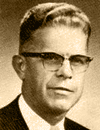
Walter Beuttler preaches on the importance of waiting on God, emphasizing that seeking God involves patiently waiting for His response, as God also waits for us to seek Him. The period of waiting allows God to work in us, manifest His mercy, and condition us for His blessings. The proper characteristics of waiting include being early, daily, watchful, patient, and hopeful, with a preference for God above all else. The results of waiting include divine aid, protection, and enabling to live a life above earthly concerns. The Lord's call to fellowship requires our active response, recognition of His voice, and overcoming conflicting interests.
Text
A. THE NEED OF WAITING
1. What is to be observed from:
(1) Lamentations 3:25? That the seeking of God involves a waiting FOR God
(2) Isaiah 30:18? That God waits for men to wait for him
(3) Proverbs 8:34? That there is a promised blessedness to those that wait for him
(4) Isaiah 30:18? That this blessedness awaits everyone without exception
2. Why does God wait with his response to man in the light of Isaiah 30:18?
(1) In order to do a work of grace in man while God uses the period of waiting as his opportunity to do what cannot otherwise be done
(2) To accomplish a work which will result in his exaltation and man's abasement
(3) To manifest his mercy and demonstrate the wisdom of his judgment
3. To what purpose does God keep man waiting in:
(1) Psalm 37:7? To silence the natural restlessness and agitation of the human spirit
(2) Habakkuk 2:20? To teach man reverence for a holy God and to give him a sense of his unworthiness because of his earthiness
(3) Psalm 42:1-2? To intensify man's desire for God so that God might have a greater opportunity for a greater response
(4) Exodus 24:12-16? To condition the human faculties for the reception of that which is to follow and to bring man into complete submission
4. Note the rendering of Psalm 37:7 in the following translations:
(1) Revised Version--"Be still before ('silent to,' margin) Jehovah and wait patiently for him"
(2) Young--"Be silent for Jehovah and stay thyself for him"
(3) Hebrew--"Resign thyself unto the Lord, and wait patiently for him"
(4) Rotherham--"Be resigned to Yahweh, yea wait with longing for him"
(5) Septuagint--"Submit thyself to the Lord and supplicate him"
(6) Moffat--"Leave it to the Eternal and be patient"
5. How is this rest obtained in the light of:
(1) Psalm 37:1? By not permitting ourselves to become fretful and envious ("Heat not thyself with vexation," Companion Bible)
(2) Psalm 37:3? By confidence in the integrity and character of God, Isaiah 50:10
(3) Psalm 37:4? By seeking and finding in God our greatest joy and deepest satisfaction (Psalm 87:7)
(4) Psalm 37:5? By committing our ways to God, i. e., turning our problems over to his care. ("Roll thy way upon the Lord." margin) 1 Peter 5:7
B. THE MANNER OF WAITING
1. Note from the following scriptures the proper characteristics of our waiting:
(1) Proverbs 8:17 - Early, i.e., without procrastination and before other interests
(2) Proverbs 8:34 - Daily, i.e., this waiting should be systematic and not spasmodic
(3) Proverbs 8:34 - Watchfully, i.e., alert to his response but without strain
(4) Hosea 12:6 - Continually, i.e., it should be a mode of life and not merely a temporary expediency in time of need
(5) Lamentations 3:25 - Objectively, i.e., this waiting should have a definite purpose with Him being the principal objective
(6) Psalm 62:1, 5 - Expectantly, i.e., with confident and active expectation and not in a state of mere pious wishing, Micah 7:7
(7) Psalm 40:1 - Patiently, i.e., calmly enduring the seemingly fruitless expenditure of time and effort in the realization that to hurry God is to find fault with him
(8) Lamentations 3:26 - Hopefully, i.e., with quiet and unwavering confidence in the ultimate response of God
(9) 1 Corinthians 2:9 - Lovingly, i.e., this waiting should not be the waiting of a selfish beggar, but the waiting of a yearning lover
(10) Proverbs 8:17 - Preferentially, i.e., desiring Him in preference to anything else, Cant. 1:2
2. Comment on the difference between Isaiah 64:4 and Paul's quotation in 1 Corinthians 2:9: Isaiah speaks of the act of waiting for God, whereas Paul speaks of the motivation
3. Note the literal rendering of "what he hath prepared for him that waiteth for him," Isaiah 64:4: "Who hath worked for him who hath waited for him"
4. Comment on the literal rendering of Isaiah 64:4:
(1) God sets the wheels of divine providence into motion on behalf of those who wait for him in loving anticipation
(2) God works while man waits and continues to work as long as man continues to wait
5. What may be observed from:
(1) 2 Kings 6:33? That there is a danger of becoming impatient with God and his seeming delays and failure to respond
(2) Psalm 106:13? That there is a danger of failing to wait for the counsel of God, Joshua 9:3-16
(3) Isaiah 49:23? That those who wait for God shall not be putto shame because of God's failure to respond
(4) Proverbs 8:34? That his response to our waiting may come through certain "gates" or "doors", i.e., through certain means and circumstances
(5) Exodus 32:1? The failure of people to understand the need of spending time with God
C. THE RESULTS OF WAITING
1. Point out some of the benefits derived from waiting for and upon God as seen in:
(1) Isaiah 64:4 - A work of God which exceeds all natural expectation
(2) Lamentations 3:25 - It will give God an opportunity to demonstrate his goodness
(3) Psalm 40:1-3 - The answer to our petitions for deliverance
(4) Psalm 33:20; 59:9 - Divine aid and protection against enemies
(5) Isaiah 40:27-31 - Divine enabling to:
a. Live on a high plane above the things of earth, (Ephesians 2:6)
b. Run the Christian race without failing by the way, (Hebrews 12:1)
c. Walk circumspectly:
(a) Before God in sanctification, Genesis 17:1
(b) After God in obedience, 2 Kings 23:3
(c) With God in fellowship, Genesis 5:22
2. In order to help man into this divine enabling, to what does God point in Isaiah 40:28? To his eternity, sovereignty, omnipotence and omniscience
D. THE LORD'S CALL
1. What, in general, is the thought of Revelation 3:20-22? The Lord's call to fellowship between himself and his people
2. Specifically, what is emphasized in:
(1) Revelation 3:20? That communion is contingent upon man's response to his approach
(2) Revelation 3:21? That such a response might involve conflict with other interests
(3) Revelation 3:22? That this response is not merely a reluctant consent of the mind, but an active response in deed
3. Point out the principle contained in the following statements in Revelation 3:20-21
(1) "Behold, I stand at the door, and knock." Attention. He arrests our attention to make known his desire and obtain a response
(2) "If ANY man." Opportunity. The opportunity of fellowship with Him is given to all
(3) "If any man HEAR." Perception. Not the hearing of the natural ear, but the inner hearing of the heart, Matthew 13:15-16
(4) "My voice." Recognition. Samuel responded to Eli instead of to God for want of recognition, 1 Samuel 3:1-8
(5) "And open the door." Response. Neither hearing nor recognition are enough without response, Exodus 3:4
(6) "To sit with me in my throne." Sovereignty. Response to him will result in overcoming things instead of being overcome by them through Him who "hath made us kings", Revelation 1:6
4. The following scriptures suggest diverse ways in which the Lord may "knock." Point them out from:
(1) Hebrews 4:12 - By the Word
(2) 1 Corinthians 14:22-25 - By the Spirit
(3) John 7:37 - By a sense of need
(4) John 6:44 - By his drawing
(5) Acts 7:51 - By conviction
(6) Exodus 3:2-4 - By supernatural phenomena
5. What things need to be overcome in our response to the Lord's call as seen in:
(1) Mark 1:16-18 - Occupational claims (Luke 5:27-29)
(2) Mark 1:19-20 - Social claims (Luke 14:26)
(3) Cant. 5:2-3 - Physical claims (Luke 9:57-58)
(4) Exodus 24:12-16 - Public claims (Luke 5:16)
(5) Mark 10:17-23 - Material claims (Luke 14:33)
6. What is shown in:
(1) Luke 14:16-20? The danger of allowing conflicting interests to become an excuse to justify unwillingness and lack of interest
(2) Luke 14:21-24? That the opportunity given to us might for lack of response be given to those with a greater sense of need
(3) Luke 5:59-61? The call of the Master will inevitably reveal where our first loyalties lie
(4) Luke 9:62? That our response should be made in an unhesitating act of finality springing from an irrevocable decision
E. THE LORD'S VISITS
1. What is evident from Hebrews 2:6? There is such a thing as God visiting his people
2. How is God seen to be visiting his people in:
(1) 1 Samuel 2:21? By answering prayer
(2) Zephaniah 2:7? By providential intervention
(3) Luke 1:67-70? By fulfilling his promise
(4) Luke 7:15-16? By supernatural deliverance
(5) John 14:21? By personal revelation
3. Comment on the term "manifest" in John 14:21: Also translated show, exhibit, reveal, and disclose, it is so strong that it implies a manifestation perceivable by the human senses
4. Point out diverse attitudes toward the Lord's visits from:
(1) Mark 5:17 - Unwanted
(2) Matthew 24:40-42 - Unexpected
(3) John 20:14 - Unrecognized
(4) John 6:60-66 - Understood
5. Point out various circumstances in which the Lord has visited man as seen in:
(1) Genesis 18:1, 33 - In a time of rest
(2) Matthew 14:23-25 - In a time of trouble
(3) John 20:19 - In a public gathering
(4) 1 Kings 3:5 - During the night
(5) Cant. 8:5; 3:6 - In the wilderness
(6) Luke 24:13-15 - During a journey
(7) Luke 24:28-31 - In the home
Sermon Outline
- The Need of Waiting
- Waiting for God involves a waiting FOR God
- God waits for men to wait for him
- There is a promised blessedness to those that wait for him
- This blessedness awaits everyone without exception
- The Manner of Waiting
- Waiting should be early, daily, watchfully, continually, objectively, expectantly, patiently, hopefully, and lovingly
- The difference between Isa. 64:4 and Paul's quotation in I Cor. 2:9
- The Results of Waiting
- Benefits derived from waiting for and upon God
- God's response to our waiting may come through certain 'gates' or 'doors'
- The Lord's Call
- The Lord's call to fellowship between himself and his people
- Communion is contingent upon man's response to his approach
- Response to the Lord's call involves conflict with other interests
- The Lord's Visits
- There is such a thing as God visiting his people
- God visits his people in various ways, including answering prayer, providential intervention, fulfilling his promise, supernatural deliverance, and personal revelation
Key Quotes
“Be still before Jehovah and wait patiently for him.” — Walter Beuttler
“God sets the wheels of divine providence into motion on behalf of those who wait for him in loving anticipation.” — Walter Beuttler
“Response to him will result in overcoming things instead of being overcome by them through Him who 'hath made us kings'.” — Walter Beuttler
Application Points
- We should wait for God early, daily, watchfully, continually, objectively, expectantly, patiently, hopefully, and lovingly.
- The benefits of waiting for God include a work of God that exceeds all natural expectation, an opportunity for God to demonstrate His goodness, and divine aid and protection against enemies.
- Response to the Lord's call involves conflict with other interests, and we should make an unhesitating act of finality springing from an irrevocable decision.