
The preachers quoted here explain the words of Jesus in John 10: the good shepherd lays down His life for the sheep, knows each one by name, is known by them, leads and feeds them, seeks the lost, carries the lambs and keeps His flock. They also show how He differs from the hired hand and what He asks of those who shepherd under Him.
Jesus called Himself the good shepherd to show what He is to those who belong to Him. He owns them, knows them, leads them, feeds them and keeps them, and He died for them. He said, "I am the good shepherd. The good shepherd lays down His life for the sheep." (John 10:11). No other shepherd has done that for his flock. Charles Spurgeon said, "He is a Good Shepherd because all that ought to be done—all that can be done—all that may be wished to be done towards His sheep—He does."1
The Lord was Israel's shepherd
The name was not new when Jesus used it. David sang, "The LORD is my shepherd; I shall not want." (Psalm 23:1). Another psalm says, "Know that the LORD is God. It is He who made us, and we are His; we are His people, and the sheep of His pasture." (Psalm 100:3). J.R. Miller wrote, "In the Old Testament there are many allusions to God under this figure of a shepherd."2 Hannah Whitall Smith wrote, "The psalmist tells me that the Lord is my Shepherd, and the Lord Himself declares that He is the good Shepherd."3 T. Austin-Sparks said of the Lord and Israel, "The Lord claimed the ownership of His sheep, and because He owned them and they were His sheep, everything He did was because of that."4 G. Campbell Morgan said, "The idea of kingship in the economy of God is always that of the shepherd, who feeds rather than is fed, who guards rather than seeks to be guarded."5 When the shepherds of Israel failed, God promised to come Himself. Through Ezekiel He said, "I will tend My flock and make them lie down, declares the Lord GOD. I will seek the lost, bring back the strays, bind up the broken, and strengthen the weak" (Ezekiel 34:15-16). When Jesus said that He was the good shepherd, He took to Himself what the Old Testament says of the Lord.
Why He is called good
There were many shepherds in Israel. Jesus is the good one. Spurgeon said, "He is the Good Shepherd—good up to the highest point of goodness, good in all that is tender—good in all that is kind, good in all the directions in which a shepherd can be needed."6 He also said, "There is a goodness, a tenderness, a willingness, a powerfulness, a force, an energy in all that Jesus does that makes Him the best possible Shepherd that can be."6 C.I. Scofield wrote of the tenderness of Christ, "It is always the tenderness of perfect strength, and perfect righteousness."7 His goodness is seen in His compassion for people who had no one to care for them. "When He saw the crowds, He was moved with compassion for them, because they were harassed and helpless, like sheep without a shepherd." (Matthew 9:36).
He lays down His life for the sheep
The first mark Jesus gives of the good shepherd is that he dies for the flock. He said it again: "And I lay down My life for the sheep." (John 10:14-15). J.C. Ryle wrote, "When He saw that nothing could deliver them from hell and the devil, but His blood, He willingly made His soul an offering for their sins."8 He added, "The sheep are saved for evermore, because the Good Shepherd died for them."9 John Newton wrote, "Such is our great Shepherd; and he is eminently the good Shepherd also, for he laid down his life for the sheep, and has redeemed them to God by his own blood."10 J.R. Miller wrote, "The Good Shepherd loves His sheep, loves them so much that He stops at no sacrifice in protecting them and saving them."11 G. Campbell Morgan said, "The Good Shepherd entereth into conflict with the wolf, and when the wolf can be destroyed only by the Shepherd's dying, then the Shepherd dies to destroy the wolf."12 Robert Candlish wrote, "He lays down his life for the sheep, as not only the obedient servant of the Father, but the representative and surety of the sheep."13 A.W. Pink wrote of Hebrews 13:20, "The fact that God brought back again from the dead this great Shepherd signifies that the Father had previously brought Him into death as a Substitute, a propitiatory Lamb, for the sins of His sheep."14 Spurgeon said, "The most pious example would not have proved him to be the divine Shepherd, if he had not laid down his life for the sheep."15 The sheep had gone astray, and the Shepherd bore what they deserved. "We all like sheep have gone astray, each one has turned to his own way; and the LORD has laid upon Him the iniquity of us all." (Isaiah 53:6).
He laid it down of His own accord
No one forced the Shepherd to die. Jesus said, "No one takes it from Me, but I lay it down of My own accord. I have authority to lay it down and authority to take it up again." (John 10:17-18). Ryle wrote, "We must never suppose for a moment that our Lord had no power to prevent His sufferings, and that He was delivered up to His enemies and crucified because He could not help it."16 He added, "A willing Savior, a loving Savior, a Savior who came specially into the world to bring life to man, is just the Savior that we need."17 Candlish wrote of the cross, "There is still a willing victim to whom the glory of the Father, and the salvation of the sheep are dear."18 The Shepherd who died also rose. T. Austin-Sparks said, "That the sheep might live, the Shepherd dies; and the fact that the sheep do live, is a Testimony to victory over death in the Shepherd Who gives them life."19
The hired hand and the wolf
Jesus set Himself beside the man who keeps sheep only for wages. "The hired hand is not the shepherd, and the sheep are not his own. When he sees the wolf coming, he abandons the sheep and runs away. Then the wolf pounces on them and scatters the flock. The man runs away because he is a hired servant and is unconcerned for the sheep." (John 10:12-13). Marcus Dods wrote of the hired hand, "It is not the work nor the sheep he has any interest in, but the pay."20 Alexander Maclaren defined the word: "A hireling is not a man who is paid for his work, but one who works for the sake of the pay."21 Robert Murray M'Cheyne said, "The hireling here mentioned, is one who seeks the hire and not the flock."22 He also said, "The time when the wolf comes is the time to mark who the true shepherd is."22 Hannah Whitall Smith wrote, "The hireling fleeth when danger appears, because he is an hireling, but the good Shepherd only sticks closer than ever."23 Spurgeon wrote, "A shepherd who does not love his sheep is a hireling and not a shepherd: he will flee in the time of danger, and leave his flock to the wolf."24 Dods wrote, "The object of the good shepherd, on the contrary, is to find for the sheep a more abundant life."25 The good shepherd stays when the wolf comes, because the sheep are His own.
He knows His sheep
The second mark is knowledge. "I know My sheep and My sheep know Me, just as the Father knows Me and I know the Father." (John 10:14-15). He knows them one by one. "He calls his own sheep by name and leads them out." (John 10:3). Scofield wrote, "The third characteristic of the good Shepherd is that he knows his sheep, and his sheep know him."7 Ryle wrote of His people, "There is not a thing about the least and lowest of them with which He is not familiar."26 He added, "The children of this world may not know Christians, and may count their lives folly; but the Good Shepherd knows them thoroughly, and, wonderful to say, though He knows them, does not despise them."27 Spurgeon said, "The knowledge of Christ towards His sheep and of the sheep towards Him is wonderfully complete."6 He also said, "He has such an intimate knowledge of all who are redeemed with His most precious blood that He never mistakes one of them for another, nor misjudges one of them."6 J.R. Miller wrote, "The shepherd's love and care are individual and personal."28 He added, "It is as easy for our Good Shepherd to know each of His millions personally, as for any human mother to know the name of each one of her little family of children."29 Maclaren wrote that this knowledge is the knowledge of love: "A loveless heart does not know the Shepherd, and unless the Shepherd's heart was all love He would not know His sheep."30 Ryle wrote of the Shepherd's care, "He bears patiently with their many weaknesses and infirmities, and does not cast them off because they are wayward, erring, sick, footsore, or lame."31
His sheep know His voice
The knowledge runs both ways. Jesus said, "My sheep listen to My voice; I know them, and they follow Me." (John 10:27). Of the shepherd He said, "When he has brought out all his own, he goes on ahead of them, and his sheep follow him because they know his voice." (John 10:4). F.B. Meyer wrote, "It is one of the characteristics of Christ's sheep that they know his voice, and follow Him, whilst they flee from the voice of strangers."32 T. Austin-Sparks said, "The Lord's sheep have an inward ear given to them, that is, a faculty of spiritual intelligence and an ability to hear what no one else can hear."4 Ryle wrote, "There is a spiritual instinct in most true believers, which generally enables them to distinguish between true and false teaching."33 Spurgeon said, "The sheep of Christ know the Shepherd's voice in the Word and they will not follow a stranger, for they know not the voice of strangers."34 M'Cheyne said, "There are two ways the sheep follow the shepherd — when they are looking at his person, and when they hear his voice."35 He added, "Just as the sheep follow the shepherd to the well, or down into the valley, or beneath some shady rock, so those that are Christ's follow him."36 George Whitefield said, "Following Christ means following him through life, following him in every word and gesture, following him out of one clime into another."37 Austin-Sparks said of the words about following, "They mean that His sheep never have to be driven, never have to be compelled to go His way."4 J.R. Miller gave a warning: "We need to be sure that the voices we hear are of the Shepherd, calling us only and always to things that are beautiful and true and good."38
He is the gate of the sheep
In the same chapter Jesus calls Himself the way in. "I am the gate. If anyone enters through Me, he will be saved. He will come in and go out and find pasture." (John 10:9). The preachers quoted here use the older word door. Scofield wrote, "As the good Shepherd he is, first, the door of the sheep."7 Spurgeon said, "There is no door into His sheepfold except Himself—His own Person."39 He explained, "He means that as by passing through a door we enter into a house, so by passing through Christ Jesus, by faith, we enter into eternal life, enter into the true Church and ultimately shall enter into Heaven!"39 Dods wrote, "Through Him alone have men access to a position of security to association with all that is worthiest among men, to a never-failing life and a boundless freedom."40 No one comes into the flock of God except through Christ.
He leads and feeds them
A shepherd in that land walked in front of his sheep. David wrote of the Lord, "He makes me lie down in green pastures; He leads me beside quiet waters. He restores my soul; He guides me in the paths of righteousness for the sake of His name." (Psalm 23:2-3). Spurgeon said of the sheep, "Happy that they were provided for, they grazed as they went along the way, not knowing and not needing to know where they were going, but quite content because their shepherd led the way."41 He also said, "He knows the way and the sheep have nothing to do but to follow him wherever he goes."6 J. Wilbur Chapman wrote, "It is the shepherd's business to lead his sheep to the place where they may find food to eat and water to drink."42 Henry Law wrote of the shepherd, "It is his daily care to lead them to the pastures where the best food abounds."43 Law found those pastures in the Scriptures and wrote, "The power of the Word to strengthen and revive consists mainly in its revelations of the Savior."44 J.R. Miller wrote, "The Syrian shepherd sometimes led his flock up steep paths, over rough roads, through dark gorges—but it never was to make the way hard for them—it always was to take them to a bit of green pasture or beside still waters, that they might be fed and refreshed."45 Hannah Whitall Smith wrote, "The Shepherd knows what pastures are best for His sheep, and they must not question or doubt, but must trustingly follow Him."46
He seeks the lost
The good shepherd does not wait for a strayed sheep to come back. Jesus asked, "What man among you, if he has a hundred sheep and loses one of them, does not leave the ninety-nine in the pasture and go after the one that is lost, until he finds it?" (Luke 15:4-5). Spurgeon said, "The sheep strays of itself, but it never returns to its fold unless sought by the Great Shepherd!"47 He also said, "The shepherd has wide-open eyes for the sheep, but the sheep, while he is wandering, has no eyes for the shepherd."48 He gave the reason for the search: "This is one of the great secrets that explain the care of the Good Shepherd—in looking for the lost sheep, He is caring for that which is His own."48 He added, "The shepherd did not go after the sheep because it never went astray nor because it was docile—but because it did go astray and was not docile."49 J.H. Jowett wrote, "Every perilous ravine, where a sheep can be lost, knows the footprints of the Shepherd."50 Hannah Whitall Smith wrote, "The good Shepherd does not cast off the sheep that is lost, and take no further care of it, but He goes out to seek for it, and He seeks until He finds it."51 Spurgeon said, "There is no way of bringing back the wandering sheep like that which the good shepherd took when he lifted the poor creature right up on his own shoulders."52 Peter wrote to believers, "now you have returned to the Shepherd and Overseer of your souls." (1 Peter 2:25).
He carries the lambs
The weakest in the flock have a special place with Him. Isaiah says, "He tends His flock like a shepherd; He gathers the lambs in His arms and carries them close to His heart. He gently leads the nursing ewes." (Isaiah 40:11). Spurgeon said, "It is, therefore, with great delight we find our gracious Lord executing the office of Shepherd in a peculiarly tender manner towards the lambs."53 He also said, "Christ carries the lambs in His bosom because the greatest need requires the most luxurious resting place and the most calm repose."54 He added, "The lamb is put into the shepherd's bosom, not that he may stand still with it all day long, but because the sheep are going this way and the lambs must go that way, too, and, therefore, he carries it."54 Ryle wrote, "The lambs in the flock are as carefully tended by the good shepherd as the old sheep."55 Matthew Henry's commentary says, "Christ is the good Shepherd; he shows tender care for young converts, weak believers, and those of a sorrowful spirit."56 A young or weak believer is not less cared for than a strong one.
He keeps His sheep
Jesus spoke of the safety of His flock. "I give them eternal life, and they will never perish. No one can snatch them out of My hand. My Father who has given them to Me is greater than all. No one can snatch them out of My Father's hand." (John 10:28-29). The safety lies in the hand that holds them. George Whitefield said, "He holds them in his hand, that is, he holds them by his power; none shall pluck them thence."57 He also said, "There is always something plucking at Christ's sheep; the devil, the lust of the flesh, the lust of the eye, and the pride of life, all try to pluck them out of Christ's hand."58 J.N. Darby wrote, "The sheep would not be able to defend themselves from this ravenous wolf; but the Good Shepherd is there, the Son of God, and no one can pluck them out of His hand; there is no greater force that can do anything against Him who keeps us."59 Ryle wrote, "The enemies of their souls may be strong and mighty, but their Savior is mightier; and none shall pluck them out of their Savior's hands."60 Spurgeon said, "The sheep that is found is perfectly secure in the Good Shepherd's grip."48 The promise is made to those whom the verse before it describes, the sheep who hear His voice and follow Him. Ryle wrote, "The man who, under a real sense of sin, flees to Christ and trusts in Him, is one of those who shall never be plucked out of Christ's hand."61 He also warned, "It will profit us nothing at the last day that Jesus was a Shepherd, if during our lifetime, we never heard His voice and followed Him."62 Watchman Nee wrote, "Those who neither know the Lord nor heed His voice are not His sheep."63
Other sheep and one flock
The flock is wider than Israel. Jesus said, "I have other sheep that are not of this fold. I must bring them in as well, and they will listen to My voice. Then there will be one flock and one shepherd." (John 10:16). Maclaren wrote, "He who sees beneath the surface, and beyond the present, beholds His sheep where men can only see wolves."64 He added, "We ought to look on every field of Christian effort with the assurance that in it there are some who will hear His voice."65 Pink wrote of the word great in Hebrews 13:20, "This adjective also looks at the excellence of His flock: He is the great Shepherd over an entire, indivisible flock composed both of Jews and Gentiles."14 Morgan wrote of the one flock, "The unity was not created by the fold, but by the nature of the sheep, and their relationship to the shepherd."66 Spurgeon said, "The motto of Christianity is—one flock and one Shepherd."67 He added, "The best way to promote the unity of the Church is for all the sheep to follow the Shepherd."67
Life in all its fullness
The Shepherd came to give life. "The thief comes only to steal and kill and destroy. I have come that they may have life, and have it in all its fullness." (John 10:10). Ryle wrote, "Christ did not come to be only a teacher of new morality, or an example of holiness and self-denial, or a founder of new ceremonies, as some have vainly asserted."68 What He came to bring is life from God, bought by His death and given to all who come in by Him. The psalm that begins with the Shepherd ends without fear of death: "Even though I walk through the valley of the shadow of death, I will fear no evil, for You are with me; Your rod and Your staff, they comfort me." (Psalm 23:4).
The great Shepherd and the Chief Shepherd
The New Testament gives Christ two more shepherd names. Hebrews speaks of God, "who through the blood of the eternal covenant brought back from the dead our Lord Jesus, that great Shepherd of the sheep" (Hebrews 13:20). Peter writes, "And when the Chief Shepherd appears, you will receive the crown of glory that will never fade away." (1 Peter 5:4). Spurgeon said, "The Lord Jesus, Himself, is the Good Shepherd who laid down His life for the sheep, the Great Shepherd who is brought, again, from the dead and the Chief Shepherd under whom He has appointed shepherds to watch for the souls of men."69 He also said, "The Good Shepherd came to earth once to lay down His life for the sheep—He will surely come again as the Chief Shepherd to recompense the under-shepherds who have faithfully kept the night watches for Him."70 Meyer wrote of the God of peace, "He brought again from the dead our Lord Jesus, that Great Shepherd of the sheep; and surely the power which achieved that bringing again is capable of any demand that may be made on it."71 Pink wrote, "The idea of Christ as Shepherd necessarily implies that there is a chosen flock."14 Spurgeon said, "He is the Good, the Great, the Chief Shepherd—but He is much more."6
Shepherds under Him
Christ cares for His flock through men He appoints. He said to Peter, "Shepherd My sheep." (John 21:16). Peter passed the charge on: "Be shepherds of God's flock that is among you, watching over them not out of compulsion, but because it is God's will; not out of greed, but out of eagerness;" (1 Peter 5:2). Jonathan Edwards said, "Christ is his people's shepherd, the good shepherd, the great shepherd of his sheep."72 Spurgeon said, "Our Lord was good in laying down his life for the sheep, and there are other shepherds whom he makes good, who in his name feed his lambs and sheep."73 He also said, "A man who does not love the Great Shepherd cannot properly feed either His sheep or lambs."74 Morgan said, "No man can feed the lambs and shepherd the sheep until he himself has felt the mysterious attraction of the Person of Christ upon his own life."75 He added, "No man can feed the lambs and shepherd the sheep until he has put Christ in the place of final supremacy."76 E.M. Bounds wrote, "The hireling and the stranger may help the sheep at some points, but it is the good shepherd with the good shepherd's heart who will bless the sheep and answer the full measure of the shepherd's place."77 Ryle wrote, "The man who makes much of Christ is a pastor after God's own heart, whom God delights to honor."78
Is He your shepherd?
David did not only say that the Lord is a shepherd. He said my shepherd. Spurgeon said, "The first duty of a sheep—that which naturally comes to a sheep—is confidence in the shepherd."41 He also said, "If Jesus is so pleased to be my Shepherd, let me be equally pleased to be His sheep and let me avail myself of all the privileges that are wrapped up in His being my Shepherd and in my being His sheep!"6 Hannah Whitall Smith wrote to troubled believers, "The fault, therefore, must lie just here; either you have not believed He was your Shepherd at all, or else, believing it, you have refused to let Him take care of you."79 M'Cheyne told his hearers that "if you follow him now, you will follow him to all eternity."80 Ryle wrote, "If we hear His voice, repent and believe, He is our own."81
- C.H. Spurgeon, "Whose Goodness Never Fails" (sermon).
- J.R. Miller, Devotional Hours with the Bible, "Volume 7".
- Hannah Whitall Smith, God of All Comfort, "The Lord Our Shepherd".
- T. Austin-Sparks, "The Shepherd of Israel" (sermon).
- Campbell G. Morgan, Westminster Pulpit, "John 21:15, 16, 17. My Lambs--My Sheep".
- C.H. Spurgeon, "Our Own Dear Shepherd" (sermon).
- C.I. Scofield, "The Good Shepherd" (sermon).
- J.C. Ryle, Expository Thoughts On John, "John 10:10-18".
- J.C. Ryle, Expository Thoughts On John, "John 10:10-18".
- John Newton, Writings of John Newton - Volume 1, "The Great Shepherd".
- J.R. Miller, Devotional Hours with the Bible, "Volume 7".
- Campbell G. Morgan, Westminster Pulpit, "John 21:1. Manifestations Of The Risen Lord".
- Robert S. Candlish, Writings of Robert S Candlish, "S. The Shepherd of the Sheep".
- A.W. Pink, "Prayer - Hebrews 13:20, 21, Part 1" (sermon).
- C.H. Spurgeon, "The Three Witnesses" (sermon).
- J.C. Ryle, Expository Thoughts On John, "John 10:10-18".
- J.C. Ryle, Expository Thoughts On John, "John 10:10-18".
- Robert S. Candlish, Writings of Robert S Candlish, "S. The Shepherd of the Sheep".
- T. Austin-Sparks, "Life Triumphant Over Death" (sermon).
- Marcus Dods, The Expositor's Bible: The Gospel of St. John, Volume I, "Xxi".
- Alexander Maclaren, Expositions Of Holy Scripture F, "Naaman's imperfect faith".
- Robert Murray M'Cheyne, "The Hireling and the True Shepherd" (sermon).
- Hannah Whitall Smith, Everyday Religion, "Lesson 10 - The Hidden God".
- C.H. Spurgeon, Come Ye Children (23 Sermons), "Chapter Four: The Children's Shepherd".
- Marcus Dods, The Expositor's Bible: The Gospel of St. John, Volume I, "Xxi".
- J.C. Ryle, Expository Thoughts On John, "John 10:10-18".
- J.C. Ryle, Expository Thoughts On John, "John 10:10-18".
- J.R. Miller, Devotional Hours with the Bible, "Volume 7".
- J.R. Miller, Devotional Hours with the Bible, "Volume 7".
- Alexander Maclaren, Expositions Of Holy Scripture I, "The good shepherd".
- J.C. Ryle, Expository Thoughts On John, "John 10:10-18".
- F.B. Meyer, "Doth Not the Ear Try Words? and the Palate" (sermon).
- J.C. Ryle, Expository Thoughts On John, "John 10:1-9".
- C.H. Spurgeon, "The Sword of the Spirit" (sermon).
- Robert M. Mccheyne, Writings of Robert M Mccheyne, "S. The Marks and Blesssings of Christ's Sheep".
- Robert M. Mccheyne, Writings of Robert M Mccheyne, "S. The Marks and Blesssings of Christ's Sheep".
- George Whitefield, Selected Sermons Of George Whitefield, "The Good Shepherd: A Farewell Sermon".
- J.R. Miller, Devotional Hours with the Bible, "Volume 7".
- C.H. Spurgeon, "The Door" (sermon).
- Marcus Dods, The Expositor's Bible: The Gospel of St. John, Volume I, "Xxi".
- C.H. Spurgeon, "The Lord Is My Shepherd" (sermon).
- J. Wilbur Chapman, "Fifth Day: 'The Lord Is My shepherd.'" (sermon).
- Henry Law, Writings of Henry Law - Volume 1, "Shepherd".
- Henry Law, Writings of Henry Law - Volume 1, "Shepherd".
- James R. Miller, Writings of James R Miller - Volume 1, "Volume 3".
- Hannah Whitall Smith, God of All Comfort, "The Lord Our Shepherd".
- C.H. Spurgeon, "God'S First Words To The First Sinner" (sermon).
- C.H. Spurgeon, "Until He Finds It" (sermon).
- C.H. Spurgeon, "One Lost Sheep" (sermon).
- John Henry Jowett, "The Lost Sheep" (sermon).
- Hannah Whitall Smith, God of All Comfort, ""The Lord Is Good"".
- C.H. Spurgeon, "Burden-bearing" (sermon).
- C.H. Spurgeon, "The Lambs And Their Shepherd" (sermon).
- C.H. Spurgeon, "A Sunday School Sermon" (sermon).
- J.C. Ryle, "The Great Separation" (sermon).
- Matthew Henry , Matthew Henrys Concise Commentary On The Bible, "Isaiah Chapter 40".
- George Whitefield, Selected Sermons Of George Whitefield, "The Good Shepherd: A Farewell Sermon".
- George Whitefield, Selected Sermons Of George Whitefield, "The Good Shepherd: A Farewell Sermon".
- J.N. Darby, Collected Writings of J.N. Darby Miscellaneous 2, "On the Gospel of John 10".
- J.C. Ryle, Expository Thoughts On John, "John 10:19-30".
- J.C. Ryle, Expository Thoughts On John, "John 10:19-30".
- J.C. Ryle, Expository Thoughts On John, "John 10:10-18".
- Watchman Nee, Writings of Watchman Nee, "Spiritual Work".
- Alexander Maclaren, Expositions Of Holy Scripture I, "'other sheep'".
- Alexander Maclaren, Expositions Of Holy Scripture I, "'other sheep'".
- G. Campbell Morgan, The Parables and Metaphors of Our Lord, "—- Chapter 57. The Good Shepherd (John 10:11-18)".
- C.H. Spurgeon, "Other Sheep and One Flock" (sermon).
- J.C. Ryle, Expository Thoughts On John, "John 10:10-18".
- C.H. Spurgeon, "Feed My Lambs —a Sunday School Sermon" (sermon).
- C.H. Spurgeon, "Number 2500—or, entrance and Exclusion" (sermon).
- F.B. Meyer, "Our Daily Homily - Hebrews" (sermon).
- Jonathan Edwards, "Christ the Example of Ministers" (sermon).
- C.H. Spurgeon, "The Blood of the Covenant (1874)" (sermon).
- C.H. Spurgeon, "Following Christ (1907)" (sermon).
- Campbell G. Morgan, Westminster Pulpit, "John 21:15, 16, 17. My Lambs--My Sheep".
- Campbell G. Morgan, Westminster Pulpit, "John 21:15, 16, 17. My Lambs--My Sheep".
- E.M. Bounds, "Heart Preparation Necessary" (sermon).
- J.C. Ryle, Expository Thoughts On John, "John 10:1-9".
- Hannah Whitall Smith, God of All Comfort, "The Lord Our Shepherd".
- Robert M. Mccheyne, Writings of Robert M Mccheyne, "S. The Marks and Blesssings of Christ's Sheep".
- J.C. Ryle, Expository Thoughts On John, "John 10:10-18".
In their own words
Each line below is quoted exactly from a sermon on this site. Follow the link to hear or read it where it was said.
He is a Good Shepherd because all that ought to be done—all that can be done—all that may be wished to be done towards His sheep—He does.
 C.H. Spurgeon
in Whose Goodness Never Fails
Read in context
The Lord claimed the ownership of His sheep, and because He owned them and they were His sheep, everything He did was because of that.
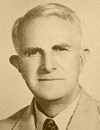 T. Austin-Sparks
in The Shepherd of Israel
Read in context
The Lord's sheep have an inward ear given to them, that is, a faculty of spiritual intelligence and an ability to hear what no one else can hear.
T. Austin-Sparks
in The Shepherd of Israel
Read in context
They mean that His sheep never have to be driven, never have to be compelled to go His way.
T. Austin-Sparks
in The Shepherd of Israel
Read in context
He is the Good Shepherd—good up to the highest point of goodness, good in all that is tender—good in all that is kind, good in all the directions in which a shepherd can be needed.
C.H. Spurgeon
in Our Own Dear Shepherd
Read in context
There is a goodness, a tenderness, a willingness, a powerfulness, a force, an energy in all that Jesus does that makes Him the best possible Shepherd that can be.
C.H. Spurgeon
in Our Own Dear Shepherd
Read in context
The knowledge of Christ towards His sheep and of the sheep towards Him is wonderfully complete.
C.H. Spurgeon
in Our Own Dear Shepherd
Read in context
He has such an intimate knowledge of all who are redeemed with His most precious blood that He never mistakes one of them for another, nor misjudges one of them.
C.H. Spurgeon
in Our Own Dear Shepherd
Read in context
He knows the way and the sheep have nothing to do but to follow him wherever he goes.
C.H. Spurgeon
in Our Own Dear Shepherd
Read in context
He is the Good, the Great, the Chief Shepherd—but He is much more.
C.H. Spurgeon
in Our Own Dear Shepherd
Read in context
If Jesus is so pleased to be my Shepherd, let me be equally pleased to be His sheep and let me avail myself of all the privileges that are wrapped up in His being my Shepherd and in my being His sheep!
C.H. Spurgeon
in Our Own Dear Shepherd
Read in context
It is always the tenderness of perfect strength, and perfect righteousness.
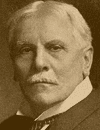 C.I. Scofield
in The Good Shepherd
Read in context
The third characteristic of the good Shepherd is that he knows his sheep, and his sheep know him.
C.I. Scofield
in The Good Shepherd
Read in context
As the good Shepherd he is, first, the door of the sheep.
C.I. Scofield
in The Good Shepherd
Read in context
The fact that God brought back again from the dead this great Shepherd signifies that the Father had previously brought Him into death as a Substitute, a propitiatory Lamb, for the sins of His sheep.
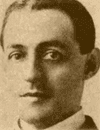 A.W. Pink
in Prayer - Hebrews 13:20, 21, Part 1
Read in context
This adjective also looks at the excellence of His flock: He is the great Shepherd over an entire, indivisible flock composed both of Jews and Gentiles.
A.W. Pink
in Prayer - Hebrews 13:20, 21, Part 1
Read in context
The idea of Christ as Shepherd necessarily implies that there is a chosen flock.
A.W. Pink
in Prayer - Hebrews 13:20, 21, Part 1
Read in context
The most pious example would not have proved him to be the divine Shepherd, if he had not laid down his life for the sheep.
C.H. Spurgeon
in The Three Witnesses
Read in context
That the sheep might live, the Shepherd dies; and the fact that the sheep do live, is a Testimony to victory over death in the Shepherd Who gives them life.
T. Austin-Sparks
in Life Triumphant Over Death
Read in context
The hireling here mentioned, is one who seeks the hire and not the flock.
 Robert Murray M'Cheyne
in The Hireling and the True Shepherd
Read in context
The time when the wolf comes is the time to mark who the true shepherd is.
Robert Murray M'Cheyne
in The Hireling and the True Shepherd
Read in context
It is one of the characteristics of Christ's sheep that they know his voice, and follow Him, whilst they flee from the voice of strangers.
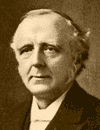 F.B. Meyer
in Doth Not the Ear Try Words? and the Palate
Read in context
The sheep of Christ know the Shepherd's voice in the Word and they will not follow a stranger, for they know not the voice of strangers.
C.H. Spurgeon
in The Sword of the Spirit
Read in context
There is no door into His sheepfold except Himself—His own Person.
C.H. Spurgeon
in The Door
Read in context
He means that as by passing through a door we enter into a house, so by passing through Christ Jesus, by faith, we enter into eternal life, enter into the true Church and ultimately shall enter into Heaven!
C.H. Spurgeon
in The Door
Read in context
Happy that they were provided for, they grazed as they went along the way, not knowing and not needing to know where they were going, but quite content because their shepherd led the way.
C.H. Spurgeon
in The Lord Is My Shepherd
Read in context
The first duty of a sheep—that which naturally comes to a sheep—is confidence in the shepherd.
C.H. Spurgeon
in The Lord Is My Shepherd
Read in context
It is the shepherd's business to lead his sheep to the place where they may find food to eat and water to drink.
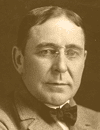 J. Wilbur Chapman
in Fifth Day: 'The Lord Is My shepherd.'
Read in context
The sheep strays of itself, but it never returns to its fold unless sought by the Great Shepherd!
C.H. Spurgeon
in God'S First Words To The First Sinner
Read in context
The shepherd has wide-open eyes for the sheep, but the sheep, while he is wandering, has no eyes for the shepherd.
C.H. Spurgeon
in Until He Finds It
Read in context
This is one of the great secrets that explain the care of the Good Shepherd—in looking for the lost sheep, He is caring for that which is His own.
C.H. Spurgeon
in Until He Finds It
Read in context
The sheep that is found is perfectly secure in the Good Shepherd's grip.
C.H. Spurgeon
in Until He Finds It
Read in context
The shepherd did not go after the sheep because it never went astray nor because it was docile—but because it did go astray and was not docile.
C.H. Spurgeon
in One Lost Sheep
Read in context
Every perilous ravine, where a sheep can be lost, knows the footprints of the Shepherd.
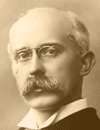 John Henry Jowett
in The Lost Sheep
Read in context
There is no way of bringing back the wandering sheep like that which the good shepherd took when he lifted the poor creature right up on his own shoulders.
C.H. Spurgeon
in Burden-bearing
Read in context
It is, therefore, with great delight we find our gracious Lord executing the office of Shepherd in a peculiarly tender manner towards the lambs.
C.H. Spurgeon
in The Lambs And Their Shepherd
Read in context
Christ carries the lambs in His bosom because the greatest need requires the most luxurious resting place and the most calm repose.
C.H. Spurgeon
in A Sunday School Sermon
Read in context
The lamb is put into the shepherd's bosom, not that he may stand still with it all day long, but because the sheep are going this way and the lambs must go that way, too, and, therefore, he carries it.
C.H. Spurgeon
in A Sunday School Sermon
Read in context
The lambs in the flock are as carefully tended by the good shepherd as the old sheep.
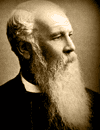 J.C. Ryle
in The Great Separation
Read in context
The motto of Christianity is—one flock and one Shepherd.
C.H. Spurgeon
in Other Sheep and One Flock
Read in context
The best way to promote the unity of the Church is for all the sheep to follow the Shepherd.
C.H. Spurgeon
in Other Sheep and One Flock
Read in context
The Lord Jesus, Himself, is the Good Shepherd who laid down His life for the sheep, the Great Shepherd who is brought, again, from the dead and the Chief Shepherd under whom He has appointed shepherds to watch for the souls of men.
C.H. Spurgeon
in Feed My Lambs —a Sunday School Sermon
Read in context
The Good Shepherd came to earth once to lay down His life for the sheep—He will surely come again as the Chief Shepherd to recompense the under-shepherds who have faithfully kept the night watches for Him.
C.H. Spurgeon
in Number 2500—or, entrance and Exclusion
Read in context
He brought again from the dead our Lord Jesus, that Great Shepherd of the sheep; and surely the power which achieved that bringing again is capable of any demand that may be made on it.
F.B. Meyer
in Our Daily Homily - Hebrews
Read in context
Christ is his people's shepherd, the good shepherd, the great shepherd of his sheep.
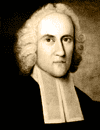 Jonathan Edwards
in Christ the Example of Ministers
Read in context
Our Lord was good in laying down his life for the sheep, and there are other shepherds whom he makes good, who in his name feed his lambs and sheep.
C.H. Spurgeon
in The Blood of the Covenant (1874)
Read in context
A man who does not love the Great Shepherd cannot properly feed either His sheep or lambs.
C.H. Spurgeon
in Following Christ (1907)
Read in context
The hireling and the stranger may help the sheep at some points, but it is the good shepherd with the good shepherd's heart who will bless the sheep and answer the full measure of the shepherd's place.
 E.M. Bounds
in Heart Preparation Necessary
Read in context
What Scripture says
- John 10:11 the good shepherd lays down His life for the sheep
- John 10:14-15 He knows His sheep and they know Him
- John 10:27 His sheep listen to His voice and follow Him
- John 10:28-29 no one can snatch them out of His hand
- Psalm 23:1 the LORD is my shepherd
- Isaiah 40:11 He gathers the lambs in His arms
- Ezekiel 34:15-16 God promises to tend His flock Himself
- Luke 15:4-5 the shepherd goes after the one lost sheep
- John 10:16 other sheep, one flock and one shepherd
- Hebrews 13:20 the great Shepherd brought back from the dead
- 1 Peter 5:4 the Chief Shepherd will appear
How this page is made: the quotes are taken word for word from sermons on SermonIndex and checked against them by program before the page is published. The transcripts of audio and video sermons are machine-made, so follow the link to hear the words as they were spoken. The answer above the quotes is an overview with its sources listed; it is not a statement of doctrine by SermonIndex.