
The preachers quoted here set out the true manhood of the Lord Jesus: His birth, growth, bodily weakness, tears, prayers, temptation and death, and His risen and ascended life as a man. They show why the Son of God took our nature and what comfort believers draw from having a Saviour who is man as well as God.
The humanity of Christ is the truth that the Son of God became a real man, with a human body and a human soul, and lived a human life from birth to death without sin. John states it in one sentence: "The Word became flesh and made His dwelling among us. We have seen His glory, the glory of the one and only Son from the Father, full of grace and truth." (John 1:14). He did not cease to be God when He became man. J.C. Ryle said, "Learn, in the second place, that the Lord Jesus Christ is truly and really man."1 Charles Spurgeon said, "He is as truly Man as if He were not God and as truly God as if He had never assumed the nature of man."2
The Word became flesh
The Son of God existed before He was born at Bethlehem. What was new at His birth was the nature He took. John Owen said, "The same person who before was not flesh, was not man was made flesh as man, in that he took our human nature to be his own."3 Paul describes the same step. He "emptied Himself, taking the form of a servant, being made in human likeness" (Philippians 2:7-8). Thomas Watson wrote, "Christ's humiliation consisted in his incarnation, his taking flesh, and being born."4 It was no mere appearance of a man. A.W. Tozer wrote, "The New Testament accepts as a matter of course that in his incarnation our Lord took upon him a real human body, and no effort is made to steer around the downright implications of such a fact."5 John Broadus said, "He is not simply God taking upon him some outward semblance of humanity."6
Born of a woman
He entered the world by birth, as the child of a human mother. Paul writes, "God sent His Son, born of a woman, born under the law" (Galatians 4:4). Luke records the birth plainly. "And she gave birth to her firstborn, a Son. She wrapped Him in swaddling cloths and laid Him in a manger, because there was no room for them in the inn." (Luke 2:7). Alexander Maclaren wrote of Paul's words, "The sending of the Son took effect in the birth of Jesus, and the Apostle puts it under two forms, both of which are plainly designed to present Christ's manhood as His full identification of Himself with us."7 Watson wrote, "As bread is made of wheat, and wine is made of the grape; so Christ is made of a woman: his body was part of the flesh and substance of the virgin."8 Spurgeon said, "It is enough for us to know that the Lord was born of a woman, wrapped in swaddling bands, laid in a manger and needed to be nursed by His mother as any other little child."9
He grew as a child grows
Scripture says that He grew in body and in mind. "And the Child grew and became strong. He was filled with wisdom, and the grace of God was upon Him." (Luke 2:40). Luke says it again of His later boyhood. "And Jesus grew in wisdom and stature, and in favor with God and man." (Luke 2:52). Spurgeon wrote, "He was born of a woman, He hung upon her breasts, and was dandled upon her knee; He grew from infancy to youth and thence to manhood, and in every stage He was a true and real partaker of our humanity."10 Jonathan Edwards said, "For we read that he not only increased in stature but also in wisdom."11 Andrew Murray said, "He not only grew and became strong; he not only advanced in stature but in wisdom too, and in favour with God and man."12 The letter to the Hebrews speaks of His learning. "Although He was a Son, He learned obedience from what He suffered." (Hebrews 5:8).
A human body and a human soul
His manhood was complete. He had a body that could be seen and touched, and He had a human soul. Thomas Brooks wrote, "He was truly and completely man, consisting of flesh and spirit, body and soul; yea, that he assumed the entire human nature, with whatever is proper to it."13 He gave the reason: "If, therefore, Jesus Christ had only a human body without a human soul, he had wanted that part which is most essential to man, and so he could not have been looked upon as true and perfect man."14 In Gethsemane Jesus spoke of His own soul: "My soul is consumed with sorrow to the point of death." (Matthew 26:38). Robert Murray M'Cheyne, preaching on John 1:14, said, "It is not meant that he really took a body without a soul."15 Thomas Manton wrote, "The verity of his human nature is seen, because he submitted to all our sinless infirmities."16
A poor man and a working man
He lived in a poor home and worked with His hands. The people of Nazareth asked, "Isn't this the carpenter, the son of Mary and the brother of James, Joses, Judas, and Simon?" (Mark 6:3). He said of Himself, "Foxes have dens and birds of the air have nests, but the Son of Man has no place to lay His head." (Matthew 8:20). M'Cheyne said, "He was not only born, but born in a low condition, and his life was one of poverty."15 Broadus spoke of "the carpenter of Nazareth who worked with hard hands over homely toil"6. F.B. Meyer said, "He never forgot that He sprang, according to His human nature, from the ranks of poverty."17
Hungry, thirsty, weary and asleep
The Gospels record the ordinary needs of His body. After the fast in the wilderness Matthew says, "After fasting forty days and forty nights, He was hungry." (Matthew 4:2). Brooks wrote, "Christ was not hungry all the forty days; but after, he was hungry, to shew he was man."18 At Sychar John says, "Since Jacob's well was there, Jesus, weary from His journey, sat down by the well. It was about the sixth hour." (John 4:6). Spurgeon said, "How really Human He appears when the burning sun smites Him, the sweat rolls off Him and He is thoroughly weary!"19 Brooks wrote, "Christ took on him not only our nature, but the common infirmities thereof, and he is to be as seriously eyed in his humanity as in the glory of his godhead."20 In the storm on the lake, Mark says, "But Jesus was in the stern, sleeping on the cushion." (Mark 4:38). Ryle said, "Surely, if the sleep of the laboring man is sweet, much more must have been the sleep of our blessed Lord."1 On the cross He said, "I am thirsty." (John 19:28). Spurgeon said, "Jesus was proved to be really man, because he suffered the pains which belong to manhood."21 Maclaren summed it up: "The ordinary wants of human nature belonged to Him; He hungered, He thirsted, and was weary; He ate and drank and slept."22
He wept and sorrowed
He had human feelings as well as human needs. At the grave of Lazarus, "When Jesus saw her weeping, and the Jews who had come with her also weeping, He was deeply moved in spirit and troubled." (John 11:33). Then John writes, "Jesus wept." (John 11:35). Spurgeon said, "His eyes were made to be fountains of tears, even as are ours."23 Maclaren wrote of His weeping over Jerusalem, "That sorrow is a sign of His real manhood, but it is also a part of His revelation of the very heart of God."24 Isaiah had called Him "a man of sorrows, acquainted with grief" (Isaiah 53:3). Miller said, "He is not only God, with all power; He is also man, with all human feelings, affections, emotions, sympathies."25
He prayed and trusted His Father
As man He lived by prayer and by faith. "Early in the morning, while it was still dark, Jesus got up and slipped out to a solitary place to pray." (Mark 1:35). Luke writes, "In those days Jesus went out to the mountain to pray, and He spent the night in prayer to God." (Luke 6:12). The letter to the Hebrews says, "During the days of Jesus' earthly life, He offered up prayers and petitions with loud cries and tears to the One who could save Him from death, and He was heard because of His reverence." (Hebrews 5:7). Spurgeon said of His tears at Bethany, "A great miracle was to be worked and great power was needed from on high—as man, the Lord Jesus cries to God with intense earnestness and finds the most fit embodiment for His prayer in weeping."23 Maclaren wrote, "Christ's perfect manhood did not release Him from, but bound Him to, the exercise of faith."26 A.B. Simpson said, "We are apt to forget the perfect humanness of Christ in His life and death."27 He added, "He was ever dependent upon His Father just as we are dependent upon Him."27 James Stalker wrote, "It is a forgotten truth that the manhood of JESUS was from first to last dependent on the HOLY GHOST."28
Tempted, yet without sin
He was truly tempted. "Then Jesus was led by the Spirit into the wilderness to be tempted by the devil." (Matthew 4:1). The letter to the Hebrews says, "For we do not have a high priest who is unable to sympathize with our weaknesses, but we have one who was tempted in every way that we are, yet was without sin." (Hebrews 4:15). Miller said, "Jesus was tempted, too, that He might understand our experiences of temptation."25 Spurgeon wrote, "He must needs be found in fashion as a man, and be tempted in all points like as we are ere he could be touched with a feeling of our infirmities."29 His manhood was like ours in everything except sin. John writes that "in Him there is no sin" (1 John 3:5). Ryle said, "He is acquainted with every thing that belongs to human nature, sin only excepted."1 Spurgeon said, "The Man of men, in whom all true humanity is found in perfection, is Christ Jesus."23 Scripture calls Him "holy, innocent, undefiled, set apart from sinners" (Hebrews 7:26).
Why He became man
He took our nature in order to die for us. "Now since the children have flesh and blood, He too shared in their humanity, so that by His death He might destroy him who holds the power of death, that is, the devil" (Hebrews 2:14). M'Cheyne said of that verse and the one before it, "In these two verses it is distinctly said that the Word was made flesh in order that he might die."15 Owen said, "God could not die, nor rise again, nor be exalted to be a prince and a saviour, in his divine nature."30 John Bunyan wrote, "Christ, then, must needs have suffered; the manner of the work laid a necessity upon him to take our flesh upon him; he must die, he must die for us, he must die for our sins."31 Stephen Charnock wrote, "Our whole nature had sinned, and our whole nature must suffer; Christ took our nature, that he might suffer what was due to our nature."32 Watson wrote, "It was not fit for any to satisfy God's justice but man; none could do it but God; therefore, Christ being both God and man, is the fittest to undertake this work of redemption."33 A.A. Hodge wrote, "If Christ is not in the same person both God and man, he either could not die, or his death could not avail."34
He truly suffered and died
His sufferings were real. In the garden, "And in His anguish, He prayed more earnestly, and His sweat became like drops of blood falling to the ground." (Luke 22:44). Spurgeon drew this lesson from Gethsemane: "The first is this—Learn, dear Brothers and Sisters, the real Humanity of our Lord Jesus Christ."35 His death was a real death. "And when He had said this, He breathed His last." (Luke 23:46). John adds, "Instead, one of the soldiers pierced His side with a spear, and immediately blood and water flowed out." (John 19:34). Spurgeon said, "Jesus, being a man, escaped none of the ills which are allotted to man in death."21
A high priest who can sympathise
Because He was a man, He knows our life from within. "For this reason He had to be made like His brothers in every way, so that He might become a merciful and faithful high priest in service to God, in order to make atonement for the sins of the people." (Hebrews 2:17). The next verse adds, "Because He Himself suffered when He was tempted, He is able to help those who are being tempted." (Hebrews 2:18). Ryle said, "He is not only the Son of God mighty to save, but the Son of man able to feel."1 He went on, "Jesus knows the heart of a man, the bodily pains of a man, the difficulties of a man, for he was a man himself, and had flesh and blood upon earth."1 M'Cheyne said, "Brethren, there are no persons that can have compassion as those who have felt like us."15 Thomas Goodwin wrote of His sympathy in Hebrews 4:15, "First, that this affection of his towards us here spoken of, is manifestly meant of his human nature, and not of his Godhead only, for it is spoken of that nature wherein he once was tempted as we now are."36 Spurgeon said, "The sympathy of Jesus is the next most precious thing to His Sacrifice."9 He urged the weary, "Go to Him without any fear, with a childlike confidence that He who has been tried in all points like as we are, and who was, Himself, compassed with infirmity, is able to succor us in all times of weariness!"19
The one mediator between God and men
A mediator must be able to stand on both sides. Paul writes, "For there is one God, and there is one mediator between God and men, the man Christ Jesus" (1 Timothy 2:5). Ryle said, "If you know what it is to go to the throne of grace for mercy and pardon, do not forget that the Mediator by whom you draw near to God is the man Christ Jesus."1 He explained why both natures are needed: "Had my Saviour been God only, I might perhaps have trusted him, but I never could have come near to him without fear."1 He added, "Had my Saviour been man only, I might have loved him; but I never could have felt sure that he was able to take away my sins."1 He concluded, "Almighty power and deepest sympathy are met together in one glorious person, Jesus Christ, my Lord."1 He is not ashamed of the tie. "For both the One who sanctifies and those who are sanctified are of the same family. So Jesus is not ashamed to call them brothers." (Hebrews 2:11). Richard Sibbes wrote, "Christ took our nature on him for this end: he became flesh of our flesh, and bone of our bone, that we spiritually might be flesh of his flesh and bone of his bone."37 Spurgeon said, "He reveals His kinship with us and our spirit is consoled and strengthened by a sense of His union with us."2
The risen Man
He rose in the same body that was laid in the tomb. He said to the disciples, "Touch Me and see—for a spirit does not have flesh and bones, as you see I have." (Luke 24:39). Then, "So they gave Him a piece of broiled fish, and He took it and ate it in front of them." (Luke 24:42-43). Spurgeon said, "His human nature was sustained, as ours is, by supplying it with food."23 Maclaren wrote of the women who met Him on the resurrection morning, "It was no phantom whose feet they clasped, and He is not withdrawn from them by His mysterious experience."38 Brooks wrote of what the apostles heard, saw and handled, "this proves Christ to be a true man, as his being from the beginning sets out his deity."39
Still a man in heaven
He did not lay His manhood aside when He ascended. The angels said, "This same Jesus, who has been taken from you into heaven, will come back in the same way you have seen Him go into heaven." (Acts 1:11). Stephen said, "I see heaven open and the Son of Man standing at the right hand of God." (Acts 7:56). Edwards said, "His whole human nature remains: not only his human soul, but also his human body."40 John Macduff wrote, "It is indeed a glorified humanity He now wears; but it is humanity still—His risen Body a human Temple enshrining the Shekinah of Godhead."41 Murray said of His glory in heaven, "It consists in this, that there His human nature, yea, His human body, freed from all the consequences of sin to which He once had been exposed, is now admitted to share the divine glory."42 Maclaren wrote, "His manhood brings Him memories which bind Him to us sorrowing and struggling, and His glory clothes Him with power to meet all our needs, to stanch all our wounds, to satisfy all our desires."43 Spurgeon said, "This day in the glory of Heaven He wears His scars, to show that, though God, He is not ashamed to be recognized as man."23 Paul told the Athenians that God "will judge the world with justice by the Man He has appointed" (Acts 17:31).
Holding both truths together
The church has to hold His Godhead and His manhood together. Spurgeon said, "We must not divide the Person, nor confuse the natures."2 He said, "Holding His Divinity without doubt, hold His manhood without mistake."23 Ryle said, "He who wrought out our redemption was perfect man; but He never ceased for a moment to be perfect God."44 Macduff wrote, "It is striking to observe, in the more prominent events of our Lord's public ministry, how the manifestations of His Manhood and Godhead go together."45 It is possible to honour His deity and lose sight of His manhood, which was like ours in everything except sin. Miller said, "There is a natural tendency to think of Jesus as different from other men in the human element of his personality."46 Spurgeon said, "Our temptation is to regard the Lord's humanity as something quite different from our own."9 John makes the confession of His coming in the flesh a test: "Every spirit that confesses that Jesus Christ has come in the flesh is from God" (1 John 4:2). He warns, "For many deceivers have gone out into the world, refusing to confess the coming of Jesus Christ in the flesh. Any such person is the deceiver and the antichrist." (2 John 1:7). Spurgeon wrote, "You do not receive Christ in very deed and truth unless you believe in His real humanity and actual Godhead."47 Ryle said, "Labor, I beseech you, to get firmly impressed on your mind that Christ the refuge of souls is man as well as God."1
The man we are to follow
His human life is the pattern for ours. Peter writes, "Christ also suffered for you, leaving you an example, that you should follow in His footsteps" (1 Peter 2:21). John writes, "Whoever claims to abide in Him must walk as Jesus walked." (1 John 2:6). Edwards said, "The greatest example of all, that is set before us in Scripture to imitate, is the example of Jesus Christ, which he set us in his human nature, and when in his state of humiliation."48 Broadus spoke of "a perfect example in the humanity of our Lord and Saviour"6. His manhood is a comfort as well as a pattern. Spurgeon said, "The fact that Jesus Christ is a Man such as we are, should greatly comfort us in ALL OUR STRUGGLES."2
- J.C. Ryle, "The Ruler of the Waves" (sermon).
- C.H. Spurgeon, "Our Lord's Humanity a Sweet Source of Comfort" (sermon).
- John Owen, "The Nature of the Person of Christ, and the Hypostatical Union of His Natures Declared" (sermon).
- Thomas Watson, A Body Of Divinity, "Christ's Humiliation In His Incarnation".
- A.W. Tozer, The Pursuit of God, "The Sacrament of Living".
- John A. Broadus, "One Jesus" (sermon).
- Alexander Maclaren, Expositions Of Holy Scripture B, "The son sent".
- Thomas Watson, A Body Of Divinity, "Christ's Humiliation In His Incarnation".
- C.H. Spurgeon, "The Man Of Sorrows" (sermon).
- C.H. Spurgeon, Till He Come, "Bands of Love; Or, Union to Christ".
- Jonathan Edwards, "Jesus Christ the Same Yesterday, Today, and Forever" (sermon).
- Andrew Murray, "The Cross the Way to God" (sermon).
- Thomas Brooks, Writings of Thomas Brooks, "Volume 5".
- Thomas Brooks, Writings of Thomas Brooks, "Volume 5".
- Robert Murray M'Cheyne, "The Word Made Flesh" (sermon).
- Thomas Manton, The Complete Works of Thomas Manton, D.D. Vol. I, "Sermon ii".
- F.B. Meyer, "The Cure for Anxious Care" (sermon).
- Thomas Brooks, Writings of Thomas Brooks, "Volume 5".
- C.H. Spurgeon, "Jesus Sitting on the Well" (sermon).
- Thomas Brooks, Writings of Thomas Brooks, "Volume 5".
- C.H. Spurgeon, "The Shortest of the Seven Cries" (sermon).
- Alexander Maclaren, Expositions Of Holy Scripture I, "The son of man".
- C.H. Spurgeon, "Jesus Wept" (sermon).
- Alexander Maclaren, Expositions Of Holy Scripture E, "A new kind of king".
- J.R. Miller, "Tempted Like as We Are" (sermon).
- Alexander Maclaren, Writings of Alexander Maclaren, "Some reasons why the word became flesh".
- A.B. Simpson, "Psalms Chapter 5 the Suffering Savior -- Psalm 22" (sermon).
- James Stalker, The Life of Christ, "The Final Stages of His Preparation".
- C.H. Spurgeon, The Bible and the Newspaper, "Sympathy Created By Kindred Experience".
- John Owen, "Power and Efficacy Communicated Unto the Office of Christ" (sermon).
- John Bunyan, The Works Of John Bunyan Volumes 1-3, "Light for them that sit in darkness;".
- Stephen Charnock, Writings of Stephen Charnock, "A discourse on the acceptableness of christ's death".
- Thomas Watson, A Body Of Divinity, "Christ's Humiliation In His Incarnation".
- A.A. Hodge, Writings of A A Hodge, "The Person of Christ".
- C.H. Spurgeon, "The Agony in Gethsemane" (sermon).
- Thomas Goodwin, Writings of Thomas Goodwin, "Christ's heart is touched with the feeling, of our infirmities".
- Richard Sibbes, 33. A Heavenly Conference Richard Sibbes, "But How came they to be His Brethren?".
- Alexander Maclaren, Expositions Of Holy Scripture B, "The prince of life".
- Thomas Brooks, Writings of Thomas Brooks, "Volume 5".
- Jonathan Edwards, "True Saints, When Absent From the Body, Are Present With the Lord" (sermon).
- John Macduff, Writings of John Macduff - Volume 1, "The great festal gathering and song of heaven".
- Andrew Murray, "As Your Redemption.-1 cor.1:30" (sermon).
- Alexander Maclaren, Expositions Of Holy Scripture B, "Warnings and hopes".
- J.C. Ryle, "Able to Save" (sermon).
- John Macduff, Writings of John Macduff - Volume 1, "The Death of an Only Son".
- J.R. Miller, "The Human-Heartedness of Jesus" (sermon).
- C.H. Spurgeon, Christ's Incarnation (17 Sermons), "The God Man".
- Jonathan Edwards, "The Character of Paul an Example to Christians" (sermon).
In their own words
Each line below is quoted exactly from a sermon on this site. Follow the link to hear or read it where it was said.
Learn, in the second place, that the Lord Jesus Christ is truly and really man.
 J.C. Ryle
in The Ruler of the Waves
Read in context
Surely, if the sleep of the laboring man is sweet, much more must have been the sleep of our blessed Lord.
J.C. Ryle
in The Ruler of the Waves
Read in context
He is acquainted with every thing that belongs to human nature, sin only excepted.
J.C. Ryle
in The Ruler of the Waves
Read in context
He is not only the Son of God mighty to save, but the Son of man able to feel.
J.C. Ryle
in The Ruler of the Waves
Read in context
Jesus knows the heart of a man, the bodily pains of a man, the difficulties of a man, for he was a man himself, and had flesh and blood upon earth.
J.C. Ryle
in The Ruler of the Waves
Read in context
If you know what it is to go to the throne of grace for mercy and pardon, do not forget that the Mediator by whom you draw near to God is the man Christ Jesus.
J.C. Ryle
in The Ruler of the Waves
Read in context
Had my Saviour been God only, I might perhaps have trusted him, but I never could have come near to him without fear.
J.C. Ryle
in The Ruler of the Waves
Read in context
Had my Saviour been man only, I might have loved him; but I never could have felt sure that he was able to take away my sins.
J.C. Ryle
in The Ruler of the Waves
Read in context
Almighty power and deepest sympathy are met together in one glorious person, Jesus Christ, my Lord.
J.C. Ryle
in The Ruler of the Waves
Read in context
Labor, I beseech you, to get firmly impressed on your mind that Christ the refuge of souls is man as well as God.
J.C. Ryle
in The Ruler of the Waves
Read in context
He is as truly Man as if He were not God and as truly God as if He had never assumed the nature of man.
 C.H. Spurgeon
in Our Lord's Humanity a Sweet Source of Comfort
Read in context
He reveals His kinship with us and our spirit is consoled and strengthened by a sense of His union with us.
C.H. Spurgeon
in Our Lord's Humanity a Sweet Source of Comfort
Read in context
We must not divide the Person, nor confuse the natures.
C.H. Spurgeon
in Our Lord's Humanity a Sweet Source of Comfort
Read in context
The fact that Jesus Christ is a Man such as we are, should greatly comfort us in ALL OUR STRUGGLES.
C.H. Spurgeon
in Our Lord's Humanity a Sweet Source of Comfort
Read in context
The same person who before was not flesh, was not man was made flesh as man, in that he took our human nature to be his own.
 John Owen
in The Nature of the Person of Christ, and the Hypostatical Union of His Natures Declared
Read in context
He is not simply God taking upon him some outward semblance of humanity.
 John A. Broadus
in One Jesus
Read in context
It is enough for us to know that the Lord was born of a woman, wrapped in swaddling bands, laid in a manger and needed to be nursed by His mother as any other little child.
C.H. Spurgeon
in The Man Of Sorrows
Read in context
The sympathy of Jesus is the next most precious thing to His Sacrifice.
C.H. Spurgeon
in The Man Of Sorrows
Read in context
Our temptation is to regard the Lord's humanity as something quite different from our own.
C.H. Spurgeon
in The Man Of Sorrows
Read in context
For we read that he not only increased in stature but also in wisdom.
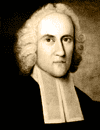 Jonathan Edwards
in Jesus Christ the Same Yesterday, Today, and Forever
Read in context
He not only grew and became strong; he not only advanced in stature but in wisdom too, and in favour with God and man.
 Andrew Murray
in The Cross the Way to God
Read in context
It is not meant that he really took a body without a soul.
 Robert Murray M'Cheyne
in The Word Made Flesh
Read in context
He was not only born, but born in a low condition, and his life was one of poverty.
Robert Murray M'Cheyne
in The Word Made Flesh
Read in context
In these two verses it is distinctly said that the Word was made flesh in order that he might die.
Robert Murray M'Cheyne
in The Word Made Flesh
Read in context
Brethren, there are no persons that can have compassion as those who have felt like us.
Robert Murray M'Cheyne
in The Word Made Flesh
Read in context
He never forgot that He sprang, according to His human nature, from the ranks of poverty.
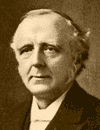 F.B. Meyer
in The Cure for Anxious Care
Read in context
How really Human He appears when the burning sun smites Him, the sweat rolls off Him and He is thoroughly weary!
C.H. Spurgeon
in Jesus Sitting on the Well
Read in context
Go to Him without any fear, with a childlike confidence that He who has been tried in all points like as we are, and who was, Himself, compassed with infirmity, is able to succor us in all times of weariness!
C.H. Spurgeon
in Jesus Sitting on the Well
Read in context
Jesus was proved to be really man, because he suffered the pains which belong to manhood.
C.H. Spurgeon
in The Shortest of the Seven Cries
Read in context
Jesus, being a man, escaped none of the ills which are allotted to man in death.
C.H. Spurgeon
in The Shortest of the Seven Cries
Read in context
His eyes were made to be fountains of tears, even as are ours.
C.H. Spurgeon
in Jesus Wept
Read in context
A great miracle was to be worked and great power was needed from on high—as man, the Lord Jesus cries to God with intense earnestness and finds the most fit embodiment for His prayer in weeping.
C.H. Spurgeon
in Jesus Wept
Read in context
The Man of men, in whom all true humanity is found in perfection, is Christ Jesus.
C.H. Spurgeon
in Jesus Wept
Read in context
His human nature was sustained, as ours is, by supplying it with food.
C.H. Spurgeon
in Jesus Wept
Read in context
This day in the glory of Heaven He wears His scars, to show that, though God, He is not ashamed to be recognized as man.
C.H. Spurgeon
in Jesus Wept
Read in context
Holding His Divinity without doubt, hold His manhood without mistake.
C.H. Spurgeon
in Jesus Wept
Read in context
He is not only God, with all power; He is also man, with all human feelings, affections, emotions, sympathies.
 J.R. Miller
in Tempted Like as We Are
Read in context
Jesus was tempted, too, that He might understand our experiences of temptation.
J.R. Miller
in Tempted Like as We Are
Read in context
We are apt to forget the perfect humanness of Christ in His life and death.
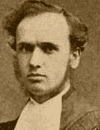 A.B. Simpson
in Psalms Chapter 5 the Suffering Savior -- Psalm 22
Read in context
He was ever dependent upon His Father just as we are dependent upon Him.
A.B. Simpson
in Psalms Chapter 5 the Suffering Savior -- Psalm 22
Read in context
God could not die, nor rise again, nor be exalted to be a prince and a saviour, in his divine nature.
John Owen
in Power and Efficacy Communicated Unto the Office of Christ
Read in context
The first is this—Learn, dear Brothers and Sisters, the real Humanity of our Lord Jesus Christ.
C.H. Spurgeon
in The Agony in Gethsemane
Read in context
His whole human nature remains: not only his human soul, but also his human body.
Jonathan Edwards
in True Saints, When Absent From the Body, Are Present With the Lord
Read in context
It consists in this, that there His human nature, yea, His human body, freed from all the consequences of sin to which He once had been exposed, is now admitted to share the divine glory.
Andrew Murray
in As Your Redemption.-1 cor.1:30
Read in context
He who wrought out our redemption was perfect man; but He never ceased for a moment to be perfect God.
J.C. Ryle
in Able to Save
Read in context
There is a natural tendency to think of Jesus as different from other men in the human element of his personality.
J.R. Miller
in The Human-Heartedness of Jesus
Read in context
The greatest example of all, that is set before us in Scripture to imitate, is the example of Jesus Christ, which he set us in his human nature, and when in his state of humiliation.
Jonathan Edwards
in The Character of Paul an Example to Christians
Read in context
What Scripture says
- John 1:14 the Word became flesh and made His dwelling among us
- Galatians 4:4 God sent His Son, born of a woman
- Luke 2:52 Jesus grew in wisdom and stature
- Philippians 2:7-8 made in human likeness and obedient to death
- Hebrews 2:14 He shared in our humanity so that by His death He might destroy the devil
- Hebrews 2:17 made like His brothers in every way
- Hebrews 4:15 tempted in every way that we are, yet without sin
- 1 Timothy 2:5 one mediator between God and men, the man Christ Jesus
- Luke 24:39 the risen Lord has flesh and bones
- 1 John 4:2 every spirit that confesses Jesus Christ come in the flesh is from God
- John 11:35 Jesus wept
How this page is made: the quotes are taken word for word from sermons on SermonIndex and checked against them by program before the page is published. The transcripts of audio and video sermons are machine-made, so follow the link to hear the words as they were spoken. The answer above the quotes is an overview with its sources listed; it is not a statement of doctrine by SermonIndex.