
Revival preaching stands as a powerful catalyst for spiritual awakening and transformation within the church and society at large. Rooted in the biblical call to repentance, revival preaching echoes the words of John the Baptist, who proclaimed, 'Repent, for the kingdom of heaven is at hand' (Matthew 3:2). This urgent message is not merely a call to sorrow over sin but an invitation to experience the profound grace of God, as articulated in 2 Chronicles 7:14, where the Lord promises healing and restoration to those who humble themselves, pray, and seek His face. Throughout history, figures such as George Whitefield and Ian Paisley have exemplified the fervent spirit of revival preaching, emphasizing the necessity of the Gospel in igniting hearts aflame for Christ. Hebrews 4:12 reminds us that the Word of God is alive and active, piercing through our defenses and revealing the truth that leads to repentance. Moreover, the importance of preaching in revival is underscored in Romans 10:14, which states that faith comes from hearing, and hearing through the word of Christ. As believers engage in revival preaching, they are called to reflect the character of Christ, who demonstrated love and compassion even to those who opposed Him (Matthew 5:44), thereby fostering an environment ripe for spiritual renewal and transformation.

In this sermon, the speaker reflects on the state of Christian meetings and how they often fail to truly impact people. He emphasizes the need for authenticity and a genuine encounter with God in our gatherings. The speaker also highlights the importance of personal repentance and surrender to God,

Brian H. Edwards emphasizes the power of preaching in revival times, highlighting that it may not always be graceful or eloquent, but it is always impactful and real, leading to life-changing experiences. He discusses the preaching styles of historical figures like Asahel Nettleton and Duncan Campbe

This sermon emphasizes the need for Christians to be fully committed and passionate in their faith, putting every part of themselves on the altar for God without reservations. It calls for churches that are alive with the power of God, where sinners are convicted and transformed by the Holy Spirit.

David Smithers preaches about the passionate prayer life and powerful preaching of John Smith, a zealous revivalist among the Wesleyan Methodists in England. Known for his constant communion with God, Mr. Smith's days were filled with fervent prayer, leading to anointed sermons that brought about de
David Smithers preaches on the powerful connection between passionate praying and true passionate preaching, using the life of W. P. Nicholson as a profound illustration. Nicholson's fearless and unique preaching style, fueled by his deep prayer life, brought about both revival and resistance among

George R. Brunk II, in a powerful sermon, addresses the crowd at a tent meeting during the Lancaster revivals, emphasizing the responsibility of preaching the Word of God to a sea of faces gathered for sincere motives. The revival, sparked by fervent prayer meetings, spread from Lancaster to several

Derek Melton delivers a powerful sermon on the importance of having a smiting fear of the Lord to combat the rampant sensuality and lawlessness in today's world. He emphasizes that only the fear of the Lord can truly turn the hearts of rebellious sinners to God, citing examples from Saul's conversio
Eifion Evans emphasizes the historical connection between preaching and revival, highlighting the importance of experiential, passionate, direct, and doctrinal preaching in past revivals. He discusses how God's presence and power in a preacher's life precede effective preaching, as seen in the exper

Faith Cook shares the inspiring story of William Grimshaw, a dedicated preacher in Haworth, England, whose humble beginnings led to a great revival in the region. Grimshaw's early preaching focused on the necessity of conversion, stirring deep conviction of sin among his hearers. Despite facing pers
The video is a description of a sermon preached by Edward Griffin on the text "the harvest is past, the summer is ended and we are not saved." The speaker describes the sermon as incredibly powerful and moving, with Dr. Griffin speaking with tears and tender appeals for nearly an hour. The sermon's
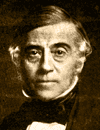
J.C. Philpot reflects on the life and ministry of George Whitefield, highlighting the opposition and admiration Whitefield faced, his unique gifts as a preacher, and the powerful impact of his sermons in a time of spiritual darkness. Whitefield, raised up by God in a period of torpor and death in th

Martin Knapp preaches about the powerful impact of revival truth, likening it to tornadoes that do God's bidding by condemning sin and promoting righteousness without regard for social status or human influence. He emphasizes the importance of fearlessly presenting God's truth, regardless of the aud

In this sermon, the preacher discusses the topic of revival preaching and repentance, using Matthew 3 as the starting point. He emphasizes that revival is needed when there is a decline or complacency in the spiritual life. The preacher explains that revival preaching is different from regular teach
In this sermon, the preacher describes the powerful preaching of Charles Finney, a renowned evangelist. Finney's preaching was described as logic on fire, piercing through his listeners like cannonballs through a basket of eggs. His words carried the anointing of the Holy Spirit, breaking through ha

Richard Owen Roberts preaches about the hindrances to revival caused by errors in preaching, such as man-centered preaching, timid preaching, preaching that evokes strange fire, self-exalting preaching, non-doctrinal preaching, preaching of minor consequence, preaching without authority, preaching w
Robert Ellis emphasizes the importance of preachers being sent by God, serving as ambassadors of Eternity in the temporal world. He highlights the need for messages from preachers to be like breezes from the eternal hills, permeating the atmosphere with eternal truths. Ellis points out that spiritua
Robert Ellis reflects on the life and ministry of Joseph Jenkins, a volcanic personality in the Welsh religious landscape from 1860 to 1929. Jenkins, a preacher of tremendous force, was known for his spiritual depth and unpredictability, often described as a 'bundle of inconsistencies.' His preachin

Robert Wurtz II preaches on the importance of prevailing prayer and powerful preaching in bringing about revival, drawing inspiration from the methods and results of Charles G. Finney's preaching during the Second Great Awakening. Finney emphasized the need for genuine love for God and neighbor, lea