
Practical Tips for Making Disciples
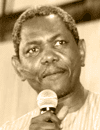
Gbile Akanni emphasizes that disciple-making, rooted in a followable life, bold recruitment, and concentrated mentorship, is the essential method Jesus used to fulfill the Great Commission and grow the church.
In this teaching, Gbile Akanni explores the biblical foundation and practical steps for making disciples, emphasizing that disciple-making is the heart of the Great Commission. He challenges modern misconceptions by distinguishing discipleship from mentoring and crowd ministry, highlighting the necessity of a followable life, bold recruitment, and concentrated teaching. Akanni encourages church leaders to adopt intentional, focused disciple-making strategies modeled after Jesus and the apostles to raise effective laborers for the harvest.
Full Transcript
Living Seed Media brings to you God's Word, which is his comprehensive equipment for changing lives. May the Lord impact your heart as you encounter his word. For further inquiry or counsel, contact Peace House, PO Box 971, Boko, Benue State, Nigeria.
Telephone numbers 0703 03636 59 0703 76811 98. Email address lsmediaatlivingseed.org or visit our website at www.livingseed.org. Let us sit back and listen as the servant of God brings forth the word of life. Practical tips for making disciples.
To think of disciple making as different from the Great Commission is very absurd to me. The only commission we are actually given is... And lo, I am with you always, even to the end of the age. Amen.
That's from Matthew 28, verses 18 to 20. It is the crux of the Great Commission, that is, disciple making is the crux of the Great Commission. It was what Jesus himself started his ministry on earth with.
It was the method of all the earlier prophets who were used of God even in the Old Testament. It was the only means by which God recruited men for his work. I perceive there is a misconception and a conspiracy in recent times concerning this matter of discipleship in our commission.
Many have thought, and even taught, that discipleship is like a new convert class that runs for a few weeks. Others seek to replace the biblical word with other concepts alien to the Bible, like mentoring and coaching. I know we are familiar with some of these terminologies, but we have never found them in the Bible.
Mentoring, for example, is a business word. It's not a Bible word. It deals with the head and the hands, but it doesn't deal with the heart.
You can mentor somebody into engineering, but he could be a drunkard, and that's not your business. It's just to mentor him in that skill. So, discipleship is not the same as mentoring, and it's not the same as coaching.
Coaching is a sports word. It's a misconception to think that discipleship is mentoring. It's not the same at all.
I would have kept mute about this trend, except that the coming generation may not know the God of the Bible as we introduce concepts of the modern day business models of ministry, which Christ's life would not tolerate if we are his disciples indeed. The import of discipleship is lost as we began to promote crusades and crowd-pulling meetings as the measure of success in ministry. Discipleship is Christ's method of growing his church.
He had the most powerful crowd-pulling anointing and could easily have emphasized the crowd ministry, but he rather focused on disciple-making. It is slow and does not allow the popular attractions of our day. Many, even in his own day, left him as he began to speak to them of the meat that perishes and the meat that endures to everlasting life.
All the parables he gave to illustrate the kingdom shows the pattern of discipleship. It is like the mustard seed, which is planted and buried away from sight. It grew, brought forth large branches.
Christ himself would not rush as the crowd. He was satisfied to sit upon the twelve and watch them grow to 120 before he left them for heaven. Disciples, when properly raised, will multiply themselves.
The multitude ministry will not give us the way forward in missions in the coming days. I believe the only way for us to adequately respond to the Great Commission is to make disciples the way Jesus and the apostles made them. To raise more laborers for the harvest of the unreached peoples, we must follow his pattern of raising men, which is concerted discipleship.
Disciple-making is the core of the Great Commission. The instrument that God uses to tie a man down for his use is discipleship. He uses discipleship to separate a man from people or things that might have either been riding his life or may want to ride his life in the future.
And that is taken from the story of the ass that Jesus rode upon to Jerusalem in Mark 11, verses 1-6. We saw that that ass had been tied. And it was tied for some time.
And when it was time for the Lord to need an ass, he did not go for asses that are free rangers. There were many asses used in those days as a means of transport or tractor on the farm. So there were many asses in that village, but Jesus only went for the one that was tied.
He would not go for free ranging asses. In the same way, when he would need a soul, an ass, a vessel to use to ride upon into his church in the nearest future, he would not go for free rangers. He would not go for asses that are going in their own liberty to do whatever they like.
He would go for those that have been tied in discipleship. He would go for vessels that have agreed to be tied away in obscurity, lending Christ. And those are the kinds of people that he would use.
If we do not expose our members to this process practically, they cannot become like Jesus or present him correctly in all walks of life. Now that we have seen the need for making disciples, we need to now analyze the crucial issues in disciple making. We shall be very schematic here as touching the various issues of necessary consideration.
And you may refer to the book Raising Agents of Transformation by Billy Akane if you want further input in the aspect of disciple making. May I also say that what we are presenting here are just the tips. This is not the full understanding of what disciple making is all about.
Just some tips to help us as we go on so that we will know what to do when we go back to our churches by the grace of God. And secondly, I would also like to say that by tomorrow, we are going to have practical discussions in our various church groups to bring out some practical steps that we must take, action points that we will go ahead to take as a matter of disciple making in our churches as we go away from here. Today we are going to discuss this, but tomorrow will be a day for practical discussion.
Now, there are three major practical tips that we are going to look at. Three major tips. One, we are going to look at a followable life as something necessary for effective disciple making.
There must be a followable life. There must be a bold recruitment for discipleship. Bold recruitment of persons that we would disciple.
We have to recruit them boldly as Jesus himself did when he said, follow me, I will make you. It's important for us to recruit people. And then the third point we are going to look at is the issue of divine concentration.
Number three, concentration in discipleship. Concentration in discipleship. The fourth one will be the issue of engaging our present structures for disciple making.
So the first practical tip that we are looking at is a followable life. In disciple making, it is necessary to have a life that is followable. Otherwise, there will be no disciple making.
This is the first crucial issue in disciple making. In every case of discipleship relationship in the Bible, God always locates a life that others can be asked to follow. It is not first a set of books or doctrines or courses that is needed in disciple making.
It's not first to read a book or to have some classroom teaching that is necessary. The first important thing is to have a life that is followable. A life that commands following.
That is a very crucial need if we are going to succeed in making disciples. The first need is for there to be a life that is available to be followed in order to see Jesus illustrated, activated, and demonstrated before the eyes of disciples. Disciple making only begins when there is a life that is followable and is willing to make himself or herself available for such a relationship.
Jesus says, follow me and I will make you. Matthew 4, 18 and 22. You also know that in John 1, verse 14, we are told concerning Jesus that the word became flesh and dwelt among us.
And we beheld his glory as of the only begotten of the father, full of grace and truth. The word became flesh and dwelt among us. That's a followable life in whom the word of God has become flesh.
And it's not dwelling in heaven. It's dwelling among us. Dwelling among the disciples.
That's the kind of life that will be effective in disciple making. And Jesus walking by the sea of Galilee saw two brothers, Simon called Peter and Andrew his brother, casting a net into the sea for they were fishermen. Then he said to them, follow me and I will make you fishers of men.
They immediately left their nets and followed him. Going on from there, he saw two other brothers, James the son of Zebedee and John his brother in the boat with Zebedee, their father, mending their nets. He called them and immediately they left the boat and their father and followed him.
Take note of what he said, follow me and not follow the book or the manual. It is the book to be read. It is the life that has become the manual for discipleship.
And in Matthew 11, 28-30, he said, take my yoke upon you and learn from me for I am gentle and lowly in heart and you will find rest for your souls. For my yoke is easy and my burden is light. Christ boldly asked men to take his yoke upon them, the yoke of learning, the yoke of discipleship and the yoke of disciplinary dealings, divine disciplinary dealings.
Learn of me, learn from me for I am gentle and lowly in heart. My yoke is easy and my burden is light is the emphasis he made while calling men unto discipleship. It is him we must follow and it is him we must learn.
And it is his yoke we must take upon ourselves. While we have no doubt about Christ's audacity and authority to make such a demand, as we study the word of God, we consider it non-limited and exclusive to him. Paul, Peter and others have also asked men and women to learn of them, to imitate them as they continue to mirror Christ before the eyes of the followers.
As we can see in Philippians 3, Philippians 4, 1 Thessalonians 1, 1 Corinthians 11 verse 1. The Great Commission gives us this mandate as well to go and make disciples of all the nations. Let's also not forget that as we learned in the Bible study, Jesus is the discipler, we are the tutors. He is the one that delegates people to go and make disciples.
And he himself is in that business of making disciples along with the delegates. He said, and look, I am with you always. Even as you go and make disciples, I am there.
I am going to be with you continuously. So he is the discipler, we are just his delegates. Now, action points and questions for us to tackle.
The first question from this need of a followable life is that, is your life a followable one? If we are interested in going to make disciples and obeying the Great Commission, the first thing we must have is a followable life. And the question is, is your life followable? Are you willing to make it available for disciples to come and examine and learn? Can you place your life at the disposal of others as a living example and a template for them to learn from? The important thing is that the disciple we want to make must be available and we who want to make them must also be what? Available. We must be available to those disciples as well if we want to make them.
And we must be followable. We must have a life that commands following. Number two, each pastor must accept this as the first task at the point of ordination.
It is to be a living example of Christ for the members to see and follow. It transcends all the degrees we may have acquired. And this life evaluation must be top in its assessment over and above its preaching and ministerial activities.
The second tip for disciple making is a bold recruitment for discipleship. Bold recruitment of people for discipleship. Discipleship is not effective in the crowd.
There is need to boldly call men into discipleship. Jesus deliberately asked men to follow him. Matthew was called into discipleship from the customs office where he was collecting government tax.
Paul was bold to ask Timothy to come with him. And so many others gave the challenge to those who eventually followed them in discipleship. So when the crowd came to him, they were thronging him to the extent that Jesus had to tell the disciples to keep a small sheep within on him.
He healed many so that as many as had afflictions, pressed about him to touch him. Jesus could have reveled in that. He could have settled down to enjoy that.
But he knew that if he settled with the crowd and did not concentrate on those that he needed for future use, whatever he stood for would be forgotten. The crowd that sang Hosanna to the son of David today could say away with him tomorrow. There is not much that God does for anybody who dwells in the crowd.
And he went on the mountain and called to him those he himself wanted. And they came to him. I'm sure we also know that the crowd that Jesus healed and preached to, the crowd that he gave bread and fish, it was not a different crowd in Jerusalem.
It was the same crowd that said away with this man, crucify him. If he did not concentrate on a few to disciple them, do you know that would have been the end of Jesus' ministry? Let it not be that ministering to the crowd in church would be finally the end of our ministry in eternity. Because if we don't boldly select a few to focus upon, we may not have anybody to present to the Savior at the end.
So we must focus. Jesus himself focused right from the beginning of his ministry. He started with discipling people.
And he went up on the mountain and called to him those he himself wanted. And they came to him. Why did the master go up to the mountain? That is a discipleship recruitment method by elimination process.
This elimination process keeps going on all the time. The crowd cannot endure mountain climbing. I hope we know.
They won't go to the mountain. They will always be in the plane of convenience. They do not normally like to climb.
Whenever you see anybody moving with the crowd, he is not up, but down. He has lowered the standard. He is doing things at a level at which anyone who is not serious can jump into it.
But when you want to eliminate those that are not serious, increase the height a little. You will discover the majority of the people in the crowd will say, whatever goes up must come down. He will come down here to meet us.
They will stay on the same spot. They will not climb up with you. They will always stay on the plane.
Just as they stayed on the plane in Matthew chapter 5. All that multitude of crowd that followed him, they stayed on the plane. While the master went up and disciples climbed up with him. He didn't ask anybody not to climb.
But the crowd, those in the crowd will normally stay in the plane. We must not let our members be lost in the crowd. They will not get anything from the master that way.
So, what are the action points to this second tip for disciple making? Each pastor, regardless of his calling and ministerial appointment, should boldly and prayerfully select a manageable number of church members. One of the methods is what we have just discussed, mountain climbing. Something that looks difficult.
Prayer and fasting. Prayer and fasting camp, for example. When it comes to prayer and fasting, Is it all church members that will be there? No.
Even Bible study. All this will show us those that are serious. And we will soon also see how Jesus spoke to people that wanted to follow him.
And gave them the conditions and many of them disappeared. So, there are methods for recruiting disciples. We must recruit people.
We must select some that we will labor upon in discipleship. Each pastor must boldly and prayerfully select a manageable number of church members. They could be elders, subgroup leaders, and so on.
For personal and intimate discipleship with whom you can pray together, share and work together on the vision of the church. Two, there should be an evaluation process of this mandatory but voluntary discipleship with the pastor. From time to time as to determine their growth in character, vision, and other areas.
I hope you know that even Jesus evaluated those that were following him from time to time. Whom do you say that I am? That was an evaluation, isn't it? That was an evaluation. And he asked Philip, how much do you think or where do you think we can get enough bread to feed these people? What was that? Evaluation.
He knew what he would do, but he asked Philip. So, each pastor should evaluate these people that he has recruited from time to time to determine their growth in character, in vision, and other areas of life. The third tip, very crucial, deals with now practical disciple making.
And that is concentration in discipleship. Several scriptures show that he indeed intentionally concentrated on them. And we shall explore this as a practical step onto effective discipleship and disciple making.
And seeing the multitudes, he went up on a mountain. And when he was seated, his disciples came to him. Then he opened his mouth and taught them saying.
That's Matthew 5 verses 1 and 2. Now when he saw the crowds, he went up on the mountainside and sat down. His disciples came to him and he began to teach them saying. That's NIV.
This was the scenario of the great sermon on the mount. It was the longest uninterrupted teaching that Jesus gave that was recorded for us. And it was preached on the mount.
It was preached not to the crowd, but to his few disciples. He sat down so to say on the men he was preparing to bear the mantle of leadership. For the gospel all over the earth, beginning at Pentecost, to expound to them.
The most detailed principles of the kingdom of God. You will notice that it covered three long chapters in the gospel of Matthew. Chapters 5, 6, and 7. Without any interruption.
No miracles were reported as an interjection. He sat down to set the principles of the kingdom. The practices of the kingdom.
The prayer pattern of the kingdom. And the purpose of the kingdom before their eyes. He could afford to keep the multitudes waiting at the foot of the mount.
As he sat on these few men he wanted to prepare for his assignment in the future. There is something very critical in that scripture. It looks as if when God wants to prepare people to become leaders.
For effective service in the purpose of God. And make them effective instruments for transformation. He takes them out of the crowd in order to sit on them.
Great and effective instruments in God's hands are not made in the crowd. And definitely not in the limelight. He takes them away into obscurity.
Where he can sit on them without any distraction. In chapter 4 of the book of Mark. It is amazing that when he saw the multitude.
He opened his mouth and spoke to them in parables. And again he began to teach by the sea. And a great multitude was gathered to him.
So that he got into a boat and sat in it on the sea. And the whole multitude was on the land facing the sea. Then he taught them many things by parables.
And said to them in his teaching. Mark 4, 1 and 2. And this was deliberate. It became clear why he would do that.
As we see how he responded to the disciples when he was alone with them in the house. Discipleship demands a deliberate concentration on those who have come into the relationship. Christ did not struggle to include everyone.
Thereby concentrating on none. Men are not made that way. Each disciple must be given a particular attention and concentration.
And here we find Christ doing just that. But when he was alone. Those around him with the twelve asked him about the parable.
And he said to them. To you it has been given to know the mystery of the kingdom of God. But to those who are outside all things come in parables.
So that seeing they may see and not perceive. And hearing they may hear and not understand. Lest they should turn and their sins be forgiven them.
Mark 4, 10 to 12. But to the disciples. Those who have come out of the crowd to follow Jesus.
It is given to understand the secrets of the kingdom. When God wants to make a man useful. He will see it as a refiner.
He will see it as a purifier of silver. On each life he wants to use. The potter, the refiner and the silversmith.
All share these attributes in common. They have gone out to bring in the raw clay. Or raw iron.
They must first be separated from the general lump. General dump. And sifted to get the material for their work.
They need to call men out of the crowd. Before we sit on them in discipleship. Cannot be over emphasized.
The first issue of concentration. In disciple making. Is first of all to understand the issue of divine concentration.
As we saw Jesus practiced. Don't forget that Jesus is our pattern disciple maker. That's why you will see us always referring to Christ.
Even though disciple making took place in other places. In the old testament. Even in the new testament.
And we will refer to them. But Jesus is the perfect example of a disciple maker. So we will be referring to him quite often.
Understanding divine concentration. But Jesus withdrew with his disciples to the sea. And a great multitude from Galilee followed him.
And from Judea and Jerusalem and Edomia. And beyond the Jordan. And those from Tyre and Sidon.
A great multitude. When they heard how many things he was doing. Came to him.
So he told his disciples. That a small boat should be kept ready for him. Because of the multitude.
Lest they should crush him. For he healed many. So that as many as had afflictions.
Pressed about him to touch him. Mark 3, 7 to 10. As Jesus Christ performed several miracles.
We are told that a great multitude from Galilee. And from Judea. From Jerusalem.
From Edomia. From beyond the Jordan. And those from Tyre and Sidon.
Followed him. They came to him. It is wonderful that the Lord Jesus Christ is a crowd puller.
But one thing I saw with him was that he knew. That nothing enduring could be achieved with a crowd. He knew that even though the multitudes are wonderful.
And when they come. Everybody is happy. And things seem to be moving.
That is not the direction for the future. There is no future in the crowd. There is no enduring impartation with the crowd.
Every time God wants to do an enduring work on a life. He takes him out of the crowd. To concentrate on him.
That shows the fact that we must boldly recruit people. And get them out of the crowd. To concentrate on them.
Beyond the crowd. God's call to take a man out of the crowd. Is a call unto discipleship with Jesus Christ.
It is a call for divine concentration. When he called the twelve. He ordained them.
That they should be with him. And that he might send them forth to preach. His purpose for them to be with him.
Was for divine concentration. This is what discipleship entails. Divine concentration is necessary for anyone.
To become a useful vessel in the hand of God. Divine concentration is what releases the gold in a man. That is what will release the glory that is embedded in you.
It is what will prepare you and make you a material for transformation. In any area that God may want to use you. And he went up into a mountain and called unto him.
Whom he would and they came unto him. And he ordained twelve that they should be with him. And that he might send them forth to preach.
And to have power to heal sicknesses and to cast out devils. And Simon his surname Peter. And James the son of Zebedee.
And John the brother of James. And he surnamed them Boanerges. Which is the sons of thunder.
And Andrew and Philip. And Bartholomew and Matthew and Thomas. And James the son of Athios.
And Thaddeus and Simon the Canaanite. And Judas Iscariot. Which also betrayed him.
And they went into a house. Mark 3 13 to 19. Sending them forth to go and preach.
To have power to heal sicknesses and to cast out devils. Is secondary. His primary reason for calling them into discipleship.
Was that they should be with him. He called them one by one. He surnamed some of them.
Their names were listed particularly. So let's also take note. That the primary reason for us in disciple making.
Is that disciples should be with us. It is in being with us. That every other thing can be achieved.
It is not first of all to teach them things. Or give them skills to do things. The primary reason first is to be with us.
So that they will learn life. Our lives will be open to them. They will observe.
They will watch. They will work with us. They will handle things with us.
They will watch us do things. Respond to issues. That's the primary reason.
Other things are secondary. Take note of their names. They were not treated as a crowd.
Each of their names was listed. Even with some specific descriptions. To identify them.
Jesus meant to be particular and unique with each of them. And when it was there. He called his disciples to himself.
And from them he chose twelve. Whom he also named apostles. Simon whom he also named Peter.
And Andrew his brother. James and John. Philip and Bartholomew.
Matthew and Thomas. James the son of Alphaeus. And Simon the Zealot.
Judas the son of James. And Judas Iscariot. Who also became a traitor.
Luke 6, 13-16. At the beginning. When Jesus called them and they came to him.
They went into a house. That was significant. It was for concentration.
For Jesus to produce these twelve. Who became apostles. He concentrated on them.
For Jesus to produce these twelve. He concentrated on them. He sat on them.
He sat with them. He sat on them with the word of God. There are some dimensions of divine concentrations.
That God must grant a man. In order to release the gold. Or the silver.
Or the precious material in him. One of the dimensions of concentration. Is concentration of fellowship.
Jesus concentrated fellowship. On his disciples. Concentration of fellowship and intimacy.
Is the first dimension of divine concentration of God. On his vessels. His primary reason for calling them to follow him.
Is that they should be with him. As a result of Christ's concentration on his disciples. It was very exciting to me.
To note the comment of the high priest. The rulers and the leaders of Israel. Concerning Peter and John.
Peter and John were arrested and questioned. For preaching Christ and healing. In his name.
And the members of St. Henry Council. Were amazed at the response of Peter. There was so much that they concluded.
That it shows that they had been with Jesus. Now when they saw the boldness of Peter and John. And perceived that they were uneducated and untrained men.
They marveled. And they realized that they had been with Jesus. Acts 4.13 They had been with Jesus.
When God says I will sit over the sons of Levi. It is a sitting on them for intimate fellowship. Intimate relationship.
And intimate interflow of life. Again what Peter and the other apostles did. And the conclusion of the council.
In that scripture shows. That discipleship is not aimless. There must be discernible results in a discipleship relationship.
God is eager to release you to fulfill the divine reason. And destiny for which he has captured, captivated and brooded over you. In Christ Jesus.
Discipleship in its primary sense. Is a followership for intimacy with God. Discipleship is not just a matter of attending a discipleship class.
Or Bible study fellowship. Discipleship is a recruiting of someone from the crowd. In order to bring him into a continuous and concentrated intimacy with God.
Jesus concentrated on them. He spent time on them. It will not be different with us.
As we also raise disciples for him. Furthermore even among the twelve. Jesus again concentrated much more on three.
He did this in order to make them leaders. Among these future leaders. I hope we know that.
When he selected. He first selected twelve. Isn't it? From among many disciples.
In Luke chapter 6 verse 12 and 13. He chose twelve. And he started concentrating on them.
Later he chose three. To concentrate his life more on the three. More than the nine.
So that the three will give leadership to the nine. All these make discipleship very effective. And a multiplication of disciples very workable.
He concentrated on three. And at last he concentrated on one. Even Peter.
Now discipleship is a recruiting of someone. From the crowd in order to bring him into a continuous and concentrated intimacy with God. Jesus concentrated on them.
He spent time on them. It will not be different with us. As we also raise disciples for him.
Furthermore even among the twelve. Jesus again concentrated much more on three. He did this in order to make them leaders.
Among these future leaders. When God wants to prepare you for leadership among your colleagues. He will not arbitrarily appoint you.
Rather he will concentrate on you much more. He will concentrate on you much more. It is his concentration on you.
That will give you leadership edge among men. Sometimes people are brought into leadership by different means. But for your leadership to be authentic and effective among people.
Something that must characterize your training is a divine concentration on your life. God must spend more time on you than on the rest of your colleagues. Divine concentration of teaching.
We have talked about divine concentration of fellowship. Now divine concentration of teaching. Jesus also concentrated teaching on their lives.
That is the second dimension of divine concentration on a life that God desires to use. In order to release the precious material in them. Jesus concentrated divine instruction on their lives.
He deliberately exposed them to the word of God that others were not exposed to. Let me tell you the truth. If God decides that you will be of a great influence in your generation.
Not only on the pulpit but also in the market place or anywhere else. He will take you aside and concentrate his teaching on you. As you leave church meetings or the general bible study teachings.
He will still call you aside and say come do you understand that parable? For example. And seeing the multitudes he went up on a mountain. And when he was seated his disciples came to him.
Then he opened his mouth and taught them saying. Matthew 5, 1 and 2. And the disciples came and said to him. Why do you speak to them in parables? He answered and said to them.
Because it has been given to you to know the mysteries of the kingdom of heaven. But to them it has not been given. For assuredly I say to you that many prophets and righteous men desire to see what you see.
And did not see it and to hear what you hear and did not hear it. Therefore hear the parable of the sower. Matthew 13, 10 and 11, 17 to 18.
He concentrated teaching on those he wants to use. God's word is his comprehensive equipment for thoroughly furnishing his vessels. All scripture is given by inspiration of God.
And is profitable for doctrine, for reproof, for correction, for instruction in righteousness. That the man of God may be perfect, thoroughly furnished unto all good works. 2 Timothy 3, 16 and 17.
So when God concentrates on you with his word. It is not because he wants to waste your time. It is because that is what God uses to make his vessels.
Discipleship is meant to create opportunity for you to be with the Lord. And to be with the person under whom he decides to place you. It is also meant to provide opportunity for you to listen to the word of God.
And be exposed to the mysteries of the kingdom embedded in the world. When Jesus Christ ascended to heaven. One would think that discipleship as God's method of making and equipping vessels for his use has ended.
But the same principle was carried on throughout the New Testament. The Lord Jesus Christ commissioned his disciples to continue with it. His early disciples sat daily with the apostles' doctrines and teachings.
Barnabas went to Stasos to look for Paul from Antioch. And brought him to be with him for a space of one year. Paul himself later in ministry would do the same for others.
He went preaching in Derbe and Lystra. Where he saw Timothy a young man and desired to go with him. Then he came to Derbe and Lystra and behold a certain disciple was there named Timothy.
The son of a certain Jewish woman who believed. But his father was Greek. He was well spoken of by the brethren who were at Lystra and Iconium.
Paul wanted to have them go on with him. And he took him and circumcised him. Because of the Jews who were in that region.
For they all knew that his father was Greek. And as they went through the cities they delivered to them the decrees to keep. Which were determined by the apostles and elders at Jerusalem at 1614.
Among all the people that followed Paul. At the end of his life Paul said concerning Timothy. I have nobody who is like minded like Timothy.
This was because Timothy spent most of his time with Paul. His teachings were imparted to Timothy. More than anyone else.
So you could write to Timothy and say. And the things that you have heard from me among many witnesses. Commit this to faithful men.
Who will be able to teach others also. 2 Timothy 2.2 But you have carefully followed my doctrine, manner of life, purpose, faith, longsuffering, love, perseverance, persecutions, afflictions. Which happened to me at Antioch and at Iconium and at Lystra.
What persecutions I endured. And out of them all the Lord delivered me. 2 Timothy 3.10 and 11 That was the same principle of discipleship that Jesus Christ used in raising his disciples.
Divine concentration on any man God wants to use is indispensable. Concentration of teaching and divine instruction must be given to the man that God wants to use. God's comprehensive equipment for making a man thoroughly furnished.
For whatever he wants to use him to do. God will sit on your life with his word if you desire to become useful in his hands. I pray that you will not be tired for God to sit on your life with his word.
And as he sits on our own life under human hands. We must also begin to concentrate teachings of the word of God on the disciples that we are making. These disciples, it is only by the word of God that they will be made and they will be thoroughly equipped.
That's why we have a lot of teaching books in Peace House. There are bible study books that makes us to delve into the word of God with disciples. So that the word of God can thoroughly furnish them.
Their lives can be transformed as they behold Christ on the pages of the scriptures. They will be transformed into his very image from one degree of glory to another. So the word of God is very important.
We must teach disciples the word of God. The third dimension of concentration is divine concentration of prayer. This is another dimension of divine concentration that God puts on those he is preparing for greatness.
He concentrates his prayers over them. I used to think that Jesus concentrated prayer on everybody. I thought that Jesus prayed for everybody equally until I began to study the word of God.
I discovered that for a man that God is planning to use for something serious. Heaven also concentrates prayer over his life more than anyone else. But you are those who have continued with me in my trials.
And I bestow upon you a kingdom just as my father bestowed one upon me. That you may eat and drink at my table in my kingdom and sit on thrones judging the twelve tribes of Israel. And the Lord said, Simon, Simon, indeed Satan has asked for you that he may sift you as wheat.
But I have prayed for you that your faith should not fail. And when you have returned to me, strengthen your brethren. Luke 22 verse 28 to 32.
Then Jesus said to them, all of you will be made to stumble because of me this night. For it is written, I will strike the shepherd and the sheep of the flock will be scattered. Matthew 26 verse 31.
In that scripture it was prophesied that all the disciples will be scattered. But I thought that Jesus would have prayed for every one of them. And say, oh, I see Satan coming.
I pray for Thomas, I pray for John. But no, Jesus was deliberate. He was strategic.
He prayed for Simon Peter. He said, and I paraphrase, I have prayed for you so that your faith will not fail. So that when you are converted you will now have the responsibility of strengthening your brethren.
In the book of John chapter 17, when the Lord Jesus Christ stood up to pray, look at what he said. I pray for them, I do not pray for the world, but for those whom you have given me, for they are yours. John 17 verse 9. Instead of praying for the whole world, he concentrated prayers on these ones who were his disciples.
Jesus knew that when he had prayed for these brothers and sisters, he has eventually prayed for the whole world. If God is seeking to make you a channel of blessings and instrument of transformation among others, he will concentrate intercession on your life. He will pray for you much more.
Not only that, he will also concentrate other people's prayers on your life. He will command people to pray for you. The fourth dimension of concentration is divine concentration of personal and practical exposure.
God also concentrates exposures on the ones he intends to use. Now I use the word exposure because I want it to be widely applied. God widely exposes a man that is training for spiritual usefulness, for leadership, and for effective ministry in the future.
First, he exposes him more to himself more than anyone else. While they were on the way to Caesarea Philippi, Jesus asked his disciples a question. When Jesus came into the region of Caesarea Philippi, he asked his disciples, Who do men say that I, the Son of Man am? Some said John the Baptist, some Elijah, others Jeremiah, or one of the prophets.
He said to them, Who do you say that I am? Simon Peter answered and said, You are the Christ, the Son of the Living God. And Jesus answered and said to him, Blessed are you, Simon Bar-Jonah, for flesh and blood has not revealed this to you, but my Father who is in heaven. Matthew 16, 13-17 As Peter answered that question, even those among his disciples who did not yet know him as the Son of the Living God now had the opportunity of doing so.
This is what the generality of the crowd did not know about him. He was giving his disciples an exposure to himself. At another time, when the Lord Jesus Christ was going to the Mount of Transfiguration, He took the three, Peter, James, and John along for further exposure while he left the other nine behind.
Now it came to pass about eight days after this saying, That he took Peter, John, and James and went up on the mountain to pray. As he prayed, the appearance of his face was altered, and his robe became white and glistening. And behold, two men talked with him, who were Moses and Elijah, who appeared in glory and spoke of his disease, which he was about to accomplish at Jerusalem.
But Peter and those with him were heavy with sleep, and when they were fully awake, they saw his glory and the two men who stood with him. Then it happened, as they were parting from him, that Peter said to Jesus, Master, it is good for us to be here, and let us make three tabernacles, one for you, one for Moses, and one for Elijah. Not knowing what he said, while he was saying this, a cloud came and overshadowed them, and they were fearful as they entered the cloud.
And a voice came out of the cloud saying, This is my beloved son, here I am. Luke 9, 28-32 Jesus took them to the mount for a prayer meeting with him. But one may ask, why is everybody not allowed to attend the prayer meeting? The prayer life of a man is indeed exclusive.
It is the place where he unveils his life to God, without any reservation, and God exposes himself to him with total liberty. When Jesus took them along to the high mountain apart to pray, he was deliberately giving them an exposure to his inner life. You need to know that when you enter into discipleship with the Lord, he is planning to make you a crucial and sharp instrument in his will.
He will give you a greater concentration of exposure, even exposure to his prayer life. As he was transfigured before them, these brothers saw what they have never seen about him. It is no wonder then, that later on in his life, Peter told the disciples of Christ in his epistle, For we did not follow cunningly devised fables when we made known to you the power and coming of our Lord Jesus Christ, but were eyewitnesses of his majesty.
For he received from God the Father honor and glory, when such a voice came to him from the excellent glory, This is my beloved Son, in whom I am well pleased. And we heard his voice, this voice which came from heaven, when we were with him on the holy mountain, 2 Peter 1, 16-18. That exposure increased their authority.
When God wants to make you a man of authority, he gives you extra exposure to himself. Exposure to spiritual experiences and exposure to his mysteries. They were the only ones with him on the mount.
He gave them that exposure to give them a leadership edge and sharpness in the work to which he called them. When they were going to the garden of Gethsemane, Jesus again told the nine to stay behind somewhere. While he took the three yonder to pray.
He was giving them extra exposure to himself and to his prayer life. That exposure was not to make them to become tyrants or proud. It was to make them responsible.
When the Lord gives you an extra exposure to himself, to his prayer life and to ministry, It is possibly because God is preparing you for a special leadership role in the body of Christ. It is to make you bear responsibility among others in the house. Then Jesus came with them to a place called Gethsemane and said to them and said to the disciples, Sit here while I go and pray over there.
And he took with him Peter and the two sons of Zebedee and they began to be sorrowful and deeply distressed. Then he said to them, my soul is exceedingly sorrowful even to death. Stay here and watch with me.
He went a little farther and fell on his face and prayed saying, Oh my father, if it is possible, let this cup pass from me. Nevertheless, not as I will, but as you will. Matthew 26, 36-39.
As he took the three there, the Bible says he began to be sorrowful as if to weep. The question is, why would he not weep in the presence of Thomas or Bartholomew? But I realize that it is a divine privilege and exposure. When God begins to reveal to you the burden of his heart and to take you into confidence, it is because he is preparing you for leadership and for a glorious usefulness tomorrow.
Are you interested in such exposures? Now, as he concentrates on us for exposures, so also we must concentrate on our disciples for exposure. You will discover that Jesus, somehow by the end of his ministry on earth, had revealed everything about himself. All the words that the father gave him, he has given it to them, hiding nothing.
Disciples must have that kind of exposure, especially the ones you are earmarking for leadership. We must give them divine exposure of our lives. What makes us succeed? What is the secret behind our success? What is it? How do we pray? How do we handle issues? We must give them such exposures.
That was how Jesus made his own disciples. He will also expose you to greater suffering. I know you may not like this, but it will happen.
God will concentrate on you by giving you concentrated exposure to more suffering than anyone else. You are likely to be misunderstood than anyone else. It is not because God hates you.
He is only enlarging your capacity to be a leader. For God to equip Jesus Christ for his ministry on earth, the Bible says that God exposed him unto suffering, so that he can be qualified for his work. For it was fitting for him, for whom are all things, and by whom are all things, in bringing many sons to glory, to make the captain of their salvation perfect through suffering.
Hebrews 2 verse 10. And from the amplified version it says, For it was an act worthy of God, and fitting to the divine nature, that he, for whose sake and by whom all things have their existence, in bringing many sons into glory, should make the pioneer of their salvation perfect, should bring to maturity the human experience necessary to be perfectly equipped for his office as high priest through suffering. When God decides to set you apart for something serious, he will concentrate exposure to suffering on you.
It is however unfortunate that this generation does not tolerate suffering. So it is difficult for your capacity to be maximized. But God will even concentrate on you to expose you unto lack.
He will make sure that when you taunt your uncle here, or your auntie there for funds, you will get nothing. He does this so that you will look up to him and not to man. And when you begin to get a breakthrough out of that abject lack, you will never lack again.
You will become entire wanting nothing. Nothing can baffle you again. Nothing can make you afraid again.
Because God has taken time to give you a concentrated exposure, and you have learned how to depend on him and tap your resources from the source that never runs dry. What are the action points from this issue of divine concentration on disciples? Number one, these are the four dimensions of concentration in discipleship. How can we practically engage and infuse this into our church activities? Each pastor should explore how to put this into practice with the few members he has selected.
Number two, how do we structure our church activities so as to allow for this deliberate concentration on the selected members in discipleship, such that the discipler pastor can spend exclusive times with the disciples, whether in private prayer or teaching of life principles. Number three, can we explore the possibility of focusing in discipleship on the house fellowship leaders as another way of disciplining our church members? Just as we see house fellowship leaders have some members of the church under them. While we concentrate on the leaders, the leaders will concentrate discipleship on the members.
This is Jesus' method, and we also see this kind of method even in the Old Testament with Moses. But the important thing is that everyone that we are making to become a disciple, we must have a followable life, we must select them boldly, and with Jesus' method, and we must also concentrate on them, concentrate fellowship, concentrate prayer, concentrate exposures, concentrate teaching on these disciples that we have selected. When they have been thoroughly made and their character has changed, when they have been thoroughly equipped for every good work, they will help us to disciple the remaining members of the congregation.
Now, number four, which we will attempt tomorrow, engaging our present structures for disciple-making. It is very clear that in many of our denominations, the structure is already there for disciple-making. If we want to use it, very, very possible in our congregations.
Even where we have thousands of people in our congregation, every member can be discipled. If we are to engage those structures and follow Jesus' method. Looking at our church structures, there are several opportunities we can engage for effective discipleship and disciple-making without disrupting the flow of things over much.
It will only require commitment and refocusing on our part as leaders. And we want to open this up for practical discussion as we explore our organizational structures and leadership models that would give us space for effective disciple-making among the leaders in the church, and then the men and women in the pews. We can refocus the choir, the women's fellowship, the youth fellowship, boys and girls brigade, and other subgroups in the church for a cumulative, consistent, and concerted discipleship.
The elders in a local church should be exposed as well to a life-changing discipleship in a way that they also can give it to people under their care. All administrators must be engaged to add this aspect of training men and women to their mandate so that we would not be having green horns each time we need to change the pattern of leadership. I pray that the Lord himself, who is the Lord of the harvest, the master disciple himself, will enable us, will help us, will grant us the wisdom to follow him and to make disciples as he has commanded us in the Great Commission in Jesus' name.
Amen. Would there be any questions about this matter of disciple-making? I just want you to speak more into bold recruitment of disciples. Okay.
As in, how do we, you know, for Jesus, we understand that. But for us, how do we do that? And it will not appear as if you are exerting yourself over somebody, especially if the person is maybe almost the same age with you or even older than you, and you are being led to disciple such person. How do we practically do this so that it doesn't look as if we want to exert ourselves? Thank you.
I think that's the reason for the first tip. A followable life. A followable life is a life that commands following.
Even without speaking, people are running after you. That's the first thing to cultivate. Honestly, that's our need.
When that life is there, before you open your mouth, somebody is already interested. Even people older than you, they will want to follow you. Let's press on to work with God to such an extent that our lives will command following.
Is that clear, sir? You also see that it's not only Jesus that did that. Even Paul did it. Am I right? We saw it concerning Timothy.
He was a guest there. A guest preacher. And he saw this young man, and people were talking well about Timothy.
And he said, follow me. And the boy practiced a lot. And he even circumcised him.
That's a life that commands following. That's what to pursue. Don't worry how God will do it.
How he will allow people to follow you. But once that life is there, he knows what to do. Because God himself is eager for disciple-making.
He will do it. You talk about a cult. I mean, an earth that was tied for discipleship.
And I also try to liken the earth being redeemed by Balaam as also comparable to such a situation. Now, the earth was saying something that Balaam was not saying. And of course, for about three times, Balaam was smiting the earth.
God helped the earth, and God opened the eyes of Balaam. To see the reality. I wouldn't know what would be the advice.
What would be the advice for my earlier experience I shared. And somebody like an earth being redeemed by Balaam that is not seeing the obstacle ahead. May I first of all distinguish between the two earths.
They are not the same, sir. This earth that Jesus rode upon, it was not a man. It was not Balaam that was riding upon it.
In fact, man was not qualified to ride upon that earth. The two disciples that he sent to bring the earth. Do you know? And it baffled me.
It's like they said, go and bring the car. And you got to where the car was parked. And instead of entering and kicking, let it carry you.
You started pushing the car to the person that sent you. Those two disciples were not qualified to ride upon the earth that Jesus has tied in discipleship. It's different from the earth that a Balaam, a prophet is riding.
So let's not use that illustration. But over the question you asked, I guess what you are thinking is about a disciple not seeing what you are seeing. Is that the question? Alright.
It's possible that God shows you something, but the man is not seeing it. We are all disciples, including that disciple. He is still what? He is a disciple.
We are all still growing. It's just that in experiencing Christ and his life, this disciple must be ahead of you in that. But there are situations in which God will show you something and he will not show your disciple.
And there are also situations in which God will show your disciple and you will never see that thing. You don't know it. Let God be God over that affair.
And if God has shown you something and you are very sure of it, you can still relate it to a disciple. But don't relate it arrogantly. The Bible says, relate with an elder as a father.
It says, rebuke not an older man publicly, but entreat him as a father. There is a way to correct a disciple. It's not that we cannot, but there is a way to do it.
It must be with humility as a father. Just to bring a little correction. There is nothing wrong in it because we are all members of the body of Christ.
Whether disciple or disciple, we are all still Jesus' disciples. One can see something and the other may not see it, but you must get it across to him prayerfully and humbly. And if he still does not see it, give him the benefit of the doubt.
The Lord, his Lord, will reveal it to him if it is necessary. We must not be arrogant against our disciples. As a disciple and want to disciple other persons, but your resources is very little or your income is very little.
How will you then do it effectively? May I also say, praise the Lord, that discipleship is not first of all a matter of money or material possession. It is first of all an issue of obedience to the Great Commission. Let's have the heart to obey first.
Do you know Jesus gave an example in Luke 11 from verse 5 to 13 of a friend who had a visitor in the midnight. Do you remember this illustration? The friend was on his journey and he had to branch in the house of his friend at midnight. And this friend had nothing to present before him.
What did he do? He went to the bigger friend and started knocking, started knocking, started knocking. And eventually, what happened? The bigger friend opened the door and gave him as many loaves as he needed. It is not first of all a matter of you having many loaves before you will embark on disciple making.
It is a matter of having access to God who is our bigger friend. It is access that we need, not assets. There is a difference between the two.
It is not assets, but access to the source that never runs dry. If you can pray, you can make disciples. We have a bigger friend and we have access to him in Christ Jesus.
A man like David, when he was running from his master, who wanted to kill him. Do you know that we are told as he was running and he ran to the cave of Adulam, some people came to him. Isn't it? His father's house.
If you look at 1 Samuel chapter 22 or so, they came to him and he received them. And then all those who were in distress, all those who were discontented, all those who were running away, they came to him in that cave. And they were 400 men, hefty men.
And the Bible says he became a leader over them. And he went from wilderness to wilderness with 400 people. What were they eating? Did David have any assets? There is no assets, no food.
But God was feeding them in that wilderness. He was going from place to place. And as they were going, it was a discipleship relationship.
Because sometimes you will see them enter a cave and they saw Saul lying down with his soldiers. Isn't it? And then maybe Abishai, one of the sons of Zeruiah will say, Oh my master David, the Lord has delivered your enemy into your hands today. Just allow me to strike him once.
I won't strike twice, just once. I will deal with this Saul the king. And David will say, who will deliver me from these sons of Zeruiah? I will not lay my hands on the Lord.
What was he doing to them? He was discipling them. He was imparting life. At other times, somebody was throwing sand at them.
Chime, or what do they call it, of the house of Saul. And another son of Zeruiah said, Ah, who is this dead dog talking to my master? Parry me, let me take off his head from his neck. And then David said, Ah, ah, why would you kill him? My own son has done this to me.
If a stranger does it, why should I kill him? Why would I revenge by myself? He was teaching them the way of the Lord. That's discipleship. So if you go to 2 Samuel chapter 23, you will now see that these men that he went from place to place with, having nothing, in abject poverty, they became the mighty men that David had.
So discipleship does not first of all depend on money. It depends on life. If you have that life that commands following, the Lord will provide.
Is that clear, sir? Is it clear, sir? Oh, thank you. Alright, so we are going to pray. We are going to commit our lives to this great commission.
And call on the Lord, that we will follow him as he did it. We will follow in his steps. We will obey the great commission.
It's not first of all about making converts. He did not say go and make converts. He said go and make disciples.
Will you please pray? Lord, I will obey. I will obey the great commission. Help me.
Look at the opportunities that he has given us in our congregations. He gathered people for you free of charge. Free of charge.
What a great opportunity to make disciples. Plead with God that you will not waste that opportunity. Thank you, Lord.
As you have shown us a little about how you did it. We pray that we will follow in your steps. And we will be effective in it in the name of Jesus Christ.
Our church members are waiting. We ask that we will not fail them. The bread that is meant for them.
To make them to become like Jesus. And to equip them for the work of ministry. Lord, you will help us to give them faithfully and effectively in the name of Jesus Christ.
All the tips that you have taught us, we ask that they will become effective in our hands in the name of Jesus Christ. Lord, please help us. Help us, oh God, that at the end, oh God, you will welcome us into your kingdom.
Because of the souls that we have discipled for you. In the times to come, the next generation of people. You will not lack laborers for your work in the churches in the name of Jesus Christ.
Help us to labor now while it is day. For the night comes when no man can walk. Thank you, Father, for hearing us.
For in Jesus' name we pray. Amen.
Sermon Outline
-
I
- Disciple-making is the core of the Great Commission
- Discipleship differs from mentoring and coaching
- Jesus’ method focused on making disciples, not crowds
-
II
- A followable life is essential for effective disciple-making
- Jesus demonstrated discipleship by living among His followers
- Discipleship begins with a life available to be followed
-
III
- Bold recruitment of disciples is necessary
- Selective focus on serious followers rather than crowds
- Use of evaluation and elimination to identify committed disciples
-
IV
- Concentration in discipleship through focused teaching
- Jesus’ Sermon on the Mount as a model of concentrated disciple instruction
- Discipleship requires intentional investment and leadership development
Key Quotes
“Discipleship is Christ's method of growing his church.” — Gbile Akanni
“Follow me and I will make you fishers of men.” — Gbile Akanni
“The first important thing is to have a life that is followable.” — Gbile Akanni
“Each pastor must boldly and prayerfully select a manageable number of church members for discipleship.” — Gbile Akanni
Application Points
- Evaluate your own life to ensure it is a followable example for others.
- Boldly and prayerfully select a few committed individuals for focused discipleship.
- Concentrate your teaching and mentorship efforts on developing deep spiritual maturity.