
The yoke of Christ is His rule over those who come to Him: His word and will, taken on willingly, under which the believer walks with Him and learns from Him. The preachers quoted here explain the rest given and the rest found, why His yoke is easy and His burden light, and how it differs from the yoke of sin and of the law.
The yoke of Christ is His rule over the life of those who come to Him: His word, His commands and His will, taken on willingly by the believer, who then walks with Him and learns from Him. Jesus calls the weary to come to Him for rest, and then says, "Take My yoke upon you and learn from Me; for I am gentle and humble in heart, and you will find rest for your souls." (Matthew 11:29). A.W. Pink, listing the first works of a heart that returns to God, included this: "A taking of His yoke upon us, bowing to His Lordship, owning His authority, earnestly seeking grace to do His commandments."1
What a yoke is
A yoke is the wooden bar laid across the neck of an ox so that it can pull a plough or a cart. It is a picture of work and of being directed by another. Zac Poonen wrote, "Oxen that are used to plough fields are kept together by a yoke upon their necks."2 Horatius Bonar said, "Yokes are for the purpose of constraining the unwilling and resisting animal to submit to its owner's will, and do its master's work."3 He went on, "Christ's yoke is certainly for the purpose of fitting us for doing his will and work; but then it does this by making us thoroughly willing, by making the service pleasant, by removing everything that galls or wounds."3
To many the word sounds harsh. James R. Miller wrote, "The thought of a yoke is suggestive of bondage and humiliation."4 The yoke of Christ is not like that. Bonar said, "The yoke is that which He says to us or bids us do; it is also the way in which He says this, so tender and gracious, it is the spirit He infuses, the spirit of love and liberty."3
Come first, then take
The invitation comes before the yoke. Jesus says first, "Come to Me, all you who are weary and burdened, and I will give you rest." (Matthew 11:28). Only then does He say, Take My yoke. Hugh Binning said, "There must be first coming to Christ, and then taking on his yoke; first believing, then obeying his commandments."5 Charles Spurgeon said the same to those who were trying to make themselves fit before coming: "It is the necessary order of your coming: first to Christ, and then to his yoke, and to his peace."6
Alexander Maclaren warned against holding one half of the words without the other. He wrote, "The people who say that Christ's call is 'Take My yoke upon you and learn of Me,' and that Christianity is a proclamation of the duty of pure living after the pattern of Jesus Christ our great Example, have laid hold of the other half of the truth."7 Both are part of the one call.
Rest given and rest found
There are two promises of rest in the passage. The first is given: I will give you rest. Spurgeon said, "As I shall have to show you, the next verse speaks of the rest that is found, wrought out, and discovered; but this is a rest given."8 He also said, "It is a present rest, rest now; not rest after death; not rest after a time of probation and growth and advancement; but it is rest given when we come to Jesus, given there and then."8 Maclaren wrote, "There is rest in coming to Christ; the rest of a quiet conscience which gnaws no more; the rest of a conscious friendship and union with God, in whom alone are our soul's home, harbour, and repose; the rest of fears dispelled; the rest of forgiveness received into the heart."9
The second is found: you will find rest for your souls. This is not a second gift that some believers receive later and others miss. It is what everyone who has come to Christ goes on discovering as he learns from Him. Spurgeon said, "Having been pardoned and saved, the saved man in the course of his experience discovers more and more reason for peace; he is learning, and seeking, and he finds."8 He added, "The man had a rest from his burden; now he finds a rest, in Christ, which exceeds what he asked or even thought."8 Maclaren wrote of the two rests, "The one is the perfecting and the prolongation, no doubt, of the other, but has likewise in it some other, I say not more blessed, elements."10
Spurgeon wrote in his exposition of Matthew, "Always free, yet always bearing his yoke; always having the rest once given, yet always finding more: this is the experience of those who come to Jesus always, and for everything."11
Taking it willingly
Jesus does not say that He will force the yoke on anyone. He says, Take it. Spurgeon wrote, "We are not only to bear a yoke, but his yoke; and we are not only to submit to it when it is laid upon us, but we are to take it upon us."12 In a sermon he said, "We are to enter upon this service voluntarily; we are to take his yoke upon us voluntarily."8 Pink wrote of the believer, "The yoke of Christ is voluntarily assumed by the believer and his example becomes the rule of his daily walk."13 Poonen wrote of the ox in the field, "The ox is forced by its owner to take the yoke upon its neck."2
Miller wrote, "We must take His yoke upon us willingly, cheerfully, without reserve."14 Spurgeon said, "It is wonderful that He should be willing to be yoked with us; the only greater wonder is that we should be so unwilling to be yoked with Him."15
Under His rule
To take the yoke is to accept Christ as Lord and not only as helper. Bakht Singh said, "Secondly we have to come under the yoke of Jesus Christ, which means to come under His rulership and to come under His authority."16 James Smith wrote, "We must prefer His will to our own, and make His pleasure ours."17 Pink also wrote, "It is not in happy emotions or in verbal professions of devotion, but in the actual assumption of His yoke and the practical submitting to His precepts, that Christ is most honored."18
The yoke covers the whole of life. William Guthrie wrote that one end of conviction of sin is to make people "consent to put their neck under Christ's yoke."19 Thomas Manton said, "The Lord Jesus is our peace, and the ground of our peace; but we never find rest until we come under his yoke."20
His own yoke
Jesus calls it My yoke. It is the yoke He Himself wore. He said, "My food is to do the will of Him who sent Me and to finish His work." (John 4:34). And again, "For I have come down from heaven, not to do My own will, but to do the will of Him who sent Me." (John 6:38). The psalm says of Him, "I delight to do Your will, O my God; Your law is within my heart." (Psalm 40:8).
Binning said, "There is so much more reason for you to take it up, that it is his own personal yoke, which he himself carried, for he delighted to do the Father's will."21 He asks nothing of His people that He did not first do. Hamilton Smith wrote that "if we take His yoke, and thus submit to the Father's will we shall find that His yoke is easy and His burden light."22
Yoked with Him
A yoke usually joins two animals together. Many preachers have taken the words to mean that the disciple does not pull alone. Poonen wrote, "The yoke is a symbol of partnership - whether in a marriage or in business."23 Miller wrote, "It is Christ's yoke we are to bear, which means that He shares it with us."24 In another place he wrote, "To be yoked with Christ is the highest honor that could be ours."25
This does not make the disciple equal with his Lord. He is under the yoke because Christ is his Master. But he is never left alone in it.
Learn from Me
The yoke and the lesson go together. Jesus says, Take My yoke upon you and learn from Me. Spurgeon wrote, "We are to be workers, and take his yoke; and at the same time we are to be scholars, and learn from him as our Teacher."26 Bakht Singh said, "Jesus wants us to become His students and disciples, and only then we can find rest for our souls."16 Andrew Murray wrote, "The obedient scholar asks no questions about possibilities or results; he accepts every order in the confidence that his teacher has provided for all that is needed."27
This is for every believer. Alexander Whyte wrote, "It is not to His ministers only that our Lord says, Take up My yoke and learn of Me."28 D.L. Moody wrote, "A disciple is a follower and a learner, one who is willing to sit at Christ's feet, learn of Him, and follow Him."29
What the disciple learns first is the heart of the Teacher: "for I am gentle and humble in heart" (Matthew 11:29). That gentleness is the subject of the page on the meekness of Christ. Hamilton Smith wrote, "The Lord asks us to learn of Him, in subjection to the Father's will, in meekness that thinks of others, and lowliness that does not think of self."30 Maclaren wrote, "There is peace in submission; peace in abdicating the control of my own being; peace in saying, 'Take Thou the reins, and do Thou rule and guide me.' There is peace in surrender and in taking His yoke upon us."31
Every man wears some yoke
No one is free of every yoke. The choice is only which one. Spurgeon said, "You cannot get on in this world without a yoke of some sort."32 Maclaren wrote, "It is that to throw off legitimate authority is to bind on a worse tyranny."33 He went on, "To some kind of yoke all of us must bend our necks, and if we slip them out we do not thereby become independent, but simply bring upon ourselves a heavier pressure of a harder bondage."34 James Smith wrote, "Each one of us must wear some yoke, we cannot be absolutely free."35 He added, "The alternative is, the yoke of Jesus — or the yoke of Satan, the yoke of the law, the yoke of superstition, or the yoke of some system of errors."36
Scripture speaks of the yoke of sin. Paul writes, "But thanks be to God that, though you once were slaves to sin, you wholeheartedly obeyed the form of teaching to which you were committed." (Romans 6:17) and "You have been set free from sin and have become slaves to righteousness." (Romans 6:18). A.W. Tozer wrote, "The man who surrenders to Christ exchanges a cruel slave driver for a kind and gentle master whose yoke is easy and whose burden is light."37 Spurgeon said, "The general principle running through every case is, that he who rejects the yoke of Christ bows his neck to something worse by far."38 J.C. Philpot said, "The first link of the servile yoke is snapped, when we begin to be discontented with our slavery, and cry and sigh for a better master and a better service."39
Easy and light
Jesus says of His yoke, "For My yoke is easy and My burden is light." (Matthew 11:30). The word translated easy also means kind. It is not a promise of an effortless life. It is a promise that His yoke does not gall. Binning said, "It is not a heavy yoke or burden, but a state of liberty, an ornament, a privilege."40 He added, "It is a chain of gold about a saint's neck, to bind Christ's laws about them, every link of that chain is more precious than rubies or diamonds."41 Stephen Charnock wrote, "The very yoke is not a shackle and burden, but a privilege."42
Edward Payson said, "The service of the Christian is perfect liberty; for Christ's commandments are not grievous, but his yoke is easy and his burden light."43 Samuel Rutherford wrote in a letter, "One kiss now is sweeter than ten long since; sweet, sweet is His cross; light, light and easy is His yoke."44
Why it is easy
The yoke is easy because of the One who gives it. Spurgeon said, "The Lord Jesus denies to those who take his yoke nothing but that which would be injurious to them."45 He also said, "He in his grace always gives to us of his bounty what he asks of us as our duty."46 Maclaren wrote, "Christ's yoke is easy because, too, He gives the power to obey His commandments."47
It is easy because the believer has been given a new heart. Thomas Boston wrote, "The more natural a thing is, the more easy it is; so Christ's yoke is easy to the saints, in so far as they are partakers of the divine nature, and sin is easy to the unrenewed man."48 John Owen wrote of the gospel, "The duties of the Law were a burden and a yoke; but those of the gospel are privileges and advantages."49
Love makes it light
John writes, "For this is the love of God, that we keep His commandments. And His commandments are not burdensome," (1 John 5:3). Love is what makes the commands light. J.C. Ryle wrote of true Christians, "They never find His yoke heavy, or His burden painful to bear, or His Commandments grievous."50 Binning said, "There is nothing superadded by Jesus Christ, but a chain of love to bind this yoke about our necks, and a chain of grace and truth to keep his laws."51 Maclaren wrote, "It is plainly true, because there is no power that will lead men to true obedience to Christ's yoke except the power of love."52 James Smith wrote, "It is lined with love, it is an honor to its wearer, and will, by and bye, be exchanged for a crown of glory."53
Spurgeon said, "Look not for your rest in the mere enjoyments and excitements of religion, but find your rest in wearing a yoke which you love, and which, for that reason, is easy to your neck."8
Hard at first
The yoke can feel heavy when it is new. Manton said, "The bullock at the first yoking is most unruly; so we which are unaccustomed to the yoke, when we begin once to take it upon us, there is a mighty backwardness."54 Charles Finney said that a command whose spirit we do not have feels like bondage: "Every requirement, then, the spirit of which we have not, is to us a yoke of bondage."55 The answer is a changed heart, not a lighter law.
Scripture says, "It is good for a man to bear the yoke while he is still young." (Lamentations 3:27). The neck grows used to the yoke, and what was hard becomes a joy.
Resistance makes it heavy
Much of the weight comes from refusing it. Binning said of impatience under God's will, "There is this mighty disadvantage in our impatient unsubjection to God's will, that it makes that a yoke which is no yoke, no cross a cross, an easy yoke hard, and a light burden heavy, and yet notwithstanding we must bear it."56 The easy yoke is easy to the one who stops pulling against it.
Rest in service
The rest Christ promises is not idleness. It is found under the yoke, not by taking it off. Spurgeon said, "True rest to the mind of the child of God is rest on the wing, rest in motion, rest in service, not rest with the yoke off, but with the yoke on."8 He also said, "Every active Christian will tell you he is never happier than when he has much to do; and, on the whole, if he communes with Jesus, never more at rest than when he has least leisure."8 In his commentary he wrote, "We are unloaded by bearing his burden; we are rested by running on his errands."57 Payson said, "The rest which Christ promises is promised to those who take upon them his yoke, and learn of him."58
Not the yoke of the law
Jesus spoke these words to people who were weighed down by the demands of their teachers. He said of the scribes and Pharisees, "They tie up heavy, burdensome loads and lay them on men's shoulders, but they themselves are not willing to lift a finger to move them." (Matthew 23:4). When some later tried to bind the law of Moses on Gentile believers, Peter asked, "Now then, why do you test God by placing on the necks of the disciples a yoke that neither we nor our fathers have been able to bear?" (Acts 15:10). Paul writes, "It is for freedom that Christ has set us free. Stand firm, then, and do not be encumbered once more by a yoke of slavery." (Galatians 5:1).
G. Campbell Morgan said, "Let us know the destruction of every yoke of bondage, by wearing the one yoke that He places upon us."59 The yoke of Christ sets men free from every other yoke, so that they may serve Him.
Take it today
The invitation still stands. Spurgeon wrote, "We shall not only rest from the guilt of sin—this he gives us; but we shall rest in the peace of holiness, which we find through obedience to him."60 Jesus says, "Come to Me, all you who are weary and burdened, and I will give you rest." (Matthew 11:28) and then, "Take My yoke upon you and learn from Me; for I am gentle and humble in heart, and you will find rest for your souls." (Matthew 11:29).
- A.W. Pink, Writings of A W Pink - Volume 1, "Chapter 28".
- Zac Poonen, "(Finding God's Will) 1. God's Plan for Your Life" (sermon).
- Horatius Bonar, "The Three Exchanges" (sermon).
- James R. Miller, Writings of James R Miller - Volume 1, "Volume 6".
- Hugh Binning, The Works Of The Rev Hugh Binning, "Sermon VI. |Come unto me, all ye that labour, and are wearied,| &c".
- C.H. Spurgeon, Spurgeons Sermons Volume 37 1891, "Israel's Hope; or, The Centre of the Target".
- Alexander Maclaren, Expositions Of Holy Scripture B, "The rest giver".
- C.H. Spurgeon, "Rest, Rest" (sermon).
- Alexander Maclaren, Expositions Of Holy Scripture B, "The rest giver".
- Alexander Maclaren, Expositions Of Holy Scripture B, "The rest giver".
- C.H. Spurgeon, Gospel of the Kingdom, "Matthew 11:20-30".
- C.H. Spurgeon, Gospel of the Kingdom, "Matthew 11:20-30".
- A.W. Pink, "THE LIFE OF FAITH Chapter 9 Christian Submission" (sermon).
- James R. Miller, Writings of James R Miller - Volume 1, "Volume 6".
- C.H. Spurgeon, Till He Come, ""I Will Give You Rest"".
- Bakht Singh, "Learning From Jesus" (sermon).
- James Smith, Good News for All!, "The Easy Yoke".
- A.W. Pink, "Profiting From the Word 3. the Scriptures and Christ" (sermon).
- William Guthrie, "Marks of a Saving Change" (sermon).
- Thomas Manton, The Works of Thomas Manton, D.D. Vol. VI, "Sermon xxxi".
- Hugh Binning, The Works Of The Rev Hugh Binning, "Sermon VII. |Take my yoke upon you, and learn of me,| &c".
- Hamilton Smith, Writings, "S. In His Steps".
- Zac Poonen, "(New Wine in New Wineskins) 6. the New Covenant - a Partnership With Jesus" (sermon).
- James R. Miller, Writings of James R Miller - Volume 1, "Volume 6".
- J.R. Miller, "Garden of the Heart - Part 3" (sermon).
- C.H. Spurgeon, Gospel of the Kingdom, "Matthew 11:20-30".
- Andrew Murray, "And You Shall Find Rest to Your Souls.--matt.11:28-29" (sermon).
- Alexander Whyte, Bunyan Characters, "Experience".
- Dwight L. Moody, Writings of Dwight L Moody - Volume 1, "The blind man and joseph of arimathea".
- Hamilton Smith, Writings, "S. In His Steps".
- Alexander Maclaren, Expositions Of Holy Scripture B, "The rest giver".
- C.H. Spurgeon, Spurgeons Sermons Volume 18 1872, "The Two Yokes".
- Alexander Maclaren, Expositions Of Holy Scripture H, "Yokes of wood and iron".
- Alexander Maclaren, Expositions Of Holy Scripture H, "Yokes of wood and iron".
- James Smith, Good News for All!, "The Easy Yoke".
- James Smith, Good News for All!, "The Easy Yoke".
- A.W. Tozer, The Pursuit of God, "Restoring the Creator-Creature Relation".
- C.H. Spurgeon, Spurgeons Sermons Volume 18 1872, "The Two Yokes".
- J.C. Philpot, "Obedience From the Heart" (sermon).
- Hugh Binning, The Works Of The Rev Hugh Binning, "Sermon VIII. |Take my yoke upon you,| &c".
- Hugh Binning, The Works Of The Rev Hugh Binning, "Sermon VIII. |Take my yoke upon you,| &c".
- Stephen Charnock, Writings of Stephen Charnock, "A Discourse of the Nature of Regeneration".
- Edward Payson, "Christ's Victory Over Satan" (sermon).
- Samuel Rutherford, Letters of Samuel Rutherford, "LXI.—To the truly Noble and Elect Lady, my LADY VISCOUNTESS OF...".
- C.H. Spurgeon, Spurgeons Sermons Volume 18 1872, "The Two Yokes".
- C.H. Spurgeon, Spurgeons Sermons Volume 18 1872, "The Two Yokes".
- Alexander Maclaren, Expositions Of Holy Scripture H, "Yokes of wood and iron".
- Thomas Boston, Writings of Thomas Boston, "The Corruption of the Will".
- John Owen, The Glory of Christ, "The Glory of the Person of Christ,".
- J.C. Ryle, "What Think Ye of Christ?" (sermon).
- Hugh Binning, The Works Of The Rev Hugh Binning, "Sermon VIII. |Take my yoke upon you,| &c".
- Alexander Maclaren, Expositions Of Holy Scripture I, "Who bring christ".
- James Smith, Good News for All!, "The Easy Yoke".
- Thomas Manton, The Complete Works of Thomas Manton, D.D. Vol. I, "Thy kingdom come".
- Charles Finney, "Gospel Liberty" (sermon).
- Hugh Binning, The Works Of The Rev Hugh Binning, "Sermon VII. |Take my yoke upon you, and learn of me,| &c".
- C.H. Spurgeon, Gospel of the Kingdom, "Matthew 11:20-30".
- Edward Payson, "Sinners in Zion Described and Doomed" (sermon).
- G. Campbell Morgan, "'Ye Leave the Commandment of God, and Hold Fast the Tradition of Men' Mar 7:8" (sermon).
- C.H. Spurgeon, Gospel of the Kingdom, "Matthew 11:20-30".
In their own words
Each line below is quoted exactly from a sermon on this site. Follow the link to hear or read it where it was said.
Oxen that are used to plough fields are kept together by a yoke upon their necks.
 Zac Poonen
in (Finding God's Will) 1. God's Plan for Your Life
Read in context
The ox is forced by its owner to take the yoke upon its neck.
Zac Poonen
in (Finding God's Will) 1. God's Plan for Your Life
Read in context
Yokes are for the purpose of constraining the unwilling and resisting animal to submit to its owner's will, and do its master's work.
 Horatius Bonar
in The Three Exchanges
Read in context
Christ's yoke is certainly for the purpose of fitting us for doing his will and work; but then it does this by making us thoroughly willing, by making the service pleasant, by removing everything that galls or wounds.
Horatius Bonar
in The Three Exchanges
Read in context
The yoke is that which He says to us or bids us do; it is also the way in which He says this, so tender and gracious, it is the spirit He infuses, the spirit of love and liberty.
Horatius Bonar
in The Three Exchanges
Read in context
As I shall have to show you, the next verse speaks of the rest that is found, wrought out, and discovered; but this is a rest given.
 C.H. Spurgeon
in Rest, Rest
Read in context
It is a present rest, rest now; not rest after death; not rest after a time of probation and growth and advancement; but it is rest given when we come to Jesus, given there and then.
C.H. Spurgeon
in Rest, Rest
Read in context
Having been pardoned and saved, the saved man in the course of his experience discovers more and more reason for peace; he is learning, and seeking, and he finds.
C.H. Spurgeon
in Rest, Rest
Read in context
The man had a rest from his burden; now he finds a rest, in Christ, which exceeds what he asked or even thought.
C.H. Spurgeon
in Rest, Rest
Read in context
We are to enter upon this service voluntarily; we are to take his yoke upon us voluntarily.
C.H. Spurgeon
in Rest, Rest
Read in context
Look not for your rest in the mere enjoyments and excitements of religion, but find your rest in wearing a yoke which you love, and which, for that reason, is easy to your neck.
C.H. Spurgeon
in Rest, Rest
Read in context
True rest to the mind of the child of God is rest on the wing, rest in motion, rest in service, not rest with the yoke off, but with the yoke on.
C.H. Spurgeon
in Rest, Rest
Read in context
Every active Christian will tell you he is never happier than when he has much to do; and, on the whole, if he communes with Jesus, never more at rest than when he has least leisure.
C.H. Spurgeon
in Rest, Rest
Read in context
The yoke of Christ is voluntarily assumed by the believer and his example becomes the rule of his daily walk.
 A.W. Pink
in THE LIFE OF FAITH Chapter 9 Christian Submission
Read in context
Secondly we have to come under the yoke of Jesus Christ, which means to come under His rulership and to come under His authority.
 Bakht Singh
in Learning From Jesus
Read in context
Jesus wants us to become His students and disciples, and only then we can find rest for our souls.
Bakht Singh
in Learning From Jesus
Read in context
It is not in happy emotions or in verbal professions of devotion, but in the actual assumption of His yoke and the practical submitting to His precepts, that Christ is most honored.
A.W. Pink
in Profiting From the Word 3. the Scriptures and Christ
Read in context
The yoke is a symbol of partnership - whether in a marriage or in business.
Zac Poonen
in (New Wine in New Wineskins) 6. the New Covenant - a Partnership With Jesus
Read in context
To be yoked with Christ is the highest honor that could be ours.
 J.R. Miller
in Garden of the Heart - Part 3
Read in context
The obedient scholar asks no questions about possibilities or results; he accepts every order in the confidence that his teacher has provided for all that is needed.
 Andrew Murray
in And You Shall Find Rest to Your Souls.--matt.11:28-29
Read in context
The first link of the servile yoke is snapped, when we begin to be discontented with our slavery, and cry and sigh for a better master and a better service.
 J.C. Philpot
in Obedience From the Heart
Read in context
The service of the Christian is perfect liberty; for Christ's commandments are not grievous, but his yoke is easy and his burden light.
 Edward Payson
in Christ's Victory Over Satan.
Read in context
They never find His yoke heavy, or His burden painful to bear, or His Commandments grievous.
 J.C. Ryle
in What Think Ye of Christ?
Read in context
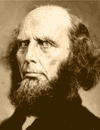
Every requirement, then, the spirit of which we have not, is to us a yoke of bondage.
 Charles Finney
in Gospel Liberty
Read in context
The rest which Christ promises is promised to those who take upon them his yoke, and learn of him.
Edward Payson
in Sinners in Zion Described and Doomed.
Read in context
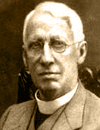
Let us know the destruction of every yoke of bondage, by wearing the one yoke that He places upon us.
 G. Campbell Morgan
in 'Ye Leave the Commandment of God, and Hold Fast the Tradition of Men' Mar 7:8
Read in context
What Scripture says
- Matthew 11:28 Come to Me, all you who are weary and burdened, and I will give you rest
- Matthew 11:29 Take My yoke upon you and learn from Me
- Matthew 11:30 My yoke is easy and My burden is light
- John 4:34 My food is to do the will of Him who sent Me
- John 6:38 not to do My own will, but to do the will of Him who sent Me
- Romans 6:18 set free from sin and slaves to righteousness
- 1 John 5:3 His commandments are not burdensome
- Lamentations 3:27 good for a man to bear the yoke while he is still young
- Matthew 23:4 heavy, burdensome loads laid on men's shoulders
- Acts 15:10 a yoke that neither we nor our fathers have been able to bear
- Galatians 5:1 do not be encumbered once more by a yoke of slavery
How this page is made: the quotes are taken word for word from sermons on SermonIndex and checked against them by program before the page is published. The transcripts of audio and video sermons are machine-made, so follow the link to hear the words as they were spoken. The answer above the quotes is an overview with its sources listed; it is not a statement of doctrine by SermonIndex.