
The kingship of Christ is His rule as the King God has appointed: promised by the prophets, born King of the Jews, rejected and crucified under that title, and exalted to the Father's right hand with all authority. The preachers quoted here explain what kind of King He is, why He cannot be taken as Saviour and refused as King, how He rules in the hearts of His people, and how every knee will bow to Him.
The kingship of Christ is His rule as the King God has appointed. He was promised by the prophets, born King of the Jews, rejected and crucified under that title, raised and exalted to the Father's right hand, and given all authority in heaven and on earth. He rules now in the hearts of those who submit to Him, and He will come again with a name written on His robe: "KING OF KINGS AND LORD OF LORDS." (Revelation 19:16). Edward Payson said, "Of this kingdom, our Saviour, who was born as a child and given us as a Son, is appointed Sovereign, and hence he is styled the King of Kings, and the Lord of lords."1
The King God has installed
The second Psalm shows the nations in revolt. "Why do the nations rage and the peoples plot in vain?" (Psalm 2:1). "The kings of the earth take their stand and the rulers gather together, against the LORD and against His Anointed One:" (Psalm 2:2). God's answer is not to argue with them. He says, "I have installed My King on Zion, upon My holy mountain." (Psalm 2:6). G. Campbell Morgan wrote, "Christ's right to Kingship rests upon the bedrock of character."2 He went on, "He and He alone is King by Divine right, because He is holy, He is true."3
The King does not take the crown for Himself. It is given. Thomas Brooks wrote, "The sceptre is given into his hand, and the crown is put upon his head, and the key of government is laid upon his shoulder by God himself."4 The Father says to the Son, "Ask Me, and I will make the nations Your inheritance, the ends of the earth Your possession." (Psalm 2:8).
The King the prophets promised
Isaiah saw a child who would carry the government. "For unto us a child is born, unto us a son is given, and the government will be upon His shoulders. And He will be called Wonderful Counselor, Mighty God, Everlasting Father, Prince of Peace." (Isaiah 9:6). He adds, "Of the increase of His government and peace there will be no end." (Isaiah 9:7).
The promise was tied to David's house, which seemed to have come to nothing. Isaiah speaks of a shoot from the stump of Jesse. A.B. Simpson said, "The idea is that the family of David was to pass into decay like an old rotting stem, and out of the ruin was to spring a shoot who should become the heir of David's house and throne."5 The angel told Mary of her son, "The Lord God will give Him the throne of His father David," (Luke 1:32) and "His kingdom will never end!" (Luke 1:33).
Born a King
Magi came from the east to Jerusalem, asking, "Where is the One who has been born King of the Jews?" (Matthew 2:2). Horatius Bonar said, "The simple visible cause was the statement of the wise men that one had been born King of the Jews."6 It should have been welcome. Bonar added, "A king born to Jerusalem; this was a good report, even had it afterwards turned out untrue."6
Instead the city was troubled. Alexander Maclaren wrote, "The Magi had naturally made straight for the capital, expecting to find the new-born King there, and His city jubilant at His birth."7
The lowly King
Zechariah told Jerusalem how her King would come. "Rejoice greatly, O Daughter of Zion! Shout in triumph, O Daughter of Jerusalem! See, your King comes to you, righteous and victorious, humble and riding on a donkey, on a colt, the foal of a donkey." (Zechariah 9:9). When Jesus rode into the city on the colt, the crowds cried, "Hosanna to the Son of David!" (Matthew 21:9). Charles Spurgeon said, "The patient ass he prefers to the noble charger; and he is more at home with the common people than with the great."8 He also said, "With half an eye every one can see that this King is of another sort from common princes, and his dignity of another kind from that which tramples on the poor."8
From the road He went to the temple. "Then Jesus entered the temple courts" (Matthew 21:12). Spurgeon said, "He was a spiritual king, and therefore he went not to the palace temporal but to the palace spiritual."9 Maclaren wrote of the same day, when Jesus wept over the city, "That is our King; a pauper King, a meek and patient King, a King that delights in the reverent love of hearts, a King whose armies have no swords, a King whose eyes fill with tears as He thinks of men's woes and cries."10 He asked, "Do you count it your highest honour if He will use you and your possessions, and condescend to say that He has need of such poor creatures as we are?"11
Before Pilate
The charge against Jesus at His trial was that He claimed to be a king. Pilate asked Him, "Are You the King of the Jews?" (John 18:33). Maclaren wrote, "The so-called trial of Jesus by the rulers turned entirely on his claim to be Messias; His examination by Pilate turns entirely on His claim to be king."12 Spurgeon said, "Jesus did not look much like a king as he stood before Pilate; there was little enough of the robes of royalty about his simple apparel."13
Jesus did not deny the title. He explained it. "My kingdom is not of this world; if it were, My servants would fight to prevent My arrest by the Jews." (John 18:36). When Pilate pressed Him, He said, "For this reason I was born and have come into the world, to testify to the truth. Everyone who belongs to the truth listens to My voice." (John 18:37). Maclaren wrote of Pilate, "He knows perfectly well that the Roman power has nothing to fear from this King, whose kingdom rested on His witness to the Truth."14 He also wrote, "The solemn revelation to Pilate of the true nature of His kingdom and of Himself the King fell on careless ears."15
Maclaren warned, "There are plenty of Pilates to-day who judge and misjudge the King of Israel."16
Crowned with thorns
The soldiers turned the claim into sport. "The soldiers twisted together a crown of thorns, set it on His head, and dressed Him in a purple robe." (John 19:2). "And they went up to Him again and again," (John 19:3) mocking Him as King of the Jews.
Over the cross Pilate set the charge: "JESUS OF NAZARETH, THE KING OF THE JEWS." (John 19:19). Spurgeon said, "Writing these words with his own hand, he refused to alter them: 'Jesus of Nazareth the King of the Jews' must stand over the cross, whether the high priests rage or submit."17
The cross was not the end of His kingship but the ground of it. Maclaren wrote, "On His head are many crowns; but, however many they be, they all grow out of the crown of thorns."18 He went on, "The true kingship is absolute command over willingly submitted spirits; and it is His death which bows us before Him in raptures of glad love which counts submission, liberty, and sacrifice blessed."19 In another place he wrote, "Cast your crowns before Him, princes and all judges of the earth, for He is King by right of the crown of thorns!"20
We do not want this man
Jesus told a parable about this rejection. A nobleman, He said, "went to a distant country to lay claim to his kingship and then return." (Luke 19:12). Brooks wrote of it, "The nobleman in this parable is our Lord Jesus Christ, who is truly and highly noble, he being coeternal and co-equal with his Father, in respect of his deity; he was born a king, and is now King of kings, and Lord of lords, and Prince of the kings of the earth."21 Jesus went on, "But his subjects hated him and sent a delegation after him to say, 'We do not want this man to rule over us.'" (Luke 19:14).
At Pilate's judgment seat the chief priests made the same refusal in other words. When Pilate asked whether he should crucify their King, they answered, "We have no king but Caesar" (John 19:15). Payson said of those whom Satan holds captive, "Their language concerning the Son of God is, We will not have this man to reign over us."22 G. Campbell Morgan said, "But the supreme difficulty is that men are perverse; that they are still saying, We will not have this man to reign over us."23
There is no middle ground. Stephen Charnock wrote, "The world is made up of receivers of Christ or rejecters of him, true subjects to God or rebels against him."24 Spurgeon said, "There is rebellion in this; for we rebel against God when we reject Christ."25
Exalted to the right hand
The one men rejected God raised and enthroned. "And being found in appearance as a man, He humbled Himself and became obedient to death— even death on a cross." (Philippians 2:8). "Therefore God exalted Him to the highest place and gave Him the name above all names," (Philippians 2:9). Peter told the crowd at Pentecost, "God has made this Jesus, whom you crucified, both Lord and Christ!" (Acts 2:36). Arthur T. Pierson wrote, "If there were seven steps downward in humiliation, there are seven upward in exaltation, until beneath His feet every knee shall bow in homage, and every tongue confess His universal Lordship."26
David had heard the Lord say to his Lord, "Sit at My right hand until I make Your enemies a footstool for Your feet." (Psalm 110:1). Maclaren wrote, "The Captain of our salvation sits at the right hand of God, expecting till His enemies be made His footstool."27 Spurgeon said, "Christ, when he sits down, expects his enemies to be made his footstool."28
The exalted King has not changed in character. Jonathan Edwards said, "Though Christ be now at the right-hand of God, exalted as King of heaven, and Lord of the universe, yet as he still is in the human nature, he still excels in humility."29
All authority
Before He sent His disciples into the world, Jesus said, "All authority in heaven and on earth has been given to Me." (Matthew 28:18). Maclaren wrote of that word, "And so the hands that were pierced with the nails wield the sceptre of the Universe, and on the brows that were wounded and bleeding with the crown of thorns are wreathed the many crowns of universal Kinghood."30
Paul says that God "put everything under His feet and made Him head over everything for the church" (Ephesians 1:22). Edwards said, "God has given him all power in heaven and in earth, to give eternal life to whomsoever comes to him."31
His people may take comfort in this. J.C. Philpot said, "This aspect of the exaltation of the Lord Jesus as the enthroned King of Zion is a blessed subject of meditation when we consider its bearing upon the helpless, defenceless condition of the church of God."32
Prince and Saviour
The apostles preached that "God exalted Him to His right hand as Prince and Savior" (Acts 5:31). The two titles are not to be pulled apart. Thomas Manton wrote, "Christ is such a saviour that he is also a prince, such a prince that he is also a saviour; and in this compounded notion must we represent him to our souls."33
F.B. Meyer said, "We are willing enough to take Him as Saviour; we hesitate to make Him King."34 A.A. Hodge wrote, "It is impossible to accept Christ as our Sacrifice and Priest without at the same time cordially accepting him as our Prophet, absolutely submitting our understanding to his teaching, and accepting him as our King, submitting implicitly our hearts and wills and lives to his sovereign control."35
The psalm of the King is also the psalm of the Priest. God has sworn to Him, "You are a priest forever in the order of Melchizedek." (Psalm 110:4). Maclaren wrote, "The conquering King whom the psalm hymns is a Priest for ever; and He is followed by an army of priests."36 The work of Christ as High Priest is set out on its own page.
The King in the heart
Payson said of Christ's rule, "But in addition to this mediatorial kingdom of Christ, which is set up in the world, he has another kingdom, the kingdom of his grace, which is set up in the hearts of his people."1 He went on, "Here Christ reigns supreme, enthroned in the soul, casting down proud imaginations and every high thing that exalteth itself against the knowledge of God, and bringing into captivity every thought to the obedience of himself."1 Paul says that God "has rescued us from the dominion of darkness and brought us into the kingdom of His beloved Son" (Colossians 1:13). Spurgeon said, "The king's laws are not promulgated by mouth of herald, but are written upon the heart."9 He went on, "The human will is subdued to obedience, the human heart is moulded to Christ's image, his desire becomes the desire of his subjects, his glory their chief aim, and his law the very delight of their souls."9
Simpson wrote, "The King that reigns supreme upon the throne of the heart will sway His scepter around the whole circle of our life, and bring into subjection everything that hurts or hinders us."37
This is where the King is most resisted. James Stalker wrote, "Most vital of all is the acknowledgment of Christ's kingship in the realm of the individual life; but it is here that His will is most resisted."38 Alexander Whyte wrote as a prayer, "Let me henceforth seat Christ, my Redeemer and my King, in the very throne of my heart, and then keep every gate of my body and every avenue of my mind as all not any more mine own but His."39
Submitting to the King
To call Christ King and not obey Him is the soldiers' mockery over again. Jesus asked, "Why do you call Me 'Lord, Lord,' but not do what I say?" (Luke 6:46). Manton wrote, "Christ is never received as king but where his will is obeyed, otherwise we mock him with an empty title."40 Spurgeon said, "He is no dead King whose memory we are bidden to embalm, but a living Leader and Commander whose behests we must obey, whose honor we must defend."41
His yoke is not a tyrant's yoke. He says, "Take My yoke upon you and learn from Me; for I am gentle and humble in heart, and you will find rest for your souls." (Matthew 11:29). "For My yoke is easy and My burden is light." (Matthew 11:30). Hugh Binning wrote, "There is no yoke so reasonable, if you consider it as imposed by Christ our King and Lawgiver."42 Spurgeon said, "He has supremacy, but it is the superiority of a wise and tender shepherd over his needy and loving flock; he commands and receives obedience, but it is the willing obedience of the well-cared-for sheep, rendered joyfully to their beloved Shepherd, whose voice they know so well."43 He added, "His service is perfect freedom; to be his subject is to be a king; to serve him is to reign."44
The King's people are known by His likeness. Brooks wrote, "Holiness is King Jesus his livery, by which all his subjects and servants are known and differenced from all other persons in the world."45
He must reign
Paul looks to the end. "Then the end will come, when He hands over the kingdom to God the Father after He has destroyed all dominion, authority, and power." (1 Corinthians 15:24). "For He must reign until He has put all His enemies under His feet." (1 Corinthians 15:25). "The last enemy to be destroyed is death." (1 Corinthians 15:26).
In a sermon on this text Payson said, "The kingdom which Christ is here represented as delivering up to his Father, is not that which he originally possessed as God."46 He went on, "In this respect, he and his Father are one, and possess the same kingdom; and this kingdom he neither will nor can resign, though he may for a time suspend the exercise of his divine authority."46 Then the Son will be made subject "so that God may be all in all." (1 Corinthians 15:28). Payson also said, "The laws of this extensive kingdom are recorded in the gospel."46 "The subjects of it may be divided into two grand classes, those who are obedient, and those who are rebellious."46
The King who is coming
John saw heaven opened. "Then I saw heaven standing open, and there before me was a white horse. And its rider is called Faithful and True. With righteousness He judges and wages war." (Revelation 19:11). "He has eyes like blazing fire, and many royal crowns on His head." (Revelation 19:12). Maclaren wrote, "The King of Kings who rides forth conquering is clothed in a vesture dipped in blood."47 In another place he wrote, "The Saviour that comes a King is the Saviour that has been here and was crucified."48 Spurgeon said, "We must never forget this, and if ever we are tempted to merge the crucified Saviour in the coming King we should feel rebuked by the fact that thus we should rob our Lord of his highest honour."49
Every knee will bow to Him. "that at the name of Jesus every knee should bow, in heaven and on earth and under the earth," (Philippians 2:10). "and every tongue confess that Jesus Christ is Lord, to the glory of God the Father." (Philippians 2:11). Thomas Goodwin wrote, "Christ will have, not only every knee to bow, but every tongue to confess his name."50
Where preachers differ
Preachers on this site agree that Christ is now exalted at the Father's right hand with all authority, that He rules in the hearts of His people, and that He will come again in glory. They differ on how the promise of David's throne in Isaiah 9 and Luke 1 is fulfilled, and on the thousand years of Revelation 20.
Some hold that the promises of His government are being fulfilled in this age as He reigns from the Father's right hand. Payson, in his sermon on the titles of Christ, applied Isaiah's words that there will be no end to the increase of His government to the kingdom of grace that Christ now sets up in the hearts of His people.
Others hold that His reign on David's throne over the earth waits for His return. J.C. Ryle, in his sermon Occupy Till I Come, taught that Christ's kingdom in this world is not yet set up and will be set up when He comes again.
Some preachers spoke of both. Spurgeon said of Christ's present rule, "At this day the government is upon his shoulders, and his name is the Mighty God, the Everlasting Father."51 In another sermon he said of Christ as the Shepherd of His church, "He is at this moment King in Zion, ruling, and overruling, present everywhere, and everywhere showing himself strong in the defense of his saints."52 In that same sermon he also looked forward to the day when the King will reign upon the earth.
This page does not decide between them. Both sides call every hearer to bow to Christ as King now.
Kiss the Son
The second Psalm ends with counsel to the rebels. "Therefore be wise, O kings; be admonished, O judges of the earth." (Psalm 2:10). "Serve the LORD with fear, and rejoice with trembling." (Psalm 2:11). "Kiss the Son, lest He be angry and you perish in your rebellion, when His wrath ignites in an instant. Blessed are all who take refuge in Him." (Psalm 2:12). Payson said, "To those of you who refuse to submit to Christ, this is an awful and alarming subject."46
The warning and the blessing stand side by side in one verse. The King who will one day be confessed by all receives now all who take refuge in Him.
- Edward Payson, "Titles of Christ" (sermon).
- G. Campbell Morgan, Writings of G Campbell Morgan - Volume 1, "The philadelphia letter".
- G. Campbell Morgan, Writings of G Campbell Morgan - Volume 1, "The philadelphia letter".
- Thomas Brooks, Writings of Thomas Brooks, "Volume 5".
- A.B. Simpson, "Isaiah Chapter 9 the King of Righteousness and Peace" (sermon).
- Horatius Bonar, "Jesus the Troubler of Jerusalem" (sermon).
- Alexander Maclaren, Expositions Of Holy Scripture A, "The first-fruits of the gentiles".
- C.H. Spurgeon, "The Lowly King" (sermon).
- C.H. Spurgeon, "The Triumphal Entry Into Jerusalem" (sermon).
- Alexander Maclaren, Expositions Of Holy Scripture D, "A royal progress".
- Alexander Maclaren, Expositions Of Holy Scripture D, "A royal progress".
- Alexander Maclaren, Expositions Of Holy Scripture D, "Christ and pilate: the true king and his counterfeit".
- C.H. Spurgeon, Gospel of the Kingdom, "Matthew 27:11-26".
- Alexander Maclaren, Expositions Of Holy Scripture B, "'see thou to that!'".
- Alexander Maclaren, Expositions Of Holy Scripture St John Chaps Xv To Xxi, "Art thou a king?".
- Alexander Maclaren, Expositions Of Holy Scripture D, "Christ and pilate: the true king and his counterfeit".
- C.H. Spurgeon, Only a Prayer Meeting, "Chapter Eighteen: Write the Name of Jesus on All Your Crosses".
- Alexander Maclaren, Expositions Of Holy Scripture B, "The crucifixion".
- Alexander Maclaren, Expositions Of Holy Scripture B, "The crucifixion".
- Alexander Maclaren, Expositions Of Holy Scripture I, "'other sheep'".
- Thomas Brooks, Writings of Thomas Brooks, "Volume 4".
- Edward Payson, "Christ's Victory Over Satan" (sermon).
- G. Campbell Morgan, "The Existing Anarchy" (sermon).
- Stephen Charnock, Writings of Stephen Charnock, "A discourse of self-examination".
- Charles Haddon Spurgeon, Spurgeon's Sermons Volume 04: 1858, "Human Responsibility".
- Arthur T. Pierson, Writings of Arthur T Pierson - Volume 1, "Chapter xxiv last looks, backward and forward".
- Alexander Maclaren, Expositions Of Holy Scripture J, "Soldier priests".
- C.H. Spurgeon, Spurgeons Sermons Volume 18 1872, "The Only Atoning Priest".
- Jonathan Edwards, "The Excellency of Jesus Christ" (sermon).
- Alexander Maclaren, Expositions Of Holy Scripture B, "On the mountain".
- Jonathan Edwards, "Safety, Fulness, and Sweet Refreshment, to Be Found in Christ" (sermon).
- J.C. Philpot, "King of Kings" (sermon).
- Thomas Manton, The Works of Thomas Manton, D.D. Vol. XX, "Sermon xii".
- F.B. Meyer, "Where Am I Wrong?" (sermon).
- A.A. Hodge, Writings of A A Hodge, "Lecture 12 - the kingly office of christ".
- Alexander Maclaren, Expositions Of Holy Scripture J, "Soldier priests".
- A.B. Simpson, The Holy Spirit, "The holy spirit in ezekiel".
- James Stalker, The Trial and Death of Jesus Christ, "Chapter vii. the crown of thorns".
- Alexander Whyte, Bunyan Characters, "The City of Mansoul and its Cinque Ports".
- Thomas Manton, The Complete Works of Thomas Manton, D.D. Vol. I, "Thy will be done in earth, as it is in heaven".
- C.H. Spurgeon, Spurgeons Sermons Volume 10 1864, "Christ is Glorious--Let Us Make Him Known".
- Hugh Binning, The Works Of The Rev Hugh Binning, "Sermon VII. |Take my yoke upon you, and learn of me,| &c".
- C.H. Spurgeon, Spurgeons Sermons Volume 10 1864, "Christ is Glorious--Let Us Make Him Known".
- C.H. Spurgeon, Spurgeons Sermons Volume 10 1864, "Christ is Glorious--Let Us Make Him Known".
- Thomas Brooks, Writings of Thomas Brooks, "Volume 4".
- Edward Payson, "Christ a King" (sermon).
- Alexander Maclaren, Expositions Of Holy Scripture I, "'other sheep'".
- Alexander Maclaren, Expositions Of Holy Scripture E, "The dying thief".
- C.H. Spurgeon, Farm Sermons, "The Corn of Wheat Dying to Bring Forth Fruit".
- Thomas Goodwin, Works of Thomas Goodwin - Volume 1, "Chapter IV (Revelation 6)".
- C.H. Spurgeon, Spurgeons Sermons Volume 10 1864, "A Mystery! Saints Sorrowing and Jesus Glad!".
- C.H. Spurgeon, Spurgeons Sermons Volume 10 1864, "Christ is Glorious--Let Us Make Him Known".
In their own words
Each line below is quoted exactly from a sermon on this site. Follow the link to hear or read it where it was said.
Of this kingdom, our Saviour, who was born as a child and given us as a Son, is appointed Sovereign, and hence he is styled the King of Kings, and the Lord of lords.
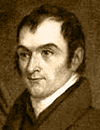 Edward Payson
in Titles of Christ.
Read in context
But in addition to this mediatorial kingdom of Christ, which is set up in the world, he has another kingdom, the kingdom of his grace, which is set up in the hearts of his people.
Edward Payson
in Titles of Christ.
Read in context
Here Christ reigns supreme, enthroned in the soul, casting down proud imaginations and every high thing that exalteth itself against the knowledge of God, and bringing into captivity every thought to the obedience of himself.
Edward Payson
in Titles of Christ.
Read in context
The idea is that the family of David was to pass into decay like an old rotting stem, and out of the ruin was to spring a shoot who should become the heir of David's house and throne.
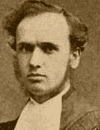 A.B. Simpson
in Isaiah Chapter 9 the King of Righteousness and Peace
Read in context
The simple visible cause was the statement of the wise men that one had been born King of the Jews.
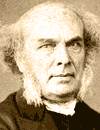 Horatius Bonar
in Jesus the Troubler of Jerusalem
Read in context
A king born to Jerusalem; this was a good report, even had it afterwards turned out untrue.
Horatius Bonar
in Jesus the Troubler of Jerusalem
Read in context
The patient ass he prefers to the noble charger; and he is more at home with the common people than with the great.
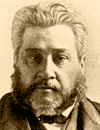 C.H. Spurgeon
in The Lowly King
Read in context
With half an eye every one can see that this King is of another sort from common princes, and his dignity of another kind from that which tramples on the poor.
C.H. Spurgeon
in The Lowly King
Read in context
He was a spiritual king, and therefore he went not to the palace temporal but to the palace spiritual.
C.H. Spurgeon
in The Triumphal Entry Into Jerusalem
Read in context
The king's laws are not promulgated by mouth of herald, but are written upon the heart.
C.H. Spurgeon
in The Triumphal Entry Into Jerusalem
Read in context
The human will is subdued to obedience, the human heart is moulded to Christ's image, his desire becomes the desire of his subjects, his glory their chief aim, and his law the very delight of their souls.
C.H. Spurgeon
in The Triumphal Entry Into Jerusalem
Read in context
Their language concerning the Son of God is, We will not have this man to reign over us.
Edward Payson
in Christ's Victory Over Satan.
Read in context
But the supreme difficulty is that men are perverse; that they are still saying, We will not have this man to reign over us.
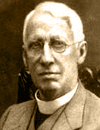 G. Campbell Morgan
in The Existing Anarchy
Read in context
Though Christ be now at the right-hand of God, exalted as King of heaven, and Lord of the universe, yet as he still is in the human nature, he still excels in humility.
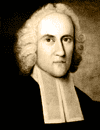 Jonathan Edwards
in The Excellency of Jesus Christ
Read in context
God has given him all power in heaven and in earth, to give eternal life to whomsoever comes to him.
Jonathan Edwards
in Safety, Fulness, and Sweet Refreshment, to Be Found in Christ
Read in context
This aspect of the exaltation of the Lord Jesus as the enthroned King of Zion is a blessed subject of meditation when we consider its bearing upon the helpless, defenceless condition of the church of God.
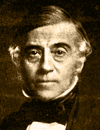 J.C. Philpot
in King of Kings
Read in context
We are willing enough to take Him as Saviour; we hesitate to make Him King.
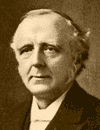 F.B. Meyer
in Where Am I Wrong?
Read in context
The kingdom which Christ is here represented as delivering up to his Father, is not that which he originally possessed as God.
Edward Payson
in Christ a King.
Read in context
In this respect, he and his Father are one, and possess the same kingdom; and this kingdom he neither will nor can resign, though he may for a time suspend the exercise of his divine authority.
Edward Payson
in Christ a King.
Read in context
The laws of this extensive kingdom are recorded in the gospel.
Edward Payson
in Christ a King.
Read in context
The subjects of it may be divided into two grand classes, those who are obedient, and those who are rebellious.
Edward Payson
in Christ a King.
Read in context
To those of you who refuse to submit to Christ, this is an awful and alarming subject.
Edward Payson
in Christ a King.
Read in context
What Scripture says
- Psalm 2:6 I have installed My King on Zion, upon My holy mountain
- Psalm 2:12 Kiss the Son ... Blessed are all who take refuge in Him
- Psalm 110:1 Sit at My right hand until I make Your enemies a footstool for Your feet
- Isaiah 9:7 of the increase of His government and peace there will be no end
- Zechariah 9:9 your King comes to you, righteous and victorious, humble and riding on a donkey
- John 18:36 My kingdom is not of this world
- Luke 19:14 We do not want this man to rule over us
- Philippians 2:10 at the name of Jesus every knee should bow
- Matthew 28:18 All authority in heaven and on earth has been given to Me
- 1 Corinthians 15:25 He must reign until He has put all His enemies under His feet
- Revelation 19:16 KING OF KINGS AND LORD OF LORDS
How this page is made: the quotes are taken word for word from sermons on SermonIndex and checked against them by program before the page is published. The transcripts of audio and video sermons are machine-made, so follow the link to hear the words as they were spoken. The answer above the quotes is an overview with its sources listed; it is not a statement of doctrine by SermonIndex.