
The preachers quoted here define surrender as giving oneself up to the power and authority of another: relinquishing one's own power, aims and goals. They insist that partial surrender is compromise, that it is as complete as a death, and that it is understood only by looking at Christ.
The word surrender is not common in the English Bible, but the thing is everywhere. Paul's terms are to yield and to present: "yield yourselves unto God, as those that are alive from the dead" (Romans 6:13); "present your bodies a living sacrifice, holy, acceptable unto God" (12:1).1 James says, "Submit yourselves therefore to God" (James 4:7).
What is surrendered is the self and its right to rule. "My son, give me thine heart" (Proverbs 23:26). Jesus put it without softening: "whosoever he be of you that forsaketh not all that he hath, he cannot be my disciple" (Luke 14:33). The rich young ruler kept everything but that, and went away sorrowful (Mark 10:21-22).
The pattern is Christ in Gethsemane: "not my will, but thine, be done" (Luke 22:42). His surrender was not passive; it was the active choice of the Father's will at the greatest cost. Isaiah's answer to God's call has the same shape: "Here am I; send me" (Isaiah 6:8).
Andrew Murray taught that this is where blessing begins: "the condition of God's blessing is absolute surrender of all into His hands."2 Scripture supports the order. "Humble yourselves therefore under the mighty hand of God, that he may exalt you in due time" (1 Peter 5:6). "Whosoever will lose his life for my sake shall find it" (Matthew 16:25).
Surrender is tested in obedience and in loss. Samuel told Saul, "to obey is better than sacrifice" (1 Samuel 15:22). Job, stripped of everything, said, "the LORD gave, and the LORD hath taken away; blessed be the name of the LORD" (Job 1:21). Paul counted all things loss "for the excellency of the knowledge of Christ Jesus my Lord" (Philippians 3:8).
It is not the loss of personality but its right ordering. Paul's description is the fullest: "I am crucified with Christ: nevertheless I live; yet not I, but Christ liveth in me" (Galatians 2:20).
- Strong's Greek 3936, parístēmi: "to stand beside, i.e. (transitively) to exhibit, proffer, (specially), recommend, (figuratively)...".
- Andrew Murray, Absolute Surrender.
In their own words
Each line below is quoted exactly from a sermon on this site. Follow the link to hear or read it where it was said.
And that word surrender means to give oneself up to the power and authority of another.
 Denny Kenaston
in (Early Anabaptism) Gelassenheit--complete Surrender
Listen at 11:34
To surrender means to relinquish your own power, your own aims, and your own goals.
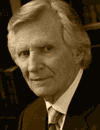 David Wilkerson
in The Surrendered Life
Listen at 2:12
And partial surrender is not surrender, it's compromise.
 Shane Idleman
in The Fully Surrendered Life
Listen at 40:42
This necessary surrender is so complete, so total, so irrevocable, that the only word that can properly describe it is death, death to the self-life.
 Lou Sutera
in Yielding Our Rights
Listen at 41:45
The only way we will ever have an accurate conception of true surrender is to know Christ, to study Christ, to emulate Christ.
 Glenn Meldrum
in (Radical Jesus) 15 Radical Surrender
Listen at 10:24
In literal terms, surrender means to give up something to another person.
David Wilkerson
in Surrender: Giving Back to Jesus
Read in context
Surrender means surrender your worries, your sorrows.
 Corrie Ten Boom
in The Joy of Total Surrender
Listen at 13:56
What Scripture says
- Romans 12:1 present your bodies a living sacrifice
- Romans 6:13 yield yourselves to God
- Luke 22:42 not my will, but yours, be done
- Luke 14:33 whoever forsakes not all that he has cannot be my disciple
- James 4:7 submit yourselves therefore to God
How this page is made: the quotes are taken word for word from sermons on SermonIndex and checked against them by program before the page is published. The transcripts of audio and video sermons are machine-made, so follow the link to hear the words as they were spoken. The answer above the quotes is an overview with its sources listed; it is not a statement of doctrine by SermonIndex.