
Christian pacifism is rooted in the teachings of Jesus Christ, who exemplified a life of nonviolence and love. In Matthew 5:44, He instructs His followers to "love your enemies and pray for those who persecute you," highlighting the radical call to respond to hostility with grace rather than aggression. The Apostle Paul echoes this sentiment in Romans 12:17-19, where he advises believers not to repay evil for evil and reminds them that vengeance belongs to God alone. This biblical perspective challenges the norms of a world often driven by conflict and retaliation. Furthermore, in James 4:1, we are reminded that wars and conflicts arise from desires that battle within us, pointing to the need for inner peace as a precursor to outer peace. The teachings of love and nonresistance, as articulated in sermons like "Love and Nonresistance," delve deeper into how Christians are called to embody Christ's love in a world marred by violence. Ultimately, Christian pacifism invites believers to reflect on the transformative power of love, as seen in 1 John 4:20, where it states that one cannot claim to love God while harboring hatred towards others. Through these scriptures, the call to nonviolence becomes not only a personal conviction but a communal witness to the peace of Christ.
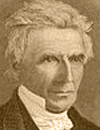
Alexander Campbell delivers a powerful sermon on the Christian perspective on war, emphasizing the moral, spiritual, and practical implications of engaging in armed conflict. He questions the justification for war between Christian nations, highlighting the devastating consequences of war on human l

In this sermon, the speaker discusses the difference between the Old and New Testaments regarding the topic of non-violence. He shares a story about an old colonel in the Austrian army who was confident in winning a battle, but was warned by a prisoner that the town they were attacking had an invinc

Jonathan Dymond preaches about the causes of war, highlighting the impure motives and lack of true patriotism that often lead to conflicts. He questions the glorification of military exploits and challenges the notion of dying for one's country, pointing out the mercenary and criminal aspects of war
Jonathan Dymond preaches about the devastating effects of war, highlighting the intense sufferings, irreparable deprivations, and moral consequences it brings upon society. He emphasizes the immense loss of human life, the financial distress, and the moral degradation that war inflicts on individual