
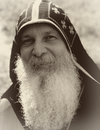
God Do You Hear Me
Mar Mari Emmanuel teaches that God hears prayers when we approach Him intimately as our loving Dad and pray sincerely from the heart.
In this devotional sermon, Mar Mari Emmanuel explores the intimate relationship believers can have with God by addressing Him as 'Dad' in prayer. He emphasizes the importance of praying sincerely from the heart, not merely with words, and explains the symbolic significance of biblical elements like the cedar of Lebanon representing Jesus Christ. The sermon also highlights God's universal love and the invitation extended to all to enter His kingdom.
Full Transcript
How can I know that God can hear what I am praying for? The secret to a healthy prayer is when you invoke firstly that God is your dad. Every time you pray, say, our father who art in heaven. Every time you pray.
So every time you come you want to pray, the key that opens your prayer life where God will definitely hear you is when you say dad, I came to say I love you. Dad, I came to say I'm sorry. Dad is the key to opening that pathway for your prayer to be heard.
Dad, and the Lord taught this, showed this, and he expects us to do so. So when you say daddy, I love you, or when you just say the Lord's prayer, our father, and you probably heard us say this before, the Lord Jesus taught this prayer in Syriac Aramaic, not in Hebrew, in Aramaic. Now, Abon or Awon in Aramaic, the literal transliteration is daddy, not father, because the word father is the formal way of addressing him, but the informal way is dad, not father.
And isn't it so true, whenever you come and speak to your earthly father, do you speak formally or informally? Of course, informally. You don't get up and say, good morning, Mr. Smith. How are you? May I ask you a question? No, you get up and say, hi dad, hey gal mate, give me 10 bucks.
But even though you talk to him informally, but don't lose track, he's your dad. Therefore, speak informally, but with respect and honor, because he's your dad. Honor your father and mother, so that I may bless you and give you long life and abundant one too.
So the key to that prayer to be heard is you invoke the word daddy. And obviously, the Lord promised, I mentioned it earlier, what did the Lord say? I am with you all the days of your life. What does that mean? All, every single moment, every single minute, hour, day, week, month, year, all the time, I'm with you.
So when I'm with you, you better believe that when you talk, I have already heard you. And I, by the way, I knew what you were gonna ask before you even knowing what to ask. So do you think I don't know? Or I don't hear? I hear, but I hear the prayer when it comes from the heart, not the lips.
It comes from the heart, not the lips. A while back, we're talking about when the Lord God ordered King Solomon to build a temple for him. He said to King Solomon, when it comes to building the holy of holies, now in the olden days, the temple, the altar now is equivalent to the holy of holies of the old Testament temple.
We call it the holy altar in the New Testament. It was called the holy of holies. Now the Lord God ordered, demanded of King Solomon to bring the timber from Lebanon to bring cedar.
And Lebanon is famous for the cedar tree. In fact, the cedar tree is even put on the flag of Lebanon. So the Lord said to King Solomon, you bring the cedar from Lebanon.
Yet, there was a lot of trees in Israel just around the corner. It's a long way to go to Lebanon, cut the trees and then transport them all the way to Jerusalem. So logically speaking to King Solomon, it only makes sense if I bring the trees from Israel, from Jerusalem.
Why God, you taking me all the way to Lebanon? He said, because I want you to learn one thing. Lebanon, when you read in the book of Genesis, the original name of Lebanon was Lubna, not Lebanon. The name changed as the time went by to Lebanon, but the original name is still mentioned in Genesis of the Old Testament.
It was called Lubna. Now Lubna, when you go to the Hebrew, which is the original text of the Old Testament, Hebrew, Aramaic, Syriac, same family. Even the Arabic language, they are all called Semitic languages, their family.
So when you go to the original text, Lubna is a compounded word, two words put together, Lubba Dmaria, the heart of the Lord. That's what Lubna means for Lebanon, the heart of the Lord. Now he said to King Solomon, the Lord, bring me cedar and the cedar tree symbolically represents Jesus Christ of Nazareth.
My son is like the cedar of Lebanon. Oh wow. We'll come to it in the Song of Songs.
My son, who is your son? God? Jesus is my son, Jesus Christ. So he is the cedar. Bring the cedar from Lubna, the heart of the Lord.
Why? And use it in the Holy of Holies. What is the Holy of Holies? God says it's my heart for you. And when you come to me every time to pray, if you do not pray from the heart, my heart will not hear you.
When you come to the Lord, you better pray from the heart, not the lips. Because I am the God of hearts, not lip service. I only hear what comes out of your heart.
You know why? Because the lips can deceive and falsify. The heart never lies. When do we cry? When we speak the language of the heart.
They are either the teas of joy or the teas of pain. And both joy and pain are both come from the heart. When we speak the lip service, we can never cry.
And even if we fake it, it will be revealed because what is a lie never lasts. But when it comes from the heart, naturally it comes. And it can be felt by those who are before us.
They will know it. So the Lord says, you when you come to me, pray from the heart, because I am the sacred heart. I am the divine heart.
I am the one who created you on the basis of my love. And when you broke my word, my love was sent forth and died on the cross for you. That is my love.
Speak the language of love. So Lubna is the heart of the Lord. Seda is Jesus Christ, who is the love of the Father.
This is my beloved Son, in whom I am well pleased. To Him you shall listen. This is my beloved.
The love of my life is my Son. He is the Seda. The Seda stands tall 30 meters.
The Seda doesn't rot. The termite doesn't eat it. And the Seda represents the body of Jesus that never rotted in the grave.
He lives forever. The human side lives forever. Does the Lord still have eunuchs in this time? Everyone is chosen from the womb of their mother.
So because the Lord gave that parable, there are some people chosen from the womb. There are some chosen by other people around them. And there are some people force themselves to win the Kingdom of God.
But the Lord chooses everyone. It is up to us to choose Him back. It's like that wedding.
You know, they send you an invitation to go to that wedding. They send everyone the invitation. But not everybody that receives the invitation goes because they're going to say, well, my wages was not that great this week.
I can't pay them. He didn't laugh. Okay.
Imagine like you receive three invitations to weddings. And they're all kind of relatives. But if you go to the three, you'll go bankrupt.
You'll go broke. So whatever you gained all that week, you're going to put it in that wedding. What am I going to eat? How am I going to pay the bills? So you say, well, since I don't, I can't go to this one.
I'm not going to go to any of them. You'll call them and say, oh, I'm really sick. The invitation was sent to every human being to come to the banquet, the wedding of the father.
And it was his son's wedding. He was very happy. His son is getting married.
The father is God, the father, his son is Jesus Christ. Invitation was sent to every human being. Some accepted and came to the invitation.
Some rejected and did not go. So, but everybody's chosen. And so God loved the whole world.
God loves the whole world. He does not differentiate. He doesn't have his own special people or the chosen people of God.
There is no such thing. Everybody is chosen. He loves everyone.
Everyone.
Sermon Outline
-
I
- The importance of addressing God as 'Dad' in prayer
- Jesus taught the Lord's Prayer in Aramaic emphasizing intimacy
- Prayer opens when we come to God with love and respect
-
II
- God hears prayers that come from the heart, not just lips
- The symbolism of cedar from Lebanon representing Jesus
- The Holy of Holies as God's heart and the place of sincere prayer
-
III
- God's love is universal and inclusive to all people
- The parable of the wedding invitation illustrating God's call
- Everyone is chosen but must choose to accept God's invitation
-
IV
- The eternal nature of Jesus as the cedar that does not rot
- The significance of praying with genuine emotion and faith
- Living in the assurance that God is always with us
Key Quotes
“The key to that prayer to be heard is you invoke the word daddy.” — Mar Mari Emmanuel
“I only hear what comes out of your heart.” — Mar Mari Emmanuel
“God loves the whole world. He does not differentiate.” — Mar Mari Emmanuel
Application Points
- Approach God in prayer with the intimate confidence of a child speaking to their loving Dad.
- Ensure your prayers are sincere and come from the heart rather than empty words.
- Accept God's invitation to His kingdom by responding to His love and call.