
Come Back
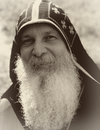
Mar Mari Emmanuel explains that true repentance is a transformative turning away from sin toward God, bringing believers closer to peace but not immediate peace itself.
In this teaching sermon, Mar Mari Emmanuel explores the profound meaning of repentance as a transformative turning away from sin toward God, emphasizing that repentance brings believers closer to peace but not immediate peace. He unpacks key biblical passages from John chapter 3, highlighting the relationship between repentance, faith, and salvation. The sermon also explains the significance of baptism and why Jesus delegated baptism to His disciples. Listeners are encouraged to understand repentance as a vital step on the journey toward spiritual renewal and salvation.
Full Transcript
What is repentance? Is meta neoi? This means more than just remorse. It is a fundamental transformation turning away from sin and toward God. So what is repentance? It is not just feeling remorseful for the wrong things you've done, but it is rather more turning away from sin and facing God.
In other words true repentance is when we hate sin and face God. When we start hating sin, that is a true true repentance. Therefore my beloved, repentance brings you close to peace.
However, repentance does not give you peace, but rather closeness to peace. So when a soul comes and says, I'm sorry God, I'm repenting before you, that doesn't mean that repentant soul received peace from within, but that repentance of that person brought him close to peace. Repentance does not give you peace, but it brings you close to peace.
Now why does repentance, why doesn't it give you peace, but rather give you closeness to peace? Why? You see, when I come to repent, say today, well that's the only time I can really come and repent. So when I come today to repent, I say God please forgive me, I won't do anything wrong today anymore. What happened? That repentance of mine prevented me by the grace of the Lord for not doing anything wrong today.
However, what about the past? All the wrong things I've done, what about them? Today's repentance does not give me peace for the past miseries and the sins I've committed. So whenever I look back and see all the wrong things I've done, I feel depressed, sad, upset, empty, disorientated, even though I repented today, but the past is still haunting me. And also the future.
I repented today, but then I am anxious because I'm not sure if this repentance is going to continue with me in the future. I may fall again. And this insecurity, the unknown of the future, also gives me anxiety and depression.
But for today, I'm okay. Yesterday, I'm not. When I look at it, tomorrow, I'm frightened of it.
I may fall into the same mistake or other mistakes tomorrow as well. That's why repentance does not give you that inner peace, but it gives you closeness to peace. And this is why John the Baptist was baptizing in English.
It's written the way you pronounce it, Aynan. He was baptizing in Aynan near Salem. But the proper pronunciation of the word in Aramaic Syriac is Anion.
It is called Anion. Anion is a compounded word, two words in one. And this Anion, this place was close to a place called Salem.
We'll come to that. That is in John 3.23. So now, therefore, repentance is the negative attitude to salvation. Repentance is the negative attitude to salvation.
What does that mean, negative attitude? Means even though I repented, I repented of negative things, i.e. sins. Since I repented of negative things, those negative things that I am trying to avoid led me to salvation. You're with me? However, faith in Christ is the positive attitude to salvation.
Repentance is the negative attitude to salvation. But faith in Christ is the positive attitude to salvation. Now, when we come to John chapter 3 and verses 27 to 30, we see that John the Baptist begins to put the following.
So John chapter 3 verses 27 to 30, we see John the Baptist begins to put the following. Number one, the general principle, verse 27. In verse 27, John the Baptist, he puts the general principle.
Number two, a reminder in verse 28. Number three, a metaphor in verse 29. And number four, and lastly, decision in verse 30.
So in verse 27, he places the general principle. In verse 28, he places a reminder. In verse 29, he places a metaphor.
And in verse 30, he makes a decision or places a decision there. So now let us come to these verses that we read in John chapter 3 from verses 22 to 30. And let's look at every single verse to understand the very last one.
Verse 30, he must increase and I must decrease. So all we said thus far is an intro to our topic. So let's come to verse 22.
Verse 22, John chapter 3 and verse 22 says, after these things, Jesus and his disciples came into the land of Judea and there he remained with them and baptized. After these things, what is after these things? After the beginning of John chapter 3 from verse 1 to 21. After everything that took place in John 3 from verses 1 to 21, after all that was mentioned in all these 21 verses, verse 22 comes into play.
What happened in John chapter 3 verses 1 to 21? Well, the Lord Jesus is engaged in a conversation or a dialect with somebody called Nicodemus, a member of the Sanhedrin, the 70 elders of the Israelite nation and also a leader of a synagogue. In other words, a very educated, well-informed, well-embedded in the Holy Scriptures. He comes to the Lord Jesus by night and engages into a conversation with the Lord Jesus about being born again, which is the holy baptism, my beloved, the sacrament of baptism, one of the seven sacraments of the true Church of Christ, which is the sacrament of holy baptism, being born again.
That's not our topic but we will address it one day in the near future, so you know how the Holy Bible is truly structured. So the Lord engages with him about baptism, unless one is born again, cannot see the kingdom of God, unless one is born of water and the Spirit, cannot enter the kingdom of God. And then the Lord Jesus goes on and explain all these things and then he comes and says, if anyone believes in the Son of God, he is not condemned, but he who does not believe in him, he is already condemned.
And what is the condemnation? The light came to the world and people chose darkness rather than light because their deeds were evil. So the light came to the world. Who is the light? Christ came to this dark world, but people still chose darkness over the light.
Why? Because their deeds were evil, they didn't want to come to the light, lest their evil deeds be revealed. In other words, they wanted to remain living in sin, they were enjoying it. And until this very day, why people reject Christ, it is not because Christ has done anything wrong, but because people are still choosing to live in sin.
That's why sin is darkness, light is holiness. Darkness hates light, can't stand it, that's why they didn't want to come to the light. So after all these things that the Lord spoke of in 21 verses, it says, after these things Jesus and his disciples came into the land of Judea and there he remained with them unbaptized.
And mind you, the Lord Jesus never baptized himself, never baptized people himself. He led baptism for his disciples, you'll find that in John chapter 4 verse 2. The Lord never baptized people himself, it was the disciples who did it. And you know why? Even though it's not our topic, but I have to mention it.
Because baptism is about death. Baptism is about death and Jesus did not come to kill people, he came to give them life. That's why he let the disciples baptize, not himself.
You with me? Just an information for you. Why Jesus never baptized people? Because baptism is death. Christ came to give life, not death.
Sermon Outline
-
I
- Definition of repentance as turning away from sin and toward God
- Repentance brings closeness to peace, not immediate peace
- Challenges of past sins and future anxieties after repentance
-
II
- Repentance as the negative attitude to salvation
- Faith in Christ as the positive attitude to salvation
- Explanation of John the Baptist's baptism near Salem (Anion)
-
III
- Overview of John 3:1-21 conversation between Jesus and Nicodemus
- Importance of being born again through baptism
- Rejection of light due to evil deeds and preference for darkness
-
IV
- Jesus and disciples baptizing in Judea after John 3:21
- Jesus did not baptize himself but allowed disciples to baptize
- Baptism symbolizes death, Jesus came to give life
Key Quotes
“True repentance is when we hate sin and face God.” — Mar Mari Emmanuel
“Repentance does not give you peace, but it brings you close to peace.” — Mar Mari Emmanuel
“Baptism is about death and Jesus did not come to kill people, He came to give them life.” — Mar Mari Emmanuel
Application Points
- Recognize that repentance is an ongoing process that brings you closer to peace, not instant peace.
- Understand the importance of faith in Christ as the positive response to salvation alongside repentance.
- Embrace baptism as a symbol of dying to sin and receiving new life in Christ.