
A false convert professes to be a Christian, and may sincerely think he is one, but has never been born again. The preachers quoted here set out what Jesus said about such people, the examples Scripture gives, the marks by which a false profession is known, and the call to every professing Christian to examine himself and come to Christ.
A false convert is a person who professes to be a Christian, and often believes that he is one, but has never been born again. He has the name, the words and some of the habits of a believer without the new heart. Jesus said it would be so: "Not everyone who says to Me, 'Lord, Lord,' will enter the kingdom of heaven, but only he who does the will of My Father in heaven." (Matthew 7:21). J.C. Ryle wrote, "The true Christian believes and therefore lives as he does; the mere professor does not believe and therefore is what he is."1 Charles Spurgeon said, "All these metaphors, and many more, go to warn us that there are many professors who are deceived—many that are in Israel, who are not of Israel."2
Jesus said there would be many
The Lord did not speak of a few. He said, "Many will say to Me on that day, 'Lord, Lord, did we not prophesy in Your name, and in Your name drive out demons and perform many miracles?'" (Matthew 7:22). His answer is the most solemn sentence a churchgoer can read: "Then I will tell them plainly, 'I never knew you; depart from Me, you workers of lawlessness!'" (Matthew 7:23). These people prayed, used His name and did religious work. Ryle wrote of that day, "The rottenness of their religion will be exposed and put to shame before the whole world."3 Spurgeon said, "The dead will remain quiet till the Lord sounds the trumpet of resurrection—mere professors will not know that they are making a false profession but will remain at ease in our solemn feasts."4 Ryle wrote of his own time, "Never perhaps since the world began was there such an immense amount of mere outward profession of religion as there is in the present day."5
Weeds among the wheat
In another parable Jesus said that an enemy sowed weeds, which older Bibles call tares, in a field of wheat. The owner would not let his servants pull them up: "Let both grow together until the harvest." (Matthew 13:30). John Bunyan wrote, "The parable of the tares also giveth countenance to this truth: for though it be said the field is the world, yet it is said, the tares were sown even in the church."6 Spurgeon said of those whose faith is only for a time, "It is true the people of temporary faith will creep into the visible church, but they do so on their own responsibility."7 The false and the true can look alike. Spurgeon said of the hypocrite, "To the common observer he is so good a counterfeit that he entirely escapes suspicion."8 He said in another sermon, "The essential difference between the true child of God and the mere professor is not readily to be discovered, even by spiritual minds."9 Ryle drew one encouragement from it: "Hypocrites and sham Christians are indirect evidence that there is such a thing as real grace among men."5
Seed on rocky ground
The parable of the sower describes a hearer who receives the word at once and with joy. "The seed sown on rocky ground is the one who hears the word and at once receives it with joy." (Matthew 13:20). Then the Lord adds, "But since he has no root, he remains for only a season. When trouble or persecution comes because of the word, he quickly falls away." (Matthew 13:21). Spurgeon preached a whole sermon on this hearer. He said, "The seed on the stony ground did not fail in the sprouting, nor in the blade which appeared above—it had no root."10 He traced the lack of root to a heart that had never been broken: "These people with the unbroken heart had gladsome hopes and joyful confidences, but they all came to an end, as they will do in your case and mine if we are strangers to contrition."10 Jonathan Edwards wrote, "The seed that is sown in stony places, though it seem to flourish at present, yet as the sun shall rise with a burning heat, will wither away."11 A.W. Pink wrote, "There is the stony-ground hearer, who received the Word with joy, yet falls away in time of persecution."12 The parable puts the failure in the root. It does not put it in the first joy.
Simon the sorcerer
The book of Acts gives a case from the first days of the church. In Samaria a man who had practised sorcery heard Philip preach. "Even Simon himself believed and was baptized. He followed Philip closely and was astounded by the great signs and miracles he observed." (Acts 8:13). Yet when he offered the apostles money for the power to give the Spirit, Peter told him, "You have no part or share in our ministry, because your heart is not right before God." (Acts 8:21). Matthew Henry's commentary says on the passage, "It is possible for a man to continue under the power of sin, yet to put on a form of godliness."13 Spurgeon said, "There is a temporary faith which believes Jesus in a sense, and after its own way of understanding him, or rather of misunderstanding him."7
Judas among the twelve
The plainest example stood closest to Christ. Jesus said to His disciples, "Have I not chosen you, the Twelve? Yet one of you is a devil!" (John 6:70). John says of Judas, "he was a thief" (John 12:6). Spurgeon said, "Judas preached the Gospel and yet Judas was a son of perdition and is lost forever."14 He drew the lesson for every church: "Until we come to Heaven itself we shall always discover necessity for the work of self-examination."4 Gifts, office and nearness to holy things are no proof of grace.
A form without the power
Paul describes people "having a form of godliness but denying its power." (2 Timothy 3:5). The Lord said to the church in Sardis, "you have a reputation for being alive, yet you are dead." (Revelation 3:1). Long before, He had said through Isaiah, "These people draw near to Me with their mouths and honor Me with their lips, but their hearts are far from Me." (Isaiah 29:13). George Whitefield preached on the man who is almost a Christian. He said, "An almost Christian, if we consider him in respect to his duty to God, is one that halts between two opinions; that wavers between Christ and the world; that would reconcile God and Mammon, light and darkness, Christ and Belial."15 He summed him up: "In short, he is fond of the form, but never experiences the power of godliness in his heart."15 John Wesley preached on the almost Christian too. He said, "A second thing implied in the being almost a Christian, is, the having a form of godliness; of that godliness which is prescribed in the gospel of Christ; the having the outside of a real Christian."16 Octavius Winslow wrote, "A bare notionalist, a mere theorist, an empty professor of religion, is a fearful deception."17
The heart has never been changed
What the false convert lacks is inward. "For man sees the outward appearance, but the LORD sees the heart." (1 Samuel 16:7). Spurgeon compared the hypocrite to a rush growing in the mire. He said, "The reed is hollow and has no heart—and the hypocrite has none either—and lack of heart is fatal, indeed."18 John Owen wrote of believers being rooted in love, "The want hereof is the cause that we have so many fruitless professors; they have entered the courts of God by profession, but were never planted in his house by faith and love."19 Ryle wrote of the hearer who builds on sand, "He never really breaks off from sin, and casts aside the spirit of this world; he never really lays hold on Christ; he never really takes up the cross; he is a hearer of truth, but nothing more."3
Charles Finney pressed the matter of motive. He held that the true convert and the deceived person may do the same things for different reasons. He wrote, "The true saint leads a moral life from love to holiness; the deceived person from selfish considerations."20 He added, "They may agree in their desires to serve God; the true convert because he loves the service of God, and the deceived person for the reward, as the hired servant serves his master."20 He said plainly, "Those who regard their own interest as supreme, and yet think they have true religion, are deceived."21 He said of those who fear God's judgments without loving Him, "Those who have this fear are supremely selfish, and while they profess to reverence Jehovah, have other gods whom they love and serve."22
Deceived, and not only deceiving
Some false professors know that they are acting a part. Many do not. Paul writes, "If anyone thinks he is something when he is nothing, he deceives himself." (Galatians 6:3). James writes, "Be doers of the word, and not hearers only. Otherwise, you are deceiving yourselves." (James 1:22). Finney distinguished the hypocrite who deceives others from a second class. He said, "The other class is that referred to in the text, who do not deceive others but themselves."23 A.W. Tozer wrote, "It is altogether possible to practice fraud upon our own souls and go deceived to judgment."24 Spurgeon said, "The blindness of the self-deceiver may continue until he finds himself in the tenfold night of eternal perdition."2 Religious activity does not cure it. He said, "The more diligent in service the self-deceiver becomes, the more strong is the net in which his foot is taken."2 Edwards wrote, "A hypocrite may retain his hope without opposition, as long as he lives, the devil never disturbing it, nor attempting to disturb it."25 Spurgeon said of a false peace, "The peace in which multitudes of professors delight themselves is merely peace with their own conscience and not in any sense peace with God."26 Winslow wrote, "It is a fearful thing to attempt to deceive God; and yet how many religionists, unsuspectingly to themselves, are committing this sin!"27 Manton wrote of those whose lives deny what they profess, "To live a falsehood is more than to speak a falsehood; they deceive the world and deceive their own souls."28
How false converts are made
The preachers quoted here lay part of the blame on careless teaching. Tozer said, "We do not mean to do it, but we are so eager to make a convert that we sometimes rush people prematurely into a decision which never goes deep enough."29 Finney wrote of the place of the law in bringing a sinner to Christ, "To overlook this in instructing souls is almost certain to result in false hope, the introduction of a false standard of Christian experience, and to fill the Church with spurious converts."30 He wrote of people who are stirred in every revival and fall back after it, "The truth is, they were deluded at first, by a spurious conversion, in which selfishness never was broken down; and the more they multiply such kind of efforts, the more sure they are to be lost."31 Art Katz wrote, "We are deceived, and we will be deceiving others if we satisfy ourselves with mere verbal acknowledgments alone."32
Known by fruit
Jesus gave the test in the same passage as the warning. "So then, by their fruit you will recognize them." (Matthew 7:20). Paul writes of some in Crete, "They profess to know God, but by their actions they deny Him." (Titus 1:16). James writes, "So too, faith by itself, if it does not result in action, is dead." (James 2:17). Spurgeon said, "Once more—the rush is well taken as an emblem of the mere professor from its bearing no fruit."18 He said, "Throughout the whole life of the hypocrite there is nothing in which he really serves God."18 Bunyan wrote, "There is a fruit among professors that withers, and so never comes to be ripe; a fruit that is smitten in the growth, and comes not to maturity; and this is reckoned no fruit."33 John makes love for other believers a mark: "We know that we have passed from death to life, because we love our brothers. The one who does not love remains in death." (1 John 3:14). Pink wrote, "The one who claims to be a Christian but hates any bearing the image of Christ is to be charged with making a false profession."34 Henry's commentary says of the fig tree that had leaves only, "A false profession commonly withers in this world, and it is the effect of Christ's curse."35
Tested by time and trouble
A false profession often shows itself when it costs something or when the first feeling has gone. Jesus said to those who had believed Him, "If you continue in My word, you are truly My disciples." (John 8:31). Edwards preached on the hypocrite's prayers. He said, "We are often taught, that the seeming goodness and piety of hypocrites is not of a lasting and persevering nature."11 He gave a reason: "Hypocrites never counted the cost of perseverance in seeking God, and of following him to the end of life."11 Henry's commentary says on Job, "A rush growing in fenny ground, looking very green, but withering in dry weather, represents the hypocrite's profession, which is maintained only in times of prosperity."36 Spurgeon said, "The hypocrite prays in his fashion because it is a task allotted to him: the Christian because it is a part of his very life."8
Where preachers differ
When someone who professed faith falls away for good, was he ever a true believer? The preachers on this site do not all answer alike. John writes of some who left the church, "They went out from us, but they did not belong to us." (1 John 2:19). Many read this as the rule for every such case. William Gurnall wrote, "There is no more difference betwixt a hypocrite and an apostate, than betwixt a green apple and a ripe one; come a while hence, and you will see him fall rotten-ripe from his profession."37 Spurgeon said, "The man who is truly united to Christ does not become apostate."38 Henry's commentary says of the warning in Hebrews 6, "Nor does it prove that any one who is made a new creature in Christ, ever becomes a final apostate from him."39
Others hold that the warnings of Hebrews are addressed to real believers, and that some who truly believed do fall away. Richard Watson wrote of the people described in Hebrews 6, "They were enlightened, is said of these apostates, the eyes of your understanding being enlightened, is said of the Ephesians; and being turned from darkness to light is the characteristic of all believers."40 He thought it absurd to make the apostle "describe the falling away from a mere profession unaccompanied with a state of grace, by terms which he is constantly using to describe and characterize a state of grace"41.
Both sides agree on what this page is about. There are people in the churches who have never been converted, a profession without fruit saves no one, and every professing Christian is told to examine himself. The pages on apostasy and on assurance give the two views at more length.
The harm a false profession does
A false profession hurts more than the person who makes it. Spurgeon wrote, "A false profession is one of the worst of lies, since it brings the utmost dishonour upon Christ and His people."42 He said, "A man who professes to be a Christian when he is not hangs out false colors on Sunday, and all through the week he plays the liar's part."43
Examine yourselves
Scripture tells professing Christians to test themselves. "Examine yourselves to see whether you are in the faith; test yourselves." (2 Corinthians 13:5). Peter writes, "strive to make your calling and election sure" (2 Peter 1:10). David prayed, "Search me, O God, and know my heart; test me and know my concerns." (Psalm 139:23). Spurgeon said, "God help us, since it is so easy to be deceived, to search and watch, and look and test, that we are not found castaways at the last!"2 He said to those who fear they may be wrong, "It is much better to be afraid of being wrong than to be indifferent as to what you are."4 Edwards warned that a false hope is hard to give up. He wrote, "True conversion is a rare thing; but that men are brought off from a false hope of conversion, after they are once settled and established in it, and have continued in it for some time, is much more rare."11 That is a reason to ask the question early and honestly, with the Bible open.
Not every failing believer is a false convert
This teaching can be misused. A believer who has sinned, or whose faith is weak, is not shown by that to be a hypocrite. Henry's commentary says on Genesis 20, where Abraham failed, "We must not condemn all as hypocrites who fall into sin, if they do not continue in it."44 Finney wrote, "There is a radical difference between a backslidden Christian and a hypocrite who has gone back from his profession."45 Finney goes on to say that the hypocrite loves the world and enjoys sin when he returns to it. Henry's test is whether a person continues in the sin.
If you find you have been false
To discover that one's religion has been empty is painful, and it is also a mercy. The door is still open. Jesus said, "the one who comes to Me I will never drive away." (John 6:37). Tozer wrote, "Christ can and will save a man who has been dishonest, but He cannot save him while he is dishonest."24 The remedy is to stop pretending and come to Christ as a sinner. Trying harder to look like a Christian does not help.
- J.C. Ryle, "Moses--an Example" (sermon).
- C.H. Spurgeon, "Self-Delusion" (sermon).
- J.C. Ryle, "Expository Thoughts On Matthew - Matthew 7:21-29" (sermon).
- C.H. Spurgeon, "What Is the Wedding Garment" (sermon).
- J.C. Ryle, "Self-Inquiry" (sermon).
- John Bunyan, The Works Of John Bunyan Volumes 1-3, "The strait gate;".
- C.H. Spurgeon, "Believing on Jesus, and Its Counterfeits" (sermon).
- C.H. Spurgeon, "The Touchstone of Godly Sincerity" (sermon).
- Charles Haddon Spurgeon, Spurgeon's Sermons Volume 16: 1870, "The Two Builders And Their Houses".
- C.H. Spurgeon, "The Seed Upon Stony Ground" (sermon).
- Jonathan Edwards, "Hypocrites Deficient in the Duty of Prayer" (sermon).
- A.W. Pink, Writings of A W Pink - Volume 1, "Chapter 25".
- Matthew Henry , Matthew Henrys Concise Commentary On The Bible, "Acts Chapter 8".
- C.H. Spurgeon, Charles Spurgeon Sermons (63 Volumes) Part1 - Volume 1, "Chronicles 35:2 #1513 - Cheer Up-My Comrades".
- George Whitefield, "The Almost Christian. (Acts 26:28)" (sermon).
- John Wesley, "The Almost Christian" (sermon).
- Octavius Winslow, "The Preciousness of God's Word" (sermon).
- C.H. Spurgeon, "A Sermon From A Rush" (sermon).
- John Owen, The Glory of Christ, "Chapter II The Way and Means of the Recovery of Spiritual Decays, and...".
- Charles Finney, "True and False Conversions" (sermon).
- Charles Finney, Writings of Charles Finney - Volume 1, "Selfishness not true religion".
- Charles Finney, "False Professors" (sermon).
- Charles Finney, "Self Deceivers" (sermon).
- A.W. Tozer, "Self-Deception and How to Avoid It" (sermon).
- Jonathan Edwards, "That They Make Persons That Have Them Exceeding Confident That What They Experience…" (sermon).
- Charles Haddon Spurgeon, Spurgeon's Sermons Volume 09: 1863, "Peace By Believing".
- Octavius Winslow, "The Best for God" (sermon).
- Thomas Manton, The Works of Thomas Manton, D.D. Vol. XX, "Sermon iii".
- Aw Tozer, Tozer Speaks To Students, "The Danger of Being Almost Altogether".
- Charles Finney, Writings of Charles Finney - Volume 1, "How to win souls".
- Charles Finney, Writings of Charles Finney - Volume 1, "True submission".
- Art Katz, "(Pdf Book) Apostolic Foundations" (sermon).
- John Bunyan, edited by George Offor, The Works of John Bunyan, Volume 3, "And he came and sought fruit THERSON".
- A.W. Pink, Writings of A W Pink - Volume 1, "Chapter 18".
- Matthew Henry , Matthew Henrys Concise Commentary On The Bible, "Matthew Chapter 21".
- Matthew Henry , Matthew Henrys Concise Commentary On The Bible, "Job Chapter 8".
- William Gurnall, "The Christian in Complete Armour - Part 8" (sermon).
- C.H. Spurgeon, "Living, Loving, Lasting Union" (sermon).
- Matthew Henry , Matthew Henrys Concise Commentary On The Bible, "Hebrews Chapter 6".
- Richard Watson, Theological Institutes, "CHAPTER 25 Extent of the Atonement".
- Richard Watson, Theological Institutes, "CHAPTER 25 Extent of the Atonement".
- C.H. Spurgeon, The Soul Winner, "The Soul-Winner's Life and Work".
- Charles Haddon Spurgeon, Spurgeon's Sermons Volume 16: 1870, "Sincerity And Duplicity".
- Matthew Henry , Matthew Henrys Concise Commentary On The Bible, "Genesis Chapter 20".
- Charles Finney, Writings of Charles Finney - Volume 1, "True & false repentance".
In their own words
Each line below is quoted exactly from a sermon on this site. Follow the link to hear or read it where it was said.
The true Christian believes and therefore lives as he does; the mere professor does not believe and therefore is what he is.
 J.C. Ryle
in Moses--an Example
Read in context
All these metaphors, and many more, go to warn us that there are many professors who are deceived—many that are in Israel, who are not of Israel.
 C.H. Spurgeon
in Self-Delusion
Read in context
The blindness of the self-deceiver may continue until he finds himself in the tenfold night of eternal perdition.
C.H. Spurgeon
in Self-Delusion
Read in context
The more diligent in service the self-deceiver becomes, the more strong is the net in which his foot is taken.
C.H. Spurgeon
in Self-Delusion
Read in context
God help us, since it is so easy to be deceived, to search and watch, and look and test, that we are not found castaways at the last!
C.H. Spurgeon
in Self-Delusion
Read in context
The rottenness of their religion will be exposed and put to shame before the whole world.
J.C. Ryle
in Expository Thoughts On Matthew - Matthew 7:21-29
Read in context
He never really breaks off from sin, and casts aside the spirit of this world; he never really lays hold on Christ; he never really takes up the cross; he is a hearer of truth, but nothing more.
J.C. Ryle
in Expository Thoughts On Matthew - Matthew 7:21-29
Read in context
The dead will remain quiet till the Lord sounds the trumpet of resurrection—mere professors will not know that they are making a false profession but will remain at ease in our solemn feasts.
C.H. Spurgeon
in What Is the Wedding Garment
Read in context
Until we come to Heaven itself we shall always discover necessity for the work of self-examination.
C.H. Spurgeon
in What Is the Wedding Garment
Read in context
It is much better to be afraid of being wrong than to be indifferent as to what you are.
C.H. Spurgeon
in What Is the Wedding Garment
Read in context
Never perhaps since the world began was there such an immense amount of mere outward profession of religion as there is in the present day.
J.C. Ryle
in Self-Inquiry
Read in context
Hypocrites and sham Christians are indirect evidence that there is such a thing as real grace among men.
J.C. Ryle
in Self-Inquiry
Read in context
It is true the people of temporary faith will creep into the visible church, but they do so on their own responsibility.
C.H. Spurgeon
in Believing on Jesus, and Its Counterfeits
Read in context
There is a temporary faith which believes Jesus in a sense, and after its own way of understanding him, or rather of misunderstanding him.
C.H. Spurgeon
in Believing on Jesus, and Its Counterfeits
Read in context
To the common observer he is so good a counterfeit that he entirely escapes suspicion.
C.H. Spurgeon
in The Touchstone of Godly Sincerity
Read in context
The hypocrite prays in his fashion because it is a task allotted to him: the Christian because it is a part of his very life.
C.H. Spurgeon
in The Touchstone of Godly Sincerity
Read in context
The seed on the stony ground did not fail in the sprouting, nor in the blade which appeared above—it had no root.
C.H. Spurgeon
in The Seed Upon Stony Ground
Read in context
These people with the unbroken heart had gladsome hopes and joyful confidences, but they all came to an end, as they will do in your case and mine if we are strangers to contrition.
C.H. Spurgeon
in The Seed Upon Stony Ground
Read in context
The seed that is sown in stony places, though it seem to flourish at present, yet as the sun shall rise with a burning heat, will wither away.
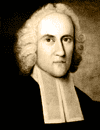 Jonathan Edwards
in Hypocrites Deficient in the Duty of Prayer
Read in context
We are often taught, that the seeming goodness and piety of hypocrites is not of a lasting and persevering nature.
Jonathan Edwards
in Hypocrites Deficient in the Duty of Prayer
Read in context
Hypocrites never counted the cost of perseverance in seeking God, and of following him to the end of life.
Jonathan Edwards
in Hypocrites Deficient in the Duty of Prayer
Read in context
True conversion is a rare thing; but that men are brought off from a false hope of conversion, after they are once settled and established in it, and have continued in it for some time, is much more rare.
Jonathan Edwards
in Hypocrites Deficient in the Duty of Prayer
Read in context
An almost Christian, if we consider him in respect to his duty to God, is one that halts between two opinions; that wavers between Christ and the world; that would reconcile God and Mammon, light and darkness, Christ and Belial.
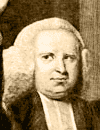 George Whitefield
in The Almost Christian. (Acts 26:28)
Read in context
In short, he is fond of the form, but never experiences the power of godliness in his heart.
George Whitefield
in The Almost Christian. (Acts 26:28)
Read in context
A second thing implied in the being almost a Christian, is, the having a form of godliness; of that godliness which is prescribed in the gospel of Christ; the having the outside of a real Christian.
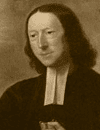 John Wesley
in The Almost Christian
Read in context
A bare notionalist, a mere theorist, an empty professor of religion, is a fearful deception.
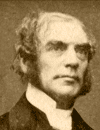 Octavius Winslow
in The Preciousness of God's Word
Read in context
The reed is hollow and has no heart—and the hypocrite has none either—and lack of heart is fatal, indeed.
C.H. Spurgeon
in A Sermon From A Rush
Read in context
Once more—the rush is well taken as an emblem of the mere professor from its bearing no fruit.
C.H. Spurgeon
in A Sermon From A Rush
Read in context
Throughout the whole life of the hypocrite there is nothing in which he really serves God.
C.H. Spurgeon
in A Sermon From A Rush
Read in context
The true saint leads a moral life from love to holiness; the deceived person from selfish considerations.
 Charles Finney
in True and False Conversions
Read in context
They may agree in their desires to serve God; the true convert because he loves the service of God, and the deceived person for the reward, as the hired servant serves his master.
Charles Finney
in True and False Conversions
Read in context
Those who have this fear are supremely selfish, and while they profess to reverence Jehovah, have other gods whom they love and serve.
Charles Finney
in False Professors
Read in context
The other class is that referred to in the text, who do not deceive others but themselves.
Charles Finney
in Self Deceivers
Read in context
It is altogether possible to practice fraud upon our own souls and go deceived to judgment.
 A.W. Tozer
in Self-Deception and How to Avoid It
Read in context
Christ can and will save a man who has been dishonest, but He cannot save him while he is dishonest.
A.W. Tozer
in Self-Deception and How to Avoid It
Read in context
A hypocrite may retain his hope without opposition, as long as he lives, the devil never disturbing it, nor attempting to disturb it.
Jonathan Edwards
in That They Make Persons That Have Them Exceeding Confident That What They Experience…
Read in context
It is a fearful thing to attempt to deceive God; and yet how many religionists, unsuspectingly to themselves, are committing this sin!
Octavius Winslow
in The Best for God
Read in context
We are deceived, and we will be deceiving others if we satisfy ourselves with mere verbal acknowledgments alone.
 Art Katz
in (Pdf Book) Apostolic Foundations
Read in context
There is no more difference betwixt a hypocrite and an apostate, than betwixt a green apple and a ripe one; come a while hence, and you will see him fall rotten-ripe from his profession.
 William Gurnall
in The Christian in Complete Armour - Part 8
Read in context
The man who is truly united to Christ does not become apostate.
C.H. Spurgeon
in Living, Loving, Lasting Union
Read in context
What Scripture says
- Matthew 7:21 not everyone who says Lord, Lord will enter the kingdom
- Matthew 7:23 I never knew you
- Matthew 13:21 the hearer with no root lasts only a season
- Acts 8:21 Simon's heart was not right before God
- 2 Timothy 3:5 a form of godliness without its power
- Titus 1:16 they profess to know God but deny Him by their actions
- James 1:22 hearers only deceive themselves
- Matthew 7:20 by their fruit you will recognise them
- 1 John 2:19 they went out from us, but they did not belong to us
- 2 Corinthians 13:5 examine yourselves to see whether you are in the faith
- John 6:37 the one who comes to Christ is never driven away
How this page is made: the quotes are taken word for word from sermons on SermonIndex and checked against them by program before the page is published. The transcripts of audio and video sermons are machine-made, so follow the link to hear the words as they were spoken. The answer above the quotes is an overview with its sources listed; it is not a statement of doctrine by SermonIndex.