
Worship service is a sacred gathering where believers come together to honor and glorify God, reflecting the biblical mandate found in Psalms 95:6, which calls us to "come, let us bow down in worship, let us kneel before the Lord our Maker." This communal act of worship is not limited to music or prayer; it encompasses the entirety of our lives as living sacrifices, as Paul exhorts in Romans 12:1, urging us to present our bodies as holy and pleasing to God. In worship, we acknowledge the divine presence that permeates our gatherings, as affirmed in Matthew 18:20, where Jesus promises, "For where two or three gather in my name, there am I with them." The concept of a spiritual house, as discussed in 1 Peter 2:5, emphasizes that believers are collectively being built into a spiritual house, a holy priesthood offering spiritual sacrifices acceptable to God. Furthermore, the worship service serves as a reminder of God's omnipresence, as articulated in Psalms 139:7-10, reinforcing that no matter where we are, we can encounter His presence. Engaging in worship is not merely a ritual but a transformative experience that aligns our hearts with God's will, fostering a deeper relationship with Him and with one another.

In this sermon, the speaker discusses the structure of a church service and the different elements that make up the first three hours and the second three hours. The first three hours are dedicated to praise, adoration, and thanksgiving, while the second three hours focus on preparation, supplicatio
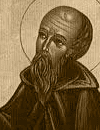
St. Benedict of Nursia outlines a structured order for the Night Office, beginning with a call to open lips in praise to the Lord, followed by the chanting of Psalms, the Ambrosian hymn 'Te Deum,' and additional Psalms with antiphons. The service includes readings from both the Old and New Testament
St. Benedict of Nursia emphasizes the omnipresence of God, reminding believers that the eyes of the Lord are watching over both the good and the evil at all times. He encourages unwavering faith in God's presence, especially during acts of worship and service. St. Benedict urges the congregation to

In this sermon, the speaker emphasizes that we are no longer dealing with shadows, but with the reality of God's desires for us. He highlights the gathering of people from every nation, tribe, town, and people to be built up as a spiritual house and a holy priesthood. The speaker also discusses the