
Eucharist theology delves into the profound significance of the Lord's Supper, a sacrament instituted by Jesus Christ during the Last Supper, as recorded in Luke 22:19-20. This sacred meal serves as a remembrance of Christ's sacrifice, embodying the new covenant established through His blood, as affirmed in Matthew 26:28. The Gospel of John elaborates on this theme, particularly in John 6:51, where Jesus declares, 'I am the living bread that came down from heaven; whoever eats this bread will live forever.' This statement invites believers to partake in a spiritual communion that transcends mere physical consumption, emphasizing the transformative power of faith in Christ. The doctrine of transubstantiation, as discussed in various theological writings, posits that the bread and wine become the actual body and blood of Christ, a belief rooted in the teachings of the early Church. Furthermore, the significance of the Eucharist is echoed in 1 Corinthians 11:26, which states, 'For whenever you eat this bread and drink this cup, you proclaim the Lord's death until he comes.' Thus, Eucharist theology not only reflects on the historical and doctrinal aspects of the sacrament but also calls believers to a deeper understanding of their relationship with Christ and the community of faith.
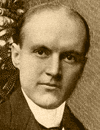
Charles Alexander delves into the profound significance of John's omission of the institution of the Lord's Supper in his gospel, attributing it to inspired deliberation to dispel any notion of carnal efficacy in the bread and wine. He emphasizes Christ's discourse on the Bread of Life in John 6, wh
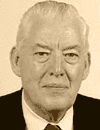
Ian Paisley delivers a sermon exposing the errors of the Church of Rome, particularly focusing on the withholding of the cup from the people during the Holy Sacrament of the Eucharist. He emphasizes the clear biblical evidence that both bread and wine were given by Jesus to His disciples, and challe
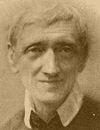
John Cosin, Bishop of Durham, refutes the doctrine of Transubstantiation, showing it to be a novelty not found in Scripture or the writings of the Fathers. He argues that the words of institution clearly indicate that the Bread is given as the Body of Christ, not that it is substantially changed int
John Cosin, Bishop of Durham, preaches about the spiritual presence of Christ in the Sacrament of the Lord's Supper, emphasizing the true and infallible nature of Christ's words in instituting the Eucharist. He explains that the Bread and Wine are consecrated by Christ's words to communicate His ble
J.H. Newman preaches against the doctrine of Transubstantiation, emphasizing that the body of Christ is spiritually received in the Supper of the Lord, not carnally. He refutes the belief that the bread and wine physically change into the body and blood of Christ, highlighting the spiritual nature o

John Chrysostom preaches on the significance of the Last Supper, emphasizing the solemnity and importance of partaking in the body and blood of Christ. He highlights the betrayal of Judas, the need for humility and faith, and the warning against partaking unworthily. Chrysostom stresses the unity be
John Chrysostom preaches about the Jews murmuring at Jesus for claiming to be the Bread of Life from heaven, highlighting their lack of understanding and faith in His divine origin. He explains how Jesus draws people to Himself through the Father and emphasizes the importance of being taught by God

W.H. Griffith Thomas delves into the controversial topic of the Eucharistic sacrifice, exploring various definitions and perspectives on whether the Eucharist is a true sacrifice or a sacrament. He critiques the Tractarian doctrine of a Eucharistic sacrifice, emphasizing the importance of aligning b
W.H. Griffith Thomas delves into the teachings of the Tractarian School, particularly focusing on Eucharistic Adoration and the ambiguity surrounding it. He emphasizes the importance of worshiping our Lord as God during Holy Communion but warns against the dangers of localizing His presence in the e
W.H. Griffith Thomas delves into the historical context and doctrinal changes in the Church of England regarding the Lord's Supper, emphasizing the continuity of anti-Roman and 'Reformed' type teachings from 1549 to the present day. Despite revisions in 1552, 1562, 1604, and 1662, the core doctrine