
Christian mysticism invites believers into a deeper, experiential relationship with God, emphasizing the transformative power of divine love and presence. Scripture encourages this pursuit, as seen in Psalms 46:10, where we are called to 'be still, and know that I am God.' This stillness fosters an intimate communion with the Creator, echoing the teachings of Jesus in John 15:4, where He invites us to 'abide in Me, and I in you.' Mystics like Meister Eckhart and Suso illuminate this path, exploring the profound depths of God's nature and our union with Him. Their writings resonate with the biblical call to holiness, as articulated in 1 Peter 1:16, 'You shall be holy, for I am holy.' The German mystics serve as guides, leading us to understand the precursors of their thought and the rich tradition of seeking God's presence. As we delve into their teachings, we find echoes of the Apostle Paul's exhortation in Philippians 3:10, to 'know Christ and the power of His resurrection.' In embracing Christian mysticism, we embark on a journey that deepens our faith, enriches our spiritual lives, and draws us closer to the heart of God.
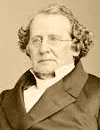
Charles Hodge preaches about the rise of Mysticism and Quietism during different periods in history, highlighting the pursuit of union with God through various means such as negation, abstraction, and disinterested love. Leaders like Molinos, Madame Guyon, and Archbishop Fenelon promoted these movem
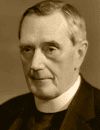
W.R. Inge preaches about Eckhart's teachings on the Godhead, emphasizing the unity and diversity within the Trinity, the eternal nature of God's creation, and the process of detachment from worldly desires to be united with God. Eckhart's focus on love as the principle of all virtues, the importance
W.R. Inge delves into the life and teachings of Meister Eckhart, a prominent philosopher-mystic born in Thuringia. Eckhart's journey in the Dominican Order led him to various leadership roles, including preaching in Strassburg and Cologne. Despite his popularity among devout women and the mystical m
W.R. Inge discusses the life and writings of Henry Suso, a poet and saint born in 1295. Suso's autobiography portrays a vivid romance of saintship, showcasing his whole-hearted devotion to Divine Wisdom and the beauty of his visions. Despite some disturbing accounts of self-inflicted sufferings and
W.R. Inge delves into the teachings of mystics like Eckhart, Luther, and Jacob Bšhme, emphasizing the importance of seeking Christ in the innermost sanctuary of our personal life. The mystics highlight the need for Christ to be not just given for us, but given into us, requiring a reenactment of the
W.R. Inge delves into the history of mysticism, highlighting the evolution of German mysticism from the era of Thomas a Kempis to the strong revival during the thirteenth century. He discusses the rise of charitable orders like the Beguines and Beghards, emphasizing their intense inward religion and
W.R. Inge discusses the religious teachings of German mystics, particularly focusing on John Tauler and his successors Tauler, Suso, and Ruysbroek. Tauler, born around 1300, was influenced by Eckhart's sermons and led a life dedicated to study, preaching, and pastoral work. He had a close relationsh