
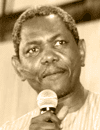
Pathfinders & Pacesetters 3
Gbile Akanni teaches that answering God's call to be pathfinders and pacesetters requires faith, perseverance, and surrendering personal ambitions to fulfill divine purpose in various spheres of life.
In 'Pathfinders & Pacesetters 3,' Gbile Akanni shares powerful testimonies illustrating the challenges and triumphs of responding to God's call. Through real-life examples, the sermon explores themes of faith, perseverance, and surrendering personal ambitions to fulfill divine purposes. Listeners are encouraged to trust God amid fears and opposition, recognizing that different pathways can lead to impactful Christian leadership.
Full Transcript
Living Seed Media brings to you God's Word, which is his comprehensive equipment for changing lives. May the Lord impact your heart as you encounter his Word. For further enquiry or counsel, contact Peace House, PO Box 971, Boko, Benue State, Nigeria.
Telephone numbers 0703 0363659, 0703 7681198. Email address lsmediaatlivingseed.org or visit our website at www.livingseed.org. Let us sit back and listen as the servant of God brings forth the Word of Life. Welcome to today's session and our very last session of Peace Setters and Pathfinders.
And today, this time around, I would like to invite Sister Kimbe from South Africa as our host. That's Sister Kimbe from South Africa. Good evening, good afternoon, good morning, good evening, where are you joining us from? Yes, and my name is Kiwe, as mentioned, I'm joining from South Africa.
I'm a postdoctoral fellow in the Health, Economics, and HIV and AIDS Division. I have a background in psychology, health promotion, and health communication. Right, Dr. Kiwe, you're welcome.
Next, I would like to call on Aqua Apati. Good evening, good afternoon, or good morning, depending on where you're connecting from. As mentioned, I am an IT specialist here in Moscow, and I have my background in electronics engineering from Skolkovo, also here in Moscow.
All right, so without further ado, I think we should go on. This is the last session of this kind, again, this year. It has been wonderful thus far.
Today, we'll have some very unique guests, and it promises to be an engaging discussion. So please pay careful attention, and we look forward to your participation in the discussion. We may now introduce our first guest for today.
His name is Baris Akene, he's a gubernatorial astronaut of one of the 11 states in Nigeria. He is a graduate of the University of Jaws. He's also a qualified graduate of the Nigerian Bar Association, and he works as a solicitor and advocate for the Supreme Court of Nigeria.
He was appointed the Deputy General Manager, Legal and Secretarial Services, Automobile, Nigeria Limited. He's a member of several professional bodies, including the Nigerian Bar Association, particularly the Section on Business Law, and the International Bar Association, Christian Bar Association of Nigeria, Christian Legal Society of America, as well as the Nigerian Institute of Management. He was called upon by the people of Mangu Local Government, and he became the Chairman of the Local Government Council.
And he was also elected as the Secretary of the Association of Local Governments in the states where he remained until now. And with that work of experience, he'll be joining us today from Jaws, Pakistan. It's good to have you, sir.
Thank you for joining us. It's a pleasure to be at this meeting tonight. I pray that God will bless us together.
Amen. Thank you. All right.
We also have missionaries with us this evening. We have Brother Tayo and Sister Junuke Aikinola. Brother Tayo graduated from the Yava College of Technology with higher national diploma in 1989, and secured his professional qualification as a chartered accountant in 1992 with the Institute of Chartered Accountants of Nigeria.
After completing his National Youth Service course, he worked briefly between 1991 and 1996 in the finance sector as a manager. Sister Junuke graduated in 1992 from the University of Illarine with second upper class division in French, and later obtained a postgraduate diploma in bilingual secretarial studies in 1994. She worked as Administrative Secretary of a well-established secondary school in Lagos, and later as a school teacher with the Lagos State School Board for a period of eight years.
She got admission for her Master's in International Relations Studies, but had to withdraw from this in order to respond to the call of God over their lives. Brother Tayo had an ambition to become a microeconomic finance analyst with the aim of working with either World Bank, IMF, and to later establish a finance management consultancy together with his wife. You're welcome.
Good evening. We bring you greetings from Liberia to all of you wherever you are around the globe. It's a privilege and a pleasure to be part of this positive event as you make this prosperous to all of us in Jesus' name.
Amen. Thank you so much, Brother Tayo. I think we will stop off our discussion just with a question for you.
It was very interesting to go through your CV. It's very impressive, and we see that the Lord really called you and your wife at a point where your career was at its peak, if I can put it like that. You were a chartered accountant.
You also had ambitions of working for IMF. I just want to hear from you. What were some of your initial fears and reservations when you started to sense the call of God over your life of full-time ministry? Thank you very much, Sister Peewee.
My initial fear as God began to call us was the fear of how to take care of my family. That was a major fear, particularly how to take care of the education of our children. Having someone that, as a couple, we are quite passionate about education and qualitative education for that matter.
Hearing the manner in which God was asking us to serve him, it was fearful much more that we really didn't have a sample of such around us. So we didn't know how it was possible and how it would work out to be our fear of survival, fear of how to meet our needs. That's very interesting.
I think before I move on to ask Sister Jumuka a similar question, I'd like to tell our audience that they can go to Meiji.com. As our conversation is going through, please feel free to go to Meiji.com, pose your question, and our guests will try and address them as much as possible. So thank you again for telling us about that. I think, Sister Jumuka, big question to you.
What were some of your own reservations as a wife, as a mother? I mean, you were really admitted into your masters when you began to hear the call of God over your life. What are some of your fears? Okay, thank you very much. Maybe I should start with the fact that when I was coming into my off-line life, God gave me a scripture from Isaiah 41, verse 10.
He said, Fear not, I will help you. I will uphold you with my victorious right hand of righteousness. At that time, there was nothing to fear around him because he was the manager in his group of work.
He was having about 21 people under him. He had a private office there, and God was speaking with this scripture. So it was as if God was speaking about the future.
You know, he knows the end of the matter even from the beginning. So when we entered into the matter of the challenge of entering into the ministry, this scripture started coming back. And the ministry matter came not long after our wedding.
We got married in 1995. And by 1996, when we had our first child, just within four months, my husband started talking about God calling him. So it was fearful.
So I kept on referring to the scripture that God gave me. Even though I had fears of how are we going to survive? Are we going to fear of the future? And more so, we had two small children that God was bringing to us. That was it.
Thank you so much for that. Just one more question for Sister Jumota on that. Did you ever face any form of persecution, pressures maybe from family, even as you were transitioning into making this kind of decision as a married couple? Very much.
We had persecution from my parents. In fact, they asked me to leave my husband and separate myself from him. Divorce him? No, divorce him, actually.
Oh, wow. Yes. The problem was getting here in the house with my children.
I think at that time we had two children at that time. At the time, you know, he was taking his decision to follow God in this manner. So my dad had a little money with him at that time.
They told me I was supposed to go and get a place and leave the man because he was lazy. He didn't want to work. And besides, even my own family also, we also had persecution from them.
So on their own side, they said I was the one who brought them into this problem. They didn't say which thing was something that happened to them? They said that I was the one that brought them in because they never thought it would take such a drastic step. You know, when my husband met them, he got persecuted, he didn't waste time at all.
So they thought I was the reason for it. And what's more, the church, the brethren, they persecuted us in our church. They called us to a meeting one day and they were asking why my husband would take such a decision.
You don't take a decision without thinking. Why you just went to a meeting and then you are saying you are not doing your job again? What is happening to you? And my husband told them, my sentence went up. I was not hypnotized.
It's my job and that's the way I want to go. And so, you know, God kept coming to us. God kept enabling us.
Then he mentioned something at this point that when we were struggling about this kind of course, the one thing that came on our hearts was that my husband doesn't hold me up for money. He says, pressure. He calls me pressure.
He let's go to Abbe Ulusa. I said, what? He said, we need to go and meet a senior brother. So we went.
At that time, our elder brother and his wife were in Abbe Ulusa. So we went to them. They welcomed us.
They explained our persecution, our challenges. And they encouraged us. They pushed us.
And from that time, all of our fears finished. So I felt, you know, that same letter that says, oh, there is no needless pain. Oh, what a needless pain we bear.
I want to say, what a needless pain we bear when we have an elder in front of us who can guide us and show us the way to go. So we enjoyed that privilege. And so it gave us a smooth moving into the purpose of just our lives.
That's wonderful. It's a very wonderful testimony. Thank you so much for that.
There's a way it sounds so sweet and so easy coming from you right now. Take a closer look at the story. You see that it took at least three years for Uncle Tayo to respond to that call from God.
He first of all sent the call from God in 1994, but did not respond until 1997. So could you please take us through a chronicle of what that story was? What was the deal breaker that finally made you to bend down your life to the altar? All right. Thank you.
Thank you so much. Like you said, when I met Christ, you know, I first had my experience of giving my life to Christ in 1984. But that was not sustained because some of the privileges that young people are having now, we didn't have it.
Actually, I used to tell myself that I grew up in an orphanage. Nobody really took care of me. I mean, take care of me as I was growing up spiritually now.
Now what? When I decided again in 1992, I found a backbone that nothing could fill. The focus I was making as a young man in my career, the future was there. I had signals that showed that I could work with World Bank or possibly something close to that, as I had the privilege to work with a former Minister of Finance in Nigeria, who came actually from the World Bank to be Minister of Finance there.
But when I met Christ again this September 6, 1992, I took a drastic decision that nothing could change. I wanted a lot. I loved him and I wanted to serve him.
But this other way now of leave your job, leave your profession and come, the factor of, so what will happen to my family? How do I meet my needs? Was what delays matter? Now on to, but in between those periods, there were several instances of revelation. I remember I travelled on official assignments and in between, I stopped somewhere to give a ride to a brother. Actually, from the visiting presenter of World Count, I gave a ride to a brother, who I felt was going to Lagos.
As we got to the Lagos end of the toll gate then, he asked to come down. When he came down, he said, I don't know you. And as I sat behind, the Lord kept telling me that he has a need of you.
Then he came down and showed it and went away. There were instances like that that kept saying, look, you will not last long in this profession. But I was confident with it until July 1997.
Our elder, our leader, was invited to a meeting in my local church in Lagos. And that's when, I mean Wednesday, July 16, 1997, he was preaching on the message, the proper response to the unconverted. And there were two statements he made.
The first one, he said, the call of God on a man's life is an interruption of his personal mission. Secondly, he said, when God is calling you, you will be thinking that you are a living certainty of certainty. And honestly speaking, those two statements just was like the extreme what was going on in my heart.
And they became the last straw that broke my nauseous path. I just knew that, look, I can't go further if I want to prosper with God. So if I want to finish, if it be in God's hands, I will be the first person outside.
With my hands raised, Lord Jesus, I have promised to stand until the end. And he called me for that. It's such a wonderful testimony and by the grace of God, I'm one of those young people that benefited from the ministry of Oktayo.
Something like 15 years ago, he came to preach to me in Calvary Rose College, and I was just a faithful one. And some of those things have formed the conviction, not just from you, but from hundreds of other students. That's very wonderful.
We thank God for that. And I want to throw a question to Baris Zakiria, who is on the other side of the spectrum, because here we have missionaries, and you have someone in politics, Baris Zakiria. You have a thriving career as a legal practitioner.
Why did you abandon your legal profession to be dedicated? Thank you, Brother Oktay. I wouldn't say I abandoned myself. It looks like everything was a preparation.
My profession as a lawyer is not too far from politics. In the sense that it's about interactions, it's about people. And so the kind of exposure I had as a lawyer also helped to prepare the pathway for politics.
So there's a connection. That's wonderful. So based on what we know about you, sir, you are an aspiring candidate for the governorship.
And we know that the path you are taking is quite a dangerous one, like a sheep in the midst of wolves. What are your greatest fears? How do you think the church can be of help to you at this time, and people like you? Thank you. Politics, from time immemorial, has always been a driven path for the church.
People have even advocated that Christians have no business in politics. And I also shared that view for many years, before I had to undergo a paradigm shift. I got born again, and God brought us early in contact with our uncle, and the message we had in those days was to lay all at the altar.
And so we learned to surrender personal admission. It didn't mean, at the time I was graduating from university, the issue of prospering in the world was something that I had let go. And gradually, we thought of ministering within the four corners of the church.
The idea was, let's go full time. And though there were opportunities, we didn't. We evangelized.
We had so many spiritual activities in court. But gradually, the Lord ordered our path. And eventually, I think the preparation for the paradigm shift came when I was offered employment in the private sector to go and work in Fusho Automobile Nigeria Limited.
And I served at the top management. In fact, I acted as top executive for one whole year. That became an eye-opener.
My innocence, you know, my naivety was thrown open. And I understood that there were struggles to do in the Latin American society. That if we Christians did not come into it, we were going to even risk the point where we may never be able to preach the gospel.
And so I began to struggle with the idea of a public engagement. Imagine I was coming from the idea of, imagine about going full time. And here, I was being confronted with a situation that people would say was the world system.
Gratuitously, the Lord, again, through counseling, and God had brought us into discipleship early, we had elder brothers who could counsel with us, who could help us build perspective, you know, on critical issues. The battle for coming into politics, I would say, lasted from about 2004 until I took a formal step in 2009. So it wasn't a one-off.
I went through a lot of thinking, planning, and adjusting of the mindset before I finally got to the point where I was persuaded that going into politics and public service was as equally important as going to the mission. So if I may, what I can see here that is really critical to me is two different pathways of entering into the purpose of God. For us, on Kulavanti, we had a clear word from God, which we took three years to sink into the earth.
We don't necessarily have a divine instruction like that. It's just a step-by-step counseling from elders and an ordering of the steps. These are just two different ways of entering the purpose of God that I think is worthy of mention.
Yes, I don't know if Sister P will have a question for... I would like to ask something from Baris Makenye before we push on. So you are saying that prior to coming into politics, you came to a point where you dived to ambition. Absolutely.
There was no ambition. Your only ambition was to please God. Yes.
And so, going into politics now is only a response to that ambition to please God and to please others and occupy territory. Absolutely. Let me say this, that during my NYC, as a result of my NYC, the instruction that came to me clearly as a pathway for my life was that the Lord taught me me and my weakness.
But I didn't understand the dimensions of that weakness. Of course, the traditional understanding is within the four walls of the church. But several effects in my life, so to say, conspired to broaden that dimension of understanding and that what could be a weakness, you know, in other fields other than ministry, quote-unquote.
And so, like I said, the teaching of Christianity, the difficulty I was exposed to right from the time I went and followed him was to die to serve, lay all on the altar, live, you know, and live it for God's purpose. It became very clear that God had authority over my life. One, because he allowed me to live.
And two, because he gave me eternal life. And therefore, I became a doctor in that sense. And that understanding guided and shaped all the things I did.
And so, coming into politics, like I said, I struggled for a while with the idea that I was drifting from the faith, and I was drifting from God's purpose. But gradually, I got to understand that, no, it was equally an important mission field. If it was not for self.
If it was not for self. And so, by the grace of God, this is what has propelled my coming into politics. Thank you.
Thank you for that. I just want to remind all of our viewers to go to mainstream.com. We're going to take questions very shortly. Just one more question for Boris.
Yeah. Mr. King, can you help us to answer this question? So, in your day-to-day activities, even as a politician, how have you seen the help of the Holy Spirit? So, we've been learning quite a lot about the Holy Spirit and the role of the Holy Spirit, even in our lives. It will be interesting to hear, especially as a politician, how we've been experiencing this.
Can you give us some practical examples of how the Lord has been helping you to navigate, even in this so-called dangerous field? Thank you, Philippe. Yes. Just like any other Christian, the competition with you everywhere, the work of the Holy Spirit is an absolute necessity.
By the meaning of the Holy Spirit, by the kind of engagements you need to have, one of the critical needs of a Christian politician is discernment. And discernment cannot happen except with the Holy Spirit. The help of the Holy Spirit.
This is the field where you encounter the idionites, people who came from nearby and deceived you that they were coming from afar. So, there's a lot of deception that, except by the meaning of the Spirit, you cannot discern who is truthful and who is deceitful. And so, depending on the Holy Spirit, the Holy Spirit is something that you just have to learn, you must be able to practice.
Let me ask you a couple of questions at that time. I want to find out. Now, you have already occupied a critical office.
Yes. How did God help you to navigate at that time? Thank you. When I was chairman of my local government, the first challenge I had was that I met ungrounded people who did not understand where I was coming from and did not understand the purpose from which I came.
So, for them, they were used to a system. They were used to doing things normally. So, the biggest frustration I had, and they also had, was that we had a clash of values.
They had a clash of values. And gradually, I had to win them over because they are masters of this system, custodians of this system, and if you do not know how to be able to manage people, then you will get frustrated and not part of this system. So, the first thing was to know how to be able to manage humanity.
And I tell you, it requires the wisdom of God to manage humanity because they are also like the sand waters of the Calvary of Galilee that you cannot remove. They have been put there by the government system. You cannot remove them.
The only way you can do it is to change their thinking and make them accept you for who you are. I give you an example. In the local government system, there is so much corruption where contractors are paid cash in millions.
Now, that system thrives because if you are to collect 10 million Naira, for example, and it's cash, if you live there with 7 billion, you are nothing. Nobody must take a portion of it. But I would say to the people of Uganda, by the time I left office, we came down to as much as 5,000, 2,000 Naira we are making each day now.
And also, people who have not shopped, change all their legitimate things to be tracked by emails. It's a gradual process. It's not an event.
It's a process that takes time. Thank you. Thank you very much, sir.
Thank you, sir. I want to put you through a question, too. But I have heard you before.
I'm going to pass it on to you. Now, you said you had fears when you were going to school. So what point did you come to in overcoming those fears? What exactly... What did you have to come to terms with as you went on? Well, I... You understand my question, sir? I do.
I do. Thank you. For instance, thank you, Stephen, for school.
You also do. And it's not only us. Of course, we will not guide us into... One thing that happened is that for me, my own Christian journey has always been guided by the Word of God.
Sometimes I hear other things. I saw a vision. I saw a dance.
I saw... I knew there was a world, but I don't doubt my own is the Word of God. And there are two major scriptures, among many, that I'm going to highlight. The first was in 1998.
I think at 5, 11, I became... I killed my own ex. You know, I was just... Me and my boss decided for the Lord that December 1997, during the end of 1997, was when I drove in the door for sending my dog. That was the end of consecration.
So I killed for the Lord in 1998, and there was this scripture. 2 Corinthians 5, verse 15, which says, In that He died, He died once for all, that those who now need to no longer need unto themselves, but unto Him who died and rose again. Now you will pray for us to go to Him.
And He came, He brought it from the perspective of finance, that the life you have now is like an investment from God, and it is for Him. So it will be forbidden for you to carry this life, to do anything else other than the purpose of which you have been killed. And that misappropriation of form is a criminal act.
That was how the ministry brought it to me. That you can't use this life or anything else for what it has given it for. That was the first one.
The second, is 1 Corinthians, I think, chapter 9, verse 7. It was given to me in 1994, at the beginning, for you know sometimes when your heart is not completely open, you don't take good notice of such scriptures. Then, during the struggle, it brought it back. It says, no man goes to war at his own will.
And 1 Corinthians, chapter 9, verse 7. And it explains that a nation that needs a soldier takes care of that soldier. No soldier goes to buy his own uniform, buy his own food, buy his own gun, so he will make the soldiers comfortable so that they are not distracted. They give them accommodation.
Solid security shots, sir. Solid security shots, sir. That's interesting.
So now, how can you now tell us, want to know, how has that soldier been in this movement? I know a lot of you care about children's education. But you don't really care. So what has happened? It's a couple of years in our school.
There are so many years of what's finally, what has gone wrong. By the grace of God, we, we went on to that school, 1 Corinthians 9, verse 7, particularly. And God added a word to it, which we took down.
He said, none of your children will suffer setback. It's simply because, simply because you are examining it in this way, and that there is a covenant over that. From that 96, our first home was just 4 months old when I resigned in October.
From that time till now, by the grace of God, many of them, as I'm speaking to you, even the third one just completed his final paper two days ago of the University of Ghana. The second one is doing his master's in UK. The first one finished in Europe, and is working there in Netherlands.
So God has been, every time there is a challenge, we remind him, we bring back the scripture he gave us. And honestly, it has been an amazing surprise. We provided the euros for the son to study in Europe, and the family to study in UK, and the siblings to study in Ghana, without us having to thank anybody that we gave so much.
And we didn't have to ask anybody. We didn't have to ask anybody. That's amazing.
That's an amazing testimony. I think our viewers already have seen the questions for both our guests this evening. So we're going to go to Meti.
We're going to see some of the questions that we'll ask our guests to help us to answer. If you can just have some of the questions highlighted for us. Yeah, one of them has been sent to me already.
I don't know if they expect me to read it directly. This is from Otayon. Very heartwarming testimony of God's faithfulness being displayed right before our eyes.
It says, we have so many stories of people walking before having the call of God over their lives. Does it always have to be like that? Or is it possible, is there something about walking before being called by God that doesn't somehow strengthen the call or give you more credibility before the people you're meeting start to? Or is it possible for God to call you straight out of college when you don't have to walk at all? Well, I would say something like that to ask how that would happen. I don't think we can put God in the state's jacket.
He calls. He don't take. By his own way.
And his curriculum for the individual, they are not the same. He allows some of us to walk before he calls. Somebody wanted to remain in the course.
He said, no, you don't have to go there. And somebody like Brother Shoe, who is there today, he came straight as he was finishing from school, if and not long. He came straight as he was finishing from school.
So it is God who decides what it is for the individual. That is why it is critical in the meeting of people the giving of the Holy Spirit so that you are not doubting what is happening in another person's life. Okay.
And we also want to add that if we think the problem of God in human's life and the actualization of it is the preparation. We didn't just jump into the call, into the actualization of it. We went for training.
We were prepared for it. In fact, we have to relocate from labor to social. We were in a bubble for seven years where God told us that we are prepared to learn what we want to do, to live on our commandments of service.
And as we went through that training, He helped us to get that we can say now in Nigeria, I stand for God. So when a man has received the call of God, it's not enough to jump out. You have to be trained.
You have to be prepared for it. You need to stop the training. Come along with it.
You have no God as something else. Let me just put a question in front of you, so people can understand. This is a matter of tradition.
I don't want to bring down something there. So you are in Liberia now and standing there and making a statement. So how are you being sustained there? Is it that Boko is sending resources to Liberia? What is happening here? It's God that is sending the resources by the grace of God.
You know, just like my wife said, part of the training we receive is the training to live on God. And then we say that even when it comes to ministry here, sometimes while we are together I think we should carry the burden that it does to people that are laboring with us. Let's share the message that we bring.
You know, I would say that you know, I never see God actively bringing to us and saying you people let us go. And then those I don't know how he does it to his own people. Sometimes, you know, it comes to people and sometimes I'm walking up and down in my room and asking, I say, Lord, have you done what happened to us? We go out, we do teaching with brethren, but in that way we are going into our process.
We are begging God on the knee either for the work of our family. And God does do it miraculously. Recently I happened to meet a bishop of the church and he was going to present to the hearing of people how practicable it is.
And by the time I shared our experience, he said, it does end here. He said, look, I think we need to work together. Now that I'm becoming the bishop of the United Nations, it's real.
God is everywhere even where man is not. And I said, I spoke to a brother to make myself strong in the behalf of those whose hearts are loyal to me. Thank you so much, sir.
It's very interesting, the testimony of living by faith that you just shared. I like that God was very meticulous to teach all the precepts that he knew you would need along the path of fulfilling his purpose for your life. But I'm still wondering, and I think a lot of people find it interesting, this life of living by faith, depending on God daily, for the smallest of your needs, as well as the largest ones, is it only for those in full-time ministry? So this question now is to Baritha Kele.
Do you also live by faith? Do you have to pray for every need of yours or do you depend on your salary? Thank you. As you understand, most of my life was a private legal practice. There is no compulsion for any client to come and give me a thing.
So you have to depend on God. And one of the scriptures reminds me that all that the Father has given to me will come. Will come.
All that God has packaged for me, it is God that has brought it at the time He has brought it. And like Rottayo was speaking, it has been the same experience in politics. I tell you that the amount of money I have spent in politics is more than the personal income I have generated.
But I say this to the glory of God, I have not gone to any man to beg for money. God has always supplied our needs. He has always supplied our needs.
That is the experience. That is what we have learned and that is what we are also continuing to practice. If God doesn't bring it, there is nothing we can do.
We wait. On the other hand, I say He has brought us thus far and I know that He will take us further. It is interesting to see that the curriculum is the same.
Whether for ultra-missionaries or for people in politics, it all starts from being completely dead to self and then living by faith is compulsory for everybody that goes to anywhere to speak. It is just interesting for me to see that. I don't know if Sista, if you have any questions from NT.com. There is an equation coming in that says I have understood that most of you are well-learned and still serving God diligently.
My question is, how did you overcome the obstacle of life at this youthful age, knowing the generation we live in? It says, why is it that people who know the Lord get to the top and become corrupt, confused, and dishonest? How can we deal with it? Right now, people of God are shying away from top positions to avoid missing the mark. I guess this is to Barista K. Why do people get to the top and become corrupt, confused, and dishonest? Those are really strong words. Thank you.
Let me say foundations are critical. Without the right foundation you will get in the course of your journey and you will be corrupted. Whether in politics or in ministry as we know it.
I want to say that some of our brothers who went to the top didn't stand on the foundations of discipleship. Even when they got there they hadn't been properly trained and equal as they were. And so maybe to the question that Sister Fira was trying to ask initially that was made is that there are challenges even in our own days we had challenges in our youth which God helped us to overcome.
And the only way to confront the challenges of your generation is to follow God. And one way that you will never, never regret in following God is to go through discipleship. I say discipleship not just about is not, is dealing about capacity enhancement.
Is dealing with your enhancing your capacity for usefulness and for lasting long. Now so where you haven't passed through the mill it is not difficult to get to the top as we call it and then corruption sets in. But again let me say that there is no thing spiritual that does not need renewal.
Anything spiritual must be daily renewed if it is going to be sustainable. And it is the failure to renew that then corruption sets in and the testimony is eroded. Okay.
Thank you. So my question I guide you Yes. Yes.
So two things I'm picking out from the foundation is extremely important and then the necessary renewal competition. I guess we can take one more question from Menti before we round up for today. I have a question here.
I don't think it will be projected. I think it's an interesting question. I'll probably ask it to Uncle Tyo and Auntie Jumoke.
Had a young man who just graduated with the first class and has so much prospects in his career be led to go into full time industry in our generation? It looks like our elders are pushing more young people into the space of career rather than full time ministry. The way God called them in their days. How can this be balanced? Now I'd like to say that this is the second year we are having a set of the Pathfinders and the first time we are having a missionary as our guest.
And I think it is necessary because it brings a balance to this. There is such a move towards the career space nowadays that now looks odd for young people to say they are called into full time ministry. So it's a two in one question.
How can we balance that? And then why have my God called somebody who is doing so well in career to abandon what he is obviously good at to go for what is uncertain? Alright. Thank you. Thank you.
God can do that. Like it was said earlier on. It is God who determines how he wants to relate to the individual.
And actually I feel that what God is doing now is giving us a balance that even though we come to a point where what has been lost before from the church in terms of the church being relevant in the community, in the society and in every field of life is what we are trying to recover. But that is not to say that everybody that wants to answer the call of God has to go the professional way. And then the stupid people will lead the stupid world.
So God can still call a young man with a first class with whatever you have depending on what is his curriculum for you. How does he want you to go in your own life? And that is why the leading of the Holy Spirit is very essential. Like I said when I wanted to pursue a career, God said for you, that is not the way.
I remember pointing another brother in the church to God. I said, God, you have not called this one. And God said, that day I was coming from a Bible study and I was crying on the road.
God, why are you doing this to me? Do you want me to be a missionary? You have not called this one. God said, if you like, you can grab me a pocket and fill it with your tears. God does not change my plan for you.
For him, I can make him a, to make money for the sake of the kingdom. That was how God answered me. I said, don't bring that to me again.
So God can still call a first class person whatever be your excellence even in your academics, he can still call you directly into the ministry or to be a missionary. Okay. Thank you so much for that answer.
It reminds me of, I think Peter in John chapter 21 when he asked this man, what would you find in me? And Jesus said, it's none of your business. You follow me. Thank you very much.
So we have come to the end of today's session and we want to thank our guest so much. It's quite critical that God has brought us thus far to this point and we will just use one minute now to go over a few things we have learned and go over how he has helped us and a few points we need to note before we now pray. What do we need to note? First, discipleship is key to all-round guidance and success whether it's in academics, profession, marriage every aspect of your life discipleship is key.
Without discipleship, you are going nowhere. It's also clear that the boast of excellence must not be an ambition. We only pursue excellence as we seek to fulfill God's mandate for our life.
It's as we seek to be like Christ. It's as we seek to fulfill his purpose for us that we pursue excellence. Ambition must never be what is driving us.
Self desire to make money must never be what is driving us. And again, the importance of stepping into God's purpose when we are young and not over 25% will give you some very long length of days to actually process the gains and push God's purpose. We are seeing that our couple that was here and all our various guests they step into things while they are young they decided to take their life in their hands and follow God and pursue what they needed to pursue while they are yet young.
Actually, it is good for a man to bear the yoke of divine strategies while he is in his youth. When the evil days have not yet come on the years drawn nigh, when you will say, I have no pleasure in them. And again, one thing that came so clear, we must learn to confront evil, even as young people.
So we must seek wisdom from elders, we must seek God's counsel, we must seek a meaning of good spirits, but don't, you are not to keep quiet. There is a cost. There is a reason.
We cannot see the Philistines coming to occupy Judah, and we hold their hands and we are watching. As they bid, we must do what we must arise. The fact that everybody is not seeing it that way, and everybody is going away from it, does not mean we should chicken out.
The old Israel went the other way. Only David stood and God followed him. This is very critical for us.
Again, one key thing is obedience. We saw that various examples shared by our faith centers. Obedience.
Obedience. Obedience in discipleship, we knew how Professor Johnson spoke about even obedience in the place of marriage. You know, my disciple used to say, you don't really know a true disciple until he comes to the point of marriage.
When he comes to the point of marriage and is able to still serve faith properly, then you will know he is a true disciple. We saw Professor Johnson mention that. All-round obedience is key to where God is taking us.
Obedience to the Lord, obedience to the Holy Spirit, obedience to those that God has placed over us to lead us is crucial. Again, it's clear. Accumulation of wealth does not give us success.
It does not give us peace. Accumulation of wealth does not give us rest. We saw with one of our faith centers.
He said he had achieved, so to speak, but he came to a point of restlessness. All that didn't mean anything to him until he came into discipleship and he found peace. He found a definition for life.
He found meaning. And lastly, God can't give you what you have not died to. You can't worship politics until you have died to it and God is saying, I can't use you.
May God help us as we go. Can we bow our heads? Let's pray together. I don't know where this has met with you.
Do you desire to be a case setter tomorrow? We have seen biblical times place setters like David, like Daniel, like Esther, but today we are seeing case setters before us in contemporary times sharing real-life examples that you can identify with. Where is this meeting? Do you desire to be a specimen of God tomorrow? Do you desire to be a unique specimen tomorrow? Can you at this moment now quickly just call before the Lord and say, Lord, I want to be your specimen tomorrow. I want to be an example that you can showcase to this generation tomorrow.
Help me to submit as I ought to to you. Help me to be your representative as I ought to. Help me to follow the pathway whether it be bitter or sweet as I ought to.
Deliver me from ambition. Deliver me from manhood. Deliver me from youthful pleasure and loss that has imaged a lot of destinies in this generation.
Help me to stand up. Can you talk to God this moment? Can you pray this moment? Can you talk to God? May you also be a setter of a case in your generation. In Jesus' mighty name, we pray.
Amen.
Sermon Outline
-
I. Introduction to Pathfinders and Pacesetters
- Overview of the series and its purpose
- Introduction of guests and their backgrounds
- Setting the stage for testimonies
-
II. Responding to God's Call
- Initial fears and reservations about ministry
- The role of scripture in overcoming fear
- The importance of counsel and mentorship
-
III. Overcoming Persecution and Challenges
- Family and societal opposition
- Church challenges and misunderstandings
- Support from elder brothers and spiritual leaders
-
IV. Different Pathways to Divine Purpose
- Missionary call versus political engagement
- Surrendering personal ambition to please God
- The role of faith and perseverance in fulfilling purpose
Key Quotes
“Fear not, I will help you. I will uphold you with my victorious right hand of righteousness. - Isaiah 41:10” — Gbile Akanni
“The call of God on a man's life is an interruption of his personal mission.” — Gbile Akanni
“When God is calling you, you will be thinking that you are a living certainty of certainty.” — Gbile Akanni
Application Points
- Trust God to provide and uphold you when stepping into His calling despite fears.
- Seek counsel and mentorship from mature believers to navigate challenges in ministry.
- Be willing to surrender personal ambitions to align with God's greater purpose for your life.