
The preachers quoted here define sin as breaking God's law or falling short of it: a missing of the mark that becomes lawlessness when a person refuses the light. They describe it as deceitful, and as a failure to act on truth God has made known.
The commonest words for sin in both Testaments, the Hebrew chata and the Greek hamartia, mean to miss the mark.12 Scripture adds others: transgression, crossing a line; iniquity, crookedness; and lawlessness. John's definition uses the last: "sin is the transgression of the law" (1 John 3:4).
The Westminster Shorter Catechism gathers these into one sentence: "Sin is any want of conformity unto or transgression of the law of God."3 It covers what is left undone as well as what is done: "to him that knoweth to do good, and doeth it not, to him it is sin" (James 4:17).
Sin is first of all against God. David, who had wronged Bathsheba and Uriah, still said, "Against thee, thee only, have I sinned" (Psalm 51:4). And it begins within: "from within, out of the heart of men, proceed evil thoughts, adulteries, fornications, murders" (Mark 7:21). "The heart is deceitful above all things, and desperately wicked" (Jeremiah 17:9).
It is universal. "All have sinned, and come short of the glory of God" (Romans 3:23). Paul traces it to the first man: "by one man sin entered into the world, and death by sin; and so death passed upon all men, for that all have sinned" (Romans 5:12). This is the doctrine of original sin.
Its consequence is death and separation. "The wages of sin is death" (Romans 6:23). "Your iniquities have separated between you and your God" (Isaiah 59:2).
The Bible's account of sin is always on the way to its account of the remedy. John the Baptist pointed to "the Lamb of God, which taketh away the sin of the world" (John 1:29). "He hath made him to be sin for us, who knew no sin; that we might be made the righteousness of God in him" (2 Corinthians 5:21).
- Strong's Hebrew 2398, châṭâʼ: "properly, to miss; hence (figuratively and generally) to sin; by inference, to forfeit, lack, expiate...".
- Strong's Greek 266, hamartía: "a sin (properly abstract)".
- Westminster Assembly, Westminster Shorter Catechism, "What is sin?".
In their own words
Each line below is quoted exactly from a sermon on this site. Follow the link to hear or read it where it was said.
Sin is any want of conformity to the law of God.
 Aaron Dunlop
in The Sin of Sinning
Listen at 26:57
Sin is a missing of the mark, a failure, and it is iniquity or lawlessness when it is the result of refusal to walk in the light, and to obey law.
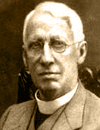 G. Campbell Morgan
in Concerning Sin
Read in context
Sin is the breaking of the Law and we are fugitives from the just laws of God while we are sinners.
 A.W. Tozer
in To Sin Is to Rebel
Read in context
So sin is failure, error, iniquity, transgression, trespass, lawlessness, unrighteousness.
 Art Katz
in Sin and Holiness - Part 1
Listen at 3:11
Sin is not acting according to revealed truth.
 Joy Dawson
in The Insanity of Sin - Part 1
Listen at 3:41
Sin is so deceitful and so subtle that it comes to us with an appeal.
 Phil Beach Jr.
in The True Nature of Sin - Ii Sam 13
Listen at 15:18
Where they differ
Some preachers in the tradition of Charles Finney define sin strictly as a choice of the will, where the older catechisms include any lack of conformity to God's law.
Sin is the decision of the will to gratify a good appetite in a bad way.
 Paris Reidhead
in Temptation and Sin
Listen at 18:19
What Scripture says
- 1 John 3:4 sin is the transgression of the law
- Romans 3:23 all have sinned and come short of the glory of God
- Romans 6:23 the wages of sin is death, but the gift of God is eternal life
- Psalm 51:4 against thee, thee only, have I sinned
- John 1:29 the Lamb of God, which takes away the sin of the world
How this page is made: the quotes are taken word for word from sermons on SermonIndex and checked against them by program before the page is published. The transcripts of audio and video sermons are machine-made, so follow the link to hear the words as they were spoken. The answer above the quotes is an overview with its sources listed; it is not a statement of doctrine by SermonIndex.