
The preachers quoted here describe importunate prayer as prayer that keeps asking until God answers, taught by Christ in the parables of the friend at midnight and the widow. They explain that God is not unwilling, that delay trains faith, and that such prayer is urgent, humble and submitted to His will.
Importunate prayer is prayer that keeps on asking until God answers. It does not stop at the first silence or the first delay, and it will not be content without the blessing it seeks. Jesus taught it plainly: "Then Jesus told them a parable about their need to pray at all times and not lose heart:" (Luke 18:1). E.M. Bounds described it in one line: "It is the throwing of the entire force of the spiritual man into the exercise of prayer."1
What the word means
Importunity is pressing, urgent persistence. The word comes from the parable of the friend at midnight, where Jesus says the man received what he asked "because of the man's persistence" (Luke 11:8). It is more than asking twice. Bounds wrote, "No principle is more definitely enforced by Christ than that prevailing prayer must have in it the quality which waits and perseveres, the courage that never surrenders, the patience which never grows tired, the resolution that never wavers."2 Thomas Brooks used the picture of a beggar at a door: "An importunate soul in prayer is like the poor beggar, who prays and knocks, who prays and waits, who prays and works, who knocks and knocks, who begs and pleads—and will not stir from the door until he has an alms."3 R.A. Torrey drew the same lesson from the Lord's parables: "It is as if the Lord would have us understand that God would have us draw nigh to Him with a resolute determination to obtain the things that we seek, a determination that will not be put to shame by any seeming refusal or delay on God's part."4
The friend at midnight
Jesus told of a man who went to a friend at midnight to borrow three loaves for a traveller who had come to his house. The friend was in bed and his door was shut. He did not want to get up. Jesus said, "I tell you, even though he will not get up to provide for him because of his friendship, yet because of the man's persistence, he will get up and give him as much as he needs." (Luke 11:8). Alexander Whyte wrote of this story, "It is a story of midnight importunity, and it is told to teach us the great lesson of midnight and importunate prayer."5 He pointed out that the knocking was loud, late and unashamed, and that this was the point of the parable: "To be shameless in that way and to that degree was the man's wisdom, and hence his utter shamelessness is our Lord's very point with His disciples and with us."6 Matthew Henry noted the spirit in which we are to come: "We must come for what we need, as a man does to his neighbour or friend, who is kind to him."7 The man had nothing of his own to set before his guest. His need and the need of another sent him to the door, and he stayed there until it opened.
The widow and the unjust judge
The second parable is about a widow who kept coming to a judge for justice against her adversary. The judge neither feared God nor respected men. For a while he refused. In the end he gave her what she asked because she would not stop coming. Bounds wrote, "The widow, weak and helpless, is helplessness personified; bereft of every hope and influence which could move an unjust judge, she yet wins her case solely by her tireless and offensive importunity."8 Jesus then applied it: "Will not God bring about justice for His elect who cry out to Him day and night?" (Luke 18:7-8). C.H. Spurgeon said, "God will be more easily moved than this unjust judge if only you are as importunate as this widow was."9 Matthew Henry made the same comparison: "The widow's earnestness prevailed even with the unjust judge: she might fear lest it should set him more against her; but our earnest prayer is pleasing to our God."10 J.C. Ryle observed that the parable looks on to the whole time before the Lord returns: "It is prayer without fainting, during the long weary intervals between the first and second advents, which Jesus is urging His disciples to keep up."11
God is not unwilling
Both parables argue from the lesser to the greater. If a sleepy neighbour and a bad judge can be moved by persistence, how much more will a Father hear His children. Samuel Chadwick was clear on this: "God is not like the reluctant friend or the unjust judge."12 He added, "God is not like him, but prayer pleads and persists until it prevails."12 Jesus Himself closed the first parable with the Father's willingness: "how much more will your Father in heaven give the Holy Spirit to those who ask Him!" (Luke 11:13). Andrew Murray explained where the need for persistence lies: "The need of urgent prayer cannot be because God must be made willing or disposed to bless: the need lies altogether in ourselves."13 He wrote again, "The difficulty is not in God's love or power, but in ourselves and our own incapacity to receive the blessing."14 And of the Father's heart he said, "God will not delay one moment longer than is absolutely necessary; He will do all in His power to hasten and speed the answer."15 Importunity, then, is not an attempt to overcome reluctance in God. It is the way God has chosen to prepare His people for what He means to give.
Ask, seek, knock
Jesus followed the parable of the friend at midnight with a command and a promise. "So I tell you: Ask, and it will be given to you; seek, and you will find; knock, and the door will be opened to you. For everyone who asks receives; he who seeks finds; and to him who knocks, the door will be opened." (Luke 11:9-10). The three words rise in strength. John Calvin wrote of them, "There is no superfluity of language, when he says, Ask, seek, knock: but lest the simple doctrine should be unimpressive, he perseveres in order to rouse us from our inactivity."16 Thomas Watson described the believer who obeys this command: "A Christian having a command to pray, and a promise, is resolved to follow God with prayer, and not give up; as Peter knocked, and when the door was not opened, continued knocking until at last it was opened."17 Spurgeon, speaking to those who come to God as beggars with nothing to offer, said, "There is nothing more fitting in you than to be importunate, to knock and knock, and knock again with a holy resolve to take no denial!"18 Torrey stated the lesson without any softening: "The central lesson in this parable of our Lord is: When we pray, if we do not obtain the thing the first time, pray again; and if we do not obtain it the second time, pray a third time; and if we do not obtain it the hundredth time, go on praying until we do get it."4
Why God delays
Scripture shows that answers are often delayed. David said, "I waited patiently for the LORD; He inclined to me and heard my cry." (Psalm 40:1). The preachers give reasons for the waiting. Murray wrote, "The God who has promised, who longs, whose fixed purpose it is to give the blessing, holds it back."19 He saw in the delay a test of faith: "It is when the answer to prayer does not come, and the promise we are most firmly trusting appears to be of none effect, that the trial of faith, more precious than of gold, takes place."19 George Whitefield, preaching on the Lord's delay in coming to Lazarus, said, "A plain proof this, that all Jesus' delays to answer prayer, are only to strengthen our faith."20 Torrey answered the question in the same way: "The answer is plain: He would do us the far greater good of training us in persistent faith."4 He counted the long waiting a gain: "There is no more blessed training in prayer than that which comes through being compelled to ask again and again and again, even through a long period of years, before one obtains that which he seeks from God."4 David Wilkerson reminded his hearers that this is the common lot of believers: "The delayed answer to prayer is one of the most common experiences shared by even the saintliest of God's children."21 J.R. Miller warned of what is lost when men stop too soon: "No doubt thousands of prayers are never answered — because men give up at God's delay."22
Jacob at Peniel
Jacob is the Old Testament pattern. Alone at night, in fear of his brother, he wrestled until daybreak and said, "I will not let you go unless you bless me." (Genesis 32:26). Hosea adds that "he struggled with the angel and prevailed; he wept and sought His favor" (Hosea 12:4). Watson wrote, "When Jacob was in fear of his life by his brother, he wrestled with God, and wept in prayer, and would not leave him until he blessed him."23 Spurgeon said, "There is nothing, I repeat it, there is no force so tremendous, no energy so marvellous, as the energy with which God has endowed every man, who like Jacob can wrestle, like Israel can prevail with him in prayer."24 Jacob received a new name that night because he held on.
The woman of Canaan
A Gentile mother came to Jesus for her daughter. At first He did not answer her. Then He spoke of the children's bread. She would not go away, and at last He said to her, "your faith is great! Let it be done for you as you desire." (Matthew 15:27-28). Bounds wrote of her, "Here, importunity is demonstrated, not as a stark impertinence, but as with the persuasive characteristics of humility, sincerity, and fervency."25 He drew the lesson that "there is no plea so efficacious as importunate prayer, and none to which God surrenders himself so fully and so freely."25 Her persistence was humble. She accepted every word the Lord said to her and still asked.
Elijah on Carmel
Elijah had God's promise of rain, and yet he prayed for it again and again. He sent his servant to look toward the sea seven times before the report came: "There is a cloud as small as a man's hand rising from the sea." (1 Kings 18:43-44). James points to him as an example for ordinary believers and says, "The prayer of a righteous man has great power to prevail." (James 5:16). Murray wrote, "On Carmel Elijah prayed seven times; and we, if we believe the promise of God without doubting, shall pray until we receive the answer."26 A promise from God is not a reason to stop praying. It is the ground on which persevering prayer stands.
The example of Christ
The Lord practised what He taught. In Gethsemane He prayed the same prayer three times. "So He left them and went away once more and prayed a third time, saying the same thing." (Matthew 26:44). Luke records, "And in His anguish, He prayed more earnestly, and His sweat became like drops of blood falling to the ground." (Luke 22:44). The writer to the Hebrews says of Him, "During the days of Jesus' earthly life, He offered up prayers and petitions with loud cries and tears to the One who could save Him from death, and He was heard because of His reverence." (Hebrews 5:7). Richard Baxter urged this example on his readers: "Christ himself spent whole Nights in Prayer, and encourages us always to pray, and not to faint."27
Not vain repetition
Importunity is not the multiplying of words. Jesus said, "And when you pray, do not babble on like pagans, for they think that by their many words they will be heard. Do not be like them, for your Father knows what you need before you ask Him." (Matthew 6:7-8). The difference lies in the heart. Bounds wrote, "We are to press the matter, not with vain repetitions, but with urgent repetitions."28 Spurgeon said of the prayer that reaches heaven, "The prayer which mounts to Heaven may have but very few of the tail feathers of adornment about it, but it must have the strong wing feathers of intense desire!"9 Brooks said of prayers without heat, "Cold prayers are like arrows without heads, as swords without edges, as birds without wings: they pierce not, they cut not, they fly not up to heaven."29 A long prayer may be cold, and a short cry may be importunate. What marks this praying is real desire that will not be put off.
The work of the Spirit
This kind of prayer cannot be worked up by human effort. Paul writes, "In the same way, the Spirit helps us in our weakness. For we do not know how we ought to pray, but the Spirit Himself intercedes for us with groans too deep for words." (Romans 8:26). Bounds said of importunity, "It is not an impulse of energy, not a mere earnestness of soul; it is an inwrought force, a faculty implanted and aroused by the Holy Spirit."25 Chadwick noted that prayer is both within the reach of the weakest and beyond the strength of the strongest: "It is so easy that those who have no strength can pray, and it is so strenuous that it taxes every resource of energy, intelligence, and power."12 The believer who feels unable to pray like this is to ask the Spirit's help and begin.
Importunity and faith
Persistence is faith in action. A man who does not expect an answer soon stops asking. Zac Poonen said, "The evidence of a person's faith is found in his persistence in prayer."30 Torrey explained why God is pleased with bold and persistent asking: "The reason why He delights in it is that it is an expression of great faith, and nothing pleases God more than faith."4 Murray wrote, "It is in persevering, not unbelieving, but confident and praising prayer, that the soul grows up into that full union with its Lord in which it can enter upon the possession of the blessing in Him."31 It is striking that Jesus ended the parable of the widow with a question about faith: "when the Son of Man comes, will He find faith on earth?" (Luke 18:7-8).
Importunity and submission
Persistent prayer is not self-will. John writes, "And this is the confidence that we have before Him: If we ask anything according to His will, He hears us." (1 John 5:14). In Gethsemane the Lord prayed with strong crying, and He also said, "Yet not as I will, but as You will." (Matthew 26:39). Paul asked three times for his thorn to be removed. "Three times I pleaded with the Lord to take it away from me." (2 Corinthians 12:8-9). He then received a different answer and was content with it. J.R. Miller wrote, "No prayer is acceptable to God which, after all its intensity and importunity, is not still referred to God, and left to his superior wisdom."32 Jeremy Taylor taught that spiritual blessings may be sought without limit, but of other things he said, "In other things they are to use a bridle; and as we must limit our desires with submission to God's will, so also we must limit the importunity of our prayers by the moderation and term of our desires."33
Praying for others
Both parables concern more than private wants. The man at midnight asked bread for a friend. The widow asked for justice. Murray wrote of intercession, "It is when we give ourselves to be a blessing that we can specially count on the blessing of God."19 Spurgeon applied the widow's example to prayer for an unconverted family: "The bringing in of that unconverted husband is to lie upon the wife's heart night and day till she gets it!"9 Charles Finney said of prayer for children, "Oh! if we ever pray, we should pour out our prayers for our offspring as if nothing could ever satisfy us or stay our importunity, but the blessings of a full salvation realised in their souls."34 Samuel Brengle wrote of the same spirit in prayer for revival: "The revival is born in the heart of some lonely, longing, wrestling, believing, importunate man or woman who will give God no rest, who will not let Him go without He blesses."35 Isaiah speaks of watchmen who pray like this for the people of God: "On your walls, O Jerusalem, I have posted watchmen; they will never be silent day or night. You who call on the LORD shall take no rest for yourselves, nor give Him any rest until He establishes Jerusalem and makes her the praise of the earth." (Isaiah 62:6-7).
Why so few pray this way
The preachers agree that this praying is rare. Chadwick said, "The modern mind resents prayer that is an agony and entreaty, a pleading and striving, a wrestling and persistence."12 Whyte wrote, "There is nothing we are all so slothful in as secret, particular, importunate prayer."36 William Carey wrote of the monthly prayer meetings he knew, "It is true a want of importunity too generally attends our prayers; yet unimportunate, and feeble as they have been, it is to be believed that God has heard, and in a measure answered them."37 Weariness is the common cause, and Scripture speaks to it: "Let us not grow weary in well-doing, for in due time we will reap a harvest if we do not give up." (Galatians 6:9).
Keep on praying
The command is simple. Paul tells believers to be "persistent in prayer" (Romans 12:12). Ryle counselled, "Let us resolve to pray on steadily, patiently, perseveringly, and let us never doubt that it does us good."38 Torrey said, "God does not always give you the things you ask the first time you ask, but don't give up; keep on praying until you do get them."4 The friend got his loaves, the widow got her justice, Jacob got his blessing and Elijah got his rain. Each of them was still asking when the answer came.
- E.M. Bounds, "Prayer and Importunity (Continued)" (sermon).
- E.M. Bounds, The Necessity Of Prayer, "VII. PRAYER AND IMPORTUNITY (Continued)".
- Thomas Brooks, The Privy Key of Heaven, "Eleven advices and counsels".
- R.A. Torrey, "Keep Praying Until God Answers" (sermon).
- Alexander Whyte, Bible Characters, "The Man Who Went Out to Borrow Three Loaves at Midnight".
- Alexander Whyte, Bible Characters, "The Man Who Went Out to Borrow Three Loaves at Midnight".
- Matthew Henry , Matthew Henrys Concise Commentary On The Bible, "Luke Chapter 11".
- E.M. Bounds, Purpose In Prayer, "Chapter VI |Nothing is impossible to industry, |said one of the seven...".
- C.H. Spurgeon, "The Importunate Widow" (sermon).
- Matthew Henry , Matthew Henrys Concise Commentary On The Bible, "Luke Chapter 18".
- J.C. Ryle, Expository Thoughts On Luke, "Luke 18:1-8".
- Samuel Chadwick, "The Importunity of Prayer" (sermon).
- Andrew Murray, The Ministry Of Intercession, "CHAPTER IV Because of His Importunity".
- Andrew Murray, The Ministry Of Intercession, "CHAPTER IV Because of His Importunity".
- Andrew Murray, With Christ In The School Of Prayer, "SIXTEENTH LESSON. Speedily, though bearing long;'".
- John Calvin, Commentary On Matthew Mark Luke Volume 1, "Matthew 7:7-11; luke 11:5-13".
- Thomas Watson, The Lord's Prayer, "p The Preface to the Lord's Prayer contd".
- C.H. Spurgeon, "Beggars Becoming Princes" (sermon).
- Andrew Murray, "Because of His Importunity" (sermon).
- George Whitefield, "The Resurrection of Lazarus. (John 11:43-44)" (sermon).
- David Wilkerson, "Faith for Seasons of Silence" (sermon).
- James R. Miller, Writings of James R Miller - Volume 1, "August".
- Thomas Watson, The Lord's Prayer, "The Third Petition in the Lord's Prayer contd".
- C.H. Spurgeon, "True Prayer—True Power!" (sermon).
- E.M. Bounds, "Prayer and Importunity" (sermon).
- Andrew Murray, Writings of Andrew Murray - Volume 1, "Fervent and Effectual Prayer".
- Richard Baxter, The Causes and Danger of Slighting Christ and His Gospel, "Chap. v".
- E.M. Bounds, Purpose In Prayer, "Chapter VI |Nothing is impossible to industry, |said one of the seven...".
- Thomas Brooks, The Privy Key of Heaven, "Eleven advices and counsels".
- Zac Poonen, "(Finding God's Will) 2. Conditions for Finding God's Will" (sermon).
- Andrew Murray, With Christ In The School Of Prayer, "SIXTEENTH LESSON. Speedily, though bearing long;'".
- J.R. Miller, "In Green Pastures - January, February, March" (sermon).
- Jeremy Taylor, Holy Living, "Chapter iv: of christian religion".
- Charles Finney, "The Rule by Which Guilt of Sin Is Estimated" (sermon).
- Colonel Samuel Brengle, Writings of Colonel Samuel Brengle, "Looking Backward and Forward-After Seventy Years".
- Alexander Whyte, Bunyan Characters, "Simple, Sloth, and Presumption".
- William Carey, "An Enquiry Into the Duty Of" (sermon).
- J.C. Ryle, Expository Thoughts On Luke, "Luke 18:1-8".
In their own words
Each line below is quoted exactly from a sermon on this site. Follow the link to hear or read it where it was said.
It is the throwing of the entire force of the spiritual man into the exercise of prayer.
 E.M. Bounds
in Prayer and Importunity (Continued)
Read in context
It is as if the Lord would have us understand that God would have us draw nigh to Him with a resolute determination to obtain the things that we seek, a determination that will not be put to shame by any seeming refusal or delay on God's part.
 R.A. Torrey
in Keep Praying Until God Answers
Read in context
The central lesson in this parable of our Lord is: When we pray, if we do not obtain the thing the first time, pray again; and if we do not obtain it the second time, pray a third time; and if we do not obtain it the hundredth time, go on praying until we do get it.
R.A. Torrey
in Keep Praying Until God Answers
Read in context
The answer is plain: He would do us the far greater good of training us in persistent faith.
R.A. Torrey
in Keep Praying Until God Answers
Read in context
There is no more blessed training in prayer than that which comes through being compelled to ask again and again and again, even through a long period of years, before one obtains that which he seeks from God.
R.A. Torrey
in Keep Praying Until God Answers
Read in context
The reason why He delights in it is that it is an expression of great faith, and nothing pleases God more than faith.
R.A. Torrey
in Keep Praying Until God Answers
Read in context
God does not always give you the things you ask the first time you ask, but don't give up; keep on praying until you do get them.
R.A. Torrey
in Keep Praying Until God Answers
Read in context
God will be more easily moved than this unjust judge if only you are as importunate as this widow was.
 C.H. Spurgeon
in The Importunate Widow
Read in context
The prayer which mounts to Heaven may have but very few of the tail feathers of adornment about it, but it must have the strong wing feathers of intense desire!
C.H. Spurgeon
in The Importunate Widow
Read in context
The bringing in of that unconverted husband is to lie upon the wife's heart night and day till she gets it!
C.H. Spurgeon
in The Importunate Widow
Read in context
God is not like the reluctant friend or the unjust judge.
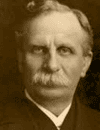 Samuel Chadwick
in The Importunity of Prayer
Read in context
God is not like him, but prayer pleads and persists until it prevails.
Samuel Chadwick
in The Importunity of Prayer
Read in context
It is so easy that those who have no strength can pray, and it is so strenuous that it taxes every resource of energy, intelligence, and power.
Samuel Chadwick
in The Importunity of Prayer
Read in context
The modern mind resents prayer that is an agony and entreaty, a pleading and striving, a wrestling and persistence.
Samuel Chadwick
in The Importunity of Prayer
Read in context
There is nothing more fitting in you than to be importunate, to knock and knock, and knock again with a holy resolve to take no denial!
C.H. Spurgeon
in Beggars Becoming Princes
Read in context
The God who has promised, who longs, whose fixed purpose it is to give the blessing, holds it back.
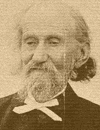 Andrew Murray
in Because of His Importunity
Read in context
It is when the answer to prayer does not come, and the promise we are most firmly trusting appears to be of none effect, that the trial of faith, more precious than of gold, takes place.
Andrew Murray
in Because of His Importunity
Read in context
It is when we give ourselves to be a blessing that we can specially count on the blessing of God.
Andrew Murray
in Because of His Importunity
Read in context
A plain proof this, that all Jesus' delays to answer prayer, are only to strengthen our faith.
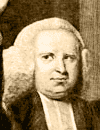 George Whitefield
in The Resurrection of Lazarus. (John 11:43-44)
Read in context
The delayed answer to prayer is one of the most common experiences shared by even the saintliest of God's children.
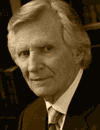 David Wilkerson
in Faith for Seasons of Silence
Read in context
There is nothing, I repeat it, there is no force so tremendous, no energy so marvellous, as the energy with which God has endowed every man, who like Jacob can wrestle, like Israel can prevail with him in prayer.
C.H. Spurgeon
in True Prayer—True Power!
Read in context
Here, importunity is demonstrated, not as a stark impertinence, but as with the persuasive characteristics of humility, sincerity, and fervency.
E.M. Bounds
in Prayer and Importunity
Read in context
It is not an impulse of energy, not a mere earnestness of soul; it is an inwrought force, a faculty implanted and aroused by the Holy Spirit.
E.M. Bounds
in Prayer and Importunity
Read in context
The evidence of a person's faith is found in his persistence in prayer.
 Zac Poonen
in (Finding God's Will) 2. Conditions for Finding God's Will
Read in context
No prayer is acceptable to God which, after all its intensity and importunity, is not still referred to God, and left to his superior wisdom.
 J.R. Miller
in In Green Pastures - January, February, March
Read in context
Oh! if we ever pray, we should pour out our prayers for our offspring as if nothing could ever satisfy us or stay our importunity, but the blessings of a full salvation realised in their souls.
 Charles Finney
in The Rule by Which Guilt of Sin Is Estimated
Read in context
It is true a want of importunity too generally attends our prayers; yet unimportunate, and feeble as they have been, it is to be believed that God has heard, and in a measure answered them.
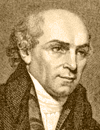 William Carey
in An Enquiry Into the Duty Of
Read in context
What Scripture says
- Luke 18:1 pray at all times and not lose heart
- Luke 11:8 because of the man's persistence
- Luke 11:9-10 ask, seek, knock
- Luke 18:7-8 God will bring about justice for His elect who cry to Him day and night
- Genesis 32:26 I will not let you go unless you bless me
- Matthew 15:27-28 the faith of the woman of Canaan
- James 5:16 the prayer of a righteous man has great power to prevail
- Isaiah 62:6-7 give Him no rest
- Romans 12:12 persistent in prayer
- Matthew 26:44 He prayed a third time
- 1 John 5:14 asking according to His will
How this page is made: the quotes are taken word for word from sermons on SermonIndex and checked against them by program before the page is published. The transcripts of audio and video sermons are machine-made, so follow the link to hear the words as they were spoken. The answer above the quotes is an overview with its sources listed; it is not a statement of doctrine by SermonIndex.