
The preachers quoted here say that to pray without ceasing is not to say prayers every moment but to keep the heart always turned to God. They describe short prayers sent up through the day, resting on set times of prayer, kept alive by the Holy Spirit and by Christ who always lives to intercede. They add that it means not giving up when the answer is slow.
To pray without ceasing is to live in an unbroken attitude of dependence on God, so that the heart turns to Him at every point of the day, in set times of prayer and between them. Paul gives it as a plain command: "Pray without ceasing." (1 Thessalonians 5:17). It does not mean speaking prayers every moment. J.R. Miller put it simply: "To pray without ceasing is--to have the heart always in converse with God."1
The command and where it stands
The command sits between two others. "Rejoice at all times. Pray without ceasing. Give thanks in every circumstance, for this is God's will for you in Christ Jesus." (1 Thessalonians 5:16-18). Joy, prayer and thanksgiving are all to be continual, and all three are called the will of God. Paul says the same thing in other letters. "Be joyful in hope, patient in affliction, persistent in prayer." (Romans 12:12). "Pray in the Spirit at all times, with every kind of prayer and petition." (Ephesians 6:18). E.M. Bounds gathered these sayings together: "To pray everywhere, to pray in everything, to continue instant in prayer, and to pray without ceasing, thus Paul spoke as a commentator on the Divine uses and the nature of prayer."2 David Wilkerson drew the plain conclusion: "No matter what our situation or condition, we are to pray without ceasing."3
What it cannot mean
The command cannot mean that a believer does nothing but say prayers. Hannah More wrote, "It is obvious that the precept to pray without ceasing can never mean to enjoin a continual course of actual prayer."4 Paul himself worked with his hands, travelled, preached and wrote letters. Spurgeon reasoned from the text itself: "Since we are to pray without ceasing, and yet could not pray with the voice without ceasing, it is clear that audible language is not essential to prayer."5 He applied the same reasoning to the body: "It is equally clear that the posture of prayer is of no great importance, for if it were necessary that we should pray on our knees we could not pray without ceasing, the posture would become painful and injurious."5 Prayer, then, is something that can go on when the lips are still and the knees are not bent.
A heart always turned to God
What continues is the direction of the heart. David wrote, "I have set the LORD always before me." (Psalm 16:8). Francois Fenelon traced unceasing prayer to love: "Love, hid in the bottom of the soul, prays without ceasing, even when the mind is drawn another way."6 Andrew Murray noted that the words of the epistles about continuing in prayer "appear more to refer to the whole life being one of prayer."7 The life itself becomes a prayer when its desire is fixed on God and His will. Miller described the same thing in terms of a child and a father: "To pray without ceasing--is to be always in happy relations of love with our Father."1 A child in that state does not need to be told to speak to his father. He does so whenever there is something to say.
Prayer as the breath of the soul
The older writers often compared prayer to breathing. Breathing does not stop when we work or sleep, and it is the sign of life. Thomas Watson wrote, "Prayer is nothing else but the soul's breathing itself into the bosom of its Father."8 A.W. Pink used the same picture: "Prayer is the breath of the new nature in the saint, as the Word of God is its food."9 On this view unceasing prayer is not an extra burden laid on a few. It is the normal working of the new life in every believer.
Every time and every place
If prayer is to be without ceasing, no time and no place can be shut out. Spurgeon said, "The Lord has not appointed a certain week for prayer, but all weeks should be weeks of prayer: neither has he said that one hour of the day is more acceptable than another."5 J.R. Miller said the same of places: "God is as accessible to us on the street, in the desert, in the midst of a great storm at sea, or in the most debased spot of the earth--as He is in our own sacred closet of prayer, in a consecrated building, or at the Lord's table."1 Paul wrote, "I want the men everywhere to pray" (1 Timothy 2:8). William Gurnall applied it to our changing circumstances: "To pray always may import as much as to pray in all conditions; that is, in prosperity as well as in adversity."10 It is easier to pray in trouble than in comfort, and the command covers both.
Short prayers through the day
Scripture shows what this looks like in practice. Nehemiah stood before the king and was asked a question. He records, "So I prayed to the God of heaven and answered the king" (Nehemiah 2:4-5). There was no time to withdraw. The prayer was sent up between the question and the answer. Spurgeon described the habit: "He who prays without ceasing uses many little darts and hand-grenades of godly desire, which he casts forth at every available interval."5 Miller advised, "It is well for us to learn this lesson--to take everything to God in prayer, to pray as we go from task to task--always silently, unostentatiously."1 Zac Poonen gave the same counsel: "A good habit to develop is to learn to speak to God about the little things of daily life - and thus to be in a spirit of prayer throughout the day."11
Set times are still needed
Unceasing prayer does not replace regular prayer. It grows out of it. Daniel had fixed hours: "three times a day he got down on his knees, prayed, and gave thanks to his God, just as he had done before." (Daniel 6:10). David wrote, "Morning, noon, and night, I cry out in distress, and He hears my voice." (Psalm 55:17). Of the Lord Jesus we read, "Early in the morning, while it was still dark, Jesus got up and slipped out to a solitary place to pray." (Mark 1:35). Spurgeon said, "To deal with this matter practically, then, it is the duty and privilege of every Christian to have set times of prayer."12 J.C. Ryle joined the two together: "We must pray without ceasing, regularly, habitually, carefully, and at stated times."13 A.W. Tozer wrote, "Prayer at stated times is good and right; we will never outgrow the need of it while we remain on earth."14 F.B. Meyer, writing on Nehemiah's quick prayer, warned that the short prayer depends on the long one: "You cannot acquire this habit of ejaculatory prayer unless you spend prolonged periods in holy fellowship."15
The spirit of prayer
Behind the habit lies what the old writers called the spirit of prayer. Jonathan Edwards said where it comes from: "The true spirit of prayer is no other than God's own Spirit dwelling in the hearts of the saints."16 Paul teaches the same. "In the same way, the Spirit helps us in our weakness. For we do not know how we ought to pray, but the Spirit Himself intercedes for us with groans too deep for words." (Romans 8:26). The believer is not left to keep up continual prayer by effort alone. Andrew Murray, describing a heart given wholly to God for others, wrote, "To a heart thus led by the Holy Spirit, it is possible to pray always and not to faint."17
Praying and not giving up
To pray without ceasing also means not to stop praying when the answer is slow. Luke says Jesus told the parable of the widow to show "their need to pray at all times and not lose heart" (Luke 18:1). R.A. Torrey wrote, "In two parables in the Gospel of Luke, Jesus teaches with great emphasis the lesson that men ought always to pray and not to faint."18 Bounds described such prayer: "Importunate praying never faints nor grows weary; it is never discouraged; it never yields to cowardice, but is buoyed up and sustained by a hope that knows no despair, and a faith which will not let go."19 James Smith set out the believer's part: "It is for us to pray without ceasing, expect without doubting, wait without murmuring--and we shall eventually be filled to our perfect satisfaction."20 The Lord's own question gives the ground for it: "Will not God bring about justice for His elect who cry out to Him day and night? Will He continue to defer their help?" (Luke 18:7). The early church prayed in this way when Peter was in prison. "So Peter was kept in prison, but the church was fervently praying to God for him." (Acts 12:5). They did not pray once and leave the matter. They kept on until the answer came.
Prayer carried into work
Work does not have to interrupt prayer. Paul wrote, "And whatever you do, in word or deed, do it all in the name of the Lord Jesus, giving thanks to God the Father through Him." (Colossians 3:17). Spurgeon taught that to labour for the thing we have asked is itself a continuing of the prayer: "He who prays for his fellow creatures, and then seeks their good, is praying still."5 A person who prays for his family and then serves them, or prays for the lost and then speaks to them, has not left off praying.
A test of where we go and what we do
The command also works as a test. Spurgeon said, "There is one other thing implied in the text, namely, that a Christian has no right to go into any place where he could not continue to pray."5 In another sermon he said, "The Christian avoids things which he could not pray about; and so he feels it a pleasure to pray always."21 If a place, a pleasure or a piece of business makes prayer impossible, the command to pray without ceasing has already judged it.
What hinders it
The first hindrance is sloth. Spurgeon said, "We must, dear friends, in order to pray without ceasing, strive against indolence in prayer."5 The second is a wrong motive. Andrew Murray wrote, "He who seeks to pray without ceasing because he wants to be very pious and good, will never attain to it."7 He named what is needed in its place: "The first thing is undoubtedly the entire sacrifice of the life to God's kingdom and glory."7 Unceasing prayer belongs to a life given up to God, and it cannot be added to a life lived for self.
Christ who always lives to pray
The believer's unceasing prayer rests on Christ's. "Therefore He is able to save completely those who draw near to God through Him, since He always lives to intercede for them." (Hebrews 7:25). Murray built his teaching on this verse: "It is the sight of this, the sight of the ever-praying Christ as our life, that enables us to pray without ceasing."7 Jesus said, "apart from Me you can do nothing." (John 15:5). Murray drew the conclusion: "Christ is all, the life and the strength too for a never-ceasing prayer-life."7 Continual prayer is the continual confession of that dependence.
Paul's own practice
Paul did what he commanded. He told the Romans, "God, whom I serve with my spirit in preaching the gospel of His Son, is my witness how constantly I remember you in my prayers at all times" (Romans 1:9-10). He told the Thessalonians, "We always thank God for all of you, remembering you in our prayers" (1 Thessalonians 1:2-3). His letters open again and again with thanks and requests for the churches. The man who wrote the command lived a busy and hard life, and still prayed like this.
How to begin
Begin with the set times, and carry them into the day. "Be anxious for nothing, but in everything, by prayer and petition, with thanksgiving, present your requests to God. And the peace of God, which surpasses all understanding, will guard your hearts and your minds in Christ Jesus." (Philippians 4:6-7). The psalmist says, "Trust in Him at all times, O people; pour out your hearts before Him." (Psalm 62:8). Paul adds, "Devote yourselves to prayer, being watchful and thankful" (Colossians 4:2). Tozer wrote of the place this must have: "It is hardly possible to overstress the importance of unceasing inward prayer on the part of the one who would live the God-conscious life."14 He added that prayer at fixed hours "must be supported and perfected by the habit of constant, unspoken prayer."14 Turn each need, fear and mercy of the day into a short word to God, and the habit will grow.
- J.R. Miller, "Our New Edens" (sermon).
- E.M. Bounds, Prayer And Praying Men, "Xii. paul, the teacher of prayer".
- David Wilkerson, "Five Common Hindrances to Prevailing Prayer" (sermon).
- Hannah More, Writings of Hannah More, "Cultivation of a Devotional Spirit".
- C.H. Spurgeon, "'Pray Without Ceasing'" (sermon).
- Francois Fenelon, "The Inner Life" (sermon).
- Andrew Murray, "Thirty-First Lesson. 'Pray Without Ceasing;' Or, a Life of Prayer" (sermon).
- Thomas Watson, The Beatitudes: An Exposition of Matthew 5:1-12, "They shall be called the children of God".
- A.W. Pink, "Profiting From the Word 4. the Scriptures and Prayer" (sermon).
- William Gurnall, "The Christian in Complete Armour - Part 16" (sermon).
- Zac Poonen, "(A Good Foundation) 8. God's Word and Prayer" (sermon).
- C.H. Spurgeon, "The Habit and the Spirit of Prayer" (sermon).
- J.C. Ryle, Expository Thoughts on Mark, "Mark 14:32-42".
- A.W. Tozer, "'I Am With You Always'" (sermon).
- F.B. Meyer, "So I Prayed to the God of Heaven" (sermon).
- Jonathan Edwards, "Hypocrites Deficient in the Duty of Prayer" (sermon).
- Andrew Murray, The Ministry Of Intercession, "TWENTY-SECOND DAY For all who are in Suffering".
- R.A. Torrey, "Always Praying and Not Fainting" (sermon).
- E.M. Bounds, "Prayer and Importunity (Continued)" (sermon).
- James Smith, "On Desires" (sermon).
- C.H. Spurgeon, Spurgeons Sermons Volume 17 1871, "The Touchstone of Godly Sincerity".
In their own words
Each line below is quoted exactly from a sermon on this site. Follow the link to hear or read it where it was said.
To pray without ceasing is--to have the heart always in converse with God.
 J.R. Miller
in Our New Edens
Read in context
To pray without ceasing--is to be always in happy relations of love with our Father.
J.R. Miller
in Our New Edens
Read in context
God is as accessible to us on the street, in the desert, in the midst of a great storm at sea, or in the most debased spot of the earth--as He is in our own sacred closet of prayer, in a consecrated building, or at the Lord's table.
J.R. Miller
in Our New Edens
Read in context
It is well for us to learn this lesson--to take everything to God in prayer, to pray as we go from task to task--always silently, unostentatiously.
J.R. Miller
in Our New Edens
Read in context
No matter what our situation or condition, we are to pray without ceasing.
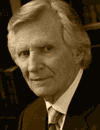 David Wilkerson
in Five Common Hindrances to Prevailing Prayer
Read in context
Since we are to pray without ceasing, and yet could not pray with the voice without ceasing, it is clear that audible language is not essential to prayer.
 C.H. Spurgeon
in 'Pray Without Ceasing'
Read in context
It is equally clear that the posture of prayer is of no great importance, for if it were necessary that we should pray on our knees we could not pray without ceasing, the posture would become painful and injurious.
C.H. Spurgeon
in 'Pray Without Ceasing'
Read in context
The Lord has not appointed a certain week for prayer, but all weeks should be weeks of prayer: neither has he said that one hour of the day is more acceptable than another.
C.H. Spurgeon
in 'Pray Without Ceasing'
Read in context
He who prays without ceasing uses many little darts and hand-grenades of godly desire, which he casts forth at every available interval.
C.H. Spurgeon
in 'Pray Without Ceasing'
Read in context
He who prays for his fellow creatures, and then seeks their good, is praying still.
C.H. Spurgeon
in 'Pray Without Ceasing'
Read in context
There is one other thing implied in the text, namely, that a Christian has no right to go into any place where he could not continue to pray.
C.H. Spurgeon
in 'Pray Without Ceasing'
Read in context
We must, dear friends, in order to pray without ceasing, strive against indolence in prayer.
C.H. Spurgeon
in 'Pray Without Ceasing'
Read in context
Love, hid in the bottom of the soul, prays without ceasing, even when the mind is drawn another way.
 Francois Fenelon
in The Inner Life
Read in context
He who seeks to pray without ceasing because he wants to be very pious and good, will never attain to it.
 Andrew Murray
in Thirty-First Lesson. 'Pray Without Ceasing;' Or, a Life of Prayer
Read in context
The first thing is undoubtedly the entire sacrifice of the life to God's kingdom and glory.
Andrew Murray
in Thirty-First Lesson. 'Pray Without Ceasing;' Or, a Life of Prayer
Read in context
It is the sight of this, the sight of the ever-praying Christ as our life, that enables us to pray without ceasing.
Andrew Murray
in Thirty-First Lesson. 'Pray Without Ceasing;' Or, a Life of Prayer
Read in context
Christ is all, the life and the strength too for a never-ceasing prayer-life.
Andrew Murray
in Thirty-First Lesson. 'Pray Without Ceasing;' Or, a Life of Prayer
Read in context
Prayer is the breath of the new nature in the saint, as the Word of God is its food.
 A.W. Pink
in Profiting From the Word 4. the Scriptures and Prayer
Read in context
To pray always may import as much as to pray in all conditions; that is, in prosperity as well as in adversity.
 William Gurnall
in The Christian in Complete Armour - Part 16
Read in context
A good habit to develop is to learn to speak to God about the little things of daily life - and thus to be in a spirit of prayer throughout the day.
 Zac Poonen
in (A Good Foundation) 8. God's Word and Prayer
Read in context
To deal with this matter practically, then, it is the duty and privilege of every Christian to have set times of prayer.
C.H. Spurgeon
in The Habit and the Spirit of Prayer
Read in context
Prayer at stated times is good and right; we will never outgrow the need of it while we remain on earth.
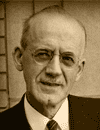 A.W. Tozer
in 'I Am With You Always'
Read in context
It is hardly possible to overstress the importance of unceasing inward prayer on the part of the one who would live the God-conscious life.
A.W. Tozer
in 'I Am With You Always'
Read in context
You cannot acquire this habit of ejaculatory prayer unless you spend prolonged periods in holy fellowship.
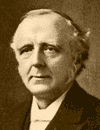 F.B. Meyer
in So I Prayed to the God of Heaven.
Read in context
The true spirit of prayer is no other than God's own Spirit dwelling in the hearts of the saints.
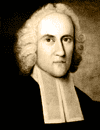 Jonathan Edwards
in Hypocrites Deficient in the Duty of Prayer
Read in context
In two parables in the Gospel of Luke, Jesus teaches with great emphasis the lesson that men ought always to pray and not to faint.
 R.A. Torrey
in Always Praying and Not Fainting
Read in context
Importunate praying never faints nor grows weary; it is never discouraged; it never yields to cowardice, but is buoyed up and sustained by a hope that knows no despair, and a faith which will not let go.
 E.M. Bounds
in Prayer and Importunity (Continued)
Read in context
It is for us to pray without ceasing, expect without doubting, wait without murmuring--and we shall eventually be filled to our perfect satisfaction.
 James Smith
in On Desires
Read in context
What Scripture says
- 1 Thessalonians 5:16-18 pray without ceasing
- Ephesians 6:18 pray in the Spirit at all times
- Luke 18:1 pray at all times and not lose heart
- Romans 12:12 persistent in prayer
- Colossians 4:2 devote yourselves to prayer
- Philippians 4:6-7 in everything, by prayer and petition
- Psalm 55:17 morning, noon, and night
- Nehemiah 2:4-5 a prayer between a question and its answer
- Hebrews 7:25 He always lives to intercede
- Romans 8:26 the Spirit helps us in our weakness
How this page is made: the quotes are taken word for word from sermons on SermonIndex and checked against them by program before the page is published. The transcripts of audio and video sermons are machine-made, so follow the link to hear the words as they were spoken. The answer above the quotes is an overview with its sources listed; it is not a statement of doctrine by SermonIndex.