
The preachers quoted here go through the Passover of Exodus 12 part by part: the lamb without blemish, its death, the blood on the door, the feast, the unleavened bread and the departure from Egypt. They show how each part points to Christ, our Passover lamb, who was sacrificed for us.
The Passover teaches that God saves His people from judgment by the blood of a lamb slain in their place, and that this lamb points to Jesus Christ. Paul says so plainly: "For Christ, our Passover lamb, has been sacrificed." (1 Corinthians 5:7). Charles Spurgeon said, "The Passover is, as we all know, a type of the great work of our redemption by the blood of Jesus, and it represents the personal application of it to each Believer."1 Matthew Henry wrote, "The passover was to be kept every year, both as a remembrance of Israel's preservation and deliverance out of Egypt, and as a remarkable type of Christ."2
The night in Egypt
The first Passover was kept on the night Israel left Egypt. God had said, "On that night I will pass through the land of Egypt and strike down every firstborn male, both man and beast, and I will execute judgment against all the gods of Egypt. I am the LORD." (Exodus 12:12). Each household of Israel was to kill a lamb and mark its door with the blood. Henry explained the name: "The angel of the Lord, when destroying the first-born of the Egyptians, would pass over the houses marked by the blood of the lamb: hence the name of this holy feast or ordinance."3 The judgment fell as God had said, and "there was loud wailing in Egypt; for there was no house without someone dead." (Exodus 12:30). Henry Law wrote, "Throughout the whole of Egypt's empire every house was woe, every face was horror, every heart was misery."4 Henry wrote, "The destroying angel entered every dwelling unmarked with blood, as the messenger of woe."5 David Wilkerson wrote, "The night of Passover found Jewish families shut up in their dwellings, waiting to leave Egypt."6 Alexander Maclaren wrote of the houses that were spared, "The consequence was exemption from the fatal stroke, which fell on all homes from the palace to the slaves' hovel, where that red streak was not found."7
A lamb without blemish
God told Israel what kind of lamb to take. "Your lamb must be an unblemished year-old male, and you may take it from the sheep or the goats." (Exodus 12:5). Maclaren wrote, "The lamb without blemish carefully chosen and kept for four days, till it had become as it were part of the household, and then solemnly slain by the head of the family, was their representative."8 Henry wrote, "It was to be without blemish; the Lord Jesus was a Lamb without spot: the judge who condemned Christ declared him innocent."9 Peter applies the same words to Christ. Believers are redeemed "with the precious blood of Christ, a lamb without blemish or spot." (1 Peter 1:18-19). Spurgeon said of Jesus, "The prince of this world watched Him narrowly, but he found nothing of evil in Him."10 John Macduff wrote, "The true paschal sacrifice must be the immaculate Lamb of God."11
The lamb had to die
A living lamb saved no one. "You must keep it until the fourteenth day of the month, when the whole assembly of the congregation of Israel will slaughter the animals at twilight." (Exodus 12:6). Scripture gives the rule: "without the shedding of blood there is no forgiveness." (Hebrews 9:22). Thomas Watson wrote, "The paschal lamb slain, was a type of Christ who was offered up in sacrifice for us."12 Henry wrote of Christ, "his blood is the only ransom for our souls; without the shedding of it there is no remission; without the sprinkling of it there can be no salvation."13 Spurgeon said, "Let others offer what they will, ours is the Lamb once slain, and there remains no more sacrifice for sin."14 Isaiah had spoken of the same death: "He was led like a lamb to the slaughter" (Isaiah 53:7).
The lamb died in the place of the firstborn
Israel was not spared because Israel was better than Egypt. The judgment fell on the lamb, and so it did not fall on the house. Spurgeon said, "He is the Lamb of our Passover, sacrificed on our behalf, that we might not be sacrificed--roasted in the fire of suffering that we might go free."15 He also said, "It passed upon the Lamb of God, and therefore it passes over us."16 He explained, "It is by the process of substitution that, according to abundant Scriptures, believing sinners are passed over in judgment and so escape eternal condemnation."17 Jonathan Edwards wrote of Israel, "He saved them, when others were destroyed, by the sprinkling of the blood of the paschal lamb, as God's church is saved from death by the sprinkling of the blood of Christ, when the rest of the world is destroyed."18
The blood had to be put on the door
The blood in the basin was not enough. It had to be applied. "They are to take some of the blood and put it on the sides and tops of the doorframes of the houses where they eat the lambs." (Exodus 12:7). Moses told the elders how: "Take a cluster of hyssop, dip it into the blood in the basin, and brush the blood on the top and sides of the doorframe." (Exodus 12:22). A.B. Simpson said, "It is not enough that Christ should be sacrificed; He must also be appropriated by each for himself."19 He added, "It is very sweet to know that the sprinkling was not done by other hands, but each household sprinkled its own doors; and so can each of us apply to ourselves the precious blood of our Redeemer."19 Henry wrote, "The blood of the lamb must be sprinkled, denoting the applying of the merits of Christ's death to our souls"20. Spurgeon said, "Faith is that bunch of hyssop which we dip into the blood and, with it, sprinkle the lintel and two side posts of the house wherein we dwell—and so we are saved from destruction."21 Andrew Miller wrote, "There must be a personal application of the blood of Christ to our own souls to meet our own need."22 Stephen Charnock wrote, "To have a part in the great passover of our Lord, the condition is to sprinkle our hearts by faith with his blood"23. Law wrote, "The shed blood must be used."4 Scripture says of Moses, "By faith he kept the Passover and the sprinkling of blood, so that the destroyer of the firstborn would not touch Israel's own firstborn." (Hebrews 11:28).
When I see the blood
The safety of the house rested on what God saw. "The blood on the houses where you are staying will distinguish them; when I see the blood, I will pass over you. No plague will fall on you to destroy you when I strike the land of Egypt." (Exodus 12:13). Spurgeon said, "God himself was abroad with his sword; but he spared them, because he saw the blood-mark on the lintel and on the two sideposts."24 C.H. Mackintosh wrote of the Israelite, "His thoughts might be deep or they might be shallow; but, deep or shallow, they had nothing to do with his safety; he was not saved by his thoughts or feelings, but by the blood."25 He added, "The blood was outside, and the Israelite inside, so that he could not possibly see it; but God saw it and that was quite enough."26 He also wrote, "God did not add anything to the blood, because nothing more was necessary to obtain salvation from the sword of judgment."27 Henry wrote, "The blood, thus sprinkled, was a means of preserving the Israelites from the destroying angel, who had nothing to do where the blood was."28 Horatius Bonar wrote, "No sword could reach the man on the door of whose dwelling God saw the sprinkled blood."29 Harry Ironside wrote, "The moment a repentant sinner puts his trust in Christ, he is viewed by God as sheltered behind the blood-sprinkled lintel."30 F.B. Meyer wrote, "The Blood is ever speaking to God for us; though we see it not, God sees it, and hears its prevalent plea."31
Feeding on the lamb
The lamb whose blood was on the door was also the food of the household. "They are to eat the meat that night, roasted over the fire, along with unleavened bread and bitter herbs." (Exodus 12:8). Henry wrote, "The paschal lamb was not to be looked upon only, but to be fed upon."32 Spurgeon said, "The paschal lamb was not slain to be looked at, to be laid by in store, or merely made the subject of conversation."33 Maclaren wrote, "The Passover as a feast is a prophecy of the great Sacrifice, by virtue of whose sprinkled blood we all may be sheltered from the sweep of the divine judgment, and on which we all have to feed if there is to be any life in us."34 Simpson said, "The flesh of the lamb reminds us that Christ is not only a substitute for us, but the very substance and subsistence of our spiritual life through his living union and communion with us."35 Spurgeon said, "Christ on the Cross is to be the one object of your faith—you must look to Him there even as the Israelite was to look upon and feed upon the lamb roasted in the fire."10
Bitter herbs
The lamb was eaten with bitter herbs. Preachers have taken these as a picture of sorrow for sin. Charnock wrote, "The Israelites ate the passover with bitter herbs; shall we be without it, when we consider the cause of our slavery, and the means of our deliverance?"36 Watson said of coming to the Lord's table, "It is true, we are to eat the Passover with bitter herbs, but they must be the bitter herbs of repentance -- not the bitter herbs of malice, wrath, and fury."37 Spurgeon said, "The bitter herbs always made the Paschal lamb the sweeter, and the pensive sadness of repentance will give zest and stimulant to the faith with which we feed upon the crucified Redeemer."38 Simpson said that "the bitter herbs spell out the story of repentance and contrition in the life of every forgiven soul."35 Meyer wrote, "We can never forget the cost of our redemption."31
Unleavened bread
For seven days after the Passover Israel ate bread without leaven. "For seven days you must eat unleavened bread. On the first day you are to remove the leaven from your houses." (Exodus 12:15). Paul draws the lesson for Christians. "Get rid of the old leaven, that you may be a new unleavened batch, as you really are." (1 Corinthians 5:7). He goes on, "Therefore let us keep the feast, not with the old bread, leavened with malice and wickedness, but with the unleavened bread of sincerity and of truth." (1 Corinthians 5:8). Henry wrote, "The Jews were very strict as to the passover, so that no leaven should be found in their houses."39 Simpson said, "The unleavened bread helps us to remember that our most holy faith leaves no place for the indulgence of sin, but requires our turning from all iniquity if we would claim that redeeming blood."35 Spurgeon said, "The purity of the house from leaven went side by side with its safety by the blood."40 He also said, "The sure and certain effect of a true faith in the atoning sacrifice of Christ is the purging out of the old leaven, the dedication of the soul to him who bought it with his blood, and the vowing to have revenge against those sins which nailed Jesus to the tree."41 Mackintosh kept the two things distinct: "The Israelite's peace was not founded on the unleavened bread or the bitter herbs, but upon the blood."42
Eaten in haste, ready to leave
Israel ate the Passover dressed for a journey. "This is how you are to eat it: You must be fully dressed for travel, with your sandals on your feet and your staff in your hand. You are to eat in haste; it is the LORD's Passover." (Exodus 12:11). Simpson said, "They were to eat their Passover in haste, with loins girded and shoes on their feet and staves in their hands."19 Maclaren wrote, "It is not yet time to sit at His table, but to stand with loins girt, and feet shod, and hands grasping the pilgrim staff."43 Spurgeon said, "We are to be, as a rule, like the Israelites who stood at the table of the Passover festival, with loins girt, and staves in their hands, expectant of a joyful deliverance."44 Meyer described the scene: "The Passover Lamb had been sacrificed; its blood was on the door; whilst its flesh, roast with fire, was being eaten."45 Bonar wrote, "We are sojourners, as were all our fathers; and we pass the time of our sojourning here in fear; not looking back, but up and on; with girded loins and staff in hand hastening to the heavenly city."46
Not a bone broken
One detail of the Passover law was fulfilled at the cross. God had said of the lamb, "you may not break any of the bones." (Exodus 12:46). When the soldiers came to Jesus they did not break His legs, and John writes that this happened "so that the Scripture would be fulfilled" (John 19:36). Spurgeon said, "In the type of the Passover lamb, it was expressly enacted that not a bone of it should be broken—therefore not a bone of Jesus must be broken."47 He also said, "He is the Paschal Lamb, not a bone of which was broken."47 Maclaren wrote, "The Evangelist, in the words of this text, points to the great Feast of the Passover and to the Paschal Lamb, as finding their highest fulfilment, as he calls it, in Jesus Christ."48
A new beginning
God made the month of the Passover the first month of Israel's year. Henry wrote of the Lord's deliverance of His people, "The time when he does this is to them the beginning of a new life."49 Spurgeon said, "To every man God makes such a change of times and seasons when He deals with him in a way of Grace, for all things are become new within him and, therefore, he begins a new chronology."1 He also said, "The Israelites placed the month Abib in the first rank because it was the month of the Passover—put down the date at which you knew the Lord as the premier day, the noblest hour you have ever known!"1 Simpson said that "the beginning of months is the cross of Calvary, and the shed and sprinkled blood."35 Adolph Saphir wrote of Moses, "Notice this passover is his first ordinance to Israel: before the giving of law was the gospel."50
Brought out of bondage
The Passover was the night of Israel's release. "And on that very day the LORD brought the Israelites out of the land of Egypt by their divisions." (Exodus 12:51). Spurgeon said that "the deliverance out of Egypt is a beautiful picture of the deliverance of all God's people from the bondage of the law and the slavery of their sins."51 He also said of the book of Exodus, "Here is redemption by blood when the paschal lamb was slain, redemption by power when He broke the chivalry of Egypt, smiting Pharaoh in the midst of the Red Sea."52 A.W. Pink wrote, "The nation had been brought out of Egypt by the power of God under the blood of the slain lamb, itself the symbol and token of His grace."53 Charnock wrote, "A redemption from divine wrath, a spiritual life and liberty, the fruits and purchase of this Lamb, are incomparably beyond the temporal deliverance conferred upon the Jews."54 Meyer wrote, "Oh blessed moment when we entered into peace, when we put the blood upon the door post and the lintel, and because God saw the blood we were ransomed, and in joy went forth from the land of bondage!"55
A memorial to be kept and taught
God commanded Israel to keep the Passover every year. "And this day will be a memorial for you, and you are to celebrate it as a feast to the LORD, as a permanent statute for the generations to come." (Exodus 12:14). The children were to be told what it meant. "It is the Passover sacrifice to the LORD, who passed over the houses of the Israelites in Egypt when He struck down the Egyptians and spared our homes." (Exodus 12:26-27). Henry wrote, "The great things God does for his people, are to be not only a few days' wonder, but to be remembered throughout all ages; especially the work of our redemption by Christ."56 He also wrote, "It is good for children to ask about the things of God; they that ask for the way will find it."57 Ironside wrote, "The parents were to explain the meaning of the Passover lamb, and though, perhaps, they realized it not, it was a picture of redemption."58 Spurgeon said, "The Lord took means to keep this matter before the people, for they were wayward and seemed bent upon forgetting—even like this present age."59
Christ our Passover
The New Testament names Jesus as the Lamb. John the Baptist said, "Look, the Lamb of God, who takes away the sin of the world!" (John 1:29). Charnock wrote, "He is therefore called the Lamb of God, as being shadowed by the paschal lamb of the old testament."60 J.C. Ryle wrote, "The daily sacrifice, the passover lamb, the continual shedding of blood in the tabernacle and temple,--all these were emblems of Christ crucified."61 Henry wrote, "The paschal lamb, in the shedding and sprinkling of its blood, the roasting and eating of its flesh, and all the other circumstances of the ordinance, represented the salvation of sinners by faith in Christ."62 On the night before He died Jesus kept the Passover with His disciples and said, "I have eagerly desired to eat this Passover with you before My suffering." (Luke 22:15). He died at the Passover season. Luke writes, "Then came the day of Unleavened Bread on which the Passover lamb was to be sacrificed." (Luke 22:7). Henry wrote, "Jesus, the true paschal Lamb, was to be sacrificed for us at that very time, and his death and resurrection rendered public."63 R.A. Torrey wrote, "God's real Paschal Lamb, Jesus, of whom all other Paschal lambs offered through the centuries were only types, was therefore slain at the very time appointed of God."64 Meyer wrote, "The Paschal Lamb was sacrificed for us on the cross."45 In heaven the song is still of the Lamb: "Worthy is the Lamb, who was slain, to receive power and riches and wisdom and strength and honor and glory and blessing!" (Revelation 5:12).
- C.H. Spurgeon, "The Beginning of Months" (sermon).
- Matthew Henry , Matthew Henrys Concise Commentary On The Bible, "Exodus Chapter 12".
- Matthew Henry , Matthew Henrys Concise Commentary On The Bible, "Exodus Chapter 12".
- Henry Law, "The Passover" (sermon).
- Matthew Henry , Matthew Henrys Concise Commentary On The Bible, "Exodus Chapter 12".
- David Wilkerson, "Power to Overcome the Flesh" (sermon).
- Alexander Maclaren, Expositions Of Holy Scripture K, "The passover: an expiation and a feast, a memorial and a prophecy".
- Alexander Maclaren, Expositions Of Holy Scripture K, "The passover: an expiation and a feast, a memorial and a prophecy".
- Matthew Henry , Matthew Henrys Concise Commentary On The Bible, "Exodus Chapter 12".
- C.H. Spurgeon, "Bitter Herbs" (sermon).
- John Macduff, Writings of John Macduff - Volume 1, "The humanity of christ".
- Thomas Watson, Body of Practical Divinity, "The Covenant of Grace and its Mediator".
- Matthew Henry , Matthew Henrys Concise Commentary On The Bible, "Exodus Chapter 12".
- Charles Haddon Spurgeon, Spurgeon's Sermons Volume 16: 1870, "Purging Out the Leaven".
- Charles Haddon Spurgeon, Spurgeon's Sermons Volume 16: 1870, "Purging Out the Leaven".
- Charles Haddon Spurgeon, Spurgeon's Sermons Volume 16: 1870, "Purging Out the Leaven".
- Charles Haddon Spurgeon, Spurgeon's Sermons Volume 16: 1870, "Purging Out the Leaven".
- Jonathan Edwards, Writings of Jonathan Edwards - Volume 1, "Period 1 Part 4 Moses to David".
- A.B. Simpson, "(The Names of Jesus) 6. Christ our Passover" (sermon).
- Matthew Henry , Matthew Henrys Concise Commentary On The Bible, "Exodus Chapter 12".
- C.H. Spurgeon, "The Annual Atonement" (sermon).
- Andrew Miller, Writings of Andrew Miller, ""what is believing in christ?"".
- Stephen Charnock, Writings of Stephen Charnock, "A discourse on christ our passover".
- C.H. Spurgeon, Spurgeons Sermons Volume 5 1859, "The Blood".
- C.H. Mackintosh, Things old and new - Volume 1, "Vol 01 - The True Ground of Peace".
- C.H. Mackintosh, Things old and new - Volume 1, "Vol 01 - The True Ground of Peace".
- C.H. Mackintosh, Things old and new - Volume 1, "Vol 01 - The True Ground of Peace".
- Matthew Henry , Matthew Henrys Concise Commentary On The Bible, "Exodus Chapter 12".
- Horatius Bonar, "Rev 12:11. the Blood of the Covenant" (sermon).
- Harry Ironside, "Much Assurance" (sermon).
- F.B. Meyer, "Our Daily Homily - Exodus" (sermon).
- Matthew Henry , Matthew Henrys Concise Commentary On The Bible, "Exodus Chapter 12".
- Charles Haddon Spurgeon, Spurgeon's Sermons Volume 16: 1870, "Purging Out the Leaven".
- Alexander Maclaren, Expositions Of Holy Scripture K, "The passover: an expiation and a feast, a memorial and a prophecy".
- A.B. Simpson, "Emblems From Their Bondage and Redemption" (sermon).
- Stephen Charnock, Writings of Stephen Charnock, "A discourse on christ our passover".
- Thomas Watson, "Love One Another" (sermon).
- Charles Haddon Spurgeon, Spurgeon's Sermons Volume 16: 1870, "A Personal Application".
- Matthew Henry , Matthew Henrys Concise Commentary On The Bible, "Exodus Chapter 12".
- Charles Haddon Spurgeon, Spurgeon's Sermons Volume 16: 1870, "Purging Out the Leaven".
- Charles Haddon Spurgeon, Spurgeon's Sermons Volume 08: 1862, "The Old, Old Story".
- C.H. Mackintosh, Things old and new - Volume 1, "Vol 01 - The True Ground of Peace".
- Alexander Maclaren, Expositions Of Holy Scripture K, "The passover: an expiation and a feast, a memorial and a prophecy".
- Charles Haddon Spurgeon, Spurgeon's Sermons Volume 16: 1870, "Purging Out the Leaven".
- F.B. Meyer, "Our Daily Homily - 1 Corinthians" (sermon).
- Horatius Bonar, "Rev. 12:6. Strangership and Pilgrimage" (sermon).
- C.H. Spurgeon, "On the Cross After Death" (sermon).
- Alexander Maclaren, Expositions Of Holy Scripture St John Chaps Xv To Xxi, "Christ our passover".
- Matthew Henry , Matthew Henrys Concise Commentary On The Bible, "Exodus Chapter 12".
- Adolph Saphir, The Epistle to the Hebrews - Vol 1-2, "Heb_11:23-29".
- C.H. Spurgeon, "The Exodus" (sermon).
- Charles Haddon Spurgeon, Spurgeon's Sermons Volume 09: 1863, "Strong Meat".
- A.W. Pink, "The Law and the Saint 1. Introduction" (sermon).
- Stephen Charnock, Writings of Stephen Charnock, "A discourse on christ our passover".
- F.B. Meyer, "Christ the Complement of Our Need" (sermon).
- Matthew Henry , Matthew Henrys Concise Commentary On The Bible, "Exodus Chapter 12".
- Matthew Henry , Matthew Henrys Concise Commentary On The Bible, "Exodus Chapter 12".
- Harry A. Ironside, Writings of Harry A Ironside - Volume 1, "The Boy Christ Among The ... -- Luk_2:41-52".
- C.H. Spurgeon, "The Blood of Sprinkling and the Children" (sermon).
- Stephen Charnock, Writings of Stephen Charnock, "A discourse on christ our passover".
- J.C. Ryle, "The Cross" (sermon).
- Matthew Henry , Matthew Henrys Concise Commentary On The Bible, "John Chapter 1".
- Matthew Henry , Matthew Henrys Concise Commentary On The Bible, "Matthew Chapter 26".
- R.A. Torrey, Difficulties in the Bible, "Was Jesus Really Three Days and Three Nights in the Heart of the...".
In their own words
Each line below is quoted exactly from a sermon on this site. Follow the link to hear or read it where it was said.
The Passover is, as we all know, a type of the great work of our redemption by the blood of Jesus, and it represents the personal application of it to each Believer.
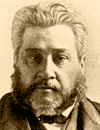 C.H. Spurgeon
in The Beginning of Months
Read in context
To every man God makes such a change of times and seasons when He deals with him in a way of Grace, for all things are become new within him and, therefore, he begins a new chronology.
C.H. Spurgeon
in The Beginning of Months
Read in context
The Israelites placed the month Abib in the first rank because it was the month of the Passover—put down the date at which you knew the Lord as the premier day, the noblest hour you have ever known!
C.H. Spurgeon
in The Beginning of Months
Read in context
Throughout the whole of Egypt's empire every house was woe, every face was horror, every heart was misery.
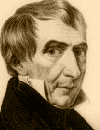 Henry Law
in The Passover
Read in context
The shed blood must be used.
Henry Law
in The Passover
Read in context
The night of Passover found Jewish families shut up in their dwellings, waiting to leave Egypt.
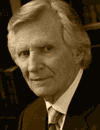 David Wilkerson
in Power to Overcome the Flesh
Read in context
The prince of this world watched Him narrowly, but he found nothing of evil in Him.
C.H. Spurgeon
in Bitter Herbs
Read in context
Christ on the Cross is to be the one object of your faith—you must look to Him there even as the Israelite was to look upon and feed upon the lamb roasted in the fire.
C.H. Spurgeon
in Bitter Herbs
Read in context
It is not enough that Christ should be sacrificed; He must also be appropriated by each for himself.
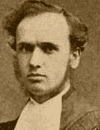 A.B. Simpson
in (The Names of Jesus) 6. Christ our Passover
Read in context
It is very sweet to know that the sprinkling was not done by other hands, but each household sprinkled its own doors; and so can each of us apply to ourselves the precious blood of our Redeemer.
A.B. Simpson
in (The Names of Jesus) 6. Christ our Passover
Read in context
They were to eat their Passover in haste, with loins girded and shoes on their feet and staves in their hands.
A.B. Simpson
in (The Names of Jesus) 6. Christ our Passover
Read in context
Faith is that bunch of hyssop which we dip into the blood and, with it, sprinkle the lintel and two side posts of the house wherein we dwell—and so we are saved from destruction.
C.H. Spurgeon
in The Annual Atonement
Read in context
No sword could reach the man on the door of whose dwelling God saw the sprinkled blood.
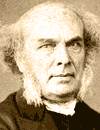 Horatius Bonar
in Rev 12:11. the Blood of the Covenant
Read in context
The moment a repentant sinner puts his trust in Christ, he is viewed by God as sheltered behind the blood-sprinkled lintel.
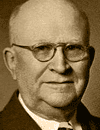 Harry Ironside
in Much Assurance
Read in context
The Blood is ever speaking to God for us; though we see it not, God sees it, and hears its prevalent plea.
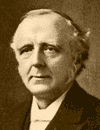 F.B. Meyer
in Our Daily Homily - Exodus
Read in context
We can never forget the cost of our redemption.
F.B. Meyer
in Our Daily Homily - Exodus
Read in context
The flesh of the lamb reminds us that Christ is not only a substitute for us, but the very substance and subsistence of our spiritual life through his living union and communion with us.
A.B. Simpson
in Emblems From Their Bondage and Redemption
Read in context
The unleavened bread helps us to remember that our most holy faith leaves no place for the indulgence of sin, but requires our turning from all iniquity if we would claim that redeeming blood.
A.B. Simpson
in Emblems From Their Bondage and Redemption
Read in context
It is true, we are to eat the Passover with bitter herbs, but they must be the bitter herbs of repentance -- not the bitter herbs of malice, wrath, and fury.
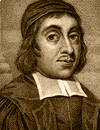 Thomas Watson
in Love One Another
Read in context
The Passover Lamb had been sacrificed; its blood was on the door; whilst its flesh, roast with fire, was being eaten.
F.B. Meyer
in Our Daily Homily - 1 Corinthians
Read in context
The Paschal Lamb was sacrificed for us on the cross.
F.B. Meyer
in Our Daily Homily - 1 Corinthians
Read in context
We are sojourners, as were all our fathers; and we pass the time of our sojourning here in fear; not looking back, but up and on; with girded loins and staff in hand hastening to the heavenly city.
Horatius Bonar
in Rev. 12:6. Strangership and Pilgrimage
Read in context
In the type of the Passover lamb, it was expressly enacted that not a bone of it should be broken—therefore not a bone of Jesus must be broken.
C.H. Spurgeon
in On the Cross After Death
Read in context
He is the Paschal Lamb, not a bone of which was broken.
C.H. Spurgeon
in On the Cross After Death
Read in context
The nation had been brought out of Egypt by the power of God under the blood of the slain lamb, itself the symbol and token of His grace.
 A.W. Pink
in The Law and the Saint 1. Introduction
Read in context
Oh blessed moment when we entered into peace, when we put the blood upon the door post and the lintel, and because God saw the blood we were ransomed, and in joy went forth from the land of bondage!
F.B. Meyer
in Christ the Complement of Our Need
Read in context
The Lord took means to keep this matter before the people, for they were wayward and seemed bent upon forgetting—even like this present age.
C.H. Spurgeon
in The Blood of Sprinkling and the Children
Read in context
The daily sacrifice, the passover lamb, the continual shedding of blood in the tabernacle and temple,--all these were emblems of Christ crucified.
 J.C. Ryle
in The Cross
Read in context
What Scripture says
- 1 Corinthians 5:7 Christ, our Passover lamb, has been sacrificed
- Exodus 12:13 when I see the blood, I will pass over you
- Exodus 12:5 the lamb must be without blemish
- Exodus 12:7 the blood put on the doorframes
- Exodus 12:8 the lamb eaten with unleavened bread and bitter herbs
- Exodus 12:11 eaten in haste, dressed for travel
- Exodus 12:14 a memorial for the generations to come
- Exodus 12:46 not a bone of the lamb to be broken
- John 1:29 the Lamb of God, who takes away the sin of the world
- 1 Peter 1:18-19 redeemed with the precious blood of Christ, a lamb without blemish or spot
- 1 Corinthians 5:8 keep the feast with the unleavened bread of sincerity and truth
How this page is made: the quotes are taken word for word from sermons on SermonIndex and checked against them by program before the page is published. The transcripts of audio and video sermons are machine-made, so follow the link to hear the words as they were spoken. The answer above the quotes is an overview with its sources listed; it is not a statement of doctrine by SermonIndex.