
The preachers quoted here follow Nehemiah from the court of the king to the walls of Jerusalem. They show a man who wept and prayed over the ruin of God's city, confessed his people's sin, pleaded God's promise, rebuilt the wall in the face of mockery and threats, kept his own hands clean, and kept calling the people back to God.
Nehemiah teaches us to carry God's cause as a burden, to pray before we act, to work hard and watch against opposition, and to keep reforming what has slipped. He wept over Jerusalem's broken wall, prayed for months, asked the king for leave, rebuilt the wall in the face of mockery and threats, and then called the people back to God's law. His own account of the finished wall is plain: "this task had been accomplished by our God." (Nehemiah 6:16). Alexander Maclaren wrote, "No man will do worthy work at rebuilding the walls who has not wept over the ruins."1
A man in a high place
Nehemiah was a servant in the king's court. He says, "At that time I was the cupbearer to the king." (Nehemiah 1:11). He lived far from Jerusalem, in comfort, and might have left the city to others. Alexander Whyte said of what the cupbearer became, "The young cupbearer has now become a great statesman and an experienced administrator, till he has left his mark on Jerusalem as long as one stone shall stand upon another."2 E.M. Bounds wrote, "In the story of the reconstruction of Jerusalem after the captivity, he plays a prominent part, and prayer is prominent in his life during those years."3
He heard, and wept
News came from Jerusalem. "The wall of Jerusalem is broken down, and its gates are burned with fire." (Nehemiah 1:3). Nehemiah did not shrug it off. "When I heard these words, I sat down and wept. I mourned for days, fasting and praying before the God of heaven." (Nehemiah 1:4).
Maclaren wrote, "God prepares His servants for their work by laying on their souls a sorrowful realisation of the miseries which other men regard, and they themselves have often regarded, very lightly."4 He went on, "The men who have been raised up to do great work for God and men, have always to begin by greatly and sadly feeling the weight of the sins and sorrows which they are destined to remove."5 Iain Murray said, "Love for God's cause was the mainspring of Nehemiah's actions."6
Bounds wrote, "How rare those who, seeing the desolations of Zion, are sufficiently interested and concerned for the welfare of the Church to mourn!"7 He went on, "Mourning and weeping over the decay of religion, the decline of revival power, and the fearful inroads of worldliness in the Church are almost an unknown quantity."8 He added, "There is so much of so-called optimism that leaders have no eyes to see the breaking down of the walls of Zion and the low spiritual state of the Christians of the present day, and have less heart to mourn and cry about it."9
Nehemiah did not treat Jerusalem as someone else's problem. T. Austin-Sparks said, "It is his own burden, and he takes the thing in responsibility upon his own shoulders before God in prayer, and prays vicarious prayer over this situation."10 He went on, "It is no mere mental apprehension of teaching and of truth; it is a heart-burden, a desperate concern for the Lord, because of things as they are spiritually amongst His people."10 In another address he said, "Intercessory prayer which brings in the Lord's purpose is something which is a continuous burden, day and night."11
Maclaren wrote, "Without the sad sense of men's sorrows, there will be no earnestness in alleviating them, nor self-sacrificing devotion; and without much prayer there will be little consciousness of weakness or dependence on divine help."12 Zac Poonen said, "Nehemiah is a great example of a man who was absolutely selfless and who was concerned for the glory of God's Name alone."13
The prayer of Nehemiah
Nehemiah began his prayer with God Himself. "O LORD, God of heaven, the great and awesome God who keeps His covenant of loving devotion with those who love Him and keep His commandments" (Nehemiah 1:5). Bounds wrote, "The prayer is recorded in Nehemiah 1 , and is a model after which to pattern our prayers."14 Austin-Sparks said, "Here is a very important law operating in true intercessory prayer; a knowledge of the Lord; that is, knowing the Lord; knowing what kind of God we are dealing with."11
Maclaren wrote, "The prayer here is all built, then, on that name of Jehovah, and on what the name involves, chiefly on the thought of God as keeping covenant and mercy."15 He added, "Prayers which are cast in the mould of God's own revelation of Himself will not fail of answer."16
C.I. Scofield said, "The first fact about this great prayer which arrests attention is that it was intercessory."17 He went on, "Most of the prayers preserved for us in Scripture are intercessory."17 He said, "Doubtless, though, the divine intent is that such prayers should by no means constitute the bulk of our praying."17 Nehemiah prayed "before You day and night" (Nehemiah 1:6). Austin-Sparks said, "It represents the unwillingness to let this matter pass lightly, to let it be taken without seriousness; it means that he is holding on to God about this thing."11
He confessed the sins of his people
Nehemiah did not blame others alone. "I confess the sins that we Israelites have committed against You. Both I and my father's house have sinned." (Nehemiah 1:6). "We have behaved corruptly against You and have not kept the commandments, statutes, and ordinances that You gave Your servant Moses." (Nehemiah 1:7).
Maclaren wrote, "The more loftily we think of our privileges, the more clearly should we discern our sins."18 He went on, "It is useless to ask God to help us to repair the wastes if we do not cast out the sins which have made them."19 Murray said, "When Nehemiah called them to action, he did so because he recognized that it was sin within the church that had laid her waste and that only sin was keeping her low."6
He pleaded God's promise
Nehemiah reminded God of His own word. "but if you return to Me and keep and practice My commandments, then even if your exiles have been banished to the farthest horizon, I will gather them from there and bring them to the place I have chosen as a dwelling for My Name." (Nehemiah 1:9).
Scofield said, "The Deuteronomic covenant had more than warnings of disaster and of the chastening hand of God, and the suppliant cup-bearer fell back upon the promises of that covenant with unquestioning faith."17 Maclaren wrote, "We are always sure of an answer if we ask God not to contradict Himself."20 Charles Spurgeon said, "Plead the promise, believe it, receive the blessing God is ready to give, and go about your business."21
So I prayed to the God of heaven
Months later the king saw Nehemiah's sad face and asked him what he wanted. Nehemiah says, "I was overwhelmed with fear" (Nehemiah 2:2). Then he writes, "So I prayed to the God of heaven" (Nehemiah 2:4) and only then answered the king. He had prayed for months, and he prayed again in the moment.
Maclaren wrote, "The consciousness of dependence on God and the habit of communion with Him give a man a clear sight of the limitations of earthly dignities, and a modest boldness which is equally remote from rudeness and servility."22 Nehemiah asked for leave, for letters and for timber, and he says, "And because the gracious hand of my God was upon me, the king granted my requests." (Nehemiah 2:8).
He saw the ruins for himself
Nehemiah did not begin by making speeches. "I set out at night with a few men. I did not tell anyone what my God had laid on my heart to do for Jerusalem." (Nehemiah 2:12). "so I went up the valley by night and inspected the wall." (Nehemiah 2:15).
Maclaren wrote, "The beginning of Nehemiah's work of repair was that sad midnight ride round the ruined walls."23 Walter Adeney wrote, "No map or book will give a man a right idea of a place that he has never visited."24 He also wrote, "The highest idealist must have something of the realist in him if he would ever have his ideas transformed into facts."25 Whyte said of Nehemiah, "A man who will see things with his own eyes, and that without all eyes seeing him."26
Let us rise up and build
Then Nehemiah spoke to the people. "You see the trouble we are in. Jerusalem lies in ruins, and its gates have been burned down. Come, let us rebuild the wall of Jerusalem, so that we will no longer be a disgrace." (Nehemiah 2:17). He told them of God's hand on him, and they answered, "Let us start rebuilding," (Nehemiah 2:18) and they set their hands to this good work.
Each family took its part of the wall. The people kept at it, "for the people had a mind to work." (Nehemiah 4:6). Bounds wrote, "Happy is that congregation who are contemplating the erection of a church to have leaders who will lay its foundations in prayer, and whose walls go up side by side with prayer."27 The psalmist says, "Unless the LORD builds the house, its builders labor in vain" (Psalm 127:1).
Mocked and despised
The work drew opposition at once. "Now when Sanballat heard that we were rebuilding the wall, he was furious and filled with indignation. He ridiculed the Jews" (Nehemiah 4:1). Tobiah joked that a fox could break down their wall. G. Campbell Morgan said, "It is so poor a city that one of his enemies laughed at his walls, and said a fox could break through them."28 He also said, "The story of the opposition against Nehemiah from without can be told in three words: Contempt, Conspiracy, Chastening."28
Nehemiah answered the mockery with faith. "The God of heaven is the One who will grant us success. We, His servants, will start rebuilding" (Nehemiah 2:20). Adeney wrote, "The Jews are God's servants; they are engaged in His work; they know He will prosper them; therefore they most certainly will not stay their hand for all the gibes and taunts of their neighbours."29 Spurgeon said, "How vexed must Tobiah and Sanballat have been when they saw the city rising upon its heap."30
We prayed, and posted a guard
When the enemies plotted to attack, Nehemiah did two things. "So we prayed to our God and posted a guard against them day and night." (Nehemiah 4:9). Spurgeon preached on this verse. He said, "No arrows will be left in the quivers of hell while there are godly men and women at whom they can be aimed."31 He said, "Sometimes when we pray, I am afraid that we are not transacting business at the throne of grace; but Nehemiah was as practical in his prayer as he was in the setting of the watch."32 He went on, "Sanballat sneered; but we prayed never the less, but all the more because of his sneers."33 He added, "Tobiah uttered a cutting jest; but we prayed never the less, but all the more because of his mocking taunt."34 And, "If they even become cruel and violent to you, pray none the less; never the less, not a word less, not a syllable less, not a desire less, and not any faith less."35 He said, "So long as there were any enemies about, the prayer and the watching were never parted."36 He also said, "Though your words are broken, and your sentences are disconnected; if your desires are earnest, if they are like coals of juniper, burning with a vehement flame, God will not mind how they find expression."37 And, "There are prayers that break the backs of words; they are too heavy for any human language to carry."38
Maclaren wrote, "The union of appeal to God with the full use of common sense, watchfulness, and prudence, would dissipate many hindrances to successful service."39 Bounds wrote, "Prayer defeats the opponents of those who are prosecuting God's enterprises."40
Discouragement at the halfway mark
Trouble also came from inside. The people of Judah said, "The strength of the laborer fails, and there is so much rubble that we will never be able to rebuild the wall." (Nehemiah 4:10). Maclaren wrote, "The enthusiasm of the builders had cooled, and the magnitude of their task began to frighten them."41
Nehemiah stood up and spoke. "Do not be afraid of them. Remember the Lord, who is great and awesome, and fight for your brothers, your sons and your daughters, your wives and your homes." (Nehemiah 4:14). Adeney wrote, "The very tone of his voice must have been reassuring; the presence of one brave man in a crowd of cowards often shames them out of their weakness."42
The sword and the trowel
The danger did not stop the work. "each of us returned to his own work on the wall." (Nehemiah 4:15). Maclaren wrote, "The work was the main thing, and the moment the interruption was ended, back to it they all went."43 The builders worked armed: "The laborers who carried materials worked with one hand and held a weapon with the other." (Nehemiah 4:17).
Maclaren wrote, "The lesson often drawn from them is no doubt true, that God's workers must be prepared for warfare as well as building."44 He went on, "But it is well to remember that building is the end, and fighting is but the means."45 Poonen said, "The people worked with him happily, because he worked himself."13
Trouble among his own people
The worst trouble came from within. "About that time there was a great outcry from the people and their wives against their fellow Jews." (Nehemiah 5:1). Poor families had pledged their fields to richer Jews and were forced to put their sons and daughters into slavery. Nehemiah was angry, and he rebuked the nobles and officials: "You are exacting usury from your own brothers!" (Nehemiah 5:7). He told them, "What you are doing is not right. Shouldn't you walk in the fear of our God to avoid the reproach of our foreign enemies?" (Nehemiah 5:9).
He also refused what was his by right. "The governors before me had heavily burdened the people, taking from them bread and wine plus forty shekels of silver. Their servants also oppressed the people, but I did not do this because of my fear of God." (Nehemiah 5:15). Maclaren wrote, "Nobody would have wondered if Nehemiah had conformed to it; but he felt that he must have his hands clean."46 He also wrote, "Nehemiah was a poorer man because he fed all these one hundred and fifty Jews at his table, but he did not mind that."47 He added, "It may involve loss, but you will keep God, and that is gain."48 Poonen said, "Wherever God sees a servant of His who is faithful with money, there will be no limit to which God uses him."13
I am doing a great work
The enemies then tried cunning. They asked Nehemiah to meet them, but they meant to harm him. He answered, "I am doing a great work and cannot come down. Why should the work stop while I leave it to go down to you?" (Nehemiah 6:3).
They tried to frighten him. His prayer was short: "But now, my God, strengthen my hands." (Nehemiah 6:9). When a hired prophet urged him to hide in the temple, he said, "Should a man like me run away? Should one like me go into the temple to save his own life? I will not go!" (Nehemiah 6:11). He saw through the man: "I realized that God had not sent him" (Nehemiah 6:12).
Whyte said, "And thus it is that such a large part of Nehemiah's autobiography is taken up with Sanballat's diabolical plots and conspiracies both to murder Nehemiah and to destroy the new Jerusalem."49
The wall was finished. "So the wall was completed in fifty-two days, on the twenty-fifth of Elul." (Nehemiah 6:15). Even the enemies saw who had done it. "When all our enemies heard about this, all the surrounding nations were afraid and disheartened, for they realized that this task had been accomplished by our God." (Nehemiah 6:16). Bounds wrote, "Prayer helps mightily in all matters concerning God's cause and wonderfully aids and encourages the hearts of those who have His work in hand in this world."50 Paul says, "Therefore, my beloved brothers, be steadfast and immovable. Always excel in the work of the Lord, because you know that your labor in the Lord is not in vain." (1 Corinthians 15:58).
The word read, and the joy of the Lord
The wall was not the end. The people gathered and asked Ezra to bring out the law. "And all the people listened attentively to the Book of the Law." (Nehemiah 8:3). "So they read from the Book of the Law of God, explaining it and giving insight, so that the people could understand what was being read." (Nehemiah 8:8).
Maclaren wrote, "The walls were completed; but the true defence of Israel was in God, and the condition of His defending was Israel's obedience to His law."51 He added, "If we have no longing to know what the will of the Lord is, we may be very sure that we prefer our own to His."52
The people wept when they heard the law. Nehemiah told them, "Go and eat what is rich, drink what is sweet, and send out portions to those who have nothing prepared, since today is holy to our Lord. Do not grieve, for the joy of the LORD is your strength." (Nehemiah 8:10). Maclaren wrote, "To divide our portion with others is the way to make our portion greater as well as sweeter."53 He also wrote, "For strength there must be hope, for strength there must be joy."54
Spurgeon preached on these words. He said, "The believer who is in a spiritually healthy state rejoices mainly in God himself; he is happy because there is a God, and because God is in his person and character what he is."55 He said, "You cannot be with a strong God without getting strength yourself, for God is always a transforming God; regarding and looking upon him our likeness changes till we become in our measure like our God."55 He added, "A man who walks in the sunlight of God's countenance, for that very reason is warm and strong."55
Reform that had to be done again
Nehemiah went back to the king for a time. When he returned, he found that much had slipped. A priest had given Tobiah a room in the house of God. Nehemiah says, "And I was greatly displeased and threw all of Tobiah's household goods out of the room." (Nehemiah 13:8). He found people working and trading on the Sabbath, and he rebuked the nobles and had the gates shut.
Maclaren wrote, "The last page of many a reformer's history has been, like Nehemiah's, a sad account of efforts to stem the ebbing tide of enthusiasm and the flowing tide of worldliness."56 He also wrote, "The one thing needful for Christian reformers is, not the power to appeal to force, but the force which they can carry within them."57 Whyte said, "Altogether, this little book is full of Nehemiah's absolute mastery in Jerusalem, and his determination that Jerusalem shall be both a safe, a happy, and a holy city to dwell in."58 Austin-Sparks said, "The book which bears his name cannot be read without recognition of the fact that God's jealousy had been generated in the heart of this man."59 He also said, "The wall is the symbol of a distinctive testimony to God in the nations and before heaven."59
Nehemiah's book is full of short prayers. "Remember me favorably, O my God, for all that I have done for this people." (Nehemiah 5:19). "Remember me for this, O my God, and do not blot out my deeds of loving devotion for the house of my God and for its services." (Nehemiah 13:14). Near the end he asks God to "show me mercy according to Your abundant loving devotion." (Nehemiah 13:22).
What Nehemiah teaches us
Nehemiah cared about the things of God, wept over them, prayed about them, and then worked with all his strength. He watched as well as prayed. He kept his own hands clean. He did not stop when he was mocked, frightened or tired. Maclaren wrote, "It is safe to imitate Him, and it is easy not to do as men do, if once our main idea is to do as Christ did."60 Morgan said, "The man who nurses his orthodoxy, and does nothing for God, is a liar and a hypocrite."28 Murray said, "In all our praying for revival, let us take care that we never cast the slightest doubt on the infinite willingness of God to prosper His people."6 Paul writes, "Let us not grow weary in well-doing, for in due time we will reap a harvest if we do not give up." (Galatians 6:9).
- Alexander Maclaren, Expositions Of Holy Scripture G, "A reformer's schooling".
- Alexander Whyte, Bible Characters, "Nehemiah".
- E.M. Bounds, Writings of E M Bounds - Volume 1, "Viii. nehemiah, the praying builder".
- Alexander Maclaren, Expositions Of Holy Scripture G, "A reformer's schooling".
- Alexander Maclaren, Expositions Of Holy Scripture G, "A reformer's schooling".
- Iain Murray, "Hope for Zion" (sermon).
- E.M. Bounds, Writings of E M Bounds - Volume 1, "Viii. nehemiah, the praying builder".
- E.M. Bounds, Writings of E M Bounds - Volume 1, "Viii. nehemiah, the praying builder".
- E.M. Bounds, Writings of E M Bounds - Volume 1, "Viii. nehemiah, the praying builder".
- T. Austin-Sparks, "The Character of the Lord's Vessel of Recovery" (sermon).
- T. Austin-Sparks, "A Model Prayer of Intercession" (sermon).
- Alexander Maclaren, Expositions Of Holy Scripture G, "A reformer's schooling".
- Zac Poonen, "Leadership Qualities of Nehemiah" (sermon).
- E.M. Bounds, Writings of E M Bounds - Volume 1, "Viii. nehemiah, the praying builder".
- Alexander Maclaren, Expositions Of Holy Scripture G, "A reformer's schooling".
- Alexander Maclaren, Expositions Of Holy Scripture G, "A reformer's schooling".
- C.I. Scofield, "Nehemiah's Prayer" (sermon).
- Alexander Maclaren, Expositions Of Holy Scripture G, "A reformer's schooling".
- Alexander Maclaren, Expositions Of Holy Scripture G, "A reformer's schooling".
- Alexander Maclaren, Expositions Of Holy Scripture G, "A reformer's schooling".
- C.H. Spurgeon, Spurgeons Sermons Volume 38 1892, "The Two Guards, Praying and Watching".
- Alexander Maclaren, Expositions Of Holy Scripture G, "A reformer's schooling".
- Alexander Maclaren, Expositions Of Holy Scripture G, "'over against his house'".
- Walter Frederic Adeney, The Expositor's Bible: Ezra, Nehemiah, and Esther, "Chapter xviii: the midnight ride".
- Walter Frederic Adeney, The Expositor's Bible: Ezra, Nehemiah, and Esther, "Chapter xviii: the midnight ride".
- Alexander Whyte, Bible Characters, "Nehemiah".
- E.M. Bounds, Writings of E M Bounds - Volume 1, "Viii. nehemiah, the praying builder".
- G. Campbell Morgan, "The Message of Nehemiah" (sermon).
- Walter Frederic Adeney, The Expositor's Bible: Ezra, Nehemiah, and Esther, "Chapter xxi: on guard".
- C.H. Spurgeon, "Jehovah-Shammah" (sermon).
- C.H. Spurgeon, Spurgeons Sermons Volume 38 1892, "The Two Guards, Praying and Watching".
- C.H. Spurgeon, Spurgeons Sermons Volume 38 1892, "The Two Guards, Praying and Watching".
- C.H. Spurgeon, Spurgeons Sermons Volume 38 1892, "The Two Guards, Praying and Watching".
- C.H. Spurgeon, Spurgeons Sermons Volume 38 1892, "The Two Guards, Praying and Watching".
- C.H. Spurgeon, Spurgeons Sermons Volume 38 1892, "The Two Guards, Praying and Watching".
- C.H. Spurgeon, Spurgeons Sermons Volume 38 1892, "The Two Guards, Praying and Watching".
- C.H. Spurgeon, Spurgeons Sermons Volume 38 1892, "The Two Guards, Praying and Watching".
- C.H. Spurgeon, Spurgeons Sermons Volume 38 1892, "The Two Guards, Praying and Watching".
- Alexander Maclaren, Expositions Of Holy Scripture G, "Discouragements and courage".
- E.M. Bounds, Writings of E M Bounds - Volume 1, "Viii. nehemiah, the praying builder".
- Alexander Maclaren, Expositions Of Holy Scripture G, "Discouragements and courage".
- Walter Frederic Adeney, The Expositor's Bible: Ezra, Nehemiah, and Esther, "Chapter xxi: on guard".
- Alexander Maclaren, Expositions Of Holy Scripture G, "Discouragements and courage".
- Alexander Maclaren, Expositions Of Holy Scripture G, "Discouragements and courage".
- Alexander Maclaren, Expositions Of Holy Scripture G, "Discouragements and courage".
- Alexander Maclaren, Expositions Of Holy Scripture G, "An ancient nonconformist".
- Alexander Maclaren, Expositions Of Holy Scripture G, "An ancient nonconformist".
- Alexander Maclaren, Expositions Of Holy Scripture G, "An ancient nonconformist".
- Alexander Whyte, Bible Characters, "Sanballat".
- E.M. Bounds, Writings of E M Bounds - Volume 1, "Viii. nehemiah, the praying builder".
- Alexander Maclaren, Expositions Of Holy Scripture G, "Reading the law with tears and joy".
- Alexander Maclaren, Expositions Of Holy Scripture G, "Reading the law with tears and joy".
- Alexander Maclaren, Expositions Of Holy Scripture G, "Reading the law with tears and joy".
- Alexander Maclaren, Expositions Of Holy Scripture G, "The joy of the lord".
- C.H. Spurgeon, "The Joy of the Lord, the Strength of His People" (sermon).
- Alexander Maclaren, Expositions Of Holy Scripture G, "Sabbath observance".
- Alexander Maclaren, Expositions Of Holy Scripture G, "Sabbath observance".
- Alexander Whyte, Bible Characters, "Nehemiah".
- T. Austin-Sparks, "Nehemiah" (sermon).
- Alexander Maclaren, Expositions Of Holy Scripture G, "An ancient nonconformist".
In their own words
Each line below is quoted exactly from a sermon on this site. Follow the link to hear or read it where it was said.
Love for God's cause was the mainspring of Nehemiah's actions.
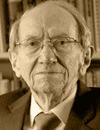 Iain Murray
in Hope for Zion
Read in context
When Nehemiah called them to action, he did so because he recognized that it was sin within the church that had laid her waste and that only sin was keeping her low.
Iain Murray
in Hope for Zion
Read in context
In all our praying for revival, let us take care that we never cast the slightest doubt on the infinite willingness of God to prosper His people.
Iain Murray
in Hope for Zion
Read in context
It is his own burden, and he takes the thing in responsibility upon his own shoulders before God in prayer, and prays vicarious prayer over this situation.
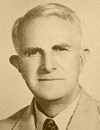 T. Austin-Sparks
in The Character of the Lord's Vessel of Recovery
Read in context
It is no mere mental apprehension of teaching and of truth; it is a heart-burden, a desperate concern for the Lord, because of things as they are spiritually amongst His people.
T. Austin-Sparks
in The Character of the Lord's Vessel of Recovery
Read in context
Intercessory prayer which brings in the Lord's purpose is something which is a continuous burden, day and night.
T. Austin-Sparks
in A Model Prayer of Intercession
Read in context
Here is a very important law operating in true intercessory prayer; a knowledge of the Lord; that is, knowing the Lord; knowing what kind of God we are dealing with.
T. Austin-Sparks
in A Model Prayer of Intercession
Read in context
It represents the unwillingness to let this matter pass lightly, to let it be taken without seriousness; it means that he is holding on to God about this thing.
T. Austin-Sparks
in A Model Prayer of Intercession
Read in context
Nehemiah is a great example of a man who was absolutely selfless and who was concerned for the glory of God's Name alone.
 Zac Poonen
in Leadership Qualities of Nehemiah
Read in context
The people worked with him happily, because he worked himself.
Zac Poonen
in Leadership Qualities of Nehemiah
Read in context
Wherever God sees a servant of His who is faithful with money, there will be no limit to which God uses him.
Zac Poonen
in Leadership Qualities of Nehemiah
Read in context
The first fact about this great prayer which arrests attention is that it was intercessory.
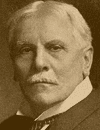 C.I. Scofield
in Nehemiah's Prayer
Read in context
Most of the prayers preserved for us in Scripture are intercessory.
C.I. Scofield
in Nehemiah's Prayer
Read in context
Doubtless, though, the divine intent is that such prayers should by no means constitute the bulk of our praying.
C.I. Scofield
in Nehemiah's Prayer
Read in context
The Deuteronomic covenant had more than warnings of disaster and of the chastening hand of God, and the suppliant cup-bearer fell back upon the promises of that covenant with unquestioning faith.
C.I. Scofield
in Nehemiah's Prayer
Read in context
It is so poor a city that one of his enemies laughed at his walls, and said a fox could break through them.
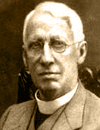 G. Campbell Morgan
in The Message of Nehemiah
Read in context
The story of the opposition against Nehemiah from without can be told in three words: Contempt, Conspiracy, Chastening.
G. Campbell Morgan
in The Message of Nehemiah
Read in context
The man who nurses his orthodoxy, and does nothing for God, is a liar and a hypocrite.
G. Campbell Morgan
in The Message of Nehemiah
Read in context
How vexed must Tobiah and Sanballat have been when they saw the city rising upon its heap.
 C.H. Spurgeon
in Jehovah-Shammah
Read in context
The believer who is in a spiritually healthy state rejoices mainly in God himself; he is happy because there is a God, and because God is in his person and character what he is.
C.H. Spurgeon
in The Joy of the Lord, the Strength of His People
Read in context
You cannot be with a strong God without getting strength yourself, for God is always a transforming God; regarding and looking upon him our likeness changes till we become in our measure like our God.
C.H. Spurgeon
in The Joy of the Lord, the Strength of His People
Read in context
A man who walks in the sunlight of God's countenance, for that very reason is warm and strong.
C.H. Spurgeon
in The Joy of the Lord, the Strength of His People
Read in context
The book which bears his name cannot be read without recognition of the fact that God's jealousy had been generated in the heart of this man.
T. Austin-Sparks
in Nehemiah
Read in context
The wall is the symbol of a distinctive testimony to God in the nations and before heaven.
T. Austin-Sparks
in Nehemiah
Read in context
What Scripture says
- Nehemiah 1:4 Nehemiah wept, mourned, fasted and prayed
- Nehemiah 1:6 he confessed his own sins and his people's
- Nehemiah 2:4 So I prayed to the God of heaven
- Nehemiah 2:8 the gracious hand of my God was upon me
- Nehemiah 2:18 Let us start rebuilding
- Nehemiah 4:6 the people had a mind to work
- Nehemiah 4:9 we prayed to our God and posted a guard
- Nehemiah 4:17 work in one hand and a weapon in the other
- Nehemiah 6:3 I am doing a great work and cannot come down
- Nehemiah 6:16 this task had been accomplished by our God
- Nehemiah 8:10 the joy of the LORD is your strength
How this page is made: the quotes are taken word for word from sermons on SermonIndex and checked against them by program before the page is published. The transcripts of audio and video sermons are machine-made, so follow the link to hear the words as they were spoken. The answer above the quotes is an overview with its sources listed; it is not a statement of doctrine by SermonIndex.