
Unbelief and doubt are significant themes throughout Scripture, revealing the struggle of the human heart to fully trust in God's promises. In Hebrews 11:6, we learn that without faith, it is impossible to please God, emphasizing the necessity of belief in our relationship with Him. The Bible recounts numerous instances where doubt led to spiritual stagnation, as seen in the story of Thomas, who declared, 'Unless I see in His hands the print of the nails, and put my finger into the print of the nails, and put my hand into His side, I will not believe' (John 20:25). Jesus responded to this doubt not with condemnation, but with an invitation to believe, highlighting His grace even in our moments of weakness. Furthermore, James 1:6 warns that those who doubt are like a wave of the sea, driven and tossed by the wind, illustrating the instability that accompanies a lack of faith. The sermon titled 'Wicked Men Inconsistent With Themselves' further explores how hypocrisy and doubt can coexist, leading to a life that is misaligned with God's truth. Ultimately, Scripture calls believers to cast aside doubt and embrace the assurance found in Christ, as stated in Romans 10:17, 'So faith comes from hearing, and hearing through the word of Christ.' In our journey of faith, we are encouraged to seek understanding and strengthen our belief, even amidst uncertainty.
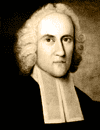
Jonathan Edwards preaches about the inconsistency of wicked men with themselves, highlighting how their rejection of God's messengers, like John the Baptist and Christ, reveals their inconsistency in objections and lifestyle choices. He emphasizes that their unbelief, doubts, and secret sins hinder