
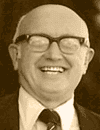
A Squirming Sacrifice
William MacDonald explores the struggle of surrendering to God, emphasizing that true fulfillment comes from embracing His will over our own desires.
This sermon emphasizes the journey of surrendering to God, highlighting the struggle to resist God's call, the realization of needing to surrender, and the ongoing process of daily surrendering our will to God. It explores the concept of being a 'squirming sacrifice,' where individuals resist God's will due to fear, selfish desires, and a lack of understanding of God's best plan for their lives. The sermon encourages daily renewal of surrender and the transformation of thinking to align with God's good, acceptable, and perfect will.
Full Transcript
Well, first of all, before we turn to the word, I'd like to express my sincere thanks to all those who've worked so hard to make this conference possible, especially the morale department of the kitchen and the dining room. Really, it was really fantastic. I would say fantabulous.
And I'd like to thank all the rest of you, too, for the wonderful fellowship here at Mid-South. I will be making my escape immediately after this meeting, and I have a tight schedule, so I just would appreciate it if I could just go out with a minimum of flourish. I think you'll all understand, if I haven't said goodbye to you, I do now, although not goodbye.
I said at the table today, I like the German expression better, Auf Wiedersehen. It's much nicer, you know, until we see you again. My insight used to say, Christians never say goodbye for the last time.
That's very true, never do. I want to talk to you this afternoon, kind of bring our little series to a conclusion. Perhaps I could use as the subject, a squirming sacrifice, a squirming sacrifice.
Isn't it strange that when God calls a person, the normal instinct is to resist? I think that was true in your salvation, wasn't it? The normal instinct is to resist. When God commissioned Moses to demand deliverance from his people, what did Moses say? He said, who am I that I should go to Pharaoh, that I should bring the children of Israel out of Egypt? And later he added another excuse. He said, oh my Lord, I am not eloquent, neither before nor since you have spoken to your servant, but I am slow of speech and slow of tongue.
And Jeremiah was just like that. God commissioned Jeremiah to go and preach the message. And he said, ah, Lord God, behold, I cannot speak for I am a youth.
And in a New Testament parable, you remember the nobleman, he entrusted ten servants with money to invest. They hated him, saying, we will not have this man to reign over us. And Saul of Tarsus, he was stubbornly refusing the voice of the Holy Spirit in his life.
And you hear those words, it's hard for you to kick against the goats, isn't it? Hard to kick against the goats. I like what C.S. Lewis said. He said that the Lord brought him in kicking and screaming, the most reluctant convert in all of England.
I can identify with that. Many of us can understand exactly what he meant, because that too was our experience. For years we had gone astray, wanting nothing but our own way.
We did not want any cosmic deity to tell us what to do. We wanted to be free lancers. Stomping our foot, we shouted defiantly, we will not have this man to reign over us.
We were determined that no one would direct our lives or interfere with our plans and ambitions. We wanted pleasure, and we were convinced that God didn't want us to have it. Isn't that right? It's a big mistake.
God does want us to have pleasure, but the trouble is he knows we're not looking for it in the right place. At thy right hand, there are pleasures forevermore. That's the right way to get pleasure.
We wanted the approval of our companions. We valued their approval more than the approval of God. We wanted self to be on the throne, and we looked upon God as being a meddling usurper.
And then gradually our peace was shattered. Looking back, it must be that someone was praying for us. But a very strange thing happened.
Without any desire on our part, we kept meeting people who wouldn't mind their own business. They kept talking to us about the Lord, and that wasn't exactly what we wanted. They insisted on bringing before us God and Jesus, sin and salvation, heaven and hell.
It didn't make any difference whether we were walking down a shopping mall or driving along in a car, we'd see Jesus saved on the side of a rock. We'd turn on the TV, we'd turn on the radio, it was always the same thing. We would hear some mention of God or of heaven or of hell.
It seemed that religion was everywhere. It was just as common as a phone booth or a Coca-Cola sign, wasn't it? And then, of course, open warfare erupted. We just got sick and tired of it, and we asked him to leave us alone.
Like Sol of Tarsus, we were kicking against the goads, and it was hard. In one sense, we were at war with the Omnipotent One, but it also seemed that we were running away from him. In our insanity, we were trying to flee from the One who is Omnipresent.
I like the way Francis Thompson said it in his poem, The Hound of Heaven. He said, I fled him down the nights and down the days. I fled him down the arches of the years.
I fled him down the labyrinths and ways of my own mind. And in the midst of tears, I hid from him. And under running laughter, up-fisted hopes, I sped and shot precipitated.
And down titanic glooms of chasmed fears for those strong feet that followed after. But with unhurrying chase and unperturbed pace, deliberate speed, majestic instancy, they beat, and a voice beat more instant than the feet, saying, All things betray thee, who betrayest me. A very vivid description of Francis Thompson trying to run away from the Lord, the Lord following without speed at all, just following, saying, Don't forget, all things betray thee, who betrayest me.
It was all so irrational. We were fighting against our own best interest. That's true of every unsaved person.
He's fighting against his own best interest. We thought the Savior wanted to rob us of pleasure when he wanted us to enjoy it. We thought that his will was bad, undesirable, horrible.
Actually, it was the very opposite. He wanted to save us from the sins that were dragging us down to hell. That's what he did.
He wanted to give us eternal life as a free gift, and we were running. He did not come to steal, kill, or destroy, but to give life more abundantly. It reminds me of a preacher friend of mine.
He had a radio program for young people, and it was supported just by the gifts of people who heard the broadcast. One night, as they were settling down for the night, the phone rang, and a lady called from the downtown railroad station. She wanted to come out and say hello.
They didn't know her. She was just a listener to the program. She just wanted to come out for a visit.
They said, well, look, it's a long way from the railroad station to where we live. She said, no problem at all. She said, I'll just take a bus out there.
They said, sorry, the buses have stopped running for the night. She said, well, that's all right. I'll take a taxi out there.
They said, well, it's really quite late, isn't it? Well, they ran out of excuses, and finally the dear woman came out, probably in a taxi, rang the doorbell, and they let her in. And she just said, I just wanted to come and tell you what a blessing the radio program is. And she went into her purse and brought out a large sum of money and handed it to this man.
And when he told me the story afterwards, he said, I'm so glad I let her in. And you know, that's a parable of us and the Lord, isn't it? He's there standing at our door in sunshine and rain and patiently waiting an entrance to gain. All he wants to do is bless us.
Dear friends, when the Lord is speaking to us, when the Lord is calling us, and we're afraid, we're only afraid of a blessing. It reminds me of years ago back at Emmaus Bible School. George Verwer was in town, and he came, and he was staying up in a men's dormitory there.
And there were a couple of fellows on their knees in one of the rooms. The door was just slightly ajar, and there was a couple of fellows on their knees praying. And one of these fellows was praying, Lord, I can't do it.
You know I can't do it. He was just pleading with the Lord about his inability to do it. And George happened to be passing by at that moment, and he just pushed the door a little and stuck his head in and said, what's the matter? Are you afraid of a blessing? Because the guy thought it was a voice from heaven, you know, speaking to him.
What's the matter? Are you afraid of a blessing? That's exactly it. That's exactly it. When the Lord speaks to us and we hold back, we're just afraid of a blessing.
We control the knob, don't we? It keeps the door locked. It keeps him outside. It's amazing to me.
We don't treat our friends and neighbors that way. It's amazing that we would ever treat the Lord of glory that way. We raced around trying to find pleasure.
We were drinking at broken cisterns. Christ was offering us water which we drank of it. We would never thirst again.
And yet we wanted our sins more than we wanted the Lord Jesus Christ. Well, there were moments when we seemed to weaken, when we knew what the right thing to do was. Maybe we should accept the Savior.
After all, the preacher said we had everything to gain and nothing to lose. But then a picture of our companions came up before us, you know, to go back and tell them that we were saved. And to hear their ridicule and their sneers, we were ashamed.
We were ashamed of Jesus, ashamed to be identified with him. The thought of confessing him before others just sent chills down our spine. Now, we can never tell people that we've been saved, that we've been born again.
We can already hear their belittling remarks to us. We can see their snide glances. But by this time, conviction of sin was deepening in our lives.
Day and night, God's hand was heavy upon us. Like David, our moisture was turned into the drought of summer. And if we tried to plead our basic goodness, the Spirit of God would remind us of what was inside those hearts of ours.
And it was obvious that no one with a polluted mind like ours could ever go to heaven without being cleansed. When we should be sleeping, we were wide awake, conscious of a load of sin on our shoulders and fearful of the just punishment that awaited us. Hell now was a terrible reality, not just a curse word.
It was a terrible reality that we all knew too well. With hypocritical skill, we tried to hide our inner feelings from those around us, from our relatives and our friends, what good actors we were. And yet we were consumed by fear and confusion.
We were tangled mass of contradiction. To put it bluntly, our life was falling apart. If I could quote C.S. Lewis again, he said, We felt the steady, unrelenting approach of him whom we so earnestly desired not to meet.
We felt the steady, unrelenting approach of him whom we desired so earnestly not to meet. And then at last came the day that we had dreaded. When we were stripped of our strength and our pride, and we dejectedly bleated out our surrender, we said, Nay, but I healed, I healed.
I can hold out no more. I sink by dying love compelled, and om thee, conqueror. It actually happened when we were in a meeting and they were seen just as I am without one plea, but that thy blood was shed for me and that thou bidst me come to thee, O Lamb of God.
I come, just as I am and willing not to rid my soul of one dark blood, to thee whose blood can cleanse each spot, O Lamb of God, I come. Those are just the right words we needed. Just as I am, though tossed about with many a conflict, many a doubt, fightings within and fears without, O Lamb of God, I come.
Just as I am, poor, wretched, blind, psych, riches, healing of the mind, yes, all I need is thee to bind, O Lamb of God, I come. Just as I am, thou wilt receive, wilt welcome, pardon, cleanse, relieve, because thy promise I believe, O Lamb of God, I come. Just as I am, thy love unknown has broken every barrier down, now to be thine and thine alone, O Lamb of God, I come.
The chase was over. The hound of heaven had caught up with us. We lay panting at the foot of the cross, weak and helpless.
It no longer mattered what our friends thought about us. It was no longer a concern of our hearts, only what he thought of us. Now we realized that the one whom we thought was our enemy was our very best friend.
Our fear had been groundless. Running away from the Lord, we were running away from our own best interests. The war was over.
We now had peace with God through our Lord Jesus Christ. We were now on the victory side. And those irritating Christians who used to buttonhole us, now we looked upon them completely differently.
They were the excellence of the earth, and whom was all our delight. They were our brothers and sisters in Christ, and we looked upon them with deepest gratitude. Once again, Lewis said, Who can duly adore that love which will open the high gates to a prodigal who is brought in kicking, struggling, resentful, and darting his eyes in every direction for a chance to escape? That's wonderful grace, isn't it? To bring in a person like that.
Struggling, screaming, looking in every direction for a way to escape. And the Lord brings him in. Squirming sacrifice.
Now another war begins. Oh, I thought when I trusted Christ the war would be over. Well, there was a war that was over, but another battle has begun.
Yes, we had trusted the Lord Jesus as our Savior, but now we faced another question. Would we surrender our lives to him for service? Could we trust him, as we said last night, to manage our lives down here on earth? And once more, our stubborn wills shifted into high gear. We know what we should do, but we weren't prepared to do it.
We know that divine logic pointed to full surrender to the one who died for us on Calvary's cross, but that might interfere with what we had planned for our life. We had looked forward to an idyllic marriage, to a luxurious home in the suburbs with hot and cold foaming doors, with two cars and a garage at least, with a profession or occupation that would yield a good income for us and a reputation for success in the community. Comfort, security, pleasure.
Oh, yes, some time to serve the Lord. To all outward appearances, the world was our oyster. Everything was going our way.
But there was something our friends couldn't see, because underneath, there was a deep disquiet. In some ways, it seemed that we were spinning our wheels. It seemed that we were chasing shadows.
Under the surface, we were struggling with the issue of full surrender. We were afraid. We were afraid of what His will for us might be.
Certainly, it couldn't be as glamorous as the life that we had planned for ourselves, could it? We dueled with God, and we listened to our hesitations too much. It never dawned on us that the Lord had options that we didn't know anything about, and that His will was far superior to anything we could ever think. God had options that could make us deliriously happy.
It just never dawned on us. Finally, we realized our foolishness. The Holy Spirit removed the blinders from our eyes.
We saw that the God of infinite love wants nothing but the very best for His people, and that really is true. We tumbled to the fact that His will is the best. God's way is the best way.
And so we did something we had never done before. For the first time in our lives, we bowed our knees and turned ourselves over to the Lord Jesus as a living sacrifice. We said, in effect, anywhere, Lord, anything, anytime, whatever you want me to do.
It was so logical. It made such good sense. How could we do less than give Him our best and live for Him completely after all He did for us? We had already turned our lives over to Him for salvation.
Now we turned them over to Him for service. We said, Jesus, Lord and Master, love divine has conquered. I will henceforth answer yes to all Your will.
Free from Satan's bondage, I am Thine forever. Henceforth, all Thy purposes may be fulfilled. So as time went on, we learned a painful lesson.
We learned that it isn't enough just to put your life on the altar once, because you go back the next day and the wretched thing is crawling off the altar. And we found out that we had to renew this every day of our lives. It was a squirming sacrifice.
We realized that the crisis of surrender was not enough. There had to be a process following it. The once for all commitments had to be followed by continual commitment.
And we learned that wonderful lesson that Anne Grannis tells us of in the little poem that she wrote. She said, I want my life so cleared of self that my dear Lord may come and set up His own furnishings and make my heart His home. And since I know what this requires, each morning while it's still, I slip into that secret place and leave with Him my will.
He always takes it graciously, presenting me with His. I'm ready then to start the day and any task there is. And this is how my Lord controls my interests, my will, because we meet at break of day for an exchange of wills.
Dear friends, if I could give you one secret of the Christian life more than any other, that would be it. Start the day down on your knees and have that exchange of wills with the Lord Jesus. Just say, Lord Jesus, I give you my will for the next 24 hours and I accept your will for my life.
Work out your will in my life. There's nothing that gives peace and poise and satisfaction and fulfillment to life like that. You say, what will happen? Will the lights go on? Will you feel nervous shivers? No, it's not a question of that at all.
And you make that commitment to the Lord every morning and then you go about your daily work, believing, believing that by the Spirit of God, He is leading, He is guiding, He's working in and through you. You say, does it make you proud? No, it doesn't make you proud at all. It doesn't make you proud at all, but there is a sense you realize that God is working in and through you.
And as time goes on, you will feel, realize that your service begins to crackle with the supernatural. And when you touch other lives, something happens for God. Isn't that something worth living for? When you touch other lives, something happens for God.
And so every morning we have to exchange our will for His. And so we begin on a daily basis to kneel before Him and say, Lord Jesus, I rededicate myself to you for the next 24 hours. You say, why not the next week? Why not? No, no.
As thy day, so shall thy strength be. Sufficient unto the day is the evil of just a day at a time. That's God's way for us to do it.
After turning our lives over to the Lord, we went through the day believing that He was guiding us, controlling us and leading us. And looking back, we realize how Theodore Monod in his poem captured the story of our squirming sacrifice in these lines. He said, Oh, the bitter shame and sorrow that a time could ever be when I let the Savior's pity plead in vain and proudly answered, all of self and none of thee.
Yet he found me. I beheld him bleeding on the cursed tree, heard him pray, forgive them, Father. And my wistful heart said faintly, some of self and some of thee.
Day by day, his tender mercy, healing, helping, full and free, sweet and strong and ah, so pleasant, brought me lower while I whispered less of self and more of thee. Higher than the highest mountains, deeper than the deepest sea, Lord, thy love at last has conquered none of self and all of thee. That should be the graduated story of our life.
First of all, we come to the Savior. We come to the Savior. We're fighting against Him.
The Spirit of God continues to work in us, convicting us of sin. Finally, we surrender to Him. Then the Spirit of God begins to plead with us for that life to be given to the Lord.
We read the other night in 2 Corinthians 5 that He died for all that they which live should not henceforth live unto themselves but unto Him who died for them and rose again. Why do we have to be squirming sacrifices? When are we going to learn that God's way for us is the very best way that divine wisdom can conceive of? Just think of that. If I give my life to the Lord Jesus to do whatever He wants with it, I have to believe that it's the very best thing that divine wisdom could ever conceive of.
Why should I ever hold back? This is the challenge of what we've been speaking about in these meetings. If I were to give a title to all of these, it would be my heart, my life, my all. Love so amazing, so divine, demands my heart, my life, my all.
It does seem to be such a contradiction that I, insignificant, frail as I am, that I should ever hold back my life from the One Father. It's good to remember that, isn't it? That I don't belong to myself. The Lord Jesus purchased me on the cross of Calvary.
And if I take my life and do what I want with it, I'm a thief because I'm taking something that doesn't belong to me. I don't want to be a thief. It belongs to Him.
I want to give it to Him. His love constrains me, Paul says. His love constrains me.
And I think of the love that He has for me. He's saying, how can I do less than give it my best to live for Him completely? After all He's done for me. The mercies of God call for myself as a living sacrifice to Him.
Romans 12, 1 and 2. I beseech you, therefore, brethren, by the mercies of God. Paul has just reversed the mercies of God in chapters 1 through 11 of Romans. I beseech you by the mercies of God to present your bodies a living sacrifice, not a dead sacrifice like the virgin offering in the Old Testament.
A living sacrifice, holy, acceptable unto God. If it's holy, it will be acceptable unto God. Which is your reasonable service.
It's the most reasonable, sane, rational thing you can do in the light of Calvary. That can also be translated, which is your spiritual worship. Both of them make very good sense.
It's an act of worship to present your bodies to Christ, a living sacrifice. Be not conformed to the world, or as Philip says, don't let the world around you pour you into its mold. But be transformed.
What does that mean, be transformed? It means to start thinking the way God thinks. You've been thinking the way the world thinks, now think the way God thinks. How does God think? Well, you have to go to the Word of God and find that, don't you? You go to the Word of God, you find out how God thinks.
Be transformed by the renewing of your minds that you may prove what is that good and acceptable and perfect will of God. You see, it's not bad and horrible and repulsive as you think it is. It's good and acceptable and perfect.
It's funny, the way people conjure up thoughts of the will of God. When most people think of the will of God, they think of snakes, scorpions, spiders in a place, in a swamp land of the densest humidity and heat. That's what they think of.
That's not what the will of God is like, good, acceptable and perfect. We have to come to the realization, as we said last night, that if God is able to save our souls from an everlasting hell, and we believe He does too, we should believe that He's able to do a good job managing our lives down here. Better than we could do, better than we could ever do.
So, if you're a squirming sacrifice today, the word is, make that surrender to the Lord. Every day of your life, make that fresh surrender to Him. There'll be a change in your life and it'll be the same again.
Shall we lift the Lord in prayer and then our brother will lead us in a closing hymn. And if you'll excuse me, I'll just slip away. Appreciate your prayers as we fly back to California.
Father, we pray that you'll forgive us for being so irrational. We realize, as we even think of these things, how sin has perverted the human mind. How it has set us in enmity against the God who built the skies.
How it has given us wrong concepts of you and of your will for our lives. Forgive us, Lord, we pray. Forgive us for plunking down all the verses of Scripture that call for that all-out commitment to you.
We pray that from this conference we'll go forth a different way. Lord, we just would dare to ask you today that from this conference here at Mid-South that lives will be changed and that blessing will flow out to the far corners of the earth. You know, this is not too much to ask of you.
And we do ask it in the worthy and precious name of the Lord Jesus. Amen.
Sermon Outline
-
I
- Introduction and gratitude
- The concept of a squirming sacrifice
-
II
- Resistance to God's calling
- Examples from scripture: Moses and Jeremiah
- The struggle of Saul of Tarsus
-
III
- The irrationality of resisting God
- The pursuit of pleasure versus God's will
- The role of prayer and divine intervention
-
IV
- The moment of surrender
- The ongoing struggle of daily commitment
- The importance of daily renewal
-
V
- The transformation of perspective towards God
- The joy of surrendering to God's will
- Living as a squirming sacrifice
Key Quotes
“I fled him down the nights and down the days.” — William MacDonald
“The one whom we thought was our enemy was our very best friend.” — William MacDonald
“I want my life so cleared of self that my dear Lord may come and set up His own furnishings.” — William MacDonald
Application Points
- Recognize that resisting God's will can lead to inner turmoil and dissatisfaction.
- Commit to daily surrender by starting each day with prayer and an exchange of wills with God.
- Understand that true joy and fulfillment come from aligning our lives with God's purpose.