
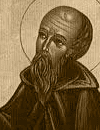
The First Degree of Humility Is Obedience Without Delay
The sermon emphasizes that true humility is demonstrated through immediate and unwavering obedience to God's commands as expressed through one's Superior.
St. Benedict of Nursia preaches about the first degree of humility, which is obedience without delay. Those who prioritize Christ above all else, fear hell, seek eternal life, and promptly obey their superiors as if it were a divine command. They forsake their own will, leaving unfinished tasks to follow the voice of their commander swiftly, motivated by the desire for eternal life. By choosing the narrow way and living under the guidance of an Abbot, they emulate Jesus' example of doing the will of the Father.
Text
The first degree of humility is obedience without delay. This is the virtue of those who hold nothing dearer to them than Christ; who, because of the holy service they have professed, and the fear of hell, and the glory of life everlasting, as soon as anything has been ordered by the Superior, receive it as a divine command and cannot suffer any delay in executing it. Of these the Lord says, "As soon as he heard, he obeyed Me" (Ps. 17[18]:45). And again to teachers He says, "He who hears you, hears Me" (Luke 10:16).
Such as these, therefore, immediately leaving their own affairs and forsaking their own will, dropping the work they were engaged on and leaving it unfinished, with the ready step of obedience follow up with their deeds the voice of him who commands. And so as it were at the same moment the master's command is given and the disciple's work is completed, the two things being speedily accomplished together in the swiftness of the fear of God by those who are moved with the desire of attaining life everlasting.
That desire is their motive for choosing the narrow way, of which the Lord says, "Narrow is the way that leads to life" (Matt. 7:14), so that, not living according to their own choice nor obeying their own desires and pleasures but walking by another's judgment and command, they dwell in monasteries and desire to have an Abbot over them. Assuredly such as these are living up to that maxim of the Lord in which He says, "I have come not to do My own will, but the will of Him who sent Me" (John 6:38).
Sermon Outline
-
I
- Definition of Humility
- Importance of Obedience
- Obedience as a Divine Command
-
II
- The Role of the Superior
- Immediate Response to Commands
- Scriptural References Supporting Obedience
-
III
- Forsaking Personal Will
- The Swiftness of Obedience
- Desire for Eternal Life
-
IV
- Choosing the Narrow Way
- Living in Community
- Following the Example of Christ
Key Quotes
“The first degree of humility is obedience without delay.” — St. Benedict of Nursia
“As soon as he heard, he obeyed Me.” — St. Benedict of Nursia
“I have come not to do My own will, but the will of Him who sent Me.” — St. Benedict of Nursia
Application Points
- Practice immediate obedience in your daily life to reflect your commitment to Christ.
- Seek to understand the commands of your leaders as divine guidance.
- Cultivate a desire for eternal life that motivates your actions and decisions.