
On Weekdays
The Morning Office on weekdays consists of a specific order of Psalms, lessons, and prayers.
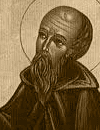
St. Benedict of Nursia outlines the order of the Morning Office to be celebrated on weekdays, starting with Psalms 66 said without an antiphon, followed by Psalms 50 with an antiphon. Each weekday has designated Psalms to be recited, along with specific canticles and hymns. The service includes Psalms of praise, a lesson from the Apostle, the Ambrosian hymn (Te Deum), a verse, a canticle from the Gospel book, and concludes with a litany.
Text
On weekdays the Morning Office shall be celebrated as follows. Let Psalm 66 be said without an antiphon and somewhat slowly, as on Sunday, in order that all may be in time for Psalm 50, which is to be said with an antiphon.
After that let two other Psalms be said according to custom, namely: on Monday Psalms 5 and 35, on Tuesday Psalms 42 and 56, on Wednesday Psalms 63 and 64, on Thursday Psalms 87 and 89, on Friday Psalms 75 and 91, and on Saturday Psalm 142 and the canticle from Deuteronomy, which is to be divided into two sections each terminated by a "Glory be to the Father." But on the other days let there be a canticle from the Prophets, each on its own day as chanted by the Roman Church.
Next follow the Psalms of praise [148-50], then a lesson of the Apostle to be recited from memory, the responsory, the Ambrosian hymn [Te Deum], the verse, the canticle from the Gospel book, the litany, and so the end.
Sermon Outline
- The Morning Office on Weekdays
- Psalms for Each Day
- Psalms of Praise and Lessons
- Celebrating Psalm 66
- Saying Psalms 50 and Others
- 'Monday: Psalms 5 and 35'
- 'Tuesday: Psalms 42 and 56'
- Psalms 148-50
- Lesson of the Apostle
Key Quotes
“Let Psalm 66 be said without an antiphon and somewhat slowly, as on Sunday, in order that all may be in time for Psalm 50, which is to be said with an antiphon.” — St. Benedict of Nursia
“Next follow the Psalms of praise [148-50], then a lesson of the Apostle to be recited from memory, the responsory, the Ambrosian hymn [Te Deum], the verse, the canticle from the Gospel book, the litany, and so the end.” — St. Benedict of Nursia
Application Points
- Make time for daily prayer and reflection.
- Use the Psalms as a guide for your spiritual growth.
- Be mindful of the importance of community prayer and worship.