
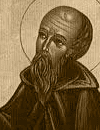
In Winter Time as Defined Above
St. Benedict outlines the structure and significance of worship during winter, emphasizing the importance of praise and communal readings.
St. Benedict of Nursia outlines a structured order for the Night Office, beginning with a call to open lips in praise to the Lord, followed by the chanting of Psalms, the Ambrosian hymn 'Te Deum,' and additional Psalms with antiphons. The service includes readings from both the Old and New Testament, along with explanations from respected Catholic Fathers, interspersed with responsories. The Night Office concludes with recitation of Psalms, a lesson from the Apostle, and a litany petition for God's mercy.
Text
In winter time as defined above, there is first this verse to be said three times: "O Lord, open my lips, and my mouth shall declare Your praise." To it is added Psalm 3 and the "Glory be to the Father," and after that Psalm 94 to be chanted with an antiphon or even chanted simply. Let the Ambrosian hymn [Te Deum] follow next, and then six Psalms with antiphons.
When these are finished and the verse said, let the Abbot give a blessing; then, all being seated on the benches, let three lessons be read from the book on the lectern by the brethren in their turns, and after each lesson let a responsory be chanted.
Two of the responsories are to be said without a "Glory be to the Father" but after the third lesson let the chanter say the "Glory be to the Father," and as soon as he begins it let all rise from their seats out of honor and reverence to the Holy Trinity. The books to be read at the Night Office shall be those of divine authorship, of both the Old and the New Testament, and also the explanations of them which have been made by well known and orthodox Catholic Fathers.
After these three lessons with their responsories let the remaining six Psalms follow, to be chanted with "Alleluia." After these shall follow the lesson from the Apostle, to be recited by heart, the verse and the petition of the litany, that is "Lord, have mercy on us." And so let the Night Office come to an end.
Sermon Outline
- I points: - Introduction to Winter Time Worship - Importance of Opening Our Lips to Praise
- II points: - Structure of the Night Office - Reading of Psalms and Lessons
- III points: - Role of the Abbot in Worship - Significance of Responsories
- IV points: - Reading from Divine Authors - Incorporating the Old and New Testament
- V points: - Concluding the Night Office - The Litany and Final Blessing
Key Quotes
“O Lord, open my lips, and my mouth shall declare Your praise.” — St. Benedict of Nursia
“Let the Ambrosian hymn [Te Deum] follow next.” — St. Benedict of Nursia
“Lord, have mercy on us.” — St. Benedict of Nursia
Application Points
- Start your day with a prayer that opens your heart to God.
- Engage in communal worship to strengthen your faith and community bonds.
- Incorporate scripture readings into your daily routine for spiritual growth.