
The Citadel of the Soul
The sermon teaches that man is the sovereign and autonomous guard of his own citadel, responsible for deciding what comes in or goes out, and accountable for what he is morally and spiritually.
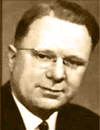
Russell DeLong emphasizes the concept of the human soul as a citadel, a place of security and autonomy where individuals have the power to choose what enters and exits. He highlights the responsibility each person holds in determining the influences that shape their character and spiritual well-being, emphasizing the importance of personal choice in allowing good or evil, God or Satan, into their lives. DeLong draws parallels between the physical citadel's protection from external threats and the soul's need for vigilance in guarding against harmful influences. He concludes by referencing Revelation 3:20, where God stands at the door of the heart, waiting for individuals to willingly invite Him in.
Text
Scripture: Revelation 3: 20
A citadel is a fortress or a stronghold. It is a place of security, safety, refuge, and strength.
It also may be situated on a high plateau and thus be doubly safe from attack and also a superior spot for vision to spot enemy advances. Sometimes in past wars moats, water-filled trenches, were dug around a castle or citadel in order to increase its safety from attack. In brief, a citadel was a place of safety.
When God created man in His own image He gave him a citadel, a place of security and
safety. Man is sovereign. He is autonomous, self-directing. Man's will is the guard to his citadel. No person or thing can make man act. He alone chooses his course. It is true that sheer physical power can push a man's body about and even throw him into jail. But no power in earth, heaven, or hell can invade man's soul and force his will. His personal citadel is impenetrable. His moral privacy is guaranteed. Man is free to open or close the door of his being.
The old Stoics had a very interesting and true motto which read:
I rest assured that nothing can harm me unless I myself open the door to the enemy.
In essence, this means that neither good nor bad can enter my soul unless I myself open the door and welcome it. With this I agree, and I am convinced that such a truth is sound Biblically, philosophically, psychologically, and morally.
If good or evil can get within me without my will, then I cannot be held accountable and
responsible for what I am morally and spiritually. I must be the guard, the monitor, the agent, who says, "Come in, or, Stay out." Otherwise I am not responsible for what I am.
I think I can hear somebody murmur, "Do you mean to say that no one can do me any harm or do me any good?" That is just exactly what I mean. But let me add this word of explanation -- certainly people can steal my money, blackguard my name, ruin my reputation, and slap my face or throw me into jail. Likewise they can do good things for me. But remember, my name, my reputation, my money, or even my body are not me. My attitude toward these external acts and things determines whether they do me good or bad, make me better or bitter, richer or poorer, stronger or weaker. "Prison bars do not a prison make." My body may be enslaved but my soul never -- unless I enslave myself.
What a sobering, awesome, tremendous truth! I am unique, individual, free, private,
sovereign, autonomous. Neither men nor devils can transgress the citadel of my soul.
In the New Testament there are instances of persons possessed of devils. One had seven
demons cast out. It would destroy my conception of God's justice and nullify the basic principle of this existence, freedom, if I had to believe that any person could be overrun by either men or devils without consent. No! It could not be.
But on the other hand, good cannot enter my self unless I welcome it. And now a step
further -- and I take it reverently -- even God, the Holy Spirit, cannot and will not possess my soul unless I open the door and bid Him enter.
Man is a citadel. He alone decides what comes in or goes out. And he is responsible for
both incoming and outgoing traffic, be it good or evil, God or Satan.
I am what I permit to come to me. If I am evil it is because I choose evil and permit it to
come into my private citadel. If I am good it is because I permit good and God to come into my soul. I stand at the door. Nothing gets in without my knowledge and personal approval.
What I am I made. If I am morally good and spiritually righteous, it is because I chose
Christ and He came into my citadel and cleansed my heart. If I am evil and corrupt, it is because I chose sin and Satan and kept Christ out.
I am the captain of my soul, the governor of my citadel, the keeper of my heart, the ruler of my spirit.
So the whole import of this sermon is wrapped up in this question: What and whom do you permit entrance to your private citadel?
In closing, listen to this scripture (Rev. 3: 20). God says:
"Behold, I stand at the door, and knock: if any man hear my voice, and open the door, I will come in to him, and will sup with him, and he with me."
My last day in London, on my recent world tour, I went to St. Paul's Cathedral. There I saw Holman Hunt's famous masterpiece, "The Light of the World." I stood awed and thrilled at its gorgeous beauty and colossal meaning. There stands Christ knocking at a door. He is colorfully arrayed in the robes of Prophet, Priest, and King. He wears the white robe, signifying the power of the Spirit; the jeweled robe with breastplate, indicating sacerdotal investiture; and on His head is a crown of soft, growing thorns with leaves for the healing of the nations. He holds a lantern, for it is night when He approaches. The door is large and heavy and fast-barred. It has never been opened. The nails are rusty. Tendrils of ivy climb up, nearly covering it. Christ knocks.
When Holman Hunt first exhibited this masterpiece, the critics studied it carefully and
finally one of them exclaimed,
"There is a great omission!"
"What is it?" Mr. Hunt asked.
The critic replied, "You forgot to paint a knob or latch on the door."
"But," said M the door of the human heart. There is no latch or knob on the outside. If it is ever opened it must be
from the inside."
That's it!
Christ will knock. He will not break the door down. He will not force His way in.
If He comes in, you must lift the latch, open the door, and bid Him enter.
The citadel of your soul is yours. You can welcome Him or reject Him.
Sermon Outline
- I. The Concept of a Citadel
- A. A place of security, safety, refuge, and strength
- B. Can be situated on a high plateau for added safety and vision
- C. May have moats or water-filled trenches for increased safety
- II. Man as a Citadel
- A. Man is sovereign and autonomous
- B. Man's will is the guard to his citadel
- C. No person or thing can make man act without his consent
- III. The Responsibility of the Guard
- A. Man decides what comes in or goes out
- B. Man is responsible for both incoming and outgoing traffic
- C. Man is accountable for what he is morally and spiritually
- IV. The Invitation to Christ
- A. Christ will knock, but not break the door down
- B. Man must lift the latch, open the door, and bid Christ enter
- C. The citadel of the soul is man's to welcome or reject Christ
Key Quotes
“I rest assured that nothing can harm me unless I myself open the door to the enemy.” — Russell DeLong
“I am the captain of my soul, the governor of my citadel, the keeper of my heart, the ruler of my spirit.” — Russell DeLong
“If He comes in, you must lift the latch, open the door, and bid Him enter.” — Russell DeLong
Application Points
- You are responsible for deciding what comes into your life, and you must be accountable for what you are morally and spiritually.
- You have the power to choose whether to welcome or reject Christ into your life.
- Your attitude towards external acts and things determines whether they do you good or bad.