
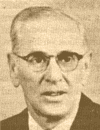
Saving Faith
Rolfe Barnard's sermon emphasizes the critical nature of saving faith as an active commitment to follow Christ and engage in His mission, rather than a mere belief or experience.
In this sermon, the preacher focuses on 2 Peter 1:11, which describes how an abundant entrance into the everlasting kingdom of Christ will be ministered to believers. The sermon begins by emphasizing the importance of not just obtaining faith, but also actively engaging in the Christian life. The preacher highlights the need for believers to remember their purpose in the world, which is to testify against it and engage in spiritual warfare. The sermon emphasizes the importance of diligently pursuing godliness and obedience to God's word, as well as the significance of the knowledge of God and Jesus in multiplying grace and peace in believers' lives.
Full Transcript
Last evening I spoke to you on the call of God in elective grace, and tonight I want to lay a foundation. It'll be a rather dull teaching message tonight. I want to lay a foundation tonight, so that tomorrow night we may address ourselves to the subject, what is saving faith? It's a question that every individual member of the Church of Christ singly, and with his brothers and sisters collectively, desperately need to re-examine in this day, when everybody believes.
Everybody believes now. You can't find anybody now who's not a great admirer of Jesus Christ. The liberals say he's the highest product of God, the best product of God's inventive grace.
If his ideals were followed, what a different world it would be. Even orthodox Jews now, who were taught to hate Jesus, have become very friendly. Most of them now read the New Testament, perhaps more than most of us professing Christians do.
That's right. Everybody has faith now. You go to the hospital and find anybody, it won't tell you about he's depending on the good Lord.
Especially if he's real sick. Isn't that right? Everybody has faith now. What is involved in saving faith? I want to introduce that subject to this congregation, Bible study method, to challenge you.
I hope to re-challenge my own heart. I don't know exactly how you feel, but I expect you cut out the same cloth I am. And as any of the milk of human kindness, much less the grace of God in your makeup, it must be a constant burden upon you that what is called the church of the living God now is making such a small impact, if it's making any, on the generation in which we are called to stand as ambassadors and envoys of the Lord Jesus Christ and with uplifted hand plead with men and women to be reconciled to God.
I take it to heart when a man, one of the few commentators that sometimes tells the truth, David Lawrence, calls our attention to the fact that the fastest growing religion in the world, communism, doesn't think that it need worry at all because of the opposition of what's called the church of the Lord in the world. That we are so much the product and the mirror of our day instead of the reflection of the character of God, communism does not fear organized Christianity. I have never been able to believe that it pleased God for people to claim to be the people of God in church assemblage to be ignored by its generation.
And I think God's calling everlast one of us to dig deeper, come to the old-fashioned mourner's bench, if you please, and repent and do good works. Certainly, this matter of faith is a good place to do some digging. I want to read from this passage of scripture in 2 Peter 1, and I want to begin with verse 11 and then go back and read the verses preceding it as they illustrate the little word, so.
Verse 11 is the climax of the argument thus far, and it proceeds to tell us that after the manner that I've been describing in verses 1 through 10, which we'll read to refresh our memories with, in this manner, for so an entrance shall be ministered unto you abundantly into the everlasting kingdom of our Lord and Savior, Jesus Christ. How is this entrance to be ministered unto us into the everlasting kingdom of Christ to take place? Well, verses 1 and 10 tell us. And so let's read it with that in mind.
Simon Peter, verse 1, says, And an apostle of Jesus Christ to them that have obtained like precious faith with us through the righteousness of God and our Savior, Jesus Christ, that all there is to it that yet to be settled, not according to Peter, and grace and peace be multiplied unto you through the knowledge of God and of Jesus our Lord, according as his divine power hath given unto us all things that pertain unto life and godliness through the knowledge of him that hath called us to glory and virtue, whereby through this calling are given unto us exceeding great and precious promises, that by these ye might be partakers of the divine nature, having escaped the corruption that is in the world through lust. Is that all? Oh, no. And besides this, giving all diligence, remember now we're reading how this entrance into the everlasting kingdom of Christ is going to be ministered to us.
Beside all this, we've obtained like precious faith, grace is multiplied, we're given the knowledge of God, we are called unto glory and virtue, we're giving exceeding great and precious promises that we may be partakers of the divine nature, having escaped the corruption that is in the world through lust. And that is all besides this. Giving all diligence, you add to your faith virtue, and then you add to your virtue knowledge.
You do this. And to knowledge you add temperance, and to temperance you add patience, and to patience you add godliness, and to godliness you add brotherly kindness, and to brotherly kindness you add love. For if these things be in you, one thing won't take place.
If these things be in you and bubble over and abound, they make that you shall neither be barren nor unfruitful in the knowledge of our Lord Jesus Christ. But he that lacketh these things, that we are to add to our faith and virtue and so forth, that we are to give diligence to build this pyramid, we are to work out our salvation as he works in us. Well, he doesn't do that, he's blind.
He cannot see afar off. He's forgotten that he was purified from his old sins. Wherefore, instead of falling into that predicament, brethren, give diligence, give diligence under God.
This is God's Word. He's telling us how this abundant entrance is going to be ministered to us. This in an addendum, something that's optional, this is to be faced and obeyed.
Beside this, give diligence to make your calling and election sure. For if you do these things, ye shall never fall. For in the doing of these things, so an entrance shall be ministered unto you abundantly into the everlasting kingdom of our Lord and Savior Jesus Christ.
Isn't it a matter of heartbreak that what we call salvation now seems to be an escape from burden, from responsibility, from warfare? Aren't we in danger of being cultists, meeting together, congratulating ourselves that we're not as other men? Do we all not need constantly to be reminded that a little knowledge puffs up, makes food out of us? Is there anything that professing people of God today need to take more seriously than the fact that a so-called faith that doesn't cause you to roll up your sleeves and spit on your hands and you build this character described in this passage? Isn't this necessary? Aren't we in terrible danger of the old Baptist credo, be saved, be baptized, and be done? Isn't the New Testament a call to warfare? Isn't it a call to remember that the only reason we're in this world is to testify against it and to witness? How much longer are we going to call ourselves Christians and continue to be spectators watching the war? How can we wet our spiritual senses and come up with a scriptural answer to the question? How? Ask churches, not to be ghettos, but to get in the battle where it's being lost. That's outside. Where are the men and women who believe that an integral part of what salvation is is a continual warfare, adding, adding, adding, adding, adding? This, what this passage of Scripture says, this is the way an entrance shall be ministered unto us abundantly into the rule, the everlasting rule of our Lord and Savior Jesus.
What's involved in saving faith? I believe this is the one single, most important question facing churches today. I believe it because I'm under the deepest conviction, as for my own self, that we've come perilously close to being blasphemous in our conception of what it means to be saved. I believe that this generation has been shot a curve by most of us in my hands, I'm afraid, are full of their blood in separating the conception of salvation from warfare and service and the will of God, counting our own lives not dear, and hazarding our lives for the gospel's sake, being willing to endure all things for the elect's sake, and becoming all things to all men, if by any means we might save.
I believe we have almost made a joke out of what it means to be S-A-V-E-D-Saved. And I believe that you are about as guilty as I am. And I'm calling myself and you to re-challenge us, see if we hadn't better buy us a Bible, everything that hadn't paid a great deal of attention to the one we've got, and see if we can't come to some sort of proximity to the conception the Bible gives us of what the salvation of God in Jesus Christ really is.
I want to ask seven questions tonight that I believe ought to be seriously faced and studied by every child of God, and especially since, if you'll not misunderstand me, you can't be a Christian by yourself. The Scriptures don't know a thing about that. It's a relationship.
It's a fellowship. And I think that as a one member of the many-membered Body of Christ, as you come together, I think we'd better drop our smugness and do some tremendous searching into the plain teaching of the Scripture, see if we couldn't come up with a message that's true to the gospel of Christ that would tell men the truth, and that churches might be born all over this country made up of men and women who are disciples of Jesus Christ. I want to use an illustration and make a quotation, make a statement before I ask these seven questions, and they'll prepare at least me for the message tomorrow night.
In one of our Baptist Sunday School classes in the Southland not long ago, in the intermediate department, a little boy raised his hand and said, Teacher, may I ask a question? The teacher said, Surely. And the little boy, intermediate, said, Teacher, was Adolf Hitler a Christian? And the teacher of the Sunday School class in the intermediate department of that Baptist church answered, and don't you laugh, because she put her finger on what is generally regarded to be salvation in America. Teacher, was Adolf Hitler a Christian? Passing on what she had imbibed, been exposed to, and concluded from what passes as Christianity today, the teacher said, He certainly didn't act like one.
We can only hope he trusted Jesus when he was a little boy. She wasn't far from what passes for salvation today. She wasn't talking from left field too far, brother, for salvation today seems to be something that has nothing whatsoever to do with the promotion of character, the character of Christ in a man's life.
Down in Kentucky, a dear lady, and sincere and honest as she could possibly be, a disciple of a preacher your pastor knows very well, a preacher who has influenced hundreds of preachers in America, was his antinomian conception of what the grace of God is. And this woman, having sat under that ministry through the years, and we are products of what we are taught. She came up to me one evening after the message and said, Brother Barnard, would you join me in prayer about my husband? Said he's breaking my heart.
Said I don't know how much longer I can stand it. Said he's lost his business, our home's torn all to pieces, he's lost his health. Said he hadn't drawn a sober breath in thirty years.
Said now he's a sock drunkard, just drunk all the time. And then it breaks your heart what the woman said to me. She said, Brother Barnard, I get down on my knees every night by the bedside before I retire to sleep, and thank God that he saved my husband before he got in that shape.
The dear woman was as honest as you are. Because you may think I'm a crank, in America to be saved now seems to be something utterly separate from the promotion of the character of Christ or the production of the character of Christ in an individual. It is almost silly now to walk up to a man and ask him if he's a Christian.
For that term is like old Mother Hubbard's blanket, it covers nearly everything. It is likewise almost silly to ask a man, would you like to be saved? I'd remember the time when that seemed to be a legitimate question. Well, who wouldn't like to have forgiveness instead of condemnation? Who wouldn't like to have life instead of death? This is all that salvation is.
Rather today I think we're going to have to be honest enough to face men and women and ask them this question. Do you believe so strongly that God's way is the only way that you're willing to give your life to making His way become a reality in the world no matter what the cost? Are you willing so strongly convicted that a Christian certainly must be engaged in the same mission as his Lord that you believe in God's way but give yourself to it if it kills you? I believe that's a legitimate question to face the question of salvation. I believe the man who will answer that question with his life, not his profession, not his little testimony, but with his life, I believe he has saving faith.
The young man, Dietrich Bonhoeffer, that Hitler had hanged in Osbrocken, one of the concentration camps, who without doubt is causing more disturbance in the ranks of theology than any body of our day, Dietrich Bonhoeffer, I want to quote from him, the only man who has the right to say that he's justified by grace alone is the man who's left all to follow Christ. Let me repeat it. I think the man's telling the New Testament truth.
The only man who's got a right to claim that he's a product of God's saving grace, not the fellow who tells you about some little experience he had that you might could have repeated with some sort of soothing syrup or the devil could have given you. But the only man who has the right to say that he stands upright, justified by the grace of God alone, is the man who has left all to follow Christ. Such a man knows that the call to discipleship, and that's what God calls us to, is a gift of grace and that the call is inseparable from the grace.
You can't have one without the other. Then he says, those who try to use God's grace as a dispensation from following Christ are simply deceiving themselves. How would you feel if you were as old as I am? I'm not as old as I hope to be, but I'm a little older than most of you.
You spent 42 years this September trying to make out like I was a preacher. God knows it's getting serious for me now. All the days of my ministry have been standing in an atmosphere.
I'd rather be saved. It's a nice little thing, but it involves no cross, no enduring hardness, no walking in enemy territory, no invasion of the strongholds of Satan. Our churches have become comfortable cults, utterly out of contact with the issues that are devouring men and women all about us, and we don't even know how to get involved.
I want to ask without too much comment seven questions that I believe this church, every institution that calls itself a local body of the church of the Lord Jesus Christ, needs to face. I believe we need to ask again the question and let it drive us to our Bibles. Ask churches, folks.
Ask church people. What kind of a person is a Christian? What kind of a person is a Christian? I believe we need to face again the fact that the Christian is not a fellow that's got a set of beliefs. I believe it would be hard to find anybody more orthodox in his doctrine than Satan.
Do you know anybody? I believe we need to face the fact that being a Christian isn't a matter of a transaction. That's that experience that you're trusting, and it's going to lead you into trouble. Most folks long since have needed to depend on Christ.
They depend on their experience. But an experience didn't die on the cross. There isn't any life in an experience.
There's life in Christ. I believe it's time we face the fact that being a Christian is entering into a new relationship with Almighty God. And this comes by way of what we call the new birth, but the new birth is a birth into a new way of life.
And in this new life, by virtue of the new relationship with God, one surrenders himself to be an instrument of God. I believe that with all of my heart. Mr. Finney used to say, and I think he knew what he was talking about, If you do not live to save others, you are not saved yourself.
I hope he's wrong. God have pity on us if he's right. Present company accepted.
I hope this generation of church people, for the most part, couldn't care less about anybody else. Lord, bless me and my wife, son John and his wife, us four no more. Most of us are like the fellow that was talking about the Methodist had a revival.
I said, thank God they didn't get in the way either. To claim to be a Christian and not be in the war, exercising the ministry God's given you, as a priest of God, in the strength of the gift that he gives severally to every man according to his will, is to deny that you're a Christian. A second question that I think we desperately need to face as God's people, professing people, are our churches producing Christians? What are we engaged in? I just raised one question there, and pass on.
Hear me carefully. Only God knows how much damage we're doing by our laziness of speech. We say God saves our souls, but the scripture says God's in the business of saving us.
In the book of Genesis, God breathed life into Adam and he became a man with a soul. No, sir. What did he become? He became a living soul.
I'm familiar with the teaching of the epistles about the body, spirit, and soul, but they do not conflict. And out of that false teaching hath risen the conception, my soul saved, my life lost, brother, brother, my soul saved. But the scripture doesn't know anything about that.
God didn't hang his son on a cross to save something you call a soul. He hung his son on a cross to possess you. You.
And you are a living soul. You. Because God breathed life into you.
You. A person. Soul-ish temperament, spiritual temperament, natural, the bodily.
But you are a person, a living soul. And saving faith is the response, not of a part of you, but all of you to the call of God. That raises the question, is Christian growth optional? And the scripture said it ain't.
There is no salvation apart from it. No wonder Peter said, beside all this, this isn't something that's optional. I think it's time that God and professing people examine afresh and see if we can come up with some challenging responses and answers.
Examine afresh why Israel as a nation lost her election. She did, you know. She was God's elect nation.
She's not now. I don't know what your theology is about the future, but I know what's true right now. Instead of being God's elect nation, Israel is God's rejected nation.
Isn't that right? That nation that was the elect nation of God now is God's rejected nation. Blind as a bat. And I can't go into it, but much can be learned with profit by churches today.
For under God-organized churches as such today are doing exactly the same thing that Israel did. May God reject her. I think it's time to ask the question I asked again last night.
Does election, God's elective grace, call us for both what we call salvation and service? If it calls us to both, they are different, but they must never be separated, then our whole conception of what salvation is, for the most part, needs to be revamped. I ask a fifth question, right quickly. Is the elective grace of God in action fraught with warning? And since I have taken too much time, I simply remind you of the fact that the sin of Israel is being repeated by church people today, that we want the privilege, but not the responsibility of being people of God.
You read again the fifteenth chapter of John, not to have a life of fruit-bearing is a denial of God's election in you. And then I ask a sixth question, right quickly. Can and do churches lose their election? I point simply to the churches of Asia.
God warned you, remove the cannon still. And He did. The bats in owls took over.
And I ask a seventh question, and thank you for your patience in the somewhat dull discussion, but it's necessary as far as I'm concerned. You can pass it up if you want to. You say, brother, we're getting along fine.
Well, I'm not. I've got the one life to live, and I've got to stand before the judge. My soul to have lived in a generation hell-bent for hell.
God knows I'd love to do anything this little old preacher could do to block their road, wouldn't you? Have we preached God's grace and made it a cheap thing, and hadn't we better come back to the costliness of God's grace? I believe we've made America Christian, and you know how much it cost us to do it, Christianity. We made, to the grace of God, a cheap thing. When the World War broke out, John II, World War, and Hitler, the organized churches of Germany submitted to Hitler, with the exception of a few men like Karl Barth, young Bonhoeffer that paid with his life, and they organized a confessional church and gave up their properties and everything else.
They said the church must not make a God out of a man like Hitler demanded. It cost them. Out of that, some of them began to write and investigate the fact that the grace of God can't be a cheap thing.
It's a cost. They cost God the lifeblood of His Son of His love, and it'll cost you your lifeblood too. The clearest thinker, perhaps, who's ever lived since New Testament days on the atoning work of Jesus Christ was Martin Luther.
And Luther discovered that the grace of God cost him his very life and would continue to cost him that daily death so long as he lived. And so it was Luther who would say that only those who are willing to go to hell will be saved. And out of that was born the Reformation which we soon killed, and the heart of it was, listen to me, that salvation cost the blood of the Son of God, and discipleship, which is salvation, can cost your blood too.
Grace isn't cheap, brother. All it costs is Christ's life and yours. All it costs is signing your life away.
Get your pencil and paper and sign your life away. Way back under a hundred years ago, in any major denomination in America, this is true. You walk down the aisle of some little church house and say, I want to be a member of this church, want to baptize.
And the old preacher or some deacon or somebody would say, well, brother, let's hear your experience of grace. And if it sounded all right, they'd accept it. If it didn't, they'd say, well, that deal with you more, brother.
And then the old preacher would say to the candidate for membership in the church which was purchased with the blood of the Son of God, say, my brother or sister, are you willing to be damned? That be the will. And if the fellow couldn't say yes, he didn't get baptized. Those old-timers, and I'm on the message tomorrow night, and I'll say this, and they'll shut up sure enough.
They had come to the only place you can have real faith when you're not making any kind of bargain with God. Huh? You're just saying, I'm turning myself over to you. Now, that's faith, brother.
Huh? And that ain't cheap, brother. And so help me, God, that's the only kind that's going to ride the storms of this anti-Christian day. Not this stuff, Lord, I'll trust you if you'll save me, but... Yeah.
You hear me? We don't know much about that. I don't. Do you? But that's faith.
Let's stand and sing.
Sermon Outline
-
I
- Introduction to the concept of saving faith
- The current state of belief in society
- The need for re-examination of faith
-
II
- The importance of character in salvation
- The relationship between faith and works
- The call to discipleship and its implications
-
III
- Seven critical questions about saving faith
- The distinction between belief and true faith
- The role of the church in producing genuine Christians
-
IV
- The dangers of complacency in faith
- The necessity of spiritual warfare
- The call to action for believers
-
V
- The relationship between grace and responsibility
- The consequences of failing to bear fruit
- The need for churches to remain vigilant
Key Quotes
“The only man who has the right to say that he's justified by grace alone is the man who's left all to follow Christ.” — Rolfe Barnard
“To claim to be a Christian and not be in the war... is to deny that you're a Christian.” — Rolfe Barnard
“Saving faith is the response, not of a part of you, but all of you to the call of God.” — Rolfe Barnard
Application Points
- Re-examine your understanding of faith and its implications in your daily life.
- Engage actively in the mission of the church to reflect the character of Christ.
- Commit to personal spiritual growth and accountability within the body of Christ.