
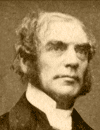
Surely It Is Meet to Be Said Unto God, I Have Borne Chastisement
Trials in our lives are a necessary means of spiritual growth, revealing the secret state of our souls and helping us to discover the evil of our hearts.
Octavius Winslow emphasizes that trials reveal the true state of our souls, exposing our weaknesses and hidden sins that we may not recognize during times of prosperity. He illustrates how adversity serves as a divine tool for self-discovery and spiritual growth, allowing us to confront our folly and draw closer to God. Winslow encourages believers to embrace these challenging seasons as opportunities for revival and deeper communion with Christ, reminding us that remembrance of past transgressions can lead to repentance and renewed faith.
Text
Surely it is meet to be said unto God, I have borne chastisement, I will not offend any more: That which I see not teach you me: if I have done iniquity, I will do no more. Job 34:31-32
OH, what a detector of the secret state of our souls does the season of trial often prove! We are not aware of our impaired strength, of our weak faith, of our powerless grace--how feeble our hold on Christ is--how legal our views of the gospel are--how beclouded our minds may be--how partial our acquaintance with God is--until we are led into the path of trouble. The season of prosperity veils the real state of our souls from our view. No Christian can form an accurate estimate of his spiritual condition, who has not been brought into a state of trial. We faint in the day of adversity, because we then find--what, perhaps, was not even suspected in the day of prosperity--that our strength is small.
But seasons of trial are emphatically what the word expresses--they try the work in the souls of the righteous. The inner life derives immense advantage from them. The deeper discovery that is then made of the evil of the heart is not the least important result: "Foolishness is bound in the heart of a child; but the rod of correction shall drive it far from him." What folly still dwells in the hearts of the wise--bound up and half concealed--who can tell? Who would have suspected such developments in the life of Abraham, of David, of Solomon, of Peter? And so is it with all who yet are the possessors of that wisdom which will guide their souls to eternal glory. Folly is bound up in their hearts; but the sanctified rod of correction reveals it, and the discovery proves one of the costliest blessings in the experience of the disciplined child. Listen to the language of Moses, addressed to the children of Israel: "You shall remember all the way which the Lord your God led you these forty years in the wilderness, to humble you, and to prove you, to know what was in your heart, whether you would keep His commandments or no." And oh, what a discovery that forty years' marching and counter-marching in the wilderness was to them of the pride, and impatience, and unbelief, and ingratitude, and distrust that were bound up in their heart! And yet, though all this evil was deep-seated in their nature, they knew it not, and suspected it not, until trial brought it to the surface. Thus, beloved, is it with us. The latent evil is brought to light. God leaves us to try what is in our heart, and this may be the first step in the reviving of His gracious work in our souls. Oh, let us not, then, shrink from the probing, nor startle at its discovery, if it but lead us nearer to holiness, nearer to Christ, nearer to God, nearer to heaven!
The time of trouble is often, too, a, time of remembrance. and so becomes a time of reviving. Past backslidings--unthought of, unsuspected, and unconfessed--are recalled to memory in the season that God is dealing with us. David had forgotten his transgression, and the brethren of Joseph their sin, until trouble summoned it back to memory. Times of trial are searching times, remembering times. Then with David we exclaim, "I thought on my ways, and turned my feet unto Your testimonies: I made haste, and delayed not to keep Your commandments."
Sermon Outline
- The Need for Trial
- The season of trial reveals the secret state of our souls
- We are not aware of our impaired strength, weak faith, and powerless grace
Key Quotes
“Foolishness is bound in the heart of a child; but the rod of correction shall drive it far from him.” — Octavius Winslow
“You shall remember all the way which the Lord your God led you these forty years in the wilderness, to humble you, and to prove you, to know what was in your heart, whether you would keep His commandments or no.” — Octavius Winslow
Application Points
- We should not shrink from the probing of our hearts, but rather welcome it as an opportunity for spiritual growth and revival.
- Trials are a time of remembrance, and they help us to recall past backslidings and unconfessed sins, leading to repentance and revival.
- God's correction is a means of revealing the evil of our hearts and helping us to turn away from it, leading to a deeper relationship with Him.