
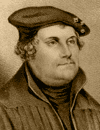
Starts Discussion of Second Commandment (Not to Take the Name of the Lord in Vain)
The Second Commandment emphasizes the importance of honoring God's Name and not taking it in vain, and encourages us to live for God's commandments rather than seeking temporal honor and praise.
Martin Luther delves into the importance of honoring God's Name and the Second Commandment, emphasizing that all works must be done in faith to truly honor and magnify God's glory. He highlights the significance of praising, preaching, and singing to exalt God's Name, stating that this work greatly strengthens faith and pleases God. Luther stresses the need to honor God's Name in the heart with genuine faith, rather than through mere outward displays, as true faith and confidence are experienced and felt in honoring God's Name. He warns against lightly esteeming the work of honoring God's Name, as it greatly helps to increase faith and strengthen the relationship with God.
Text
XVIII. So far we have treated of the first work and of
the First Commandment, but very briefly, plainly and
hastily, for very much might be said of it. We will now
trace the works farther through the following
Commandments.
The second work, next to faith, is the work of the Second
Commandment, that we shall honor God's Name and not take
it in vain. This, like all the other works, cannot be
done without faith; and if it is done without faith, it
is all sham and show. After faith we can do no greater
work than to praise, preach, sing and in every way exalt
and magnify God's glory, honor and Name.
And although I have said above, and it is true, that
there is no difference in works where faith is and does
the work, yet this is true only when they are compared
with faith and its works. Measured by one another there
is a difference, and one is higher than the other. Just
as in the body the members do not differ when compared
with health, and health works in the one as much as in
the other; yet the works of the members are different,
and one is higher, nobler, more useful than the other;
so, here also, to praise God's glory and Name is better
than the works of the other Commandments which follow;
and yet it must be done in the same faith as all the
others.
But I know well that this work is lightly esteemed, and
has indeed become unknown. Therefore we must examine it
further, and will say no more about the necessity of
doing it in the faith and confidence that it pleases God.
Indeed there is no work in which confidence and faith are
so much experienced and felt as in honoring God's Name;
and it greatly helps to strengthen and increase faith,
although all works also help to do this, as St. Peter
says, II. Peter i: "Wherefore the rather, brethren, give
diligence through good works to make your calling and
election sure."
XIX. The First Commandment forbids us to have other gods,
and thereby commands that we have a God, the true God, by
a firm faith, trust, confidence, hope and love, which are
the only works whereby a man can have, honor and keep a
God; for by no other work can one find or lose God except
by faith or unbelief, by trusting or doubting; of the
other works none reaches quite to God. So also in the
Second Commandment we are forbidden to use His Name in
vain. Yet this is not to be enough, but we are thereby
also commanded to honor, call upon, glorify, preach and
praise His Name. And indeed it is impossible that God's
Name should not be dishonored where it is not rightly
honored. For although it be honored with the lips,
bending of the knees, kissing and other postures, if this
is not done in the heart by faith, in confident trust in
God's grace, it is nothing else than an evidence and
badge of hypocrisy.
See now, how many kinds of good works a man can do under
this Commandment at all times and never be without the
good works of this Commandment, if he will; so that he
truly need not make a long pilgrimage or seek holy
places. For, tell me, what moment can pass in which we do
not without ceasing receive God's blessings, or, on the
other hand, suffer adversity? But what else are God's
blessings and adversities than a constant urging and
stirring up to praise, honor, and bless God, and to call
upon His Name? Now if you had nothing else at all to do,
would you not have enough to do with this Commandment
alone, that you without ceasing bless, sing, praise and
honor God's Name? And for what other purpose have tongue,
voice, language and mouth been created? As Psalm li.
says: "Lord, open Thou my lips, and my mouth shall show
forth Thy praise." Again: "My tongue shall sing aloud of
Thy mercy."
What work is there in heaven except that of this Second
Commandment? As it is written in Psalm Ixxxiv: "Blessed
are they that dwell in Thy house: they will be for ever
praising Thee." So also David says in Psalm xxxiv: "God's
praise shall be continually in my mouth." And St. Paul,
I. Corinthians x: "Whether therefore ye eat or drink, or
whatsoever ye do, do all to the glory of God." Also
Colossians iii: "Whatsoever ye do in word or deed, do all
in the Name of the Lord Jesus, giving thanks to God and
the Father." If we were to observe this work, we would
have a heaven here on earth and always have enough to do,
as have the saints in heaven.
XX. On this is based the wonderful and righteous judgment
of God, that at times a poor man, in whom no one can see
many great works, in the privacy of his home joyfully
praises God when he fares well, or with entire confidence
calls upon Him when he fares ill, and thereby does a
greater and more acceptable work than another, who fasts
much, prays much, endows churches, makes pilgrimages, and
burdens himself with great deeds in this place and in
that. Such a fool opens wide his mouth, looks for great
works to do, and is so blinded that he does not at all
notice this greatest work, and praising God is in his
eyes a very small matter compared with the great idea he
has formed of the works of his own devising, in which he
perhaps praises himself more than God, or takes more
pleasure in them than he does in God; and thus with his
good works he storms against the Second Commandment and
its works. Of all this we have an illustration in the
case of the Pharisee and the Publican in the Gospel. For
the sinner calls upon God in his sins, and praises Him,
and so has hit upon the two highest Commandments, faith
and God's honor. The hypocrite misses both and struts
about with other good works by which he praises himself
and not God, and puts his trust in himself more than in
God. Therefore he is justly rejected and the other
chosen.
The reason of all this is that the higher and better the
works are, the less show they make; and that every one
thinks they are easy, because it is evident that no one
pretends to praise God's Name and honor so much as the
very men who never do it and with their show of doing it,
while the heart is without faith, cause the precious work
to be despised. So that the Apostle St. Paul dare say
boldly, Romans ii, that they blaspheme God's Name who
make their boast of God's Law. For to name the Name of
God and to write His honor on paper and on the walls is
an easy matter; but genuinely to praise and bless Him in
His good deeds and confidently to call upon Him in all
adversities, these are truly the most rare, highest
works, next to faith, so that if we were to see how few
of them there are in Christendom, we might despair for
very sorrow. And yet there is a constant increase of
high, pretty, shining works of men's devising, or of
works which look like these true works, but at bottom are
all without faith and without faithfulness; in short,
there is nothing good back of them. Thus also Isaiah
xlviii. rebukes the people of Israel: "Hear ye this, ye
which are called by the name of Israel, which swear by
the Name of the Lord, and make mention of the God of
Israel neither in truth, nor in righteousness"; that is,
they did it not in the true faith and confidence, which
is the real truth and righteousness, but trusted in
themselves, their works and powers, and yet called upon
God's Name and praised Him, two things which do not fit
together.
XXI. The first work of this Commandment then is, to
praise God in all His benefits, which are innumerable, so
that such praise and thanksgiving ought also of right
never to cease or end. For who can praise Him perfectly
for the gift of natural life, not to mention all other
temporal and eternal blessings? And so through this one
part of the Commandment man is overwhelmed with good and
precious works; if he do these in true faith, he has
indeed not lived in vain. And in this matter none sin so
much as the most resplendent saints, who are pleased with
themselves and like to praise themselves or to hear
themselves praised, honored and glorified before men.
Therefore the second work of this Commandment is, to be
on one's guard, to flee from and to avoid all temporal
honor and praise, and never to seek a name for oneself,
or fame and a great reputation, that every one sing of
him and tell of him; which is an exceedingly dangerous
sin, and yet the most common of all, and, alas! little
regarded. Every one wants to be of importance and not to
be the least, however small he may be; so deeply is
nature sunk in the evil of its own conceit and in its
self-confidence contrary to these two first Commandments.
Now the world regards this terrible vice as the highest
virtue, and this makes it exceedingly dangerous for those
who do not understand and have not had experience of
God's Commandments and the histories of the Holy
Scriptures, to read or hear the heathen books and
histories. For all heathen books are poisoned through and
through with this striving after praise and honor; in
them men are taught by blind reason that they were not
nor could be men of power and worth, who are not moved by
praise and honor; but those are counted the best, who
disregard body and life, friend and property and
everything in the effort to win praise and honor. All the
holy Fathers have complained of this vice and with one
mind conclude that it is the very last vice to be
overcome. St. Augustine says: "All other vices are
practised in evil works; only honor and self-satisfaction
are practised in and by means of good works."
Therefore if a man had nothing else to do except this
second work of this Commandment, he would yet have to
work all his life-time in order to fight this vice and
drive it out, so common, so subtile, so quick and
insidious is it. Now we all pass by this good work and
exercise ourselves in many other lesser good works, nay,
through other good works we overthrow this and forget it
entirely. So the holy Name of God, which alone should be
honored, is taken in vain and dishonored through our own
cursed name, self-approval and honor-seeking. And this
sin is more grievous before God than murder and adultery;
but its wickedness is not so clearly seen as that of
murder, because of its subtilty, for it is not
accomplished in the coarse flesh, but in the spirit.
XXII. Some think it is good for young people that they be
enticed by reputation and honor, and again by shame of
and dishonor, and so be induced to do good. For there are
many who do the good and leave the evil undone out of
fear of shame and love of honor, and so do what they
would otherwise by no means do or leave undone. These I
leave to their opinion. But at present we are seeking how
true good works are to be done, and they who are inclined
to do them surely do not need to be driven by the fear of
shame and the love of honor; they have, and are to have a
higher and far nobler incentive, namely, God's
commandment, God's fear, God's approval, and their faith
and love toward God. They who have not, or regard not
this motive, and let shame and honor drive them, these
also have their reward, as the Lord says, Matthew vi; and
as the motive, so is also the work and the reward: none
of them is good, except only in the eyes of the world.
Now I hold that a young person could be more easily
trained and incited by God's fear and commandments than
by any other means. Yet where these do not help, we must
endure that they do the good and leave the evil for the
sake of shame and of honor, just as we must also endure
wicked men or the imperfect, of whom we spoke above; nor
can we do more than tell them that their works are not
satisfactory and right before God, and so leave them
until they learn to do right for the sake of God's
commandments also. Just as young children are induced to
pray, fast, learn, etc., by gifts and promises of the
parents, even though it would not be good to treat them
so all their lives, so that they never learn to do good
in the fear of God: far worse, if they become accustomed
to do good for the sake of praise and honor.
XXIII. But this is true, that we must none the less have
a good name and honor, and every one ought so to live
that nothing evil can be said of him, and that he give
offence to no one, as St. Paul says, Romans xii: "We are
to be zealous to do good, not only before God, but also
before all men." And II. Corinthians iv: "We walk so
honestly that no man knows anything against us." But
there must be great diligence and care, lest such honor
and good name puff up the heart, and the heart find
pleasure in them. Here the saying of Solomon holds: "As
the fire in the furnace proveth the gold, so man is
proved by the mouth of him that praises him." Few and
most spiritual men must they be, who, when honored and
praised, remain indifferent and unchanged, so that they
do not care for it, nor feel pride and pleasure in it,
but remain entirely free, ascribe all their honor and
fame to God, offering it to Him alone, and using it only
to the glory of God, to the edification of their
neighbors, and in no way to their own benefit or
advantage; so that a man trust not in his own honor, nor
exalt himself above the most incapable, despised man on
earth, but acknowledge himself a servant of God, Who has
given him the honor in order that with it he may serve
God and his neighbor, just as if He had commanded him to
distribute some gulden to the poor for His sake. So He
says, Matthew v: "Your light shall shine before men, so
that they may see your good works and glorify your Father
Who is in heaven." He does not say, "they shall praise
you," but "your works shall only serve them to
edification, that through them they may praise God in you
and in themselves." This is the correct use of God's Name
and honor, when God is thereby praised through the
edification of others. And if men want to praise us and
not God in us, we are not to endure it, but with all our
powers forbid it and flee from it as from the most
grievous sin and robbery of divine honor.
XXIV. Hence it comes that God frequently permits a man to
fall into or remain in grievous sin, in order that he may
be put to shame in his own eyes and in the eyes of all
men, who otherwise could not have kept himself from this
great vice of vain honor and fame, if he had remained
constant in his great gifts and virtues; so God must ward
off this sin by means of other grievous sins, that His
Name alone may be honored; and thus one sin becomes the
other's medicine, because of our perverse wickedness,
which not only does the evil, but also misuses all that
is good.
Now see how much a man has to do, if he would do good
works, which always are at hand in great number, and with
which he is surrounded on all sides; but, alas! because
of his blindness, he passes them by and seeks and runs
after others of his own devising and pleasure, against
which no man can sufficiently speak and no man can
sufficiently guard. With this all the prophets had to
contend, and for this reason they were all slain, only
because they rejected such self-devised works and
preached only God's commandments, as one of them says,
Jeremiah vii: "Thus saith the God of Israel unto you:
Take your burnt offerings unto all your sacrifices and
eat your burnt-offerings and your flesh yourselves; for
concerning these things I have commanded you nothing, but
this thing commanded I you: Obey My voice (that is, not
what seems right and good to you, but what I bid you),
and walk in the way that I have commanded you." And
Deuteronomy xii: "Thou shalt not do whatsoever is right
in thine own eyes, but what thy God has commanded thee."
These and numberless like passages of Scripture are
spoken to tear man not only from sins, but also from the
works which seem to men to be good and right, and to turn
men, with a single mind, to the simple meaning of God's
commandment only, that they shall diligently observe this
only and always, as it is written, Exodus xiii: "These
commandments shall be for a sign unto thee upon thine
hand, and for a memorial between thine eyes." And Psalm
i: "A godly man meditates in God's Law day and night."
For we have more than enough and too much to do, if we
are to satisfy only God's commandments. He has given us
such commandments that if we understand them aright, we
dare not for a moment be idle, and might easily forget
all other works. But the evil spirit, who never rests,
when he cannot lead us to the left into evil works,
fights on our right through self-devised works that seem
good, but against which God has commanded, Deuteronomy
xxviii, and Joshua xxiii, "Ye shall not go aside from My
commandments to the right hand or to the left."
XXV. The third work of this Commandment is to call C upon
God's Name in every need. For this God regards as keeping
His Name holy and greatly honoring it, if we name and
call upon it in adversity and need. And this is really
why He sends us so much trouble, suffering, adversity and
even death, and lets us live in many wicked, sinful
affections, that He may thereby urge man and give him
much reason to run to Him, to cry aloud to Him, to call
upon His holy Name, and thus to fulfil this work of the
Second Commandment, as He says in Psalm 1: "Call upon Me
in the day of trouble; I will deliver thee, and thou
shalt glorify Me; for I desire the sacrifice of praise."
And this is the way whereby thou canst come unto
salvation; for through such works man perceives and
learns what God's Name is, how powerful it is to help all
who call upon it; and whereby confidence and faith grow
mightily, and these are the fulfilling of the first and
highest Commandment. This is the experience of David,
Psalm liv: "Thou hast delivered me out of all trouble,
therefore will I praise Thy Name and confess that it is
lovely and sweet." And Psalm xci says, "Because he hath
set his hope upon Me, therefore will I deliver him: I
will help him, because he hath known My Name."
Lo! what man is there on earth, who would not all his
life long have enough to do with this work? For who lives
an hour without trials? I will not mention the trials of
adversity, which are innumerable. For this is the most
dangerous trial of all, when there is no trial and every
thing is and goes well; for then a man is tempted to
forget God, to become too bold and to misuse the times of
prosperity. Yea, here he has ten times more need to call
upon God's Name than when in adversity. Since it is
written, Psalm xci, "A thousand shall fall on the left
hand and ten thousand on the right hand."
So too we see in broad day, in all men's daily
experience, that more heinous sins and vice occur when
there is peace, when all things are cheap and there are
good times, than when war, pestilence, sicknesses and all
manner of misfortune burden us; so that Moses also fears
for his people, lest they forsake God's commandment for
no other reason than because they are too full, too well
provided for and have too much peace, as he says,
Deuteronomy xxxii "My people is waxed rich, full and fat;
therefore has it forsaken its God." Wherefore also God
let many of its enemies remain and would not drive them
out, in order that they should not have peace and must
exercise themselves in the keeping of God's commandments,
as it is written, Judges iii. So He deals with us also,
when He sends us all kinds of misfortune: so exceedingly
careful is He of us, that He may teach us and drive us to
honor and call upon His Name, to gain confidence and
faith toward Him, and so to fulfil the first two
Commandments.
XXVI. Here foolish men run into danger, and especially
the work-righteous saints, and those who want to be more
than others; they teach men to make the sign of the
cross; one arms himself with letters, another runs to the
fortunetellers; one seeks this, another that, if only
they may thereby escape misfortune and be secure. It is
beyond telling what a devilish allurement attaches to
this trifling with sorcery, conjuring and superstition,
all of which is done only that men may not need God's
Name and put no trust in it. Here great dishonor is done
the Name of God and the first two Commandments, in that
men look to the devil, men or creatures for that which
should be sought and found in God alone, through naught
but a pure faith and confidence, and a cheerful
meditation of and calling upon His holy Name.
Now examine this closely for yourself and see whether
this is not a gross, mad perversion: the devil, men and
creatures they must believe, and trust to them for the
best; without such faith and confidence nothing holds or
helps. How shall the good and faithful God reward us for
not believing and trusting Him as much or more than man
and the devil, although He not only promises help and
sure assistance, but also commands us confidently to look
for it, and gives and urges all manner of reasons why we
should place such faith and confidence in Him? Is it not
lamentable and pitiable that the devil or man, who
commands nothing and does not urge, but only promises, is
set above God, Who promises, urges and commands; and that
more is thought of them than of God Himself? We ought
truly to be ashamed of ourselves and learn from the
example of those who trust the devil or men. For if the
devil, who is a wicked, lying spirit, keeps faith with
all those who ally themselves with him, how much more
will not the most gracious, all-truthful God keep faith,
if a man trusts Him? Nay, is it not rather He alone Who
will keep faith? A rich man trusts and relies upon his
money and possessions, and they help him; and we are not
willing to trust and rely upon the living God, that He is
willing and able to help us? We say: Gold makes bold; and
it is true, as Baruch iii. says, "Gold is a thing wherein
men trust." But far greater is the courage which the
highest eternal Good gives, wherein trust, not men, but
only God's children.
XXVII. Even if none of these adversities constrain us to
call upon God's Name and to trust Him, yet were sin alone
more than sufficient to train and to urge us on in this
work. For sin has hemmed us in with three strong, mighty
armies. The first is our own flesh, the second the world,
the third the evil spirit, by which three we are without
ceasing oppressed and troubled; whereby God gives us
occasion to do good works without ceasing, namely, to
fight with these enemies and sins. The flesh seeks
pleasure and peace, the world seeks riches, favor, power
and honor, the evil spirit seeks pride, glory, that a man
be well thought of, and other men be despised.
And these three are all so powerful that each one of them
is alone sufficient to fight a man, and yet there is no
way we can overcome them, except only by calling upon the
holy Name of God in a firm faith, as Solomon says,
Proverbs xviii: "The Name of the Lord is a strong tower;
the righteous runneth into it, and is set aloft." And
David, Psalm cxvi: "I will drink the cup of salvation,
and call upon the Name of the Lord." Again, Psalm xviii:
"I will call upon the Lord with praise: so shall I be
saved from all mine enemies." These works and the power
of God's Name have become unknown to us, because we are
not accustomed to it, and have never seriously fought
with sins, and have not needed His Name, because we are
trained only in our self devised works, which we were
able to do with our own powers.
XXVIII. Further works of this Commandment are: that we
shall not swear, curse, lie, deceive and conjure with the
holy Name of God, and otherwise misuse it; which are very
simple matters and well known to every one, being the
sins which have been almost exclusively preached and
proclaimed under this Commandment. These also include,
that we shall prevent others from making sinful use of
God's Name by lying, swearing, deceiving, cursing,
conjuring, and otherwise. Herein again much occasion is
given for doing good and warding off evil.
But the greatest and most difficult work of this
Commandment is to protect the holy Name of God against
all who misuse it in a spiritual manner, and to proclaim
it to all men. For it is not enough that I, for myself
and in myself, praise and call upon God's Name in
prosperity and adversity. I must step forth and for the
sake of God's honor and Name bring upon myself the enmity
of all men, as Christ said to His disciples: "Ye shall be
hated of all men for My Name's sake." Here we must
provoke to anger father, mother, and the best of friends.
Here we must strive against spiritual and temporal
powers, and be accused of disobedience. Here we must stir
up against us the rich, learned, holy, and all that is of
repute in the world. And although this is especially the
duty of those who are commanded to preach God's Word, yet
every Christian is also obligated to do so when time and
place demand. For we must for the holy Name of God risk
and give up all that we have and can do, and show by our
deeds that we love God and His Name, His honor and His
praise above all things, and trust Him above all things,
and expect good from Him; thereby confessing that we
regard Him as the highest good, for the sake of which we
let go and give up all other goods.
XXIX. Here we must first of all resist all wrong, where
truth or righteousness suffers violence or need, and dare
make no distinction of persons, as some do, who fight
most actively and busily against the wrong which is done
to the rich, the powerful, and their own friends; but
when it is done to the poor, or the despised or their own
enemy, they are quiet and patient. These see the Name and
the honor of God not as it is, but through a painted
glass, and measure truth or righteousness according to
the persons, and do not consider their deceiving eye,
which looks more on the person than on the thing. These
are hypocrites within and have only the appearance of
defending the truth. For they well know that there is no
danger when one helps the rich, the powerful, the learned
and one's own friends, and can in turn enjoy their
protection and be honored by them.
Thus it is very easy to fight against the wrong which is
done to popes, kings, princes, bishops and other
big-wigs. Here each wants to be the most pious, where
there is no great need. O how sly is here the deceitful
Adam with his demand; how finely does he cover his greed
of profit with the name of truth and righteousness and
God's honor! But when something happens to a poor and
insignificant man, there the deceitful eye does not find
much profit, but cannot help seeing the disfavor of the
powerful; therefore he lets the poor man remain unhelped.
And who could tell the extent of this vice in
Christendom? God says in the lxxxii. Psalm, "How long
will ye judge unjustly, and accept the persons of the
wicked? Judge the matter of the poor and fatherless,
demand justice for the poor and needy; deliver the poor
and rid the forsaken out of the hand of the wicked." But
it is not done, and therefore the text continues: "They
know not, neither will they understand; they walk on in
darkness"; that is, the truth they do not see, but they
stop at the reputation of the great, however unrighteous
they are; and do not consider the poor, however righteous
they are.
XXX. See, here would be many good works. For the greater
portion of the powerful, rich and friends do injustice
and oppress the poor, the lowly, and their own opponents;
and the greater the men, the worse the deeds; and where
we cannot by force prevent it and help the truth, we
should at least confess it, and do what we can with
words, not take the part of the unrighteous, not approve
them, but speak the truth boldly.
What would it help a man if he did all manner of good,
made pilgrimages to Rome and to all holy places, acquired
all indulgences, built all churches and endowed houses,
if he were found guilty of sin against the Name and honor
of God, not speaking of them and neglecting them, and
regarding his possessions, honor, favor and friends more
than the truth (which is God's Name and honor)? Or who is
he, before whose door and into whose house such good
works do not daily come, so that he would have no need to
travel far or to ask after good works? And if we consider
the life of men, how in every place men act so very
rashly and lightly in this respect, we must cry out with
the prophet, Omnis homo mendax, "All men are liars, lie
and deceive"; for the real good works they neglect, and
adorn and paint themselves with the most insignificant,
and want to be pious, to mount to heaven in peaceful
security.
But if you should say: "Why does not God do it alone and
Himself, since He can and knows how to help each one?"
Yes, He can do it; but He does not want to do it alone;
He wants us to work with Him, and does us the honor to
want to work His work with us and through us. And if we
are not willing to accept such honor, He will, after all,
perform the work alone, and help the poor; and those who
were unwilling to help Him and have despised the great
honor of doing His work, He will condemn with the
unrighteous, because they have made common cause with the
unrighteous. Just as He alone is blessed, but He wants to
do us the honor and not be alone in His blessedness, but
have us to be blessed with Him. And if He were to do it
alone, His Commandments would be given us in vain,
because no one would have occasion to exercise himself in
the great works of these Commandments, and no one would
test himself to see whether he regards God and His Name
as the highest good, and for His sake risks everything.
XXXI. It also belongs to this work to resist all false,
seductive, erroneous, heretical doctrines, every misuse
of spiritual power. Now this is much higher, for these
use the holy Name of God itself to fight against the Name
of God. For this reason it seems a great thing and a
dangerous to resist them, because they assert that he who
resists them resists God and all His saints, in whose
place they sit and whose power they use, saying that
Christ said of them, "He that heareth you, heareth Me,
and he that despiseth you, despiseth Me." On which words
they lean heavily, become insolent and bold to say, to
do, and to leave undone what they please; put to the ban,
accurse, rob, murder, and practise all their wickedness,
in whatever way they please and can invent, without any
hindrance.
Now Christ did not mean that we should listen to them in
everything they might say and do, but only then when they
present to us His Word, the Gospel, not their word, His
work, and not their work. How else could we know whether
their lies and sins were to be avoided? There must be
some rule, to what extent we are to hear and to follow
them, and this rule cannot be given by them, but must be
established by God over them, that it may serve us as a
guide, as we shall hear in the Fourth Commandment.
It must be, indeed, that even in the spiritual estate the
greater part preach false doctrine and misuse spiritual
power, so that thus occasion may be given us to do the
works of this Commandment, and that we be tried, to see
what we are willing to do and to leave undone against
such blasphemers for the sake of God's honor.
Oh, if we were God-fearing in this matter, how often
would the knaves of officiales have to decree their papal
and episcopal ban in vain! How weak the Roman
thunderbolts would become! How often would many a one
have to hold his tongue, to whom the world must now give
ear! How few preachers would be found in Christendom! But
it has gotten the upper hand: whatever they assert and in
whatever way, that must be right. Here no one fights for
God's Name and honor, and I hold that no greater or more
frequent sin is done in external works than under this
head. It is a matter so high that few understand it, and,
besides, adorned with God's Name and power, dangerous to
touch. But the prophets of old were masters in this; also
the apostles, especially St. Paul, who did not allow it
to trouble them whether the highest or the lowest priest
had said it, or had done it in God's Name or in his own.
They looked on the works and words, and held them up to
God's Commandment, no matter whether big John or little
Nick said it, or whether they had done it in God's Name
or in man's. And for this they had to die, and of such
dying there would be much more to say in our time, for
things are much worse now. But Christ and St. Peter and
Paul must cover all this with their holy names, so that
no more infamous cover for infamy has been found on earth
than the most holy and most blessed Name of Jesus Christ!
One might shudder to be alive, simply because of the
misuse and blasphemy of the holy Name of God; through
which, if it shall last much longer, we will, as I fear,
openly worship the devil as a god; so completely do the
spiritual authorities and the learned lack all
understanding in these things. It is high time that we
pray God earnestly that He hallow His Name. But it will
cost blood, and they who enjoy the inheritance of the
holy martyrs and are won with their blood, must again
make martyrs. Of this more another time.
Sermon Outline
- I points: - 'The Second Commandment: Honoring God''s Name' - The importance of faith in doing good works - The difference between good works and self-devised works
- II points: - Praising God in all His benefits - The danger of seeking temporal honor and praise - The importance of living for God's commandments
- III points: - The role of God's fear and commandments in training young people - The need to avoid seeking praise and honor from others - The correct use of God's Name and honor
Key Quotes
“Wherefore the rather, brethren, give diligence through good works to make your calling and election sure.” — Martin Luther
“Whether therefore ye eat or drink, or whatsoever ye do, do all to the glory of God.” — Martin Luther
“Your light shall shine before men, so that they may see your good works and glorify your Father Who is in heaven.” — Martin Luther
Application Points
- We should recognize and thank God for the good things in our lives and praise Him for His benefits.
- We should avoid seeking temporal honor and praise, as it can lead to pride and a focus on self rather than God.
- We should use God's Name and honor correctly by recognizing that it is for God's glory and not for our own benefit or praise.