
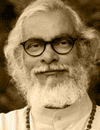
Real Love Shares
The sermon calls for a transformative love that prioritizes the needs of the poor and marginalized, reflecting Jesus' love for all children.
K.P. Yohannan shares a poignant experience in the streets of Bombay, where he encounters a desperate beggar girl pleading for help. This moment forces him to confront the stark contrast between her life and that of his own daughter, Sarah, highlighting the deep need for compassion and love for the less fortunate. He reflects on God's challenge to prioritize love for all children, regardless of their circumstances, and to embody the real love that shares and cares for others. The sermon emphasizes that true love transcends societal boundaries and calls for action towards those in need.
Text
The streets of India--especially in the bloated, overpopulated cities like Bombay and Calcutta--are maddening to Western visitors. Millions of homeless people are born, live and die in them. Part toilet, part barnyard, part roadway--they are also the bedroom, living room and marketplace for the poorest of the world's poor. In summertime's furnace heat, the dust of centuries rises from them to fill your eyes, choking your mouth and nose. In the monsoon rains, the streets turn into vast seas of mud and sewage.
In winter, the freezing pavements bring disease and death to those who have nowhere else to rest their starving bodies. It was on one of these nightmarish streets of Bombay that I was surrounded by an army of begging children. Already late and on my way to an important meeting, I tried to ignore the pleading children as I waited for the light to turn green. Suddenly from the sea of hungry faces I heard a voice so distinct from the rest that I was paralyzed. In crystal-clear tones, I heard her speaking in plaintive Hindi, "Sir, my father died three months ago of tuberculosis.
My mother is too sick to beg anymore. My little brothers and sisters have not eaten for two days. Please, sir, they are hungry and crying. Can you please give me a few pennies so I can buy some bread?" The light turned green. But I couldn't move. I was arrested by the image of this little girl who must have been about 9 years old. Her face was one of the most beautiful I've ever seen, perfectly shaped with big brown eyes and long black hair. Through the tears on her cheeks, the dust and the sweat, I could see that in different circumstances this desperate little waif could easily have been a princess.
Her filthy hair had obviously not been washed or combed for weeks. She was barefoot and dressed in rags. But I'm still sure she had the potential of being a winner in the Miss World beauty pageant. Then something else happened. It was as if another face came before my eyes right beside hers. It was another child, about 8, also with big brown eyes. But she had long, clean hair and a shining face. Her clothes were fresh and colorful--and she wore nice socks and tennis shoes. I knew her.
She was the best student in her class. Each night she said her prayers and read the Bible. Her parents loved her. She had a comfortable home, air-conditioned from the Texas summer and heated in the cold winter. She had a comfortable bed with clean sheets every week. I didn't know the name of the dirty little beggar girl, but I did know the name of the girl beside her. It was Sarah, my own daughter. Then I heard a supernatural voice beside me ask, "What is the value of this beggar girl?
Is she of less value than your daughter, Sarah?" I knew the answer from the Bible. Instinctively, I answered, "No, Lord--Jesus loves all the children of the world." But even as I replied, I realized that God was not asking me the question I had answered. He was asking me something more personal and life-shaking. He was really asking me about my priorities. Was I willing to love this beggar girl as Jesus loved her--in the same way that I loved myself and my own wife and my children? Would I love her with real love, the kind that shares?
Sermon Outline
-
I
- Introduction to the plight of the poor in India
- Personal experience with begging children
- Contrast between two children: the beggar girl and the speaker's daughter
-
II
- The call to recognize the value of every child
- Understanding God's perspective on love
- The challenge of prioritizing love for the needy
-
III
- Real love is sacrificial and shares
- Practical ways to demonstrate love
- The impact of loving others as Jesus loves
-
IV
- The importance of personal transformation
- Responding to God's call in our lives
- Living out real love in everyday actions
Key Quotes
“What is the value of this beggar girl? Is she of less value than your daughter, Sarah?” — K.P. Yohannan
“Jesus loves all the children of the world.” — K.P. Yohannan
“Would I love her with real love, the kind that shares?” — K.P. Yohannan
Application Points
- Reflect on your own priorities and how they align with God's call to love the needy.
- Look for practical ways to share your resources and time with those less fortunate.
- Challenge yourself to see the value in every individual, regardless of their circumstances.