
By Faith, Not Sight
We must learn to walk by faith, not sight, and trust in God even when we can't see the outcome.
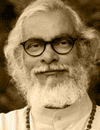
K.P. Yohannan emphasizes the necessity of living by faith rather than sight, highlighting the conflict between our old nature, which seeks proof and understanding, and our new nature, which believes without seeing. He explains that faith and sight are opposites; when we rely on sight, we limit our need for God. Yohannan encourages believers to embrace their new nature, which allows them to trust in God's promises despite not having physical evidence. He warns against the cultural tendency to demand proof, urging listeners to remember Jesus' words about the blessedness of those who believe without seeing.
Text
Second Corinthians 5:7 says, "For we walk by faith, not by sight." Here we see that there is a clear distinction between faith and sight. The two are opposites; each excludes the other. When we walk by faith, we don't have to worry about how things look. If we walk by sight, there is no room for faith. We can see where we are going and so we simply follow the path we see. If you know how something is going to happen or know how to solve your problems on your own, you don't need faith. You don't need God if you can work it out without Him. But the truth is we always need God. Thus, we must always live by faith.
But in this quest to live by faith, we run into the very real conflict between our old nature and our new nature. There is a continual war between the two--the flesh and the Spirit, the temporal and the eternal, the walking by sight and the walking by faith. Our old nature demands to see, to experience, to understand. But the new nature is different. It is able to believe without seeing and feeling, because God has created that new nature in us.
We are a culture that demands to see proof. Scientists spend years running experiments just to show that some medicine or treatment works. Much like Thomas, who wouldn't believe the Lord Jesus had risen until he put his hand in His pierced side, we find it hard to believe anything we cannot see, declaring "seeing is believing." Please, let us not be like this. Jesus said in John 20:29, "Blessed are those who have not seen and yet have believed."
Sermon Outline
- The Distinction Between Faith and Sight
- The Need for Faith
- The Conflict Between Old and New Nature
- The Importance of Faith
- Faith is required to believe in the unseen
- Blessed are those who have not seen and yet have believed
Key Quotes
“For we walk by faith, not by sight.” — K.P. Yohannan
“Blessed are those who have not seen and yet have believed.” — K.P. Yohannan
Application Points
- We must be willing to trust in God even when we can't see the outcome.
- We should not demand to see proof before believing.
- Faith is required to believe in the unseen, and it is a blessing to believe without seeing.