
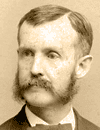
Paul's First Missionary Journey: Cyprus--Acts 13:1-13
The sermon explores the beginnings of foreign missions through the Antioch church, emphasizing the role of the Holy Spirit, prayer, and the importance of perseverance in faith.
J.R. Miller discusses the significance of Paul's first missionary journey, emphasizing the role of the Antioch church in sending out missionaries under the guidance of the Holy Spirit. He highlights the diverse backgrounds of the church's leaders, particularly Manaen, who serves as an example of how one's environment does not determine one's character. The sermon also addresses the challenges faced by missionaries, including opposition from figures like Elymas the sorcerer, and the importance of perseverance in faith, as seen in the story of John Mark's temporary defection. Ultimately, Miller encourages believers to recognize their unique roles in God's mission, regardless of their position or experience.
Text
We have here the beginning of foreign missions. It was at Antioch, the church which had been built up by Barnabas and Paul, which proved a center of holy influence, reaching out widely. This church was blessed with an unusual number of earnest and efficient workers. Being so strong, it became its duty to spare some of its valuable helpers to carry the gospel elsewhere.
It is interesting to study the names here recorded. Some of them are mentioned only here. Manaen was an active Christian worker, foster brother of Herod. There could not have been a much worse man than Herod. Yet the boys were nursed by the same foster mother, growing up amid the same influences, and Herod became a wicked, unscrupulous, degraded man--while Manaen grew into saintly character. There is encouragement here for those who find themselves living in unfavorable conditions. No boy need decide that, because his home influence is not wholesome, therefore he is doomed to be a wicked man.
It is probable that the meeting referred to in the second verse, had been called by the ministers to pray for the heathen world, and to ask for guidance regarding their own duty. When God wants to have a good work done--he puts the thought into one or more of his people. Then they begin to pray--and the blessing comes!
We should notice that the missionaries were not chosen by the Church itself--but by the Holy Spirit. So this foreign missionary movement was not merely an outgrowth of religious enthusiasm. God himself began it. He named the first missionaries. When the Spirit had indicated who should be sent out on this new mission, the Church set them apart. "When they had fasted and prayed, and laid their hands on them, they sent them away." It was not easy to give up these two good men. They were the best ministers of this Antioch church, too, that were chosen for this mission to the heathen. Yet the people did not say, "We cannot spare these good men!" They were ready at God's call to make the sacrifice and to give up their best workers to carry the gospel message over the sea.
The men went forth under the guidance and in the power of the Holy Spirit. "They, being sent forth by the Holy Spirit . . . sailed to Cyprus." It is a great thing to be sent forth by the Holy Spirit. If we live as we may live--we are thus divinely sent forth every day and upon every errand. If we start always at God's feet in the morning, asking him for guidance, he will lead us where he would have us to go and give us the work he would have us to do.
There is a work for all kinds of helpers. A little sentence here tells us about John who went with Barnabas and Saul as their attendant. This is the Mark whom we know through the Gospel he wrote. He was not a preacher or even a teacher at this time; he was only a helper. He probably had to do many things that were not easy. This suggests that there are ways of helping in the Lord's work--besides being pastors, elders or Sunday school superintendents. The lesson is for young men like Mark. If they cannot be teachers, they can be helpers, and can find a great deal to do in the Lord's service.
Samuel ministered to the Lord in the tabernacle when he was only a child. He could not then do the work of a priest--but there were many things he could do. He could tend the door, look after the lamps, and run errands for Eli. So always there are many things which even the youngest Christians can do for the Master!
Wherever the gospel of Christ goes--it finds opposition. These missionaries in their work came into contact with a sorcerer who withstood them, and sought to interfere with their work. It was a superstitious age--and fortune tellers abounded everywhere. Even men of distinction--governors and others--were often under the influence of these men, and turned to them for counsel. This sorcerer was with the proconsul, Sergius Paulus, and when he found that his patron was listening to the teaching of the Christian missionaries, he tried to interfere. "Elymas the sorcerer . . . withstood them, seeking to turn away the deputy from the faith." It is a great sin to try to turn any believer away from Christ, or to prevent anyone from coming to Christ. Yet there are at all times, people who are doing this very thing. They seek to cast doubt upon the religion of Christ and to keep back those who would accept it.
Paul (whose name in this form appears her for the first time) very strongly rebuked the sorcerer. He unmasked his heart, showing its blackness. "You are a child of the devil and an enemy of everything that is right! You are full of all kinds of deceit and trickery. Will you never stop perverting the right ways of the Lord?" This is not a bit of bad temper in Paul; he is exposing the man's wickedness, as the Spirit of God revealed it to him.
Judgment came swiftly upon the sorcerer. Paul said to him, "Now the hand of the Lord is against you. You are going to be blind, and for a time you will be unable to see the light of the sun! Immediately mist and darkness came over him, and he groped about, seeking someone to lead him by the hand." It was not Paul--but the Lord who inflicted this judgment. Elymas had been trying to blind the eyes of others--that they might not see Christ; and now he himself is struck with blindness! In Roman history is a story of one who had been hunted by the authorities, who, in order to save his life, disguised himself by wearing a black patch over one eye. When he had worn this for a long while, and when there was no longer any danger of his being discovered, he removed the patch--but his eyesight had now been destroyed. The darkening of the eye for a time in the practice of deception, led to the putting out of its light. If we stubbornly shut our hearts against the truth--the light that is in us will become blindness.
The influence of this judgment upon the proconsul was to lead him at once to accept Christ fully. "When the proconsul saw what had happened, he believed, for he was amazed at the teaching about the Lord!" The very punishment of Elymas became convincing proof to the proconsul of the power of God in the missionaries.
It is somewhat discouraging to read about John Mark's defection. When Paul and his company passed over into Perga, "John Mark left them and returned to Jerusalem." When he saw what hardship he would have to endure if he continued on this missionary journey, he decided to withdraw. It showed lack of courage and of constancy in the young disciple. No one knows how much Mark lost through his discouragement and failure. Yet we must not too severely condemn him. It is probable that his early failure made him all the better Christian afterwards. At least his defection was only temporary.
It is pleasant to read, also, later in the story, that even Paul at length commended Mark, speaking of him in words of strong approval. We know that Mark became highly honored, also, as a writer of one of the Gospels. The lesson we learn is, that though a young man at the beginning of his Christian life may fail; this should not discourage him nor prevent his returning with new fervor and earnestness, to the work which he has once deserted.
Sermon Outline
-
I
- Introduction to foreign missions
- The role of the Antioch church
- The importance of prayer and guidance
-
II
- The selection of missionaries by the Holy Spirit
- The church's response to God's call
- The significance of being sent forth by the Holy Spirit
-
III
- The role of helpers in ministry
- Examples of service from young Christians
- The importance of every role in God's work
-
IV
- Opposition faced by missionaries
- The encounter with Elymas the sorcerer
- The consequences of opposing the gospel
-
V
- Paul's rebuke of Elymas
- The judgment upon the sorcerer
- The proconsul's response to the miracle
-
VI
- John Mark's defection
- Lessons from Mark's temporary failure
- The potential for restoration and growth
Key Quotes
“When God wants to have a good work done--he puts the thought into one or more of his people.” — J.R. Miller
“It is a great thing to be sent forth by the Holy Spirit.” — J.R. Miller
“Though a young man at the beginning of his Christian life may fail; this should not discourage him.” — J.R. Miller
Application Points
- Seek God's guidance through prayer in all aspects of life.
- Recognize the value of every role in ministry, regardless of visibility.
- Learn from setbacks and remain committed to serving God with renewed fervor.