
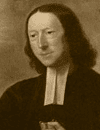
John Wesley's Explanatory Notes - Matthew 2
The sermon explores the story of the Magi's visit to Jesus, Herod's reaction, and the significance of Jesus' preservation and being called a Nazarene.
John Wesley explains the significance of the events surrounding the birth of Jesus in Bethlehem, emphasizing the role of the wise men as the first fruits of the Gentiles who recognized the fulfillment of prophecy through the star. He highlights Herod's fear and deceit as he sought to eliminate the newborn King, and the fulfillment of Old Testament prophecies regarding Jesus' origins and the protection God provided for Him. Wesley also notes the humble beginnings of Jesus in Nazareth, which reflects the theme of divine providence and the unexpected ways God works in the world.
Text
II. 1. Bethlehem of Judea - There was another Bethlehem in the tribe of Zebulon. In the days of Herod - commonly called Herod the Great, born at Ascalon. The sceptre was now on the point of departing from Judah. Among his sons were Archelaus, mentioned Matthew 2:22; Herod Antipas, mentioned Matthew 14:1; &c., and Philip, mentioned Luke 3:19. Herod Agrippa, mentioned Acts 12:1; &c., was his grandson. Wise men - The first fruits of the Gentiles. Probably they were Gentile philosophers, who, through the Divine assistance, had improved their knowledge of nature, as a means of leading to the knowledge of the one true God. Nor is it unreasonable to suppose, that God had favoured them with some extraordinary revelations of himself, as he did Melchisedec, Job, and several others, who were not of the family of Abraham; to which he never intended absolutely to confine his favours. The title given them in the original was anciently given to all philosophers, or men of learning; those particularly who were curious in examining the works of nature, and observing the motions of the heavenly bodies. From the east - So Arabia is frequently called in Scripture. It lay to the east of Judea, and was famous for gold, frankincense, and myrrh. We have seen his star - Undoubtedly they had before heard Balaam's prophecy. And probably when they saw this unusual star, it was revealed to them that this prophecy was fulfilled. In the east - That is, while we were in the east.
Verse 2. To do him homage - To pay him that honour, by bowing to the earth before him, which the eastern nations used to pay to their monarchs.
Verse 4. The chief priests - That is, not only the high priest and his deputy, with those who formerly had borne that office: but also the chief man in each of those twenty-four courses, into which the body of priests were divided, 1 Chronicles 24:6-19. The scribes were those whose peculiar business it was to explain the Scriptures to the people. They were the public preachers, or expounders of the law of Moses. Whence the chief of them were called doctors of the law.
Verse 6. Thou art in nowise the least among the princes of Judah - That is, among the cities belonging to the princes or heads of thousands in Judah. When this and several other quotations from the Old Testament are compared with the original, it plainly appears, the apostles did not always think it necessary exactly to transcribe the passages they cited, but contented themselves with giving the general sense, though with some diversity of language. The words of Micah, which we render, Though thou be little, may be rendered, Art thou little? And then the difference which seems to be here between the prophet and the evangelist vanishes away. Micah 5:2.
Verse 8. And if ye find him, bring me word - Probably Herod did not believe he was born; otherwise would not so suspicious a prince have tried to make sure work at once?
Verse 10. Seeing the star - Standing over where the child was.
Verse 11. They presented to him gifts - It was customary to offer some present to any eminent person whom they visited. And so it is, as travellers observe, in the eastern countries to this day. Gold, frankincense, and myrrh - Probably these were the best things their country afforded; and the presents ordinarily made to great persons. This was a most seasonable, providential assistance for a long and expensive journey into Egypt, a country where they were entirely strangers, and were to stay for a considerable time.
Verse 15. That it might be fulfilled - That is, whereby was fulfilled. The original word frequently signifies, not the design of an action, but barely the consequence or event of it. Which was spoken of the Lord by the prophet - on another occasion: Out of Egypt have I called my Son - which was now fulfilled as it were anew; Christ being in a far higher sense the Son of God than Israel, of whom the words were originally spoken. Hosea 11:1.
Verse 16. Then Herod, seeing that he was deluded by the wise men - So did his pride teach him to regard this action, as if it were intended to expose him to the derision of his subjects. Sending forth - a party of soldiers: In all the confines thereof - In all the neighbouring places, of which Rama was one.
Verse 17. Then was fulfilled - A passage of Scripture, whether prophetic, historical, or poetical, is in the language of the New Testament fulfilled, when an event happens to which it may with great propriety be accommodated.
Verse 18. Rachel weeping for her children - The Benjamites, who inhabited Rama, sprung from her. She was buried near this place; and is here beautifully represented risen, as it were out of her grave, and bewailing her lost children. Because they are not - that is, are dead. The preservation of Jesus from this destruction, may be considered as a figure of God's care over his children in their greatest danger. God does not often, as he easily could, cut off their persecutors at a stroke. But he provides a hiding place for his people, and by methods not less effectual, though less pompous, preserves them from being swept away, even when the enemy comes in like a flood. Jeremiah 31:15.
Verse 22. He was afraid to go thither - into Judea; and so turned aside into the region of Galilee - a part of the land of Israel not under the jurisdiction of Archelaus.
Verse 23. He came and dwelt in Nazareth - (where he had dwelt before he went to Bethlehem) a place contemptible to a proverb. So that hereby was fulfilled what has been spoken in effect by several of the prophets, (though by none of them in express words,) He shall be called a Nazarene - that is, he shall be despised and rejected, shall be a mark of public contempt and reproach.
Sermon Outline
- I. Introduction to the Magi
- A. Background of the Magi
- B. Their journey to Bethlehem
- II. The Birth of Jesus
- A. The circumstances of Jesus' birth
- B. The significance of Jesus' birth
- III. The Magi's Visit to Jesus
- A. The Magi's gifts to Jesus
- B. The Magi's worship of Jesus
- IV. Herod's Reaction to the Magi
- A. Herod's fear of Jesus
- B. Herod's attempt to kill Jesus
- V. The Preservation of Jesus
- A. The preservation of Jesus from Herod's soldiers
- B. The significance of Jesus' preservation
Key Quotes
“Undoubtedly they had before heard Balaam's prophecy. And probably when they saw this unusual star, it was revealed to them that this prophecy was fulfilled.” — John Wesley
“That is, whereby was fulfilled. The original word frequently signifies, not the design of an action, but barely the consequence or event of it.” — John Wesley
“He shall be called a Nazarene - that is, he shall be despised and rejected, shall be a mark of public contempt and reproach.” — John Wesley
Application Points
- God cares for his children in their greatest danger and provides a hiding place for them.
- Jesus' preservation from harm is a figure of God's care over his children.
- Being called a Nazarene signifies that Jesus will be despised and rejected, but this is a mark of his true identity as the Son of God.