
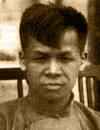
xiv.  on Dedication
The sermon emphasizes the importance of dedicating ourselves to God, being broken and changed, and using our resources and abilities to serve others and experience abundance.
John Sung emphasizes the importance of dedication to God through the story of Jesus feeding the five thousand. He highlights that in our 'desert' age, many lack spiritual nourishment, and challenges believers to offer what they have, just as the little boy offered his five loaves and two fishes. Sung explains that true dedication involves placing ourselves in Jesus' hands, allowing Him to bless and break us, so we can be used to feed others spiritually. He encourages the congregation to recognize their own gifts and to share them selflessly, leading to abundance and fulfillment in their lives. Ultimately, the message is about surrendering to God for transformation and service.
Text
"Whence shall we buy bread, that these may eat?"
Beloved brothers and sisters, you have heard the passage of Scripture read, which is the very familiar story of Jesus feeding the five thousand in a desert place. But you all know that this present age is a "desert" age. Why is ours a "desert" age? Because there are multitudes today without food --- without spiritual food. The problem today is: "Whence shall we buy bread, that these may eat?" When Jesus uttered these words, He knew very well what He would do, for He wanted to "prove" Philip.
What did Philip give for an answer? He said, "Two hundred pennyworth of bread is not sufficient for them that everyone of them may take a little." As a matter of fact Philip said this by way of contrast. Philip might not have that much money in his hands.
What did Andrew say? He said, "There is a lad here, which hath five barley loaves, and two small fishes . . ." This little boy had bread and fish in his hands. O, let us become like this little boy before God. "Except ye be converted, and become as little children, ye shall not enter into the kingdom of heaven."
Friends! Do you have bread in your hands? Fish? Yes! You and I have them. Where? How many fingers have you on your hands? How many toes on your feet? Five to each hand and foot. How many senses? Five! How many viscera? Five (heart, liver, lung, stomach, kidneys)! Are not these your five loaves? Now, how many hands? Two! How many legs? Also two! How many eyes have you? Two! How many ears? Two! Are not all these your five loaves and two fishes?
Now let us take a look at this lad's attitude. When the disciples asked of him the loaves, he could adopt four different attitudes.
No. 1. He could say, "I won't give you. I want to eat them, for I am hungry!" Beloved, there are some who adopt this attitude. They eat up their five loaves and two fishes. After eating, however, they are still hungry. For, their loaves and fishes have not been "changed".
No. 2. The little boy could say, "I won't give you! My relatives and friends are here. They want to share with me." There are today people like this. The loaves and fishes which are not sufficient to feed them have got to be shared with relatives and friends. No satisfaction either. Why? Because their loaves and fishes have not undergone change.
No. 3. The little boy could have capitalised on the hungry five thousand to make big business. He could well have shouted, "Who would want to eat these loaves and fishes? Let them buy them for a $1,000." Now there are such people today. For having merely a bit of education --- from Amerca, or graduating from a university --- they become conceited! If they should be approached to join the preaching ministry, they would use the occasion to raise the price of their five loaves and two fishes. How do they raise the price? They will answer thus, "If you pay me so much per year, I'd then serve in your church as a preacher. If not, nothing to do with you!" Pitiful! How they have commercialised their five loaves and two fishes!
No. 4. The little boy could have said, "My loaves cannot feed five thousand. After I have eaten them myself, I'd rather throw the leftovers away." Friends, there are men like this today! They have wasted the loaves and fishes God has bestowed them on useless endeavours! Whatever they do each day is zero, of little benefit to others. Think of it. Isn't this miserable business?
Let us take a look at what the little boy in fact did. Immediately, the loaves and fishes he had
1. were sent to Jesus' hands,
2. Jesus blessed;
3. Jesus broke;
4. Jesus gave to the disciples,
5. The disciples passed them on to the multitudes.
Since we are the loaves, let us put ourselves into Jesus' hands. If we are not in Jesus' hands, then He cannot bless us. Nor will He protect us. How can we send ourselves up to Jesus hands? By dedicating everything in us to the Lord. Placed in His hands, we can obtain His blessing.
Jesus broke (the bread). This signifies His crucifixion. So need your old Adam, old nature, oldself be broken. When you are completely reduced to nothing, then only will God greatly use you. When God has changed you, you will be able to feed many people. It is when Jesus has broken you that you will receive power. Until you are broken (which also means the giving forth of your witness to others, and your being sent to preach the Gospel) you have no strength. The more you're broken the more you are changed. When He stops breaking you, your power through changing also stops!
What do you do after being broken? You are given into the hands of the disciples. The disciples pass on to the multitudes. In the same manner, as often as Jesus passes on to you, you in turn are to pass on to others.
What happens? All become fed. Moreover there are twelve baskets of crumbs left over. Wonderful? I think this is what is meant by the twelve disciples each carrying home a basket. You give up yourself to the Lord. He changes you. He uses you to feed others. But He also keeps many a happiness and abundance for you. So, quickly come and give your all to the Lord!
THEME SONG
"Come and dine," the Master calleth, "Come and dine."
You may feast at Jesus' table all the time;
He who fed the multitude, Turned the water into wine,
To the hungry now He calleth, "Come and dine."
Sermon Outline
- I. Introduction to the Desert Age
- II. The Problem of Spiritual Hunger
- III. The Disciples' Inability to Solve the Problem
- IV. The Little Boy's Attitude: Possibility of Change
- V. The Process of Change: Jesus' Hands, Blessing, Breaking, and Giving
- VI. The Result of Change: Feeding the Multitude and Abundance
Key Quotes
“Except ye be converted, and become as little children, ye shall not enter into the kingdom of heaven.” — John Sung
“Since we are the loaves, let us put ourselves into Jesus' hands.” — John Sung
“When you are completely reduced to nothing, then only will God greatly use you.” — John Sung
Application Points
- Recognize that we have the resources and abilities God has given us, and use them to serve others.
- Be willing to be broken and changed by God, allowing us to be used by Him.
- After being broken and changed, use the power and abundance God gives us to feed others and experience abundance in our lives.