
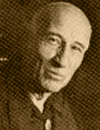
How to Read the Bible
John Follette teaches how to read the Bible effectively by emphasizing the importance of attitude and engagement with the Holy Spirit.
John Follette emphasizes the importance of approaching the Bible with the right attitude, encouraging believers to read it not merely as a religious obligation but as a means to receive divine truth. He outlines three ineffective methods of reading: perfunctory reading, marathon reading, and traditional pattern reading, and contrasts these with a more inspired approach that invites the Holy Spirit to reveal deeper meanings. Follette illustrates how a heart open to God's voice can transform a simple passage into a profound experience of spiritual growth. He concludes by reminding listeners that the Word of God is not just literature but a living communication from God, meant to inspire and guide us in our faith journey.
Text
Trust the Lord to give each one his portion. I thought this morning instead of taking one text, the Lord
didn't lay that on my heart at all, I felt to read you something in the Word and show you how the Lord
opens up the truth to me. Would that help you? Many people say, "I read the Bible and it doesn't seem
to mean anything. I just read it and I maybe get one or two thoughts."
But, you know its possible to read the word of God and when the Spirit of God moves with you, He will
break it all to pieces and get you on several lines of truth just from one little passage of the word. So,
that's the way He's been teaching me to read.
Several years ago, I was reading the Word and the Lord stopped me and said, "How readest thou? How
are you reading?" Well, I knew it was the Lord. I know when He gets after me cause I know how His
voice sounds. It isn't a real voice, but its something inside of you, it doesn't have to be something you
hear out here. How many know the voice inside? Of course. And how many know it has tones and
inflections too? It has real tones and inflections. And He just said it quietly to me. He said, "How are
you reading, how readest thou?" Well, I thought, I'm reading like I always do. I'm reading Your word
and hoping you will speak to me through it and I want to be helped by it, and fill my heart and life with
it.
I thought, how should I read? Tell me how to read the Word. Well then, when I asked Him this
question you know, He's very courteous about it. He had no business to say, "How do you read the
Word" unless He was willing to tell me how. So I said, "How should I read?" Well, He told me there
were three methods of reading the Word of God.
Now, there is one that is "perfunctory," that is, you feel a certain obligation since you are a Christian to
read the Word of God. Well, now, that's a very good thing, but after all it doesn't get you very far. You'
re doing it purely from a perfunctory act of being a Christian and, therefore, you think I must pray and
I must read the Word. Well, that is good, but it isn't the way He would have us to read because there's
no inspiration about it. It's perfunctory. You are reading the Word and some people can't rest unless
they have read thus much. As I said the other night, some people even before they go to bed they have
to read a certain bit of the Word or something or other or they'd probably have a nightmare. I don't
fuddle around with such stuff as that. And so they'll get out of the bed and open the Bible, and still half
asleep, read something in the Bible to kind of satisfy that superstitious thing in them. How many know
what I mean? And then they feel they are clear, and can sleep. Well, how many can see there is nothing
inspiring about that at all. There is nothing inspiring and there is nothing for God to work in a heart
with that attitude. They are perfunctorily reading the Word because they're supposed to read the
Word. Every Christian is supposed to read the Word. Well, if that's as far as you're going to go, then
go on. You won't go to hell, but you won't get anywhere near God, because you are doing it merely as a
perfunctory act of being religious.
Now every once in awhile I run across the "marathon" reader. You know what a "marathon" reader is?
They read so many chapters a day and so many chapters on Sundays and six extra verses on
Wednesday and then do it all over again and over again as long as they are reading the Bible. How
many have ever heard of them? I run cross them every once in awhile. "Marathon" readers. Well, I
ask them what in the world did you get out of it. They tell me, "Well, nothing, you know. I just read the
Bible." Well, I tell them, if your exercising reading, get the almanac and read that. It will be better,
because that won't do you the damage that you're receiving reading the Bible this way.
I think it's right to have some kind of system about your reading. If God is leading you to read certain
portions, certain books, let's say we're taking up Ephesians or taking up Philippians or something, stay
in that book until the Lord finishes with you. Then take another portion that He wants to lay on your
heart.
Now, there is another fashion. It is what I call a "traditional pattern." Having read the Word, and
having read the stories, read the parables, read the gospels and you know the Epistles, by and by we
have a general, very good conception of what they hold. That you can start the gospels, and you read a
parable, and you can say that's a parable as Matthew puts it. Now this is all technical. Then you read a
little bit more and know that it is in John. Read some more and that's Luke. Well, that's good to have
also. How many see the technical aspect of that right away? We are becoming letter conscious. You
are becoming very conscious of the letter of the Word and its position. That is good, you must have
that as a background, but don't rest in that. That is not yet feeding you. And so when you read
traditionally, you read all the while with an anticipation.
When the Lord stopped me, I was reading the story of the raising of Lazarus. I was reading that
wonderful story of the household of Mary, Martha, and Lazarus, and how Jesus came and the
conversation between Martha first and then Mary. Martha made the first contact, Mary makes the
second. But, if you make an analysis of it, both repeat the same, because they are both of the same
attitude and the same mind. Well, I was reading along and waiting for something. Do you know what it
was? "Lazarus come forth!" How many know that is the great climax of this story. Well everybody
reads along hastily to get Lazarus out of the tomb. That's really what they want to get, and so I don't
blame people. I'm not too harsh, I'm just amused at people that's all.
But, why do people read certain scriptures? You read certain scriptures because they bring a certain
reaction to you. Now, if someone wants the inspirational thinking that there is the miracle and how
wonderful it is that He wrought this miracle, you read the story of the raising of Lazarus from the dead
and there is a miracle. Well, what do you really find? A great lift when He says, "Lazarus, come forth."
How many see the climax right away?
Alright, now in your build up to that climax, you have left undone, unfinished, unattached at all, oh so
many beautiful, wonderful bits of truth in there. In their conversation, in the way they approach, in
the reason why one appeals to Jesus before the other. All of that is perfectly there and purposely
designed and purposely arranged so that you read it before we come to "Lazarus come forth." I got so
interested in that chapter I don't know how many days I was reading it. Days! Imagine spending days
reading one chapter.
Well, people would ask me what kind of a reader I am. Well, I'm a slow reader. I can take a chapter
and I can move around in that chapter for days. I forgot all about Lazarus coming forth, I got so
interested in what was going on in that chapter and how the Lord was handling these people and there
little conversations and what He was saying. I got so enthralled because it was all spiritual. I was
getting a terrific spiritual lift through it. Finally I thought, where is Lazarus, we better get him out of
the tomb. So I read on a little farther and we got him out of the tomb. And I said, "Well, dear Lord,
think of reading for days before you get him out."
Now you see, people can read traditionally because they get a certain reaction from the reading.
Originally it gave you a lift and so you like to have that lift over again and so you read it again,
repeating the same emotional reaction from it. Do you get it or don't you? Yes, well people have found
that out, they know how we're made and so they have made little bookmarks. I've seen them, you have
too. When you are blue, read so and so. And then when you are starved, read so and so. And when
you are in difficulty, read so and so. How many know these little book marks like that. Well, how did
anyone know how to make them? Because they know how people generally react to the truth. And so,
in order to help they just say, well when you are blue and discouraged, press a button and out comes
the truth. How many see it? That's a kind of a mechanical way. It's good. It will help you, but by and
by you depend too much upon the mechanism of the thing without having anything that is original and
inspiring and fresh.
So the Lord said, "Well now, don't read that way. It's alright, you may read it, but don't expect Me to
meet you in it, because you have closed the avenues. By your attitude and anticipation, you have
closed the door for me to come in with anything fresh because you knew just what was going to come
anyway." Do you get it? Well, knowing all that is coming, how do you know but what the Lord wants to
stop you and say, here look at this verse. But no, we don't. We just read along because that's the way
the story goes.
I said, "Alright Lord, you've showed me about two ways NOT to read, how should I read?" He said,
"When you approach this Word, it is your attitude that counts. Never approach it like any other
literature in the world, because it isn't anything like any other literature in the world. This book isn't
like any other book that's ever been printed in this world, because its content is the Word of God. It is
God speaking." Well then, if I approach this word and I keep in mind this is God speaking, I must take a
different attitude from merely reading it, because it is interesting. I must read it because the Holy
Spirit who has written the Word is the interpreter of it and it is possible for Him to arrest my attention
all along the way at any verse and call my attention to it. And the Holy Spirit then has time for what I
call "inspiration in reading."
Christians have come to me so many times and told me they are Christians. Only a couple weeks ago a
dear sister came to me and said, "I'm a Christian and I love the Lord and everything, but I don't get
anything out of the Bible. I read I suppose because I have to. I'm a Christian and I read it." How many
see the poor dear? She had never had any little instruction of how to read the Bible and to be open to
God.
Now let me help you here. In the reading of that Word, keep your heart open. It isn't so much your
mind that is now analyzing every third word. I know that technique too. We have to have that in
scholarship and in study, but I never see the Word of God for a real help as I do in a study, because in a
study you have to do analysis and word values and all that. A teacher should have that. I've had that
for years, that's my old methods. I know that. I can't get out of the Word what I do unless I do that.
But, I'm talking about my general reading, of my precious sheep who read. I have to be a shepherd
over them and I do a different kind of work from you. I'm not expecting you to do my work at all and I
don't want you to be trying to do what I do. You just stay put in whatever little pattern you have and I
stay in my little pattern and that is the only way through.
So I find that it depends upon my attitude. Then the Lord showed me something else. He said, "It's
your attitude of heart that governs not only in your word but in your prayer life. When you come to
seek me, it isn't the prayers that you are making." You have to have your prayers and say and repeat
the prayers because that is a release to a certain urge and an emotional drive in you that wants life and
truth and God. Now if that urge is really as it should be, the depths, I would say the core of the thing is
inarticulate. That is, the real core of the prayer that should be birthed in you and in me is not articulate
in words. It has to bind its expression as best we can through words and then Paul says it gets so
intense that even words won't do it, it has to go through groans and cries. How many see what I mean?
I mean that the core of that prayer, the core of the desire in there, that is giving birth to what we call
our prayers, "and now dear Lord you know how I am." That goes on and He listens to it of course, that'
s alright but that doesn't entertain Him too much. Well I said, "Why Lord is that?" He told me it isn't
your words that you are saying, it is your heart attitude. And in your heart attitude you either close me
or you release me. How many can see that is quite possible.
Even before your words are spoken, even before they are formed in any kind of a conscious sentence,
the attitude of your heart, when you come into the Lord's presence, the attitude of your heart is either
releasing Him or it is closing Him in. Those are things I find as I walk with God. I discovered those
facts and they are principles, they are things that pertain to our spiritual culture, to our spiritual
education, to our development in grace, and to our growth in God. We have to know these things or we
fumble along like children untaught. That is why we have teachers.
To me a teacher is not just someone who studies the Bible and gives a Bible reading. The Lord helped
me with this one time. I had to minister in conventions and camp meetings and I always dreaded it.
They would introduce me as an evangelist and I had to ask them to please do not do that. I am not an
evangelist, I have no special gifts as an evangelist and people come to hear me preach a revival when I'
ve never preached a revival. How many know you'll hear about 10,000 evangelists and only hear
about two teachers. That's right. The proportion is all out of balance. People think, when a Bible
teacher is coming, that he is some kind of an evangelist. No, not at all. His vocation isn't that at all.
Why has God said that He is placing in the church pastors, preachers and evangelists if there is no
difference between them. Why didn't He just say He was placing into the church a lot of Christian
workers? He doesn't do that because He says there is a specific ministry for each one of them.
The evangelist comes to work on the unbelievers and the sinners to present Jesus to them and to bring
them into the light and give the little lambs their birth and bring them into the fold and give them first a
little elementary teaching. His work in the world is with sinners to try and bring them into a
relationship with God.
The pastor takes these sheep and begins to minister to them. He begins to feed them, direct them,
guard them and guide them. Entirely different ministry, but very necessary. He has to be a shepherd
over them, watching them, taking care of them.
Well, then a teacher comes in. He's not the preacher there and he's not the evangelist. What is he
then? He is what God has called teachers, who are to open the Word of God and bring Spiritual reality
into a living consciousness in the hearts and lives of those who are hungry for it or who have capacity
for it.
Now, many Christians, hundreds of them, have no special capacity for anything past salvation, the
baptism, healing and a few miracles, and then they are all finished. There are thousands of folks like
that. Then there are others who have an urge and a desire for something more in God and they are
trying to battle their way through these old patterns and trying to find, if there is a reality in the things
of God, in the Spirit , in the Word. So some of us have to come in and help those who have a hunger
and thirst for a deeper understanding of the things of God.
Now all of us have a certain potential for spiritual gifts. Potential spiritual qualifications. We are not
made the same. We are not geared the same. There are some who have a certain aptitude. The old
French mystics, teachers and scholars entered into what I call the realm of spiritual living. We have a
few scholars who have lived in that field. They are not recognized because they are called mystics or
unpractical; some kind of doers that live around Moonies. Well, that shows the ignorance of people.
They don't know anything about them. When you don't know anything about people like that, keep
still. You only display your ignorance.
Not long ago somebody said to me, "Have you ever heard of Follette? He's kind of like a mystic, he's
not very practical." That amused me. I thought, has he ever seen my hands? How many know I have
very square hands, they are not tapering. Enough said for that, so you'll know my language. I thought,
you follow me around two weeks and you'll find out if I'm practical or not. But you see, they have an
idea that if you delve into anything of spiritual nature past the baptism, then you have become
impractical and sort of mystical.
Now listen, I've moved in this realm for over 50 years and I have never found one thing in there that
contradicts the practical living life. Not at all. I've never found anything in that realm that contradicts
the fact that we are still walking here in the flesh and eat potatoes and beans, and should be able to tell
our right hand from our left. Do you know the trouble is, without knowing this field or knowing what
these teachers are trying to do, to salvage out of Christendom, not out of the world, the evangelist
salvages sinners out of the world, a teacher salvages spirits out of a church. How many get it or don't
you get it? I'm not salvaging sinners out of the world. I'm salvaging lovely spirits that I contact over
the face of this earth out of Christianity to bring them into what God wants. I get some out of Pentecost
and some out of churches. I get them from every region, because there's that aptitude, the French
word is "attray" and that's a good word. And you will find that in a soul. I'll say, "Oh, there's a certain
'attray' in you." How do you know? I know, we've talked about it and I just know. Now come on.
I believe if you're really honest with God, He will lead you and feed you and culture and bring that little
potential spiritual life in you into the thing that He wants. Now don't be frightened if you don't turn out
to be a Francis of Assisi or a Madame Guyon. Don't be worried. You are supposed to be the person
whom God sees you to be. That is all. Now when the Holy Spirit begins to work with you, offer to Him
with all the abandonment that you have, that little "attray," that aptitude, that urge, that little hunger,
just that little flickering hunger for more of God, more of God. Cultivate that. That to me is the most
choice thing in you. Why? Because it is the root, THE ROOT, of all the possibilities of the ages to
come are hidden potentially in that little quivering urge in your heart. You know that, or don't you
know that? Well, that's true.
As I said yesterday, all we will carry over into the next realm is the amount of spiritual life, vision,
understanding, the amount of spiritual opening, alertness, awareness - the amount of that spiritual life
that we have, that's what we carry over into the next age. God begins to work with us from that angle.
When we are translated or brought in, we are not matured, He takes us exactly where we are now. If
you were a babe in Christ, translation never makes you into a matured saint. Neither does death,
because God has a law that governs in that field just as much as the law of gravitation. I want you to
know that because it is scripture. That is why Paul taught so earnestly as he did. He's called a great
missionary, but how many know his great field was that of a teacher. Absolutely. I know he was a
missionary but underneath all that there was the most profound urge and drive in that man that had
been pushing its way even while he was yet in that old Judistic sect. That little curiosity that brought
him down to see Stephen stoned and all that. How many can see yet there was a little urge in there.
Though he'd had all that training he thought he's go see what these Christians were like. How many
know he got caught?
Well, keep on and praise God and maybe you'll get caught. It would be good if you got caught with this
little hunger that is in your heart, this little urge. This has to be trained and educated. When we go,
don't let these funny feelings which are so deceptive side track you. When Jesus comes and takes us
home, all He can possibly take home is what we have acquired here of spiritual value. Flesh and blood
cannot enter or inherit the kingdom. It does not. It's all of spiritual value. But, the fact that I am
brought into heaven doesn't mature me. I have all the eternal ages in which I may grow in God. Why?
Because God is infinite.
How many know what infinity means. How many think you're going to get to the end of infinity. Do
you think so? Well, the first one who gets there holler at me please. You can't exhaust it, neither can
you exhaust the revelation of light and truth which shines in God, the Ancient of Days, the God that I
spoke of yesterday. He has been eternally God before that. This is the only conception we have of Him
here in time. But what is the conception when we move out of time. What will be our conception of
God? Did you ever stop to think. That's why I love Him because He is infinite and we're going home
where we belong.
Do you ever feel the restlessness in your spirit that you do not belong in this apparatus down here or
don't you? I don't mean that you feel so holy that you want to get out of the world. I don't mean that at
all. I'm very human, thank God. I never want to be so spiritual that I can't tell beans from buttons. I
want you to be conscious of that. Why? Because we don't belong here.
How many remember the lovely quotation from St. Augustine, our early church father? "The heart
was made for God, neither shall it find rest until it rests in Him." That's the epitome of our whole
Christian concept isn't it? That's the little nutshell, that's the whole story of what we call Christianity.
Christianity has broken in upon us to give us our bearings. It comes to us in our darkness and
ignorance saying, "You are not designed for this. You were made for the Glory of God. You bear His
stand and image. You were made for eternal things." This is a little time of schooling. Don't become
too satisfied with the seat you are holding in school while you are being taught. Don't be worrying
about your car, your dollars, a name and a reputation. That's the mechanics that have operated in
your heart and life and will push through even while you are a dynamic spirit, a conscious entity born
of God, filled with Him and illuminated by Him. When that starts to push through, we should get back
home, back to God. That should be our attitude.
So God says when we come to read the word, when we come to Him in prayer and in seeking, we either
block or we release Him by the attitude that we take. Everything depends upon the attitude of the
heart. It's not so much the language or the position of the body, but it is the attitude of the heart.
"Keep thy heart with all diligence, for out of it are the issues of life." People will beat that. They are all
concerned with the issues of life out here, trying to fix them and muddle with them and do a lot of
funny things with them and correct them or adjust them. God says to let that alone please. You're too
conscious of the issues of life. It's consequences, it's comings and it's goings. That is not life. that is a
manifestation. You real life is here. "Guard your heart for out of it moves the issues which will be
birthed over there."
Then you get into trouble. How many times I have to deal with people who come to me with
disturbances. They say, "Well Brother Follette, you will think its bad of me." Look, just tell me, I don't
care if you've committed murder last night. Tell me about it, you can't scare me. I love you because
you area soul and you belong to God. I don't care if you've committed adultery and murder and stolen
70 million dollars. Let us sit down and talk. Talk! Let's get the thing out. Well they say, "I've been
saved several years and I've been baptized in the spirit and I used to have this and do that." I tell them,
"I know all about it." I know their language before they speak it. I know what they're coming to. So I
tell them to just spill it out on the floor and look at it and get through this thing.
Now, let me help you. You are disturbed because of a local disturbance, an unhappiness that has
come. It's registering in you. Your whole emotional life is all upset. But this isn't your trouble. Your
trouble goes farther back than that. And sometimes we have to go back weeks and months and years to
find the beginning of that thing. Why? Because it is an issue of the heart which had projected itself out
here and taken weeks or months. I have dealt with people that have had to go back years to find their
difficulty. When we find the difficulty I tell them to get that straightened out and you know what will
happen? The issue out here that they are all upset about, it will find an adjustment.
Now that's the way Jesus taught. That's the way He taught and that's the way He makes us to teach,
because that's the way it is. Sitting down and saying a lot of prayers, that won't help. I had a Catholic
woman come to me just this last winter. She was an educated woman, a Roman Catholic. But
somewhere she had heard some of my teaching, either through tracts or something she'd read, and she
asked for an appointment. She came to me for help and I told her you're a Roman Catholic and I don't
know what your priest might say. I don't want to get into trouble by having a disturbance. She tells me
that she's been to the priest. She's had this problem for months and months and all he says is 'confess
your sins and pray harder.' Confess your sins and then go pray to the virgin and all these other ones,
and pray harder and harder.
Can you see what a terrible deception this is. She told me, "I don't get anywhere and I do pray harder."
She said, "I do just what the priest tells me, but you know, I don't think our priest understands who we
are." I thought, my dear sister, you've hit the thing right on the head. The priest doesn't know who she
is. So I told her, if she felt it was alright, I would try to help her. So she's been a couple times for real
prayer and help and you know she's coming right along in the Lord. A lovely little Catholic mother with
her three children, hungry, but saying prayers to get help. How many know that for her to say a
thousand prayers, it would not help her. It couldn't help her. She had to have this analyzed. We went
through it and found out what was the matter and it was something months ago. Well I said, "Lets go
back and clear this up." It was wonderful to see how she came along, a little old Catholic sister. But
why? Because she was using the methods God uses. It isn't psychology, it is just common sense. It's
just what God is doing.
Jesus was the greatest psychologist and psychoanalyst that ever walked the earth and He used the
principles in the most perfect fashion. They have stolen the principles which He has and they fumble
around with them, with clumsy fingers of flesh. And then they get a partial result. They're extremely
wonderful in analysis, the psychoanalysis. But you know, they are very poor in synthesis. What's the
difference? Well, the analysis is to take the thing apart and to lay it out here and see all the different
parts. Synthesis, is to put the thing together as it should properly belong so it can function. How many
know the majority of the psychoanalysts are wonderfully clever in the analysis. But how many know
they always fall down on the synthesis. Do you know why they fall down on the synthesis? Because
they don't approach it from a Christ angle, from a God angle. Personality, the life, should be adjusted
about the Christ, not about the ego.
Jesus has come to become the center of life and all your life should be orientated about that. All the
orientation of your life, all of it, should be all centered about it. He is the center. But when you don't
do that, and you still have an ego which is fairly respectable, and you're trying to build a life all about it,
you see, without Christ you'll fail. You have to go back to Him again. And then He puts you back on
the couch and goes through another series. Oh, I know. Christ is the center, we were made for God,
then let us go home and how will we go home? By the instructions which He's left in His Word. Bible
stories? But even in the simplest Bible story you'll find enough spiritual light and illumination to carry
us over all of these hard places. Over every one of them. And that's the way we should read it. But we
don't have very many teachers.
I was disturbed quite a while ago about this idea of teaching. When they put me down as an evangelist I
asked them not to do that. They don't do that any more. So now they say Bible teacher. Well, that's
pretty good. I do teach from the Word of God. I am supposed to be a Bible teacher, but this is what I
want to ask you. I don't know if I am going to answer it for you. The Lord answered it for me, maybe
He will answer it for you. Now when the Lord God breathed upon those early disciples and organized
what we call the little first apostolic group of people into what He called His Body, His Church, it said,
"He placed in the Church," not in the world, He placed in the Church these gifts, pastors, evangelists,
teachers, prophets for the edification of the Body, not for the salvation of the world, for the edification
of the Body. That's where His interest is. But nobody wants to be interested where the Lord is. They're
all out there hollering and praying and yowling and banging around to get the Lord interested in
something over there, when He's interested here. How many know He's interested in His Body? Well
then why in the world do they keep hammering at Him to get over there and do something there. He
says, "No, the work that needs to be done is here at home." Nobody wants that. The difficulty is closer
to home.
Now this is what I want to ask you. If He placed teachers in that early church, in that little group of
believers, what were they teaching when the Bible hadn't been yet made. All they had were the Old
Testament scrolls, the Bible as we know it had not been made. So what were the teachers teaching in
that early church. All you who have great wisdom, I wish you would enlighten me on that. Well, the
Lord told me about it and I'm quite satisfied with the way He spoke to me about it. But, I'll give you
that for homework since this is the school. Your homework is to try to get that thing together.
I went up for a retreat in Wisconsin. When I went I told them I had come for information. All of them
who were at the retreat were more or less mature Christians. I hadn't any there who were beginners.
They were people who had been following around for years and were advanced. So I said to them, "I
want you to help me out." So I presented three or four questions to them. I put this to them. God
placed teachers in the early church to teach them, but the Bible was not compiled yet. What did they
teach?
Well, we won't talk about that cause you're awfully still this morning. But I want you to think about
some things. I think about them and I want the Lord to help me with them. I see things in the Bible that
I have read a hundred times and all of a sudden I stop and realize that I don't know what it is. I thought
I did, I thought I knew what that is and now I don't know anything about it. I tell the Lord and He says,
"You're pushing over into this realm of the Spirit where you will have to put away some of these
traditional things, and find out what the word says and not what your great grandmother says." How
many know our great grandmothers might have been mistaken about some things possibly?
Now for a little while I want to read to you. It is a story that is given to us in Luke. Now this is Luke's
way of telling it. It is the story of Jesus going down by the seashore and seeing this multitude and
feeling them press upon Him for the word, He puts out the boat and they have a wonderful time. It's
the 5th chapter of Luke verses 1-11. I'll read it to you so those who haven't Bibles may enter in, but if
you have a Bible you might want to follow along.
"And it came to pass that as the people pressed upon Him to hear the word of God, He stood by the lake
of Gennesaret. And saw two ships standing by the lake but the fishermen were gone out of them and
were washing their nets. And He entered into one of the ships which was Simon's and prayed him that
he would thrust out a little from the land. And He sat down and taught the people out of the ship. Now
when He had left speaking, He said unto Simon, launch out into the deep and let down your nets for a
draught. Simon answering said unto Him, Master, we have toiled all the night and have taken nothing.
Nevertheless, at thy word, I will let down the net. And when this done, they enclosed a great multitude
of fishes and their net brake. And they beaconed unto their partners, which were in the other ship, that
they should come and help them. And they came and filled both the ships so that they began to sink.
When Simon Peter saw it, he fell down at Jesus knees saying, depart from me, for I am a sinful man, oh
Lord, for he was astonished and all who were with him, at the draught of the fishes which they had
taken: And so was also James, and John, the sons of Zebedee, which were partners with Simon. And
Jesus said unto Simon, Fear not; from henceforth thou shalt catch men. And when they had brought
their ships to land, they forsook all, and followed him."
Isn't that a nice story? Now this is a real nice fish story isn't it? I like it because its rather dramatic,
and in their action and their is conversation we will find a lot of truth. In fact, this little story will cover
much of your experience in living. It isn't just a little incident that happens today, but it's going to
cover the required high points in our experience in God and of our living in the Spirit. We will touch
certain high points and they will be also repeated in your heart and mine too. They are repeated here
in the life picture because it is a little drama that is in acted and we see it, but all the while we're looking
at it, remember that that very thing today is being enacted in hearts and lives. And much that we find
here you will find repeated in your life, as I've found it repeated in mine, because it is like a little over
all pattern.
"It came to pass." That's a lovely way to begin it isn't it? There are so many wonderful things that have
come to pass in the experience of the disciples with the Lord. Now, this is one which seems, on the
surface, to be very casual. Almost as though it were an accidental thing that He was walking down by
the sea shore and there was this multitude of people. How many see that it looks very casual? Or did
you think they had put flyers and posters out days before saying, the great Son of God is to appear
upon this shore at such and such a time, and everybody come. How many know the Lord didn't have to
fuss around with all that stuff. You don't have to with the Holy Spirit, you really don't. They didn't
have to because they had something that we have lost and that's why we have to substitute all the
paraphernalia that we have today, because we have lost the original thing which they had. And so, this
is what we call a substitute. Put out a great poster that Jesus is going to appear at the shores of this lake
and so on.
The people are there, they are moving and Jesus is there too. But here's a sweet thing the way it opens.
"And when the multitude pressed upon Him to hear the Word of God, He sat down in the ship and
taught." How many see something. Do you get it? How many know their attitude released Him. The
very thing I was telling you a few minutes ago. The attitude of their heart, that hunger, that desire, that
urge, and when they pressed upon Him that He would work a miracle. No, that will shut Him up. I've
seen Him shut right up just because that's all they had on their hearts - to see a miracle. You know that
people have hearts and ears and stomachs and things that can show. And Jesus knows it too. And when
He sees people have ears, He's right there. And when He sees all they have is stomachs, well He says I
can put something in their stomachs, but they never have their ears open. When the multitude pressed
upon Him to hear the Word of God they released Him instantly. He said let me have your little boat
here for a little while. Here are a hundred people and I want to feed them. Now push out a little bit
from the shore and let me greet them. Do you get it or don't you get it? How many see the attitude of
their heart released Him?
Now let me show you this thing in reverse. Here they are upon the mountainside and they have
followed Him. The multitude are hungry, He discerns that and He lets them sit down on the ground
and He performs a miracle there. A real nice one. Wasn't anything psychic about it, it was the real
thing. He hasn't dealt with them. They are hungry, so He is going to satisfy that first physical urge
because He knows He can't get anywhere with them in the flesh cause they sit there and their stomachs
are just gnawing and they are thinking when will He finish, I want something to eat. He knows that. He
has what you call a perceiver. I read another portion of the Word of God today where He uses that
word. "And when Jesus perceived..." Well what does that mean? It means a quality in the Lord Jesus
that when He comes near us or touches us, He perceives our hearts, our thoughts, our minds, our
motives without us even saying a thing to Him. You don't have to say a thing to Him. Because He has
that strange lovely mystical thing about Him that as He brushes by us He knows us instantly, all about
us.
These people are sitting about eating the bread and fish and they are thinking He's all the time talking
about a kingdom and He never gets into the kingdom. Now if we could get Him on the throne, where
He belongs as the Messiah, and He can make bread and fish, He'll answer the whole economic problem,
couldn't He. Wouldn't He make a wonderful Messiah. While they sit there eating fish and bread Jesus
perceives something. He walked among them. "And when He perceived that they would by force make
Him a king..." When He perceived what was in their hearts, not what they were eating. He knew very
well they were eating a miracle. They were eating a miracle, but in their hearts, out of which come the
issues, they were hoping to divert this whole lovely expression of God into a political channel and make
Him a king. And when He perceived that they would by force do that, He turned and left them and
went alone into the mountains. I wish I could have been there to say, Jesus don't stay with that crowd,
they'll kill you. How many know they did finally kill Him. It is always a wonder to me that He didn't
die before they got Him, up on the cross. That always been a miracle to me. How in the world did He
ever keep alive with that kind of mess going on around Him. He left them alone, and went alone into
the mountains while they sat still eating their miracle. Why? Because they had stomachs and wanted a
miracle, but had no ears to hear the everlasting word of God. How many know that this is going on
today? There are plenty of Pentecostal people who have stomachs, but a lot of them have no ears.
They have stomachs and they like fish. Finally Jesus rebuked them. He said, "You don't follow Me for
My miracle, You follow me for the loaves and fishes that come out of it. But you don't want the real
truth." Do you remember that?
I haven't found anyone painting that picture yet where Jesus dared to rebuke them. They always paint
a picture of Jesus as some effeminate silly Son of a flimsy flam thing and I don't like it at all. I would
like a few pictures, if they have them at all, with Jesus in these realistic fashions, daring to turn His
back on a group of people who have stomachs for miracles and no ears for the word of God. How many
get that or don't you see it?
Remember we talked about motivation yesterday. How many see your two fields of motivation, right
now this morning. In the one there is the motivation of what? Counted by the hunger in their heart for
the eternal, and they release Him and He sat down and talked to them. What is the motivation of the
other? A natural thing that rests in the realm of our flesh and it closed all spiritual avenues. Do you get
that or don't you? I want you to see that. These things are going on now. These are stories for our
admonition. All these things are written for our admonition that we should be admonished by them.
And so He says here, "And it came to pass that as the people pressed upon Him to hear the Word of
God." There is your motivation, a fine splendid motive which opened His heart. It didn't say when
they pressed upon Him to see Him work a miracle. No, you are liable to shut him up doing that.
"When they press upon Him to hear the Word. And He saw two ships on the lake. But the fishermen
were gone out of them and were washing their nets." I read this a lot of times before the Lord stopped
me. I wonder if any of you can sense anything right in there. "The fishermen were washing their nets."
I had read that many times before I saw what He was talking about. What is the net? The net is the
method by which the fishermen catches his fish. Do you get it or don't you? Why doesn't it say, "They
were washing the fish?" No, they were washing the nets. I think a thing that would please me today
would be a line from here to Jerusalem with all the fish nets that our people have today of catching fish
strung out there to be cleaned off. Wouldn't that be wonderful? They were washing. How many know
your message has to be cleaned out every once in awhile. Why sure. Think of the methods now which
people are using to catch fish. Those are the methods. Well those are the nets and He said they were
washing their nets. I think it high time for the nets to be washed out and hung out in the sun where the
lovely Son of God can beat upon them and the fresh air of the Spirit can blow through them and they
will be ready to be cast in again for another drop.
A few years ago I had a trip to Europe to teach and lecture. They invited me over. I was going over on
the steamer and I met a group of enthusiastic young people. You can't blame youth for its enthusiasm,
although its not always directed where it should be. How many like to see this enthusiasm even though
its crazy? Oh, they were going over to take Europe by storm you know. They were going to make a
divine invasion upon Germany and just sweep the country. Why they were as bold as 12 lions put
together. I asked them what they were doing. They said they were going over to evangelize Turkey.
Well I thought they've got some job.
Well they had all these nets with them. One could play a horn, one a fiddle, one could play a fife, one
was a juggler and one was a slight of hand performer. He had a bag of tricks and so in the name of Jesus
he was performing all this. I thought, dear Lord, talk about fish nets that need to be washed. How
many can see it? Don't you think that would have been lovely to have had those nets washed out.
There they were with all this paraphernalia. I never heard much about them after they got there.
I had services among the refugees from the war zones and they had these huge tents for them. We had
real meetings night after night. I had to play the part of an evangelist. It was a little hard, but God put
me in the place and He can make me an evangelist every once in awhile. Once in awhile He makes me
an Evangelist for the time being and He gives me enough souls and I take them. And then He says,
"Now take your real role. You're a teacher. Let the rest of them do that."
So I was there ministering and He gave me some lovely material. And at the close of our meetings two
or three of the leaders came to us and said, "Now Br. Follette we want to ask you something as a favor.
When you go back to America do you have anything to do with sending out the material that you send
for us. "Well, I began to groan a little inside. I said, "Well, why?" Well, he says, "We don't want
America to be sending us a lot of funny things like musicians, we can play better today in this war torn
zone than anything they bring over. We are musicians most of us by right. We don't need somebody
coming over here blowing on a horn and playing on 7 kinds of instruments at once and standing on
their head. We don't want that. Will you please tell them over in America not to sent any more stuff
like that here. We are heartbroken. We have been dugout of the rubble of our blasted cities, our
homes are gone. Everything is devastated and our hearts are broken and hungry. All we want now is
for somebody to tell us about God and how to get back. That's all we want. If someone will just come
in the plainest way and just preach God to us. Tell us about God, tell us about Christ, tell us about
living."
Now that came by request of some of the leaders in Germany. They approached me. How many can
see what I mean by, "And they were washing their nets." I wish we had a line from here to Jerusalem
with about half the stuff that's going on today in the name of the Lord. String it out so the wind and the
rain can wash it clean. How many are getting motivation in just this one verse? How many knew that
was in there? Sure it was. It was staying right in there and when by hunger they pressed, how many see
motivation. That's all in there.
Now see if we can find something in some of the other verses. "And He entered into one of the ships
which was Simons and prayed him that he would thrust out a little from the land. And He sat down and
taught the people out of the ship." Now this is the first command. He gives two commands to Peter in
this story if you notice carefully when you read. Two commands about pushing out. The first one He
says to him, "Push out a little from the shore that I may speak to them." Now after the speaking is done
He gives the man other command and says, "And now launch out into the deep." How many see two
commands? How many see they relate to what? The distances to their pushing out. He doesn't land
you out into the deep the first thing. He can't. He never commands anyone with a command, "launch
out into the deep," when He knows better. We'd all flounder and get drowned. What will we do in the
deep? Can you imagine a little young inexperienced Christian being launched out into the deep where
the trials, waves, billows, testings, and all that comes on. Well, you would be swamped.
He says, "push out a little from the shore." Well even that little is detachment. Do you get it?
Detachment. How? "Oh, just a little. I won't hurt you now. I'm going to separate you. Just the
simplest beginnings of a life of detachment. The time is coming when you're really going to be
launched way out into the deep. But I can't do that with you now, because you haven't had my word
yet." This is the simplest measure of detachment. The shore is your homeland, your natural habitant,
the shore is where you were born and where you have lived. Out there in the water is not your natural
habitat. It's going to be a place of miracle and wonder, but it isn't where you really live. Now He says,
"Push out a little." That means the first beginnings of a life of detachment and separation. And I want
to sit down and talk. So He sat down and taught them out of the ship.
Now I won't take the time here, but I may use it later. I want you to see it says, "He sat down and
taught them out of the ship." I'll only suggest it, but I can't go into it, because it takes a whole evening
to do it. Watch the postures which are mentioned.
One time the Lord woke me up during the night, and I'm always scared when He wakes me up to talk to
me, because if I ask Him to talk to me and I am still very conscious of things I don't know the conscious
realm in which I'm moving might be interwoven in the thing He's telling me. So, I'm always glad when
he lets me rest. It washes my thinking all out. My mind is clear and I'm dead to the world. Do you get
me? I always feel safe when He comes into my room and I open my eyes, I always feel, "Oh God is
here." Then I'm not afraid, because I know that what He's going to show me won't be some concoction
of my own thinking because I hadn't been awake enough to think of anything.
Do you know what He told me that night? Well, He didn't tell it in one night, it took several evenings.
He said, "Now listen I want to show you something in the Word." I'd never heard of such a thing, never
heard of anybody ever getting on to it in my life, but its there. He showed it to me and I can show it to
you. He said, "I want to teach you something. All my truth that I am giving to you has to come to you
through visible agency. Through material things. Through the little parables. Through things you can
touch, things you can see. That's the only way I can communicate to you, because truth is abstract, it's
invisible, it's a reality. Now I want to show you something. Your body, the human body, has seven
general postures." Now I mean by posture, I am in the standing posture now. Supposing I sit down, I
am in the sitting posture. Supposing I run, that is a running posture. It is the action movement of the
body. He says there are seven. Well seven is the number of completion. Seven is a perfect number.
And He said, "I will show you in the word, by specific verses where the words are really used, that
every posture of the body has spiritual significance. There is a reason why in the scripture often is says
"to stand." Why? Because standing is a posture that signifies something. How many know "running" in
the scripture always signifies something. How many know "prostration" always signifies something.
All of these postures signify something, and He began verse by verse with special pictures and showed
them to me. It took several nights to get through the thing. I've never preached on it or written on it,
but I think it would make an interesting theme though. I really do.
I think if I had time to write, sometime I'd like to tell a lot of things. They are wonderful to me and I'd
like to write that. I'd write a book with seven chapters and each chapter would be given a specific place
right in the word.
Now, this is suggested by this word, "And He sat down and He taught the people." Well, "sitting" is
your posture of receptivity. How many see that has to be? How many know there is no receptivity in
running or even walking. No, to sit down, relax, how many see receptivity right away. Alright. And
when He sits, He always teaches. Now don't get me wrong to feel that you can't teach standing on your
feet. I'm not talking about that. How many know that I am saying that in the spirit it is a spiritual
significance. I did know one man who had the idea that if He taught He ought to sit down and he used
to have a chair that he brought up and sat on the edge of the platform and he sat down and taught.
Then when he preached he stood up. But I don't go through those funny things because I think that is
not required.
However, when you come to the word "to sit," that's receptivity. Sit down -that's receptivity. When he
sits down, He is teaching and we sit down to receive. Now, can you see why a spirit that is agitated,
running here and there, how many see there is no teaching to it at all. How many get that. The heart is
too agitated. Well, when I saw that He pointed out this scripture to me and said, when He was to teach
the people out of the boat, "And He sat down in the boat and preached." No. No. "He sat down and
taught them."
Did you ever look at Gamaliel, the great learned one, who had been taught, what does it say? He sat at
the feet of Gamaliel. Why? Receptivity. He sat. Oh, I suppose he walked and everything else, but it's
the position, the attitude of the heart. These are heart attitudes. It rested in the presence of Gamaliel
and he became a profound philosopher and teacher.
In the home of Mary and Martha, which one was the agitated one bussling around getting supper?
Which one did that? Martha is the example of the agitated spirit which is good. We have to have it.
Never divorce Mary and Martha. They are sisters, let them be, never divorce them. They are in the
same family, don't kick one out. Holy Mary. No. Martha is just as holy. She has a different vocation.
What does it say of Mary? "Mary sat at Jesus' feet." Do you get it?
Well now, go through the word and it is astounding that wherever you find a teaching ministry, it
always says something about sitting down. I never heard such a business. When Jesus taught the
disciples that wonderful sermon on the Mount, what does it say? "He went up into the Mount and when
He was SAT His disciples came unto Him and He TAUGHT them saying..." How many get it right
away? Well we won't go into that because how many of you see it would take along time to go over all
seven of them, but it is really very fascinating, because there are really lovely spiritual things taught to
us through our body and its postures and action which has its spiritual analogy running right along with
it.
Jesus sat in the boat and taught them. Now, you can teach standing, but do you get me? How many can
see what I'm after? The certain heart attitudes which we must take. A person who is running hither
and yonder....how many know quietude. There is hardly any chance for the Lord to get to them. Do
you know why God has to lay people aside to talk to them or haven't you ever noticed. You see, He can'
t get at them until He knocks them over, pretty near paralyzes them, and pretty near kills them to say,
"I would like to talk to you."
Well, just one more point shall we? We'll never get all these fish caught. Tomorrow we'll go on a little
bit more cause I hate to leave Him sitting in the boat without any fish.
"And He entered into one of the ships which was Simons and prayed him that he would thrust out a
little," just a little from this land, that's all. I'm only going to take you now a short distance in the
lessons of detachment and separation. This is your old home country. This is your natural habitat, but
I can't work the thing that I want with you here. It has to be walked out there. So we will separate just a
little. Later I'm going to take you farther out, but you can't do that now. Now I want to talk to you.
"And so He sits down and teaches them out of the boat." Now, what I would like to help you to see just
before I close is this. Before there is any miracle, and we all want the miracles, before there is any
lovely manifestation of God and His power, how many see the emphasis He places upon the power of
His word first? Do you get that or don't you? He has to lay a terrific foundation of truth and the word
of God before there can be any place for even a miracle.
You can have what I call a "miracle in its superficial manifestation without getting the miracle in itself
and that's why He spoke of it. He says, "You don't want me for the miracle. You want me for what your
getting out of it, this fish and bread." That is why people see miracles and never get anywhere with
them. They see it, and they even eat the fish and bread, and say, "I feel better." But what have you?
Fish and bread, or have you the real miracle? The miracle is indicative. It is like a chapel with a church
bell up in the top in the tower. When you ring the church bell it attracts the attention of the people
instantly and they all come running. Is the church bell tolling, is that the message in the church? No.
How many know you use it though? You have to have it. But, how many know it isn't the message yet.
The bell is only saying the message is in the church. The message is in the church dear. You're looking
at the bell. "Oh I never heard one thing like that. How it can clang. Why it just goes cling clang." How
many get it or don't you? The bell is to indicate that the message is going on in the church. Your
miracle is to indicate that there is a message connected with this thing. There is a force, a power, a
truth, a significance of some kind attached to it. But don't be absorbed with the clanging of the bell nor
the eating of the fish. He says, "Before I can go out and have the real miracle that I want, you have to
sit and listen. "And He began to teach them His word."
So always remember as a preface to anything God has for us in our life, He wants as a preface, an
impact of truth, the Word of God because that Word of God will do something to you and to me that
nothing else can do. No miracle can do it. No sign or wonder can do it. It is the power of the word of
truth that can do it. It's the power of the word of truth that can do it. But the miracle can't. The
miracle will call you, but as soon as the miracle is over, set it aside and say thank you and say, "What is
this thing?" Take the spiritual value right out of it and allow it to come right into your heart and life to
transform you.
He's giving them the word because there is going to be a test of their faith in a few minutes. He's going
to bring a command and a question and He's going to ask them to do things which will arouse faith in
them. They will have to have faith to do it. Command - "Push out a little." Command - "Push out into
the deep." Command - "Let your nets down." How many see commands coming or don't you see that.
How many know there has to be a reason for it and a strengthening for it? You can't obey a command
without some faith. How do you get faith? "Faith cometh by hearing and hearing by the word of God."
Don't think you are always going to say. "Now give me faith Lord. I'd like several pounds of faith
because I have a very large problem." That's ridiculous, "Faith cometh by hearing and hearing by the
word of God.
Study, perusing, eating, drinking and living in that word beings a reaction in you and without knowing
how or why, faith springs up in you. I have had to have faith for some of the most tremendous things
because I live a life of faith continually. That's the only way I live, but it didn't come in a minute. And,
it moves now without any conscious effort. Isn't that strange? I believe I'm in a logical order of it.
"The hearing of the word bringeth faith." Faith becomes operative. When your heart is simple and
open, responsive to the truth, faith will come and God will not ask of you anything nor will He give you
a promise of a thing He wants done, unless with that, there will come faith. It comes with the word.
How many got anything this morning? Did ya? We wandered all over but did you really get
something? Oh, I so covet you. You've been so lovely to sit and listen. I just love you folks.
Precious Lord, take these lovely dear spirits, these hungry sheep who sit and listen by the hour. You
love them. I love them, but you love them so much more than I ever could, because you've known
them all along the way. You've known them from the beginning of life with thee and you have ordered
their steps that they should come just now and have the word of life broken to them a few mornings.
How lovely of you to do it Lord and don't let one heart go home hungry or dissatisfied or disappointed.
May each one go with a portion, a portion which is adequate for instruction, for teaching, illumination,
food -all the blessing that they may need. Now the word has been given. Bless it. Seal it in our hearts
and in the days to come refresh us as thou seest good. For Jesus' sake. Amen. May God bless you.
Sermon Outline
- I points: - Understanding the importance of reading the Bible - Common misconceptions about Bible reading - The role of the Holy Spirit in reading
- II points: - Three methods of reading the Bible - Perfunctory reading and its limitations - Marathon reading and its pitfalls
- III points: - The traditional pattern of reading - The need for deeper engagement with the text - The importance of attitude in reading
- IV points: - How to read the Bible effectively - The significance of heart attitude - The role of prayer in understanding Scripture
- V points: - The distinction between teachers, pastors, and evangelists - The teacher's role in spiritual growth - Cultivating a deeper hunger for God
Key Quotes
“How readest thou?” — John Follette
“It isn't a real voice, but it's something inside of you.” — John Follette
“This book isn't like any other book that's ever been printed in this world.” — John Follette
Application Points
- Approach the Bible with an open heart, ready to receive new insights.
- Avoid reading the Scriptures merely out of obligation; seek inspiration and understanding.
- Cultivate a deeper hunger for God's Word through prayer and meditation.