
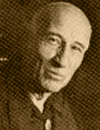
Fellowship With Christ in the Yoke
The sermon emphasizes the importance of being yoked with Christ for true fellowship and effective service in His will.
John Wright Follette preaches about the deep work of God's plow in our hearts, breaking up the fallow ground and turning self-hood into a field set free. He emphasizes the importance of responding to God's call to a life of fellowship and intimate communion with Jesus Christ, highlighting the phases of growth and the need for a common basis in the image of God. Follette discusses the invitation to come to Jesus, who offers rest and abundant life, leading to a fellowship of service and learning from Him through taking His yoke and finding rest for our souls.
Text
Singing Plowman
God's plow struck deep within my heart
And plowed long furrows, one by one,
Through fallow ground so hard and firm,
From early morn till set of sun.
The plow-share was eternal TRUTH
Which tore the hidden roots in me
And turned them to the light and air
Till self-hood lay a field set free.
I felt Him walk each furrow plowed,
I knew He felt the briars sting,
Tie field was His-- it was His joy,
For low I heard the plowman sing.
He only plowed that He might sow,
There must be seed to scatter wide.
And then I felt His presence near,
He stood in silence by my side.
And so I gave Him all of me--
My hopes, and dreams and inner throne.
All these He scattered far and near,
And left me naught to call my own.
They fell like seed in furrows deep,
And all were buried 'neath the sod.
All that I had went dozen in death
To wait the mighty breath of God.
He did not leave me then alone
To mourn the loss of earthly things,
To be thus stripped gave greater place
For life His radiant presence brings.
How could I grieve for heart thus plowed?
I covet now no sweeter thing
Than wait with Him till harvest day,
And in the mean time hear Him sing.
--John Wright Follette
There is a wonderful word in one of the Epistles upon which I often like to meditate. We find it in 1 Cor.
1:9. First, we notice there is a call sounding out from the heart of God to all of us as His children. We
are called from and unto. Not only from the world and sin in their visible and common manifestations,
but from the whole natural order and scheme of the Adamic and human limitations. The call is
sounding today by the power of the Holy Spirit down in the depths of our hearts. It may take different
forms but we are conscious that it is the will of God calling us (the personal individual) out from the
natural and into a life of the Spirit where a certain fellowship may be developed.
It is about this fellowship that I wish to speak. As we ponder over the Word we are conscious of hidden
possibilities and of very intimate communion and understanding with the Lord Jesus Christ. As I
studied over this question of fellowship I found it was a matter of growth, and that there were phases of
it which were logical and orderly. We will consider three phases and as we do so, note that the second is
a sequel or outgrowth of the first, and the third, in turn, is the normal and perfect answer to the second.
We must have, of course, a common basis for the fellowship. In creation we are given that capacity. We
are created in the image of God. That image, in fact, is the capacity of receptivity for spiritual
communion with God. We find no tracings of His image upon any other form of His workmanship. The
new birth is necessary and all other subsequent experiences in order to deepen and enlarge the power
of reception. One may be tempted to think the experience or crisis is the fellowship, but we make a
grave mistake often in resting in the experience and not allowing it to act as a door into a new phase of
life and fellowship. All experiences are beautiful, wonderful and uplifting; but do not park on any one
of them. They are never in themselves the life or fellowship. They are but doors. They are to work out,
in and through us a manifestation of the power and glory of God; to introduce us to and give us
qualifications for the life. Salvation gives us an introduction, as it were, to Christ, but we must have
more than an introduction. There is a merely bowing acquaintance. Many have that. They go to church
on Sunday and bow to the Lord, but He wants us to come closer, to tarry often and to share in the
interests which are upon His heart.
He wants our hearts to understand Him and desires a platform upon which He may come to break the
bread and pour out the water of life, thus beginning a spiritual adjustment so that when we are released
from this present here and new we will know how to move. The Lord always had such lovely long-
distance vision; He never seemed to be upset with the immediate present but was continually looking
beyond. Had it not been for that long-distance vision, He never would have dared to put into the hands
of those trembling, weak apostles, the glorious torch of divine revelation. Do you not think that He
knew they had wiggly, wobbly natures? Did He not know that Peter would lie and swear and curse?
Certainly He did, but I have a God who can look at those things and yet never be fazed by them,
because He saw Peter way down through the years to come, serving Him as a strong man of God. Vision
and faith did that. It was because of these that He refused to be upset by the manifestation of that local,
present condition. Are you bound by your immediate present condition ? Are you interpreting your
life by the things which just now touch you? If so, you are missing what He has in store for you. These
present material things are only passing and effervescent. Make them serve you; get out of them
everything you possibly can. I often told my students that they should try to get something out of
everything that touched their lives, even the tragic experiences.
Now the very first movement to which we are introduced in connection with this fellowship, is a very
normal and logical one. It came one day to the heart of Jesus to invite His disciples--and everyone
throughout the whole age who desired it--to enter into it.
When He ministered He did so first and primarily to the House of Israel. But He found no receptivity
there, for Israel refused the message, and when He found He couldn't minister to them He changed His
tactics. He had worked His miracles, desiring to help Israel, but they refused His help. Our Lord knew
that if they would not receive it somebody else would, and I have often thought of this in connection
with the outpouring of the Spirit. The Lord started something wonderful but if we do not watch our
step someone else will come along and walk off with the blessings and that which He planned for us. Are
we aware of the full meaning of the moving of the Spirit? And do we know why the Spirit is moving here
and being lifted there? Keep sensitive to God and know why He is dealing with you as He does.
When Jesus found that as a nation there was no response, He turned and did the thing that He always
does. When the great mass refuse to follow, He begins to deal with the remnant. Did you know that God
was a God of remnants? When Israel failed He had a remnant. When the Church as a body fails to
testify and move on with Him, He takes from her midst a remnant. He is continually sifting and sifting,
and then He takes the few kernels and sifts again. Have you ever felt Him siring you? He is after saints
to bring them into His highest purpose for them. When the great masses refuse to respond to the
message and have no ear to hear, He begins to sift till He can get a remnant that will listen. How many
out of that great mass of five or six thousand, do you suppose, really followed Him? He had to sift
continually and take out a remnant of those who would follow on in His further revelations.
Sensing the national failure He turns to the individual and says, "Come unto me all ye that labor and are
heavy laden and I will give you rest." He so longs to have hearts and lives united with Him in the
thoughts and purposes He has for them, that He turns and invites all those who are heavy laden to
come unto Him. It is as if He would say, "You have walked with this burden upon you now for
centuries; you have walked to the temple and you have walked home again with the same burden; you
have walked to the Pharisees, to the scribes and leaders with your burden but walked home without
any peace or victory in your life. Let Me tell you what to do." He doesn't say, "Come to the temple" nor
does He invite them to any shrine; He doesn't invite them to any priest or philosopher, but only to
Himself, for He is the center and supply for all that any heart may need, so He says, "Come unto me."
By that He means to an individual personal contact with Him. This mass movement is all out of order;
things don't move in great masses; His dealings are always with the individual.
Now please remember that when Jesus came He didn't come simply to bring us happiness or joy; He
didn't come just to bring us rest. All of these are included in one great element which He brought and of
which He knew the world was in desperate need. He came to bring life. Death reigned everywhere--
spiritual death. Oh, yes, men could run and jump and sing and dance, but it was all physical. So when
Jesus came He said to them, "I have come for this purpose, that you might have life, and that you might
have it more abundantly." Not merely life enough to put a little breath in you and perhaps get you to
heaven but life that will expand into an abundant display of God. We don't know very much about this
abundant life. We may know something of its joy and exhilaration. But the life more abundant means
something far above all that, and I fear most of us are touching only the fringes of the possibilities that
this life holds.
Now here we are, strange personalities, yielded and surrendered, washed and lined up on the sin
question and possessors of this marvelous life. We contact Him and the Spirit thrills us and we are
conscious of that wonderful new life so that we feel we want to go out and convert the world. This new
life wants to express itself and it is right that it should. It wants to go and preach and serve the Lord. If
you are really born you have life.
Now the Lord understood all this and He knew that the first movement in this new life would be
manifested in a fellowship of service for Him. He was very wise in meeting the situation and seems to
say, "Now just wait a minute." But someone may say, "Wait? Why, I have peace and victory, my
burden is lifted and why should I wait?"
But He bids us listen till He has finished what He was about to say, "Come unto me all ye that labor and
are heavy laden and I will give you--." And as we look we see a yoke--yes, a yoke. And we hear Him
say, "Take my yoke upon you and learn of me." But we say, "What do I want to do with a yoke? That
great big clumsy thing to hang around my neck when I am free! No, no," and we turn away.
But if we are open to His voice we will hear Him say, "Come, wait, fill I put this yoke upon you. I bore a
yoke and let me say that I am not quarreling with you because you have this new life; I know you have
it, but if I left you alone in the manifestation of the new life you might never know the full meaning of
real fellowship with me. New life alone never brings to you the burden that I am bearing." We say, "Oh,
I am willing to do anything! I want to go as a missionary and work for you." But He answers, "Yes, I
know you want all of that but I wear a yoke because I am bearing a particular burden and I want you to
fellowship with me in service. Remember, I have my head under the yoke and there is a bow in this
yoke for you." As long as you have your head in that yoke, you will not be doing the wrong thing. All
this energy that you feel, all this desire to serve, and all these gifts will run in a channel which will be
effectual in glorifying God; for this yoke is His will and as long as you are being yoked with Him His will
is being accomplished.
When He stands still then you will stand still and when He pulls, you will pull; in this way you will be
having fellowship in service; you will be co-workers with Him, not for Him; serving with Him because
you are yoked up.
I was born on a farm and I remember we had two oxen called Punch and Judy. I learned many a lesson
there. One thing I noticed was that when those two oxen were obedient to walk in the path which was
directed for them, everything was all right, but just as soon as they started wanting their own way--as
folk will do sometimes when they don't want to do the will of the Lord--then there was trouble. One ox
would pull one way and the other ox the other way and that was a tragedy, for when night came and our
man, David, who helped father on the farm, would take off that yoke, their necks would be badly
rubbed. The will of their director had galled them because they refused to obey that will. Did you ever
have your neck galled? If so, let me give you a little remedy. Take the ointment of the Name of the
Lord and apply it as a salve to that sore neck. He says, "My name is as ointment poured forth."
Another thing I noticed about these oxen was that whenever they had to stop, they would look around
and see some green grass that they wanted. They didn't see it as long as they were moving along and
pulling together, but just as soon as they stood still they saw it and oh, they wanted it so badly! It
looked so green and fresh. "Why not have it? We are just standing still." Do you know when the most
severe temptations come? It is when you are standing still. When you are moving right along in the
conscious presence of the Lord you do not think about the green grass; but you stand still and see if
you don't get taken up with things that you never noticed before. They have been all along the road but
you had been so occupied with Him that you didn't see them. But now that you are standing still your
vision gets filled with other things.
So He says, "Take my yoke upon you, for my will is the most blessed thing that you can ever have." It
steadies us; it holds us; it is the means of helping us bear our burden with ease. If you tied the yoke
about the middle of one of these oxen and then tied him to the stoneboat, how long do you suppose that
ox would go without having trouble? Suppose it were tied around its hind leg? The hind leg is strong,
why not tie it there? But you know if that were done it wouldn't be long till the hind leg would be out of
joint. How are you bearing the burdens that God has laid upon you? Is your leg pulled out of joint so
much that you cannot walk in the Spirit anymore? If so, then you have been bearing your burden in the
wrong way, "Oh," but you say, "I cannot understand what the Lord is trying to do with me. I don't seem
to be getting anywhere with Him." Perhaps you have the yoke tied around your middle and you are
bearing the burden in a way He never intended you should. Let the yoke be fastened about your neck.
The neck stands for subregion and when the will of God rests upon my neck I show that I am in
submission, that I am working in perfect co-operation with my divine Companion.
One of the Gospels is called the Ox Gospel--Mark, the Gospel of Service. An ox was sometimes used as
a sacrifice. You may either be a sacrifice or a servant. Can you be an ox for Him? You know when you
get yoked up with Him you get so close to Him that you can get His very breath; you can see His eyes,
sense the pressure and feel the pull that is upon His heart so that you are consumed with Him instead of
scampering around on some hillside. It is then that your service is sanctified, and owned of Him; kept
where He wants it because you are yoked up with Him.
Now all these things which He asks us to take are symbolic. Our first service for Him is always
manifested in some kind of activity and when we are made partakers of His life it moves out in some
manifestation of service. Then how wise He is! The instant that He finds our love going out in service
He says, "Now wait a minute! Get yoked up with Me and you will be safe." Otherwise that manifestation
will get us nowhere; it may be a display but there will be no fruitage.
Now the next thing after He mentions the yoke, He says, "Learn of me, for I am meek and lowly of
heart, and ye shall find rest unto your souls." He has already given us the rest; that is an immediate
possession--a gift. But having given the rest He wants us to learn of Him. Learn what? You say, "I am
all right." No, we are but babes in Christ, little inquiring babes. Now little babes can be saved and
sanctified and baptized and have gifts; all of this is not a sign of maturity. He wouldn't even give them
to us, excepting, that in their reaction they mature us. Remember, it is never a sign that we are deeply
spiritual or wonderfully developed in God when He baptizes or gives gifts. He baptizes us because we
are babes that need life and help and then upon these weak bodies He deposits the gifts of heaven.
So Jesus said, "Take my yoke . . ., and learn of me." "Learn, when we have had all these wonderful
experiences?" Why, yes, bless your heart! He has only started to get you ready, to introduce you to the
schoolroom. He saves, sanctifies, baptizes and gives us the gifts and then sets us down in the primary
department, puts a primer in our hands and says, "Now learn to spell." And then we begin to learn all
sorts of lessons in obedience, lessons which will develop us and make us mature; and then He moves us
up to the second grade. Oh, I know some of you thought you were graduated and ready to sit on a
throne with the Lord! What under heaven would some of us do sitting on a throne as we are now? If in
the next age He should give us some divine commission which required certain elements of character,
and we had not had our training here, whatever would we do? I am sure it would be a merciful thing to
keep us from such a throne experience. Capacity, power, development--these are the things that will
qualify us for such positions, and nothing else will ever do it.
Knowing all this, He says, "Take My yoke . . . and learn of Me." We think we are serving Him so
wonderfully when we are bearing this yoke, but let me enlighten you. He lets us think we are doing
something when all the time He is bearing the burden and pulling the load. "Take My yoke upon you
and learn of Me." Do you see what He is trying to say? "I will take care of the pulling, for I am doing it
anyway, only you don't know it." We are to learn of Him because we are stupid and ignorant. Blest
beyond words to express, but stupid and untaught.
Just one little secret in connection with this. If the burden gets too heavy and the yoke too hard to
bear, there is something wrong. He says, "My yoke is easy and My burden is light." His yoke is His will,
and the burden is that which we incur by doing His will. So when we find the yoke becomes uneasy and
the burden too heavy it is very likely because we are doing our own will and bearing some burden
which He has not laid upon us.
In this verse we find two rests mentioned. First, the rest which He gives in salvation--the burden of sin
is lifted and the soul, worn and tired from that burden, enters into the rest thus mentioned. However,
as we journey down life's road there will be many burdens to bear, and our hearts oft times will become
weary. But ample provision is made, for He says, "Ye shall find rest to your souls." This is progressive
discovery. So we find the first phase of this fellowship consists of co-operation in service with our
blessed Lord. His yoke (His will) is upon us, the power of His Spirit is thrilling the heart, and life finds a
proper channel for its movements. Then God's heart is satisfied, His name glorified and we enter into
an understanding of His will and purpose.
Sermon Outline
- I points: - Introduction to fellowship with Christ - The call from God to a deeper relationship - Understanding the nature of true fellowship
- II points: - The necessity of the new birth - Experiences as doors to deeper fellowship - Moving beyond mere acquaintance with Christ
- III points: - The invitation to take on Christ's yoke - The significance of being yoked with Christ - Co-laboring with Christ in service
- IV points: - The importance of obedience in fellowship - Learning from Christ's example - The process of spiritual growth and maturity
- V points: - Understanding the burden of service - Finding rest in Christ's yoke - The distinction between personal will and God's will
Key Quotes
“He only plowed that He might sow, there must be seed to scatter wide.” — John Follette
“Take my yoke upon you and learn of me.” — John Follette
“My yoke is easy and My burden is light.” — John Follette
Application Points
- Seek to deepen your relationship with Christ beyond initial experiences.
- Embrace the yoke of Christ as a means of finding purpose and direction in your life.
- Recognize the importance of obedience and learning from Christ in your spiritual journey.