
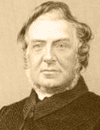
The Rage of the Present Day
To experience revival in piety, we must resist the influence of the world and lower our estimate of the importance of wealth.
John Angell James preaches about the importance of resisting the worldly influences that lead to pride, materialism, and spiritual poverty. He highlights the obsession with wealth, comfort, reputation, and earthly possessions that distract many from pursuing a deeper piety. James emphasizes the need to subdue the desire for worldly elevation, cultivate simplicity, contentment, and moral courage, and prioritize heavenly treasures over earthly pursuits to experience true revival in piety.
Text
If we would be revived in piety, we must resist by faith the
encroaching influence of the WORLD, and the engrossing
power of seen and temporal things. The address to the
church of Laodicea would lead one to suppose that it was
a place of trade--and that trade had produced riches--and
riches had produced . . .
pride,
worldly-mindedness,
love of ease,
indifference to divine things,
and spiritual poverty.
Most people in our country appear inordinately intent upon
gaining the world. To be rich, or at least to be comfortable,
to be reputable, to be stylish, to be fashionable, to live in
larger houses, and to have finer furniture and more earthly
things than others--seems to be the supreme concern of
most! They must, whether they can afford it or not, vie
with their neighbors in all their habits. This seems to be
the rage of the present day--and the church of God is,
in a measure, carried away by the delusion.
Many seem almost without knowing it, to be possessed by
a grasping at things beyond their reach, and an ambitious
aspiring at some undefinable point of worldly elevation. All
their time, all their attention, is absorbed--and all the vigor
of their spirits is exhausted--in this panting race after
the world's possessions and comforts!
It is evident that . . .
until this disposition be more subdued than it is,
until our moderation be more known to all men,
until we have lowered our estimate of the importance of wealth,
until we have ceased thus to mind earthly things,
until we have gained a greater victory over the world, or
are anxious to gain it--our piety cannot be revived. It is
like seed growing amidst thorns--and though a fertile
shower and a warmer sun should cause it to spring afresh
during a more than ordinarily genial season--yet it is still
among thorns, which will be sure to choke the grain!
I am afraid that we have not . . .
that simplicity of taste,
that contentment,
that moral courage to be indifferent to the world's opinions,
that sobriety of mind,
that comparative unconcernedness about finery and splendor
--which are necessary to prepare us for a high state of piety.
Let us, then, consider this matter. Let us attend to the
apostolic admonition, "Be not conformed to this world
--but be transformed by the renewing of your mind."
The spirit of the world, and the spirit of piety, cannot dwell
together in the same bosom. "You cannot serve God and
Mammon." "If any man loves the world, the love of the
Father is not in him." "Are you seeking great things for
yourself? Seek them not!" "Do not lay up for yourselves
treasures on earth," so much as treasures in heaven.
Remember that "one thing is needful!" "Take heed,
and beware of covetousness, for a man's life does not
consist in the abundance of the things that he has."
But if we will be rich, if we will be anxious about many
things, if we will be full of worldly ambition, and earthly
mindedness and covetousness--then we cannot experience
much revival in piety--and need not add hypocrisy to
lukewarmness! For very little better than a hypocrite,
is the man who prays for the effusions of the Holy Spirit
--and yet will not moderate his extreme concern after
worldly wealth.
We must also put away our worldly-mindedness, our
ambition, our excessive concern to be conformed, as far
as possible, to the showy, expensive, and luxurious habits
of the people of this world. We must restrain our taste for
voluptuous ease, extravagance and self-indulgence. We
must give up our concern to be accounted fashionable.
Sermon Outline
- The Encroaching Influence of the World
- The Rage of the Present Day
- The Need for Revival in Piety
- The Conflict Between the Spirit of the World and Piety
- The Call to Repentance and Renewal
- The need to put away worldly-mindedness and ambition
- The importance of restraining our taste for luxury and self-indulgence
Key Quotes
“You cannot serve God and Mammon.” — John Angell James
“If any man loves the world, the love of the Father is not in him.” — John Angell James
“One thing is needful!” — John Angell James
Application Points
- We must resist the influence of the world and lower our estimate of the importance of wealth to experience revival in piety.
- We must put away our worldly-mindedness, ambition, and excessive concern for wealth to follow Christ.
- We must prioritize moderation and simplicity in our lives to prepare for a high state of piety.