
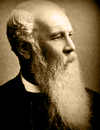
Expository Thoughts On Matthew - Preface
J.C. Ryle explains his approach to providing clear, accessible expository insights on the Gospel of Matthew, focusing on key passages to deepen understanding without engaging in exhaustive critical commentary.
In this preface to his Expository Thoughts on Matthew, J.C. Ryle outlines his method and purpose in producing a clear and practical exposition of the Gospel. He emphasizes that his work is not a detailed critical commentary but a series of focused reflections on key passages. Ryle aims to help readers grasp the main truths of the text through plain, vigorous explanation, making the Gospel accessible to a broad audience.
Text
IN sending forth the first volume of a new Expository work upon the Gospels, I feel it necessary, in order to prevent misapprehension, to offer some explanation of the charactor and design of the work.
The \"EXPOSITORY THOUGHTS,\" which are now before the reader, are not a learned critical commentary. I do not profess to expound every verse of the Gospels, to grapple with every difficulty, to attempt the solution of every hard text, and to examine every disputed reading or translation.
The \"EXPOSITORY THOUGHTS\" are not a continuous and homiletic exposition, containing practical remarks on every verse, like the commentaries of Brentius and Gaulter.
The plan I have adopted in drawing up the \"Expository Thoughts\" is as follows: I have divided the sacred text into sections or passages, averaging about twelve verses in each. I have then supplied a continuous series of short, plain \"Expositions\" of each of these passages. In each Exposition I have generally begun by stating as briefly as possible the main scope and purpose of the passage under consideration. I have then selected two, three, or four prominent points in the passage, singled them out from the rest, dwelt exclusively on them, and endeavoured to enforce them plainly and vigorously on the reader\\
Sermon Outline
-
I
- Purpose of the Expository Thoughts
- Clarification on the nature of the work
- Avoidance of exhaustive critical commentary
-
II
- Method of dividing the text into sections
- Focus on key passages of about twelve verses
- Selection of prominent points for exposition
-
III
- Aim to provide plain and vigorous enforcement of key truths
- Not a continuous homiletic commentary
- Intended to aid understanding and prevent misapprehension
Key Quotes
“The "EXPOSITORY THOUGHTS," which are now before the reader, are not a learned critical commentary.” — J.C. Ryle
“I have divided the sacred text into sections or passages, averaging about twelve verses in each.” — J.C. Ryle
“I have generally begun by stating as briefly as possible the main scope and purpose of the passage under consideration.” — J.C. Ryle
Application Points
- Approach Bible study by focusing on key passages to gain deeper understanding rather than attempting to cover every verse.
- Seek to grasp the main purpose of each scripture passage before delving into detailed points.
- Use clear and plain language when sharing biblical truths to make them accessible to others.
Frequently Asked Questions
What is the main goal of J.C. Ryle's Expository Thoughts?
The goal is to provide clear and accessible explanations of key passages in the Gospels without engaging in exhaustive critical analysis.
Does this work cover every verse in the Gospel of Matthew?
No, the work focuses on selected passages averaging about twelve verses each rather than every verse.
Is this a detailed critical commentary?
No, Ryle explicitly states that this is not a learned critical commentary or a continuous homiletic exposition.
How does Ryle structure his exposition?
He divides the text into sections, states the main purpose of each passage, and focuses on two to four prominent points.
Who is the intended audience for this work?
The work is intended for readers seeking plain and practical insights into the Gospel of Matthew.