
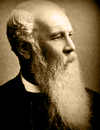
Expository Thoughts on Mark - Preface
J.C. Ryle's Expository Thoughts on Mark aims to provide practical insights for readers seeking to deepen their understanding of the Gospel of Mark.
J.C. Ryle introduces his work 'Expository Thoughts on Mark', emphasizing that it is a continuation of his previous volume on St. Matthew, designed to provide practical expositions rather than critical commentary. He aims to assist families in prayer, those visiting the poor, and individual Bible readers, focusing on essential truths for salvation while avoiding minor topics. Ryle acknowledges the challenges of meeting diverse expectations regarding the length of expositions and expresses his hope that this work will lead readers to Christ and deepen their faith. He also reflects on the lack of attention given to the Gospel of Mark by other commentators, asserting its unique value. Ultimately, Ryle prays that this volume will glorify God and encourage readers in their spiritual journey.
Text
THE volume now in the reader's hands, is a continuation of a work already commenced by "Expository Thoughts on St. Matthew".
The nature of the work has been so fully explained in the preface to the volume on St. Matthew, that it seems unnecessary to say anything on the subject. It may be sufficient to repeat that the reader must not expect to find in these "Expository Thoughts," a learned, critical commentary on the Gospels If he expects this he will be disappointed. The work before him makes no pretence to being anything more than a continuous series of short practical Expositions.
The main difference between this volume and the one which has preceded it, will be found to consist in the occasional explanatory foot-notes. The subjects of these notes will generally prove to be difficult passages or expressions in the inspired text. I cannot pretend to say that I have thrown any new light on the difficulties in St. Mark. But I can honestly say that I have endeavoured to put the reader in possession of all that can be said on each difficulty.
In composing these Expositions on St. Mark, I have tried to keep continually before me the three-fold object which I had in view, when I first commenced writing on the Gospels. I have endeavoured to produce something which may be useful to heads of families in the conduct of family prayers--something which may assist those who visit the poor and desire to read to them,-and something which may aid all readers of the Bible in the private study of God's Word. In pursuance of this threefold object, I have adhered steadily to the leading principles with which I began. I have dwelt principally on the things needful to salvation. I have purposely avoided all topics of minor importance. I have spoken plainly on all subjects, and have striven to say nothing which all may not understand.
I cannot expect that the work will satisfy all who want some book to read at family prayers. In fact I know, from communications which I have received, that some think the expositions too long. The views of the heads of families as to the length of their family prayers are so exceedingly various that it would be impossible to please one clam with- out displeasing others. In some households the family prayers are so short and hurried, that I should despair of writing anything suitable to the master's wants. In such households a few verses of Scripture, read slowly and reverently, would probably be more useful than any commentary at all. As for those who find four pages too much to read at one time, and yet desire to read my Expository Thoughts, I can only suggest that they have an easy remedy in their own hands. They have only to leave out one or two divisions in each exposition, and they will find it as short as they please.
In preparing for publication this volume on St. Mark, I have looked through all those Commentaries mentioned in my Preface to the volume on St. Matthew, which throw any light on St. Mark.* After careful examination, I feel obliged to say, that, in my humble judgment, very few commentators whether ancient or modern, seem to give this Gospel the attention it deserves. It has been too often treated as a mere abridgement of St. Matthew. This view of it I believe to be an entire mistake.
* It is needless to repeat their -names.
The only large separate Commentary on St. Mark- that I have been able to meet with, is a remarkable work consisting of 1666 folio pages, by George Petter, Vicar of Brode, in the county of Sussex, published in the year 1661. It is a work which from its scarcity, price, and size, is much less known than it deserves. The greater part of the impression is said to have perished in the great fire of London. Some account of this book may not be uninteresting to some readers.
Petter's Commentary was originally preached by him in the form of expository lectures to his own congregation. He began to preach on it, June 7th, 1618, and continued preaching on it most Sundays with very little intermission till May 28th, 1643. The dates of each sermon are given on the margin.
The doctrine of this remarkable book is excellent,-Protestant, evangelical, and spiritual. The learning of the author must also have been not inconsiderable, if we may judge by the number and variety of his quotations. His faults of style and composition are the faults of the day in which he lived, and must therefore be charitably judged But for laborious investigation of the meaning of every word, for patient discussion of every question bearing on the text, for fulness of matter, for real thoughtfulness and for continual practical application, there is no work on St. Mark which, in my opinion, bears comparison with Petter's. Like Gohliah's sword, "there is none like it"
I now send forth these "Expository Thoughts on St. Mark" with an earnest prayer that it may please God to use the -volume for His glory. It has been written under the pressure of many public duties, and amidst many interruptions. No one is more conscious of its defects than myself. But I can honestly say, that my chief desire, if I know anything of my heart, in this and all my writings, is to lead may readers to Christ and faith in Him, to repentance and holiness, to the Bible and to prayer.
If these are the results of this volume in any one case, the labour I have bestowed upon it will be more than repaid.
Helminghain Rectory,
Sep., 1857
Sermon Outline
-
I
- Introduction to the work
- Nature of the Expository Thoughts
- Differences from previous volumes
-
II
- Three-fold objectives of the work
- Focus on salvation
- Clarity and accessibility
-
III
- Audience considerations
- Length of expositions
- Suggestions for readers
-
IV
- Commentary landscape on St. Mark
- Importance of St. Mark
- Petter's Commentary overview
-
V
- Personal reflections on writing
- Desire for practical application
- Closing prayer for impact
Key Quotes
“The work before him makes no pretence to being anything more than a continuous series of short practical Expositions.” — J.C. Ryle
“I have endeavoured to produce something which may be useful to heads of families in the conduct of family prayers.” — J.C. Ryle
“If these are the results of this volume in any one case, the labour I have bestowed upon it will be more than repaid.” — J.C. Ryle
Application Points
- Utilize these expositions as a guide for family prayers to foster spiritual growth.
- Consider the clarity of the message when sharing Scripture with others, ensuring it is accessible.
- Reflect on the importance of focusing on essential truths of salvation in personal Bible study.