
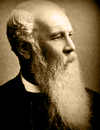
Expository Thoughts On Mark - Mark 12:28-34
J.C. Ryle expounds on Jesus' teaching in Mark 12:28-34, emphasizing the supreme importance of loving God wholeheartedly and loving one's neighbor as oneself.
In this expository sermon, J.C. Ryle explores the profound dialogue between Jesus and a Scribe in Mark 12:28-34, focusing on the two greatest commandments. Ryle highlights how Jesus teaches that loving God fully and loving one’s neighbor encapsulate the entire moral law. The sermon encourages believers to embrace these commandments as the foundation of Christian living and faithfulness.
Text
These verses contain a conversation between our Lord Jesus Christ and "one of the Scribes." For the third time in one day we see our Lord tried by a hard question. Having put to silence the Pharisees and Sadducees, He is asked to decide a point on which much difference of opinion prevailed among the Jews--"Which is the first commandment of all?" We have reason to bless God that so many hard questions were propounded to our Lord. Without them the marvelous words of wisdom which His three answers contain, might never have been spoken at all. Here, as in many other cases, we see how God can bring good out of evil. He can make the most malicious assaults of His enemies work round to the good of His church, and redound to His own praise. He can make the enmity of Pharisees and Sadducees and Scribes minister instruction to His people. Little did the three questioners in this chapter think what benefit their crafty questions would confer on all Christendom. "Out of the eater came forth meat." (Judges 14:14.)
Let us observe, in these verses, how high is our Lord Jesus Christ\
Sermon Outline
-
I
- Context of Jesus’ conversation with the Scribe
- The significance of the question on the greatest commandment
- God’s providence in using adversaries for good
-
II
- Explanation of the first commandment: Love God wholly
- The heart as the center of true religion
- The inseparability of love and obedience
-
III
- The second commandment: Love your neighbor as yourself
- The practical outworking of love in Christian life
- How these commandments summarize the Law and the Prophets
-
IV
- The Scribe’s response and Jesus’ commendation
- The importance of understanding and applying these commandments
- Encouragement to live out these truths daily
Key Quotes
“Without them the marvelous words of wisdom which His three answers contain, might never have been spoken at all.” — J.C. Ryle
“He can make the most malicious assaults of His enemies work round to the good of His church, and redound to His own praise.” — J.C. Ryle
“Out of the eater came forth meat." (Judges 14:14)” — J.C. Ryle
“Little did the three questioners in this chapter think what benefit their crafty questions would confer on all Christendom.” — J.C. Ryle
Application Points
- Prioritize loving God with your whole heart in all aspects of life.
- Demonstrate genuine love and care for your neighbors daily.
- Let the two greatest commandments guide your moral and spiritual decisions.
Frequently Asked Questions
Why did Jesus say the greatest commandment is to love God?
Because loving God with all one’s heart, soul, mind, and strength is the foundation of all true religion and obedience.
What does it mean to love your neighbor as yourself?
It means to care for others with the same concern and kindness that one naturally has for oneself.
How do these commandments relate to the entire Law?
Jesus taught that all the Law and the Prophets depend on these two commandments of love.
Who was the Scribe in the passage?
A Jewish teacher of the Law who questioned Jesus to test His understanding.
How can Christians apply these commandments today?
By making love for God and neighbor the guiding principles of their daily lives and decisions.