
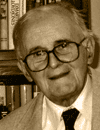
The Christian Duty/social Degeneracy
The sermon emphasizes the Christian duty to act as preservers of moral values in a society facing significant moral decline.
In this sermon, the preacher emphasizes the importance of believers being active in influencing the world around them. He compares believers to a red hot poker that has lost its zeal and passion due to being influenced by the world. The preacher encourages believers to embrace their identity in Christ and allow the grace of God to transform them into the image of Christ. He also highlights the desperate situation of society, particularly in the realm of education, where tolerance is elevated as the supreme virtue. The sermon concludes with a reference to Matthew 5, where Jesus teaches about the blessings of those who are poor in spirit, mourn, are meek, hunger and thirst for righteousness, show mercy, are pure in heart, make peace, and are persecuted for righteousness' sake.
Full Transcript
Will you turn in the scriptures to St. Matthew's Gospel in chapter 5, and we are going to read the passage beginning with the first verse and ending with verse 16. As you are looking it up, may I say how glad and pleased we are to be with you on this lovely, looks like a summer morning from this vantage point, not quite summer outside, but it is good to be in the Lord's house and to be with you here. Thank you for your prayers and your continued interest in us.
Matthew chapter 5 and the familiar words beginning with the first verse. Now when he, that is Jesus, saw the crowd, he went on to a mountain side and he sat down. His disciples came to him and he began to teach them saying, blessed are the poor in spirit, for theirs is the kingdom of heaven.
Blessed are those who mourn, for they will be comforted. Blessed are the meek, for they will inherit the earth. Blessed are those who hunger and thirst for righteousness, for they will be filled.
Blessed are the merciful, for they will be shown mercy. Blessed are the pure in heart, for they will see God. Blessed are the peacemakers, for they will be called sons of God.
Blessed are those who are persecuted for righteousness sake, for theirs is the kingdom of heaven. Blessed are you when people insult you, persecute you, and falsely say all kinds of evil against you because of me. Rejoice and be glad, because great is your reward in heaven.
For in the same manner they persecuted the prophets who were before you. You are the salt of the earth. That statement will occupy the main part of our theme this morning, but I want to read to the end of verse 16.
You are the salt of the earth. But if the salt loses its saltiness, how can it be made salty again? It is no longer good for anything except to be thrown out and trampled by men. You are the light of the world.
A city on a hill cannot be hidden. Neither do people light a lamp and put it under a bowl. Instead they put it on its stand and it gives light to everyone in the house.
In the same way, let your light shine before men, that they may see your good deeds and praise your father in heaven. Thus reads the word of God, and we look to him for an understanding of it by the aid of his spirit. Christian duty in the face of social degeneracy is the subject given to us this morning to consider, and that particularly with reference to our Lord's statement to his disciples of old.
You are the salt of the earth. I believe very firmly that if our Lord were to make a broadcast of his very latest thoughts concerning the duty of the Christian church in our day, and we were to hear his broadcast at midday today, they would include what in principle we have here. Never has the world been more in need of men and women of saline properties, of the capacity to stop the rot of sin and evil of every kind in society and in the church.
Never was there a greater need for men who can stand in the breach so that sin does not occupy their minds, pollute their lives, and they in turn become carriers of the evil thing and spread it along the way. And so there are two things that I want us to examine here particularly. First of all, and mainly really, our Lord's perception of the underlying degeneracy of the society he was then addressing.
He said you're the salt of the earth. Why did he say that? Well it's pretty evident from the primary usage of salt in that ancient world, that is the world before they had freezers or coolers or refrigerators or what have we today. If you went out into the market and you bought a slab of meat and you brought it home, you didn't want to cook it today but you wanted it for a meal tomorrow, well the only way to keep it from turning bad, putrefying, was to rub it with salt as soon as you could.
Salt was the only antiseptic, the only preservative then known for meats and foodstuffs, and in order to act in that capacity it needed to be rubbed into the meat, rubbed into the foodstuffs, and then unless the putrefaction had already begun, it would keep it reasonably safe for tomorrow or maybe the day after in hot climate. Jesus said to his people, you, he says, you are the salt of the earth. Now he did not mean by that that by being salt we can bring a cure, healing in and of ourselves to society.
Salt does not make the polluted whole again. Salt only stops the rot from spreading. But Jesus says you are the salt of society and that leads me to say this, it is necessary, very necessary, that we should be seeing this statement of our Lord, you are the salt of the earth, in conjunction with the one that follows, you are the light of the world.
Salt does not bring salvation. Salt does not heal that which has gone bad, but salt helps the rot from spreading. It keeps it back.
What brings salvation that changes the circumstances is this, you are the light of the world. Jesus had said of himself, I am the light of the world, bringing the knowledge of God into the midst of a decadent community, lost and undone. And now he says, I have so wrought by the Spirit upon you, you are the light of the world.
My light is kindled in you. The knowledge I have brought has laid hold of you and you've laid hold of it and it has transformed you. You are light and you are capable by my grace and what the grace of the Father and the Spirit has made you, you are capable of transforming the situation ultimately.
But in the meantime, as a preliminary action, you need to be salt. You are the salt of society. You see my friends, unless we can prove to society at large that our experience of the Lord Jesus Christ, the subject of his kingdom and of his rule, unless we can prove that he has given us a new life that is capable of standing against the tide of evil from all quarters, as James said, of keeping ourselves unspotted from the world, as Paul says, holding forth the word of life in the midst of a crooked and perverse nation or generation, unless we can do that, unless we can prove that, that is by our saline property as salt.
Then the gospel doesn't make sense when it comes. To preach of the light of the knowledge of the glory of God doesn't make sense to men and women unless they see that that same gospel has transformed me, transformed you, that we are able to overcome the sin and the evil and the wickedness and the perversity and the tendency to evil in this world in which we live. And there are thousands upon thousands of sermons that will never make sense in any pulpit or in any church or in any community unless the believing community of that place are salt along with the preacher so that when they go out into society, the light of the truth they declare is illumined by the life that has saline properties that stops the rot in the unbelieving world.
You are a salt of the earth. Now what really gives edge to this statement of our Lord, at least to me, what really gives edge to it is this, that he speaks these words not to voluptuous Grecians or Greeks, not to idolatrous and proud Romans, but the little congregation that he has before him are a group of his disciples, probably the twelve and maybe more, and then there is a crowd coming, whether they're listening already, I don't know, possibly they are, but they were predominantly Jews. Now there was there were certain things that really set the Jewish community apart in this day as in most generations, but especially at this time they had been spiritually and morally nurtured on the law and on the prophets.
They had a background. God had revealed himself to Abraham and their very history as a people spoke of what God had done, and it was one of the duties of a father to tell his children how the Lord had brought the very nation into existence, how God had later taken them out of Egypt after 400 years in bondage, how he had taken them into the promised land, how he had given them his law to indicate the kind of thing that he expects of his redeemed people, of people that have been saved from slavery, now made free. He gave them the law.
He erected or caused to be erected a sanctuary for his worship and showed them how every detail in that worship was ordered by him, even to the very what we would call today safety pins, holding the curtains had to be of gold, indicative of the fact he is God and he knows what he must have from his people, and he's concerned about every detail. Now they had been brought up on that, and they knew something about God. I know they'd wondered, and as Jesus looked at that very people, so honored, so honored, so honored, now having God incarnate among them to add to everything else, so honored, he says, this generation, this nation too, is rotting at the heart, and this generation needs salt to stop the rot, and you my people, you whom I've called to be subjects of my kingdom, you whom I've called to live under my rule, under my yoke, you are the salt for this society.
Brothers and sisters, I wonder, I wonder what terms Jesus would use today to describe the rot in our society. If this society was seething and rotten, what on earth would the Son of God say if he came to Toronto this morning? I'm not going to give you a parade of what I know. You probably know much more than I do, but I do want to tell you this, that I have been absolutely overwhelmed recently in being able to dip into the works of some of the leading analysts of the society in North America over recent years in order to find out what's been going wrong.
I'm not going to quote them for you, but I came across a book was laid on my desk the other day written by Chuck Colson, whom you know very well. I've preached a few times from this pulpit in our time here, and I think since. Chuck Colson wrote a book about three years ago entitled Against the Light, and there are many virtues to this book, but one of them is that he covers evidence from various sources, and the sources he describes and he gives are as important as the book itself, and he presents his own understanding of it all and the summary of it all, and he tells us how desperate the situation is.
He traces, for example, the kind of thing that's been going on in the realm of education. I remember when I came to, and my wife and I came here in 1974, one of the things that were raging in some areas of Ontario at that time was the great subject of values education, as it was called, and there was a professor in a certain college who had his roots here in Knox who was involved in a very serious discussion, an animated discussion on high level concerning the propriety and the value and the meaning and the significance of this particular policy in education. Well, values neutral education has proved to be anything but neutral, and it has indoctrinated millions of young people in North America to debunk the very basis of the Western civilization over the last 200 years and more.
And it has inculcated other ideas. However, I mustn't go off at a tangent. He speaks about the financial world and its problems, and he goes into the political arena and into the centers of higher learning in our colleges and universities and into the Christian church.
And what he says in effect is this, that whilst we have been sleeping, the ethos, the moral and spiritual ethos in our society has been deoxygenized. Christians can't breathe. Men who believe in moral absolutes can't breathe freely in this atmosphere in which we live today.
They are suffocated. You have men and women on a campus in the United States going around crying, shouting with all their wills, hey, hey, ho, ho, Western culture's got to go. Why? Because books from Pascal and others, I don't need to mention them, are part of their syllabus, representing some of the philosophies underlying Western culture.
They say it's got to go, and go, go it did. The syllabus had to be changed. That's just the kind of thing that has been going on.
Brothers and sisters, we are living in a desperate situation. Let me give you one or two illustrations of this, purely illustrated. I could illustrate from many, many other sources, but let me just read to you something.
I've referred to the realm of education. Let me say this. Let me read this.
A new barbarian, says Chuck Colson, who have invaded American education, as they have the news media and our legislatures, elevate tolerance as the supreme virtue. Alan Bloom, who wrote a remarkable book on the closing of the American mind, Alan Bloom calls this new tolerance, quote, the virtue, the only virtue, which all primary education for more than 50 years has dedicated itself to inculcating, end of quote. Chuck Colson goes on.
Teachers and school administrators encourage students to choose from a smorgasbord of what they term morally equivalent lifestyles. Homosexuality, adultery, premarital promiscuity. Gorge yourself on one or sample the whole.
And this smorgasbord morality, which is itself a value system, tramples on the sensibilities of any who hold to moral absolutes, Christians in particular. A Californian sex education curriculum entitled Intelligent Choices of Social Lifestyle, oh sorry, of Sexual Lifestyle, advises seventh graders, parents, get that, advises seventh graders, I've lost my place, here we are, advises seventh graders to set, quote, a purely personal standard of sexual behavior, unquote, for themselves. A sex education curriculum for the elementary school system in the same state specifies that children will develop an understanding of homosexuality, will view films, act out homosexual roles, and take a test on what they have learned there.
So 10 year olds will get gold stars if they do well in homosexual role play in school. Every area of education, Chuck Colson concludes, every area of education has been infected by the value neutral philosophy. This is not only tragic, it is ironic, since at one time the pursuit of virtue was the specific goal of education.
Plato once wrote, if you ask what is the good of education, the answer is easy. The education makes men good, and good men act nobly. The nobility that has gone from our society can oftentimes be traced in particular to this root.
Now you may say to me that's very far-fetched. California anyway is a long way from here. Let me read to you one other.
It's not from the schools, it's from another area, and it is very telling. Some studies in the AIDS crisis in the United States identify French-Canadian flight steward Gaetan Duga as patient zero, they call him, patient zero, the initial carrier of the virus. Before his death in 1984, Duga estimated that he had sexual liaisons with 2,500 partners in New York and California bathhouses, restrooms, bars, hotels, and motels.
Even after doctors had warned Duga that he had a fatal sexually transmitted disease, he continued to infect dozens and dozens of partners, and when he had coupled with them, he would triumphantly announce, announced, I've got gay cancer, enjoying the merging of sex and death. No one knows how many victims of the epidemic he unleashed finally reached. Brothers and sisters, we are living in a desperate day, and I fear that we as churches are sleeping somewhere.
We need to be aroused. There's trouble in the air, and to me, summarizing all this, one of the tragedies is this, not simply that our children in the public schools are becoming more difficult to teach, and the numbers of teachers having to abandon teaching in our public schools at all because they can't cope with it. The lack of discipline and many other things I don't need to go into, and I'm not competent at any length to talk about, it's not only that.
Not only are our children becoming unteachable, that is not only caused by the schools. Very often there is no discipline of a godly sort in the home. To add to that, our society is fast becoming ungovernable.
You see, the one thing that our boys and girls have been taught is this, that they are self-made. They've developed from a little bit of slime, and they owe it all to themselves. There is no god at all who has been responsible for this.
No intelligence. It has just happened. It has just evolved, and here they are now.
They've come a long way from where they began, and really the only thing that matters, do what you think best. Think what you think best. What do you think about this problem? Well now, that's your thought.
That's your idea. Think it out, and live it out. And if you want anything, well just get it.
We have produced the whole generation of me-ites. I want my thing. This is what I want, and I must get it, and I will shout, and some of our adults have tantrums like spoiled children when they don't get what they want.
We're living in that world, so that politicians are in a scare. Many of our politicians are the best people in society. We're forgetting that.
There are bad things that are going on in the political field, but some of them, brothers and sisters, are still the salt of the earth and the light of the world. But what do they find when they go back to their writings and their constituencies? They find people who want exactly and only what suits them, and the sense of responsibility for one another that was inculcated by the Judeo-Christian philosophy and theology has gone, to a large measure. What we find on our streets is a company of me-ites, me-me's, shouting, I must get it.
We demand. When our politicians go home to their writings, this is what they hear. Is it any wonder that our nation and North America is as it is? But over and above this, as far as I am concerned, whilst our children are becoming largely unteachable and our society ungovernable, the churches have become unreformable.
You see, one of the characteristics of the churches of North America today is this. It is very difficult to reform churches according to the teaching of the Bible. Oh, we all stand for the truth, but there creeps into our churches all the sins of society, because we all go out into a society and in some measure we are infected.
But the difficulty is this. Get a pastor, or get an eldership, or whatever you call your leadership if you're not a Presbyterian, to try and exercise discipline, and you will find that it is downright impossible. And if you get an eldership or its equivalent to do so, you will find that the body, the democratic body of the congregation, will not stand it.
And when a church becomes unreformable, it is a question whether that so-called church ever was a true church of Jesus Christ. Now, somebody very astute here this morning will want to tell me immediately, now, now, now, what about the churches of the New Testament? Were they perfect? No, my friend. I'm, I blush sometimes when I read the New Testament and the sins of some of the Christians there.
For example, the church of Corinth. There was gross immorality that came in there, but I tell you one thing, I don't stand for the kind of things that went on in Corinth. But listen, my friend, when a duly appointed apostle of Jesus Christ addressed the issue to the Corinthian church and sent them an epistle in the power of the Holy Spirit, that tragic church, that church that had accepted immoral people into its midst, did something about it.
It was reformable. When an apostle of Jesus Christ spoke, they accepted the truth, and they humbled themselves, and they apologized that they'd ever given their blessing to certain things, and the culprit was given time to repent and change, or leave that society of disciples of Christ. But the church has become unreformable, and I'll tell you this much, you will hardly ever hear of reformation in many of our courts.
Now it is to that society that Jesus said in the first place, you are the soul to the earth. Why did he say it? Well, he said it because he saw the need of the society. But I must leave you with this, he had confidence that his people, subjects of his kingdom, the men and women that he had gathered around him as his very own, he had confidence of this, they were all capable of acting as salt and later as light.
Now he wasn't writing to the intellect, he wasn't speaking to the intelligentsia. He was speaking to the common people that he had called to be among the twelve and in the larger body of his discipleship. And to all of them without exception, he says, you are the salt of the earth.
You are the salt. How could you say that? How can you say that about an ordinary Tom, Dick, Harry, whatever? Well you see, it's because of the nature of the true Christian life. You see, there is a world of difference between a genuine Christian and the man of the world.
Now let's get that. All some of us know it in our heads, but brothers and sisters, we've got all mushy and we don't remember it. There's a world, there's an eternity of a difference between a man who is in Christ Jesus, a subject of his kingdom, under his rule, and the best that the polluted world can produce.
How's that, you say? For this reason, that when a man comes to the Christ of the gospel, a great miracle takes place. Becoming a Christian, you see, is not just a sacramental occasion, as some people say. And you come and have a few drops of water on your forehead or go under the oceans.
Sorry Baptists, you forgive me, I'm exaggerating. Or even have it poured as they do in some parts of the world. Have water poured upon you.
It's not a sacramental occasion primarily. There is a place for the sacraments, of course. But it is not that.
Becoming a Christian is a matter of becoming a new creature. Are you a new creature in Christ? If any man be in Christ, there is, says Saint Paul, a new creation. Yes, but our Lord Jesus has said that already.
He told Nicodemus, the very apex, at the apex of religiosity among the Jews. The teacher in Israel, the teacher in Israel, as it is put. And Jesus says to him, look here Nicodemus, he says, you don't understand the things I'm talking about.
Because you must be born anew. You've got to be born from above. You've got to have a new life that you don't have now.
A new creation. How come? How do you, how do you, how do you get a new creation? Well it is by incorporation into Christ. Well you say that's a mouthful that we can't take in.
What does it mean? It means this. There is a relationship with Jesus Christ which is akin to the relationship of the branch to the vine. Or the relationship between my limb, my hand, my arm, and my corpus.
A relationship in which this hand of mine shares in the body of this body of mine, is subject to this mind of mine, and this will of mine, is part of me. To become a Christian, my friend, is a supernatural act of God the Holy Spirit, whereby he takes a man of the world, incorporates him into Christ, so that the life of Christ, the head, penetrates and percolates that body and that new limb, and he is born anew. And he is a new creature.
Old things are passed away. Everything has become new. You see we were all in that depraved society at one time.
God let's be proud. I was there. You were there.
By nature we were all, says Paul, the children of wrath. We walked according to the prince of this world, the power that is still working among the children of disobedience. That's where we were brothers and sisters.
Well what changed it for those of us who are in the kingdom of God? Well just this. God by his word and his spirit and the blood of Christ, brought us to a point where he drew us to himself, and the life of Christ began to flow into us. Now you can see.
And you see this is why, this is why our Lord could tell men and women, ordinary men and women, of many failures, you are the salt of the earth. Because this new life has already come into you, and the one who began the good work in you will continue it until until he's finished with it. My friend I want to tell you exactly the same this morning.
I don't know whether this is a very challenging or a comforting word, but I have to say it. I want to tell you my friend, however weak you feel in this dreadfully immoral society, the grace of God, the fullness of Christ, the power of the spirit, the meaning and the message of the word of God, if you can only read it and meditate upon it and believe it, is such that it will transform you day by day more and more into the image of the Christ who withstood all things, tempted in all times like as we are, yet without sin. Take a red hot poker out of the fire on a day like this.
Have a fire outside. Put a poker in it. Don't know what you'll be doing, but anyway put a poker in it and it gets red hot.
On a cold frosty morning you take that poker out and it's red and it's hot. Put it on the ground. Two processes will begin simultaneously.
One, the poker will get colder and colder and colder. Two, the heat from the poker will penetrate the cold earth beneath little by little. There comes a point where the temperature of the poker and of the earth that is immediately under it are equal, is equal, but then something happens.
The poker gets colder and colder and colder and the earth doesn't get warmer anymore. It too goes back to what it was until the poker has lost everything that it had and is just like a slab of frozen earth. Men and women, are you influencing the world around you as much as the world around you is influencing you? Or is it not true that like the poker you too have been so influenced by the world that you've lost your zeal? You've lost your passion? You've lost your concern for society and for individuals, for your children, for your grandchildren, for everybody? And though believing in the old doctrines of grace, but passion has gone out of life, the Son of God comes to you this morning and broadcasts a message that has not been changed.
You believer, or you feel ever so weak, you believer, wherever you are, you, if you're a subject of my kingdom, your first duty is not to do anything but to be what you are. Be what you've been made. Now we need people to go up, to be active and to go out into society and to do many many things.
That comes, that comes. But before you start that, the Bible says there is the service of being what God has called us to be. That is the meaning of worship really.
Fundamentally, to re-selenize our characters with a sense of God and his holiness and his sovereignty and his will and his grace and his mercy and his purposes. And being thus re-selenized to go back into the world and be and as God leads us to do. God bless you.
I feel a great warmth in my heart for this congregation. It couldn't be otherwise. Oh, I'd love to hear that the man God sends you, as he will, to be your senior pastor, will be a man of salt and will lead you, dear people, to be such a salty people in a society that is smelling sick.
That you can declare the light of the knowledge of the glory of God and shine that light out of a full experience of his presence. Better than you've ever done before. May the future be so much better than anything you've ever seen or read about in the past history of this great old church.
Let us pray. Oh Lord our God, we humbly bow before you. There is no other stance that we can honestly take but the one that acknowledges that we are unworthy and wayward sinners at best.
And apart from your grace without any hope, but by your transforming grace and power, you are still able to change the citizens of a lost, of a Corinthian society, of a Canadian society, of a Californian society, into men and women of salt. Oh God, revive your work in the midst of the earth in Jesus.
Sermon Outline
-
I
- Introduction to the theme of Christian duty
- Context of Jesus' teachings in Matthew 5
- Importance of being 'salt' and 'light' in society
-
II
- Understanding the degeneracy of society
- Historical context of the Jewish community
- The role of Christians in addressing societal decay
-
III
- The necessity of Christians as preservers of moral values
- The impact of societal changes on education and culture
- Challenges faced by Christians in modern society
-
IV
- The call for reform within the church
- Comparison of modern churches to early Christian communities
- The importance of accountability and discipline in the church
-
V
- The urgency of the Christian message in today's world
- Encouragement to live out faith actively
- Conclusion and call to action
Key Quotes
“You are the salt of the earth.” — J. Glyn Owen
“Unless we can prove that our experience of the Lord Jesus Christ... that we are able to overcome the sin and the evil...” — J. Glyn Owen
“The churches have become unreformable.” — J. Glyn Owen
Application Points
- Christians should actively engage in their communities to promote moral values.
- Regular self-examination and accountability within the church can lead to necessary reforms.
- Living out one's faith authentically can serve as a powerful testimony to others.