
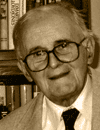
Here We Stand - the Deity of Jesus Christ
The sermon emphasizes the importance of understanding Jesus' deity and his role as the incarnate Son of God, highlighting his impeccable character, claims, and self-consciousness.
In this sermon, the speaker emphasizes the impeccable character of Jesus of Nazareth as portrayed in the four gospels. The testimony of Matthew, Mark, Luke, and John, both collectively and individually, affirms that Jesus was without moral fault. The speaker also references a statement by Charles Darwin, who recognized the transformative power of the message of Christ crucified and risen. The sermon is part of a series exploring the fundamental subjects that have always been prominent in the preaching of this place.
Full Transcript
Now, shall we turn in the Scriptures to St. John's Gospel in chapter 5, and we are going to read a passage which is very relevant to our theme this evening. We are going to read from chapter 16 over, I'm sorry, chapter 5, verse 16, over verse 40. John chapter 5 and verse 16, and I'm going to read from the New International Version.
Will you please remember that as we read this passage, we've chosen it because it depicts, very graphically, one stage in our Lord's experience where we see this issue of His Godhead, of His deity, brought out very clearly. So because Jesus was doing these things on the Sabbath, He had healed someone, as you remember in the opening verses of this chapter, the Jews persecuted Him. Jesus said to them, My Father is always at work to this very day, and I too am working.
For this reason the Jews tried all the harder to kill Him. Not only was He breaking the Sabbath, but He was even calling God His own Father, making Himself equal with God. Jesus gave them this answer.
I tell you the truth. The Son can do nothing by Himself. He can do only what He sees the Father doing.
Because whatever the Father does, the Son also does. For the Father loves the Son and shows Him all He does. Yes, to your amazement, He will show Him even greater things than these.
For just as the Father raises the dead and gives them life, even so the Son gives life to whom He is pleased to give it. Moreover, the Father judges no man but has entrusted all judgment to the Son, that all may honor the Son just as they honor the Father. He who does not honor the Son does not honor the Father who sent Him.
I tell you the truth. Whoever hears My word and believes Him who sent Me has eternal life and will not be condemned. He has crossed over from death to life.
I tell you the truth. A time is coming and has now come when the dead will hear the voice of the Son of God and those who hear will live. For as the Father has life in Himself, so He has granted the Son to have life in Himself.
And He has given Him authority to judge because He is the Son of Man. Do not be amazed at this. For a time is coming when all who are in their graves will hear His voice and come out.
Those who have done good will rise to live and those who have done evil will rise to be condemned. By Myself I can do nothing. I judge only as I hear.
And My judgment is just. For I seek not to please Myself but Him who sent Me. If I testify about Myself, My testimony is not valid.
There is another who testifies in My favor and I know that his testimony about Me is valid. You have sent to John and he has testified to the truth. Not that I accept human testimony but I mention it that you may be saved.
John was a lamp that burned and gave light and you chose for a time to enjoy that light. I have testimony weightier than that of John for the very work that the Father has given Me to finish and which I am doing testifies that the Father has sent Me and the Father who sent Me has Himself testified concerning Me. You have never heard His voice nor seen His form nor does His Word dwell in you for you do not believe the One He sent you diligently study the Scriptures because you think that by them you possess eternal life.
These are the Scriptures that testify about Me yet you refuse to come to Me to have life. May God bless His Word to us and grant us the hearts as well as the minds to receive the accumulated message and testimony they bring. Let us bow for a moment's prayer.
Gracious Lord we bow in Your presence yet again acknowledging that in and of ourselves we have neither the natural nor the spiritual capacity rightly to understand and divide and apply the Word of Truth so that we are in need of the positive ministry of Your Holy Spirit upon our minds, upon our wills, upon our understanding upon our hearts and emotions upon us as whole beings. Grant us now to know what it is to hear You speak from Your Word that we may have an understanding of those things before us at this time. In the name of Your Son our Savior Amen.
Now during these Sunday evenings we are pursuing the theme to which we have given the general title Here We Stand taking it from Dr. Fitch's history of Knox Dr. Fitch's book on the history of Knox and following the seven subjects that he refers to there as having always featured very prominently in the preaching of this place. There are other subjects of course that are also included in the proclamation of the Word of God for we are committed to preach the whole word and not any part of it. But it is true to say that there are some basic fundamentals to which we always return and I think we shall find that the seven referred to there by Dr. Fitch deserve the place that they have been given in the history of the past.
Now last Sunday evening we thought of the inspiration and authority of the Scriptures. Tonight we come to the deity of Jesus Christ. This of course is the great Christian statement and the great Christian faith that Jesus Christ was not simply a man.
Even though we cannot fully and properly understand it all we believe that Jesus Christ was at one and the same time both God very God and man very man. How the two natures were related in the one person we cannot properly comprehend for we are finite and we can only go in so far as Scriptures teach us. But what we are concerned with tonight is the fact the reality of our Lord Jesus Christ being not only a child of Mary but being God the Son.
Not simply a Son of God but the incarnate Lord God the Son. The Nicene Creed uses language that perhaps we are not accustomed to but it may be useful for us to be reminded of the terminology that is used with reference to our Lord Jesus Christ's deity. Speaks of him as the only begotten Son of God very God of very God.
Being of one substance with the Father. Now that's a statement that has certain conclusions that are inescapable. Being of one substance with the Father.
In nature, in his very substance Jesus Christ was not simply man living in a body like yours and mine. His was a substance other than that or alongside of that. He was very God of very God.
Now there have been times in the history of the church when men have been prone to stress the deity of our Lord Jesus Christ perhaps to the neglect of his humanity. I think there can be made a legitimate case to that effect. There have been times when Christian people have been so aware of the deity of our Lord and so concerned to stress it that they have forgotten to stress the equally true fact that Jesus who was God was incarnate in a human body like yours and mine.
And it can be said of him as the epistle to the Hebrews does say that he was tempted. God incarnate was tempted. Tempted in all points like as we are sin apart.
In other words, he was a real man. He knew what it was to be tempted, to be seduced. The temptations came to him but he didn't give in.
But he knew the power of temptation. He knew what it was to wrestle with Satan. He was a real man and not a phantom human.
Well, that's not the climate in which we live today. The climate in which we live today rather stresses the humanity of Jesus and forgets his deity. Multitudes of people today are agreed or willing at any rate when you press them to think of the Lord Jesus Christ as a very good man.
Some even to go so far as to say that he was probably the best of men, the best that's ever lived. But they always come short of this. They always come short of the acknowledgement of the fact that he was no mere man.
And this is where we cross the frontier from unbelief into Christian faith. In the language of the first epistle of Saint John, he is a Christian who believes that Jesus Christ has come in the flesh. That the Messiah, the Son of God, God the Son has become incarnate and has lived and died and is risen again and is ascended at the Father's right hand to be a Prince and a Savior until at last he will consummate his work and be King of kings and Lord of lords as visibly seen by his creatures.
And that's why we want to stress at this time the fact of his deity. It is not to take away from the reality of his manhood. It is certainly not to deny that because we need to tell our people and we need to be able to preach to men and women today that our Lord Jesus Christ having assumed our humanity is able to understand what's going on in our lives.
And is able in the language of the epistle to the Hebrews to sympathize with us. A phantom deity could not do that. But our Godhead, our God has sent a mediator into this world who is capable of sympathizing with us.
He knows what human life is from the inside and has emerged through all the trials and temptations of his own experience without sin. Now some of you may remember that it was 1977 I think when the student Christian movement press in England brought out a book called The Myth of God Incarnate. I'm only referring to that book for one reason.
To indicate that that is the kind of climate in which we live today. That book was written by theologians. It was written by people from within the church.
Not by people from outside. Not by people in the secular humanistic spheres in the university. It was written by people from within the theological halls and colleges of the United Kingdom.
All of whom were in the employ of the church. And if I may put it terribly crudely who were being paid to preach the gospel of a crucified son of God. But they bring out a book that bears this title The Myth of God Incarnate.
Now that I believe indicates the kind of climate that is still in existence in many parts in Canada, in North America as well as in the United Kingdom and elsewhere. People are suspicious of this. People can't understand this in many cases.
They don't know what is implied. So that it is necessary for us from time to time to look at the subject see what it means in the light of scripture and see what basis there may be for believing that Jesus the son of Mary was also not only a son of God but God the son among men. Now this is a very fascinating, this is a very wonderful subject to put in the hands of any preacher.
Very dangerous thing to ask anybody to preach on this. Because you see this is what the New Testament speaks about from beginning to end and the Old Testament too points forward to it. And the difficulty is to know where to start and where to end.
There are so many ways of doing this. I could suggest you at least half a dozen ways of setting about this matter or facing this subject and all of them would bring you to the same conclusion of course. But they would have their own distinctive way of profiting your soul as well as your mind in following them.
Take for example the obvious one. This is what many scholars do. They take each section of the New Testament, the Gospels in the first place then the book of Acts, then the Pauline writings then the writings of Peter, then of the Johannine and the others and they examine them in turn and see now what do these books say about this subject.
And I suggest to you that's a very profitable way of approaching this subject. But there are many others. Now I tonight I'm choosing one.
I don't know that anybody else has taken it but at least I felt that this is the way I wanted to go tonight. I want us to notice three main facts about the Lord Jesus Christ. And incidentally all my evidence will be taken from the Gospels tonight.
I'm not going to call upon the apostles of Paul and James and John and the others. I'm not going to go into the epistles at all. We're going to look at the Gospels and we're going to bring out three main facts about the life of Christ as it is there depicted.
And then against that background I want to look at one basic fact, namely this. I want us to examine the consciousness of the Lord Jesus himself. I want us to try to do something like this.
To look into the mind of the Savior as he thought and see how the New Testament reflects the kind of thoughts he entertained about himself. He wasn't always making claims, though sometimes he was. But the passages I'm going to refer to are passages which reveal the innermost consciousness of Jesus as he thought about himself.
And one thing is clear. There was in the very depths of his being the awareness of the fact, the certainty of the fact, we would say that he was no mere man among men. That he had not been sent on a mission that a man nor men could do.
But that his was a commission that required him to be the person he was. The eternal Son of God who was with the Father sent down, as he says, into the world to do the work which the Father had given him. And may he return again to the Father and finally will gather his people to be with himself.
Now here's the picture then. There's a back cloth to that of three main thoughts and then we come to his own self-consciousness. Let's follow that line.
Now first of all, some of these essential facts that we bear in mind as a back cloth to the one main feature we want to stress. The first thing I want to refer to is the character of Jesus as that is delineated in the New Testament. Now, it is important to remember that the Jesus Christ that we are concerned about is the Jesus of history.
Not the mythical Jesus that some people have. Not the Jesus that people think up in their minds and say I believe this about Jesus or I believe that about Jesus. But they have no shred of evidence that such things apply to him.
I remember in our Welsh Sunday schools I don't know why it should be in Wales more than anywhere else. One of the things that used to distress me so very, very often was to find somebody whom you'd expect something better from and he would chirp up or she would chirp up and say but I like to believe such and such a thing about Jesus. What on earth does it matter what you like to think about him? What matters is, is it true? Is it revealed? What do the witnesses say? What do the scriptures say about him? What is the testimony of the historical Jesus of Nazareth? Now that is why I want to stress we are dealing with the Jesus of history.
And here you see we have a good foundation. Because God has arranged that there should be four testimonies to the Jesus of history. The real Jesus, the Jesus of history is a person concerning whom God has given to the church the gift of four gospels, four narratives.
Each one purporting to give us a biography of Jesus, each from his own standpoint. Matthew, Mark, Luke and John. And it's necessary for us to remember this.
Each one of them is telling us what they saw, what they heard, what their impressions were as they lived with him and talked with him over a period of time or by the authority of those who did so live with him. Now, one of the essential features emerging from the fourfold testimony of the gospels is this. It relates to the impeccable character of Jesus of Nazareth.
Now if I was speaking somewhere else tonight, I would take much, much more time with this. If I were addressing a different congregation, I would do the same. But I'm going to take the liberty tonight of believing that most of us here accept something about the deity and about the perfections of our Lord Jesus Christ.
And therefore I'm going to summarize what I propose to say here in this way. I just want to put in juxtaposition two main lines of thought. Two main aspects of biblical truth.
On the one hand, neither friend nor foe was able to find one solitary moral fault in Jesus Christ. I'm aware that that is a very challenging and a very dogmatic statement. But I would affirm that the testimony of the witnesses, Matthew, Mark, Luke and John imply this and affirm this in one way or another, the four of them together and each of them singly.
That Jesus of Nazareth was without fault. This is a tremendous thing. The writer of the epistle to the Hebrews tells us he was tempted.
The three synoptic gospels begin by telling us of a time when he was right at the beginning of his public ministry involved with Satan himself in the wilderness. And he was very grievously assaulted from various angles to compromise with Satan. Right at the beginning.
We also have reason to believe that when that came to an end, the devil only left him for a season. That's a statement from one of the gospels. Meaning, of course, the devil came back in due course.
He was tempted. But it is most significant, though the Jews sent one group of people after another to try and trip him, to try and trap him, to try and find fault with him, to try and find some kind of accusation that would stand against him. There was not a single moral charge that they could fabricate.
Not one. So that when at last they hailed Jesus before Pontius Pilate and before Herod, or before the Sanhedrin, for that matter, there was not a single moral charge that they could level against him. Now there on the one side is the failure to discern any fault in him.
Or put positively, Jesus says, Which of you convinceth me of sin? In other words, he challenged those that had been living with him and seen him at close quarters. Watched his responses to circumstances, to evil, perverse, wicked men as well as kind people. He says, Which of you convinces me of sin? That on the one side.
Now on the other side, in sheer juxtaposition, I want to place this fact. God the Father unequivocally declared him to be his son. His only begotten son, in whom he was well pleased.
I can only refer to this. Do you remember how at the very outset of our Lord's public ministry, there by the side of Jordan, having been baptized of John in Jordan, and as he was proceeding out of the river, when the Holy Spirit came upon him, this is what we read in Matthew 3.17 and in the other Gospels, in the corresponding passages. And a voice from heaven said, This is my son, whom I love, with whom I am well pleased.
Now that means that God had full pleasure, proper pleasure, real pleasure in him. I suppose the word we ought to use if we were dealing with ordinary literature would be the word, God was satisfied with him. God was delighted with him.
Not only did God declare that in a sheer supernatural way at the side of Jordan, but again a similar divine utterance was heard on the slopes of the unnamed Mount of Transfiguration. Matthew 17.5 and the corresponding passages in Mark and Luke. Each of these, by the way, are recorded in the three Shinopter Gospels.
They are so important. While he was still speaking, a bright cloud enveloped them, and a voice from the cloud said, This is my son, whom I love, with whom I am well pleased. Listen to him.
Now, I'm simply going to say that much about the character of our Lord Jesus Christ. Neither foe nor friend could find fault in him. His Father found pleasure in him.
In the next place, I want to say a word about the claims of Jesus Christ. The claims of the one in whom neither friend nor foe could find fault, and in whom the Father was well pleased. What did he claim concerning himself? Recognizing that he was a person of character, a law-abiding citizen of his land, and evidently walking in fellowship with God, as Nicodemus affirmed in John 3, we come to the claims of Jesus, the more predisposed to hear what he said concerning himself, than we might otherwise be.
People have been known to make claims for themselves that simply could not be substantiated. They bore no consistency with their known mode of living. And sometimes we do that, do we not? We claim for ourselves what is palpably untrue.
God have mercy upon us. We all know what it is to be hypocritical, to play the part, to make a claim, which simply does not stand up to the facts. Jesus claimed that he was no one less than the incarnate Son of God.
He claimed equality with God. He claimed not simply to be a creature of God, but to be equal with God. Our only way of framing the truth is to say that he claimed equality with God as Son in relation to his Father.
Now let's examine this. And what I want to do for the rest of the evening is something very simply. I just want to refer to the Scriptures.
And I just want to let the accumulated testimony of the Scriptures speak for themselves. Now listen to this verse from John 5, 26. You've heard it already once.
But listen to Jesus, Jesus of Nazareth, born of the Virgin Mary. People rubbed shoulders with him. They met him in the market.
They heard him speaking, that Jesus, the real Jesus. Listen to what he said on one occasion. As the Father has life in himself, so has he granted the Son to have life in himself.
Now what does he mean? What he means is this, that God is the source of all life. Natural life, spiritual life. Temporal life, eternal life.
God is the source of all life. He has life in himself. And life is found nowhere else, ultimately, other than in the Godhead.
But now, says Jesus, as the Father has life in himself, so has he given to the Son, and he's speaking of himself, to have life in himself. In other words, he says, I am creator. I can impart natural life, physical life, life to the body, life to the mind, life to the conscience, life to the spirit.
Life in this world, life in the world to come. Eternal life as temporal life. I have life in myself to give.
Move on in the Gospel of St. John. Come to a place like John 6, chapter 6 and verse 35. Then Jesus declared, I am the bread of life.
He who comes to me will never go hungry. And he who believes in me will never be thirsty. What's he saying? Well, he's saying something similar.
It's different. It has a distinction. What Jesus is saying is this.
Those who receive me as you would receive bread and water will be so satisfied that you will never need to receive anything else to give you the life that I am giving you. I give you life. And I give it so completely that you will have it the moment you receive me.
I have life in myself to give. And when I give it, your thirst is quenched. When you eat the bread that I give and the bread that I give is myself, you have life in you.
I give you myself. And I am life-producing and life-sustaining. Now, my friends, who else have you heard speaking like that? These are remarkable claims.
Or come on a little bit. Come on to John chapter 8. When Jesus spoke again to the people, he said, I am the light of the world. Whoever follows me will never walk in darkness but will have the light of life.
I am the light of the world. Of the world. Jesus had never been outside Palestine.
He was born in a most obscure little village, the least among the princes of Judah. And yet here he comes and he seriously says, I am the light, not just of Palestine, not just of Jerusalem, Judea, Samaria, and a few of the other countries around, but of the whole cosmos. I am the light of the world, he says.
And then he adds, lest anybody misunderstand, whoever follows me will never walk in darkness but will have the light of life. Now, you notice the bringing together of light and of life. When Jesus gives us his own life, he gives us his own light.
And we begin to understand the way we ought to go. Come again, let me take another passage like this from John chapter 12 verse 32. Listen to these words.
But I, he says, when I am lifted up from the earth will draw all men unto me. That's John chapter 12. Now, in that particular context, he is just announcing to his disciples that he's going to die.
And if you remember, they were filled with consternation and dread at the thought of his death. He, on the other hand, says, in effect, he didn't put it in these words, but what he's saying is this, look people, he says, look fellows, don't you get it? And I, if I am lifted up from the earth, which means lifted up on the cross, will draw all men unto me. I win by dying, not lose.
I conquer by my cross, I'm not defeated. Why? Because of the person he was. The passion of his death is given meaning and significance because he was a person unlike any other person that ever lived.
He was not simply a good man, not simply a perfect man, but he was God incarnate. There were virtues to his life and to his death which therefore belong to no other. Let me give you another.
Really, the Bible is so full of this as you will appreciate. But take this delightful word to two mourning sisters. John 11, 25.
Jesus said to her, one of the two sisters of Bethany, I, he said, am the resurrection and the life. He who believes in me will live even though he dies. Jesus doesn't deny the reality of the physical death, though sometimes he calls it falling asleep.
The reason is, of course, a person who goes to sleep will hear the sound of the reveille in due course. And even though we go to sleep in Jesus, we rise again at the sound of the reveille. The trumpet shall sound, and the dead shall be raised incorruptible.
I am the resurrection and the life. He who believes in me will live even though he dies, he will live. And whoever lives and believes in me will never die in the true sense, in the deep sense.
Or listen to him saying this in John chapter 14, words which we can so easily gloss over. He says, with one breath, you believe in God, don't you? As God the Father. They were Jews, most of them.
You believe in God the Father, that's alright. He says, believe also in me. And you see what he's doing.
He is putting himself forth as an object of faith alongside God the Father. This is a remarkable play. And I sat in a pew one night, and I heard a man say that Jesus never professed to be anything other than a good man.
Do you wonder I walked out? And make no apology for it. John Stott summarizes a passage on our Lord's claims in these words. That Jesus did in fact claim intimate relation to God is further confirmed by the indignation which he aroused in the Jews.
He made himself the Son of God, they said. John 19, 7. So close was his identification with God that it was natural for him to equate a man's attitude to himself with his attitude to God. Thus, to know Him was to know God.
To see Him was to see the Father. To believe in Him was to believe in God. To receive Him was to receive God.
To hate Him was to hate God. To honor Him was to honor the Father. In other words, he and the Father are inseparably bound together.
He makes himself out to be equal with God. Such claims are either true or false. They can't be both.
They represent the dreams of someone sadly deceived, devilishly deceptive himself, or of one who was what he claimed to be and there are no other alternatives. P.T. Forsyth well says these claims in a mere man would be egoism carried even to imperial megalomania. But in him, they represent the truth as proved by the fact.
What is more, how can you possibly attribute all the noble influences of history that have emanated from him and from the death and resurrection of our Lord Jesus Christ and the church which He founded, how can anyone conceivably read the history of the Christian church and its influence upon art and politics and morality right down through 2,000 years of time and then say all this has sprung from somebody who thought he was God but was merely a man? Actually, Benjamin Warfield in one of his volumes has a beautiful passage on this and he kind of challenges us to read two books on church history to which he refers. The one by Harnack, The Expansion of Christianity or von Dobschutz's Christian Life in the Primitive Church, neither of whom, not one of these authors, believed in the deity of our Lord. But in their history of Christianity, they're explaining what happened in the early church and the great victories of Christ morally, spiritually and otherwise.
And then he says, neither is it simply that. We must remember that these things were not only wrought in that heathen world 2,000 years ago, but they have been wrought over and over again every generation since. For Christianity has had to conquer the world to itself each passing generation.
Think of how the Christian proclamation spread, eating its way into the world like fire into the grass of a prairie. Think of how as it spread, it transformed lives. Then he goes on to refer to a statement by Charles Darwin of all people.
Should a voyager, says Charles Darwin, and I believe Warfield must have been chuckling when he wrote this. Should a voyager, says Charles Darwin, chance to be on the point of shipwreck on some unknown coast, he will most devoutly pray that the lesson of the missionary may have reached thus far. The lesson of the missionary is the enchanter's wand.
That's Darwin. But you see the point. Darwin recognized that the message of Christ crucified and risen was a message that changed men.
And if you happen to be shipwrecked on an island where there were cannibals, God bless you. Have mercy on you if you arrive there before the gospel. Could this transforming influence undiminished after two millenniums have preceded from a mere man, especially a man who was so deceived about himself that he thought he was God when he was merely a man? A man who has deceived so many people down through the ages? It is historically impossible that the great movement which we call Christianity, which remains unspent after all these years, could have originated in a merely human impulse or could represent today the working of a merely human force.
A third thing I want to refer to very briefly is the conquest of Jesus. This is as a background. It is necessary for us to see this factor alongside the other two.
History affirms that Jesus conquered on two fronts. First of all, his was a total conquest over every alternative that human beings or satanic hosts could suggest to the will of God for his life. In other words, he conquered over his own human nature.
He was master over himself. Sometimes we do not appreciate this as we ought. Jesus was master over his own desires, master over his own will, master over everything that happened in his body and in his mind.
He mastered himself. He was conqueror over himself. He was sinless.
Until we come to that last point in the Garden of Gethsemane, there was something that, oh, he yearned, it might not be necessary to do it. And if only there was another way, he would have the Father choose that other way. But he says, nevertheless, not my will, but thine be done.
You see, the complete mastery over his own feelings and everything within himself. He was lord of his own life. He was captain of himself.
He was in charge. He was victor. Jesus, therefore, claimed sinlessness.
John 8, 46. But now, he was conqueror in another sense. He was not only a total, his was not only a total conquest of sin as it tried to invade his own life, but also of sin as it had actually invaded the life of the race.
He came to make war against sin in human nature. And he came to take the curse of sin away and to provide something that would change the human heart and purge the human spirit that it could be remade after his very own perfect image. When he died upon the cross and rose again, he had accomplished that victory.
So that the mission of the crucified Lord is the mission of life-giving to the dead. Not simply proclaiming pardon to the guilty, but life to those who were dead in trespasses and sins, to those who had no awareness of God, no consciousness of God, who knew not how to speak to God. He sent his disciples to preach life in Christ.
New life, divine life. As such, the resurrection of Jesus is at one and the same time a climax and a commencement. It was the climax of the phase of his victorious campaign against the inroads of sin and death into his own life.
But it was the commencement of his victorious life-giving mission to the world whereby he would endow a multitude which no man could number with life eternal in this very present world. A life that would begin to transform them here and now and a life that would be increasingly transformed until he would consummate it at his return. Now, against that background, I want us to look at the consciousness of Jesus.
How is he thinking of himself? Against the background of his character, against the background of his claims, the claims of a person whose character was acceptable as a good man, to say the least, and against the background of his conquest over his temptation as far as his own life was concerned, and his conquest of sin in bearing it away so that forgiveness is possible and a new life may be given as a gift. Against that background, let's try and look and see what the Gospels tell us. How did he think about himself inwardly? I want to say some general things.
Oh, no, the time has gone. We can't say them. Let's come to some of the specifics only.
Let's just turn away from a whole wealth of evidence in the Gospels and just come and notice some particular aspects of his self-awareness only, those which have very special reference to the fact that he thought of himself so clearly, so often, if not consistently and regularly, in terms of being God as well as man. First of all, we notice his consciousness that he was God's only son or his only begotten son. Some people make very little of this.
They are generally the folk who have little sympathy with the truth about Jesus or with the inspiration of the Scriptures. Our Lord Jesus spoke of this in a number of places. I can only refer to one or two now.
Recently, we were dealing with the parable of the tenants in John 12 and verse 6. Do you remember the parable of the tenants? How our Lord is described as the owner of the vineyard and he rented it out and he sent people to collect the fruit in due season and the profits were stoned and this, that and the other. They are not lost. The owner of the vineyard said, I have yet one son, my well-beloved.
I will send him to them. They will reverence my son. Who is he speaking of? He's speaking about himself.
In other words, he saw a continuity between himself and the profits. He continued the line of the profits that were stoned and beaten and hurt and slain in many cases. But he was different.
He wasn't a servant. He was a son and he saw himself. Now, this is not a dissertation on his sonship, but this is just a little insight into the way he thought of himself.
Or take this great passage, John 3, 16. This is a verse that every Christian knows. For God so loved the world, that he gave, who, what? His only begotten.
His only begotten son? There was no other son quite like him. By him we become children of God, but he is God the Son. He is the only begotten of the Father, says the Apostle John, full of grace and truth.
Then again, another aspect of our Lord's consciousness is this, his consciousness of the fact that he preexisted his birth. You can't talk, you can't attribute this to any ordinary human being. Listen to Jesus in John 3, verses 12 and 13.
I have spoken to you of earthly things, he says, and you do not believe. How then will you believe if I speak of heavenly things? No one has ever gone into heaven except the one who came down from heaven, even the Son of Man. Says he, look, my existence didn't begin in the stable, in Bethlehem.
I didn't begin my pilgrimage as a being when I was born of the Virgin Mary. I came down from heaven. I was before I was born.
You have the same kind of thing in the statements in John 6 about the bread of heaven, where he says about himself, I am the bread that came down from heaven. They said, is this not Jesus, the son of Joseph, whose father and mother we know? How can he say, I am come down from heaven? Well, you see, he was aware of his preexistence. And so he says in John 8, 58, before Abram was, I am.
I am. Or again in John 16, 28, he says this, I came from the Father and entered into the world. Now I am leaving the world and I am going back to my Father.
Is anything clearer than that? I came from the Father and now, having come into the world from the Father, I am now returning to the Father from the world. He was aware of his preexistence in communion and union with the Father before he began to live in the body. Or think again of his consciousness of oneness with the Father.
I suppose the most intriguing passage of all in the Gospels is the one in John 10, 30. He says, I and the Father are one. Now he says that in many places, of course, not just in John 10, 30.
But there it is, it is very challenging. I and the Father are one. He can't separate us.
In verses 28 to 30, he has been talking about the sheep and about the security of the sheep in his hands. And he says, no man shall pluck them out of my Father's hands. And then he says, I and my Father are one.
My sheep are in my hands and they're in my Father's hands and I and my Father are one. Now, the one there is in the neuter. In the neuter.
And it means I and the Father, I don't know, dare I put it like this, are one thing, of one nature, of one substance. Not just that we have the same mind, they did have the same mind. Not just that they had the same will, they did have the same will.
But the thought here essentially behind that neuter case is something of this order. Jesus saw himself and his Father as being essentially one in the profoundest depths of his person. One in the depths.
Come again. Can I give you another one? So because Jesus was doing these things on the Sabbath day, John 5, the Jews persecuted him. Jesus said to them, my Father is always at his work to this very day.
That's a lovely translation and a very correct one. Better than any of the others. My Father is always at work to this very day, right up to now, that's the point.
And I too am working along with my Father. For this reason the Jews tried all the harder to kill him. Well, what has he said that's wrong? He said his Father was working and he was working.
What he said that's wrong. Well, they tried to kill him. Not only was he breaking the Sabbath, but he was even calling God his own Father, making himself equal with God.
They saw through his claims. He was saying that he was working along with God. What God required to be done, he did.
What God commended, he obeyed. They willed things together and they worked together. The Father and the One in fellowship.
Can I also mention his consciousness of being worthy of the worship of men? You have it in the Gospels and you have it elsewhere. But I suppose the last thing that I should refer to is this. His consciousness of having been divinely assigned to perform unequivocally divine functions.
Such as forgiving sins. When he was involved in setting aside for us the sacrament of the Lord's Supper. In instituting it, he said this.
This is my blood of the covenant which is poured out for many for the forgiveness of sins. We read in Luke 24. Then he opened the minds of the people on the way to Emeus.
He opened their minds so that they could understand the scriptures and he told them. This is what is written. The Christ will suffer and rise from the dead on the third day.
And repentance and forgiveness of sins will be preached in his name to all nations beginning in Jerusalem. He saw himself as the one in and through whom sins could be forgiven. That's a divine function.
He saw himself as worthy of the kind of devotion that should only be given to God. He saw himself as the judge of the nations. Read Matthew chapter 25.
He saw himself as the one who would say to some come and inherit and would say to others go and depart. He saw himself as the judge who would divide the nations at last until there would be an eternal chasm separating sheep from goat, believers from unbelievers. And his verdict makes an eternity of a difference.
He saw himself as final judge. Now these things would be wholly unwarranted megalomania in any of us and in any man that ever lived. Why then do we believe that these things are true about our Lord Jesus Christ? Well because they're just of a peace with his character and with his conquest.
And with a work that he not only did in his own person but set in motion in his church and does today. In every part of the globe. We had the privilege of having a young Russian brother with us for our meals today.
It's a joy to have him with us in worship tonight. And he was telling us something about the work of God in Christ in his own country and in Eastern Europe. Brothers and sisters, our Lord Jesus Christ is alive and he's about his father's business as much today as he was when the church was founded on the day of Pentecost.
You can say that about no other. Napoleon is dead. Stalin is dead.
Hitler is dead. The saints have passed away. But he's alive.
In the book of the Revelation, we are introduced to him in this way. Don't be afraid, he says. When he shows himself to the apostle John.
I am the first, the alpha, and the last, the omega. I am he that was dead and is alive again. And I have the keys of hell and of death.
He is God and he is man. He is the Lord of all the ages. Veiled in flesh, said Wesley.
That's why we sang that carol tonight. Veiled in flesh, what do we see? Mary's little child? Yes, Mary's little child, provided you only put a comma after that statement. But if you put a period after it, then you're wrong.
Veiled in flesh, the Godhead. Not just a divine being, but the very incarnate Lord. God, the Son, the Godhead.
See, hail, the incarnate deity. Salute him. Worship him.
Oh, come, let us adore him. Trust him. Is there someone among us tonight who has never yielded personal faith to Jesus Christ? Is there someone among us who has never really offered him obeisance and acknowledged him as Lord? My friend, it may be this is the hour, this is the day, this is the very opportunity for you to do precisely that.
Do so. Pray for grace to make this the hour when you acknowledge that Jesus Christ is God. To his glory and to your good.
Amen. Let us pray. Our Lord, our Heavenly Father, we acknowledge again our gratitude for your help to be meditating upon your word.
Some of these things are so large and so big that our puny minds find it difficult even to move around the fringes of these continents of truth. We pray that you will enable us to have sufficient light to be able to trust you with all our hearts. And that as we trust and obey, grant that we shall know more and still more so that we can trust you the greater.
And may further knowledge of the truth elicit from us an ever enlarging confidence in yourself, Father, Son, and Holy Spirit. Through Jesus Christ, our Lord. Amen.
Sermon Outline
- The Character of Jesus Christ
- The Claims of Jesus Christ
- The Consciousness of the Lord Jesus Himself
- Jesus' Awareness of His Deity
- The Incarnation of God the Son
- The Significance of Jesus' Self-Consciousness
Key Quotes
“He was tempted. God incarnate was tempted. Tempted in all points like as we are sin apart.” — J. Glyn Owen
“Neither friend nor foe was able to find one solitary moral fault in Jesus Christ.” — J. Glyn Owen
“God the Father unequivocally declared him to be his son. His only begotten son, in whom he was well pleased.” — J. Glyn Owen
Application Points
- Recognize the significance of Jesus' deity in understanding his role as the incarnate Son of God.
- Acknowledge Jesus' impeccable character and lack of moral fault.
- Understand the importance of Jesus' claims of equality with God and his role as the one in whom the Father was well pleased.