
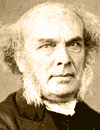
The Holy Spirit
Horatius Bonar emphasizes the essential role of the Holy Spirit in authentic spirituality, worship, and the life of the Church.
Horatius Bonar emphasizes the vital role of the Holy Spirit in spiritual life, asserting that true worship and energy come only through His presence. He warns against hollow religion that lacks the Spirit, which can lead to a superficial faith devoid of love and joy. Bonar illustrates how the Spirit brings life, light, and comfort, guiding believers and binding up the broken-hearted. He stresses that the Spirit's love is essential for genuine faith and joy, urging the Church to recognize and embrace the fullness of the Spirit's gifts. Ultimately, Bonar calls for a deeper relationship with the Holy Spirit, who is a living personality, not just an influence, and whose love is integral to the believer's life.
Text
The Holy Spirit begins, carries on, and consummates in us all spiritual feeling, all spiritual worship, all spiritual life and energy. There be nothing more hollow and unreal than religion without the Holy Spirit. That which is external and superficial, that which manifests itself in mere dress, and music, and routine service may flourish without Him; no, can only flourish in His absence. But the deep and the real must be His work from first to last. The Spirit is absolutely necessary to a religion of love, and liberty, and joy. Mere 'religiousness' is at every man's command. Any man may get it up in a day. But 'spirituality' comes from above, and is the product of the Spirit dwelling and working in the heart.
The 'bustle' of the present day hinders our discernment of this difference; no, it grieves the Spirit provoking Him utterly to depart; thus leaving us with a hollowness of heart which yields no rest nor satisfaction, and which cannot be acceptable to God. The Spirit of God loves retirement and silence; it is then He penetrates into our hearts.
It is the Holy Spirit who has been the life of the Church. When He came, all was life; when He departed, all was death. Nothing was lacking so long as He was in the midst, and when He left nothing could compensate for His withdrawal. When He was present, the Church was the garden of the Lord. When He forsook her, every herb and flower of that garden withered. It was the fulness of the Spirit's power, possessed and exercised by holy men, awakening, quickening, sanctifying, that wrought the mighty changes which history records.
Formalism, routine, and external religion, the excitements of mysticism- these are poor substitutes for the life, and glow, and energy of the Holy Spirit. Nothing but His own presence can avail to lift us out of the unreal religiousness into which we have fallen; to transform creeds into realities, and the bodily bowing of the head, or bending of the knee, into spiritual worship; turning the "dim religious light" into the sunshine of a heavenly noon; drawing out of our hymnals the deep 'heart music' of divine and blessed song; delivering us alike from Rationalism and Ritualism, from a hollow externalism, and from an impulsive and unreasoning fanaticism.
It is His presence only that can vitalize ordinances; clothe ministry with power; unite the broken Church; fill the void of aching hearts; impart to service, liberty and gladness; ward off error; and make truth mighty, filling our sanctuaries with living worshipers, and sending forth men of might to preach the everlasting gospel; and to proclaim, as in primitive days, the Christ that has come, and the Christ that is to come again.
The Spirit has come, in His love, to quicken the dead in sin; and He is daily moving upon the face of the waters; bringing life out of death. Nor is His arm shortened, that it cannot save.
The Spirit has come, in His love, to give light for darkness. Nor is there any human heart too dark for Him to illumine. He lights up souls. He lights up Churches. He lights up lands, making those who sit in darkness to see a great light.
The Spirit has come, in His love, to gather in the wanderers, far and near. No strayed one has gone too far into the wilderness for Him to follow and to bring back. The "ends of the earth" form the vast region into which His love has gone forth to seek, and find, and save.
The Spirit has come, in His love, to guide the doubting heart. He takes lovingly and gently the hand of the perplexed and inquiring, and leads them into the way of peace. He knows all their troubles and fears, so that they need not fear being misunderstood. He teaches their ignorance and shows them their mistakes, and points their eye to the cross.
The Spirit has come, in His love, to bind up the broken-hearted. His name is the Comforter, and His consolations are as abundant as they are everlasting. "Comfort, comfort my Persons," are the words which he has written down for every sorrowful one (Isa 40:1). In all trial, bereavement, pain, sorrow, let us realize the love of the Spirit. That love comes out most brightly and most tenderly in the day of mourning. In the chamber of sickness or of death, let us find strength and peace in the presence, companionship, and sympathy of the gracious Spirit.
The Spirit has come down, in His love, to seek after the backslider. From a heart that once owned Him, He has been driven out, and He has retired sorrowfully. But He has not ceased to desire a return to His old abode. He still pities, and yearns, and beseeches. "Turn, you backsliding children, for I am married unto you," are His words of longing and pity.
The Spirit has come, in His love, even to the mis-believing and the deluded, seeking to remove the mists with which a rebellious intellect has compassed itself about; and to lead them out into life, and love, and day. They are groping for an idea; and He brings them into contact with a Person, even God Himself. They are crying vaguely for knowledge; and He presents to them the wisdom deposited in the Person of the Word made flesh. They are in search of sympathy for their wounded hearts; and He places Himself before them in the fulness of His all sympathizing love. They are asking for a creed of certainty and perfection, on which their faith may rest; He offers Himself to them as a living and unerring Teacher- the Author of an infallible Book, all whose pages sparkle with the love of its loving Author. They crave beauty in worship, something to please the eye- aesthetic beauty, as they call it! He draws the eye to Him who is "the chief among ten thousand, and altogether lovely."
The Spirit has come, in His love, to build up His own. He seeks to fill, with His holy presence, the soul into which He has come. He wants, not a part of the man, but the whole- body, soul, and spirit- the entire being, that it may be altogether conformed to Himself. He has come to His temples, and His purpose is to make them in reality, what they are in name, the "habitation of God, the temples of the Holy Spirit."
The Gospel of the Holy Spirit's
Love
Horatius Bonar
Does the Holy Spirit love us?
There can be but one answer to this question. Yes! He does.
As truly as the Father loves us, as truly as the Son loves us, so truly does the
Spirit love us. The grace or free love which a sinner needs, and which has been
revealed and sealed to us through the Seed of the woman, the "Word made flesh,"
belongs equally to Father, Son, and Spirit. That love which we believe to be in God
must be the same in each Person of the Godhead, else the Godhead would be
divided; one Person at variance with the others, or, at least, less loving than the
others: which is impossible.
Twice over it is written, God is love (1 John 4:8,16); and this applies to each Person
of the Godhead. The Father is love; the Son is love; the Spirit is love. The Trinity is
a Trinity of Love.
When it is said, "God is a Spirit" (John 4:24), the words refer to each Person. If we
lose sight of the love of one, we shall lose sight of the love of all. That which is the
glory of Jehovah, is the glory of each of the three Persons. Let us beware of
misrepresenting the Trinity by believing in unequal love, a love that is not equally
large and free in each.
When it is said, "God is light" (1 John 1:5), we know that these words are true of the
whole three Persons; not merely of the Father or of the Son. The Father is light; the
Son is light; the Spirit is light. As of light, so of love; and he who would doubt that
the Spirit is love, must needs also doubt that the Spirit is light. That which is written
of God, is written of the Spirit of God. That "name" which God has proclaimed as
His, belongs to the Spirit as certainly as to the Father and the Son,- "The Lord God,
merciful and gracious, long-suffering, and abundant in goodness and truth, keeping
mercy for thousands" (Exo 34:6). Shall we rob the Holy Spirit of that blessed name?
His personality claims it; and the gracious characteristics which go to make up the
name, are as much those of the Spirit as those of the Father and the Son. The
personality of the Spirit requires that what is thus written of one should be
applicable to all. We are wont to say of the three Persons, "They are one God, the
same in substance, equal in power and glory." If so, then the love which we affirm
of the whole we must affirm of each. They must be equal in love, as well as in
"power and glory."
Let not the old question of unbelief come in "How can these things be?" We cannot
"find out the Almighty unto perfection" (Job 11:7); but shall this inability of ours lead
to doubt? Shall it not rather lead to faith? Shall we rob the Spirit of His love,
because we cannot understand the deep wonders of Godhead? Shall we not rather
say, If there be love in God at all, there must be love in the Spirit? For to Him it is
given to carry out in human hearts the purposes of redeeming love, in striving,
awakening, drawing, convincing, quickening, comforting; so that it is impossible to
suppose that His love can be less warm, less tender, less large, less personal than
the love of the Father and the Son.
Laying aside the disputes of intellectual pride, the questionings of vain human
reason, the puzzling suggestions of unhumbled self-righteousness, the fond
endeavors to comprehend the hidden things of God, the stubborn determination
not to believe unless we see "signs and wonders" (John 4:48), let us recognize in
that simple formula, God is love the foundation of our faith as to the Spirit's
gracious character, and the solution of all our perplexities as to His personal and
ineffable love. True, He did not take flesh for us; He did not become poor for us; He
did not die for us; He did not weep for us the human tears which the Son of God
wept over Jerusalem; but none the less does He love us; and none the less is His
work for us and in us the work of love,-love without bounds, or change, or end.
We are baptized "in the name of the Father, and of the Son, and of the Holy Spirit"
(Matt 28:19). That threefold name is love; or rather, that one name in its threefold
connection with the three Persons, unfolds itself as the expression of the threefold
love of Father, Son, and Spirit. The name thus named upon us is the divine
declaration and pledge to us of "the love of the Spirit." Our baptism says, not only,
"God the Father loves us," not only, "God the Son loves us"; but also, "God the
Spirit loves us." We are baptized into the love of the Spirit.
Perhaps much of our slow progress in the walk of faith is to be traced to our
overlooking the love of the Spirit. We do not deal with Him, for strength and
advancement, as one who really loves us, and longs to bless us, and delights to
help our infirmities (Rom 8:26). We regard Him as cold, or distant, or austere; we
do not trust Him for His grace, nor realize how much He is in earnest in His dealings
with us. More childlike confidence in Him and in His love would help us on mightily.
Let us not grieve Him, nor vex Him, nor quench Him by our untrustfulness, by
disbelieving or doubting the riches of His grace, the abundance of His
loving-kindness.
He is no mere "influence," but a living "Personality"; and there is a vast
difference between these two things. An "influence" cannot love us, and
we cannot love an "influence." If there is to be love, there must be
personality; and, in this case, it must be the personality of love. The fresh
breath of spring is an influence, but not a personality. It cannot love us nor call on
us to love it. The voice of that which we call "nature" is an influence, but not a
personality. There can be no mutual love between it and us. But a being with a soul
is a personality, not an influence; and the love of man or woman is a personal thing,
a true and real affection-one eye looking into another, and one heart touching its
fellow. So is it with the love of the Spirit. There is a personality about Him passing
all the personalities of earth,-passing all the personalities of men or angels; and it is
this divine personality that makes His love so precious and so suitable, as well as so
true and real. There is no reality of love like that of the Spirit. It has nothing in
common with the coldness or distance of a mere "influence." It comes closely home
to a human heart, because it is the love of Him who formed the heart, and who is
seeking to make it His abode forever.
The proofs of His love are abundant. They are divine proofs; and, therefore,
assuredly true. It is God who has given them to us, that no doubt of the Spirit's love
may ever enter our minds. They are spread over all Scripture, in different forms
and aspects. While the Bible was meant to be specially the revelation of the Son of
God, it is also the revelation of the Holy Spirit. He reveals Himself while revealing
Christ. He utters His own love while showing us the love of the Father and the Son.
The thoughts of the Spirit are thoughts of love. The apostle uses the words,
"the mind of the Spirit," in connection with His gracious intercession (Rom 8:26,27);
and we know that intercession implies love. The "groanings that cannot be uttered"
are awakened in us by the Spirit in His love. He thinks of us; and His thoughts are
"precious" (Psalm 139:17). Yes; He thinks of us; and His thoughts are thoughts of
peace (Jer 29:11). The Bible is filled with the thoughts of the Spirit; and they are
love. They breathe in every page of Scripture; for holy men of God "spoke as they
were moved by the Holy Spirit."
The ways of the Spirit are the ways of love. His manifold dealings with the sons
of men, in "opening hearts" (Acts 16:14), teaching, sanctifying, chastening, are the
dealings of love,-love which many waters cannot quench, and which the floods
cannot drown. The faintest touch of His hand is the touch of love. The gentlest
whisper of His voice is the whisper of love. All His dealings from day to day,
whether of cheer or of chastisement, whether of warning or of welcome, are those
of love. In a thousand ways He beckons us to come to the Cross; He draws us,
unconsciously and imperceptibly, but irresistibly, away from sin and self to God and
heaven. He has not, indeed, human tears to shed, like the son of God when he wept
over Jerusalem; but not the less are His yearnings true and tender, and all His ways
toward us are ways of unutterable compassion (see Gen 6:3; Psalm 51:11,12; Isa
55:8). He is "very pitiful, and of tender mercy."
The works of the Spirit are the works of love. When He "garnished the
heavens" (Job 26:13), it was the work of love. When he moved upon the face of the
deep (Gen 1:2), it was in love. When He came upon holy men of old, it was in love.
When He wrote the Scriptures, it was in love,-love to us. When He anointed Jesus of
Nazareth to preach the gospel to the poor, it was in love to us. When He fulfills His
office of "guiding into all truth," it is in love. When He opens eyes and hearts, it is in
love. When He chastens, it is in love. When He comforts, it is in love. When He
sheds abroad the love of God in our hearts, it is in love. When He, as one with the
Father and the Son, wrote the seven epistles of the Revelation, it was in love,-as
the close of each of them shows: "He that has an ear, let him hear what the Spirit
says unto the churches" (Rev 2:7). His works in the soul of man, in regenerating,
upholding, and perfecting, are the works of love,-love like that of Christ, "that
passes knowledge": love to the chief of sinners; love to those who have vexed and
resisted and quenched Him; love which says, "How shall I give you up, Ephraim?
how shall I deliver you, Israel?" (Hosea 11:8).
The words of the Spirit are the words of love. That which we call "the word of
God" is specially the Spirit's word: and it overflows with love; love which, while it
condemns the sin, presents pardon to the sinner; love which, while it spreads out
before us "the exceeding sinfulness of sin," proclaims aloud, to the guiltiest of the
guilty, free forgiveness and "deliverance from the wrath to come." The gospel of
Christ contains in it the good news of the Spirit's love. "He shall baptize you with the
Holy Spirit" (Matt 3:11) are the words in which is described the fitting out of men
for preaching the good news; and in this baptism we have the manifestation of the
Spirit's love. He baptizes because He loves. He sends out men to tell of His love;
and the baptism with which He baptizes them is to fit them for this message of love.
By this baptism the words of love are put into their lips; and these words are truly
those of the Spirit Himself, from whatever lips they may come, by whatever pen
they may be written down. They are the words of sincerity and truth. He means
what He says when He sends out His servants with the language of love upon their
tongues.
Hear some of His words of grace,-grace as boundless and as suitable as
that of the Father and the Son; grace which has lost none of its largeness
or freeness by the lapse of ages or the desperate resistance of human
hearts: "Who forgives all your iniquities; who heals all your diseases; who
redeems your life from destruction; who crowns you with loving-kindness and
tender mercies" (Psalm 103:3,4); "O Lord, I will praise you: though You were angry
with me, Your anger is turned away" (Isa 12:1); "Seek you the Lord while He may
be found" (Isa 55:6); "Though your sins be as scarlet, they shall be as white as
snow; though they be red like crimson, they shall be as wool" (Isa 1:18); "As I live,
says the Lord God, I have no pleasure in the death of the wicked" (Eze 33:11); "I
drew them with cords of a man, with bands of love" (Hosea 11:4); "Who is a God
like unto You, that pardons iniquity" (Micah 7:18); "The Lord is good; a
stronghold in the day of trouble" (Nahum 1:7); "How great is His goodness" (Zech
9:17). These are the Spirit's own words; and He writes them as the witness for God,
the revealer of the divine character, the Unfolder of the love of Father, Son, and
Spirit. They are the words of the Spirit, spoken before the Son of God came into the
world to reveal and to embody in Himself the love of God to man. The New
Testament is yet more abundant in its utterances of love: and in every one of them
the Spirit has His part: until all is summed up in the wondrous words which time
cannot weaken, and which long use cannot make stale: "The Spirit and the bride
say, Come. And let him that hears say, Come. And let him that is athirst come.
And whosoever will, let him take the water of life freely" (Rev 22:17).
The Holy Spirit is no mere mechanical agent in the great work of a sinner's
deliverance, and of the Church's up building, obediently doing the work appointed to
Him. "I delight to do Your will" is as true of the Spirit as the Son. He loves the
sinner; therefore He lays hold of him. He pities his misery; therefore He stretches
out the hand of help. He has no pleasure in his death; therefore He puts forth His
saving power. He is longsuffering and patient; therefore He strives with him day by
day; and though "vexed," "resisted," "grieved," and "quenched," He refuses to
retire from, or give up, any sinner on this side of eternity. The extent to which we
resist Him, and the amount of His forbearing love, we cannot know. This only we
may say, that our stubbornness is something infinitely fearful and malignant, while
His patient grace passes all understanding.
We are little alive to the injury we do to ourselves by any misunderstanding as to
the mind and the work of the Spirit. The injustice which we do to Him is great; and
the wrong which we inflict upon ourselves is no less so. No mistakes as to the
Spirit's gracious character can be trivial or harmless. To regard Him as "austere," or
"hard," or inaccessible, or needing to be persuaded to do His work in us, is to treat
Him as at variance with the Father and the Son; slow to carry out the great purpose
of divine love, in which purpose the three Persons of the Godhead are equally
concerned. To raise questions as to the riches of His grace is to misread Scripture,
and to put a dark and false construction upon His testimony for Christ, as well as
upon His dealings with the sons of men,-His dealings with those who have been
saved, as well as with those who are lost. For what do the saved ones not owe to
His love; and what would that love not have done for the lost, had they not
stubbornly set it at nothing to the last! "How often would I have gathered your
children" were the words which accompanied the tears of the Son of God over the
rebellious city; and they are words equally expressive of the Spirit's feelings toward
the stout-hearted of every age and nation.
Imperfect views of the Spirit's character may not be regarded by some as serious or
fatal, but it is hardly possible that they can be entertained without exercising a
darkening and deadening influence upon the soul: not in the same way as defective
views of Christ's work affect us, but still with a most evil result both upon the
conscience and the heart,-as if there were something in the Spirit which repelled us,
whatever there might be in Christ to attract us; as if the light which the Cross
throws upon the love of the Spirit were not quite in harmony with that which it
reveals of the love of Christ; as if the Spirit were not always as ready with His help
as is the Son.
All wrong thoughts of God, whether of Father, Son, or Spirit, must cast a shadow
over the soul that entertains them. In some cases the shadow may not be so deep
and cold as in others; but never can it be a trifle. And it is this that furnishes the
proper answer to the flippant question so often asked, Does it really matter what a
man believes? All defective views of God's character tell upon the life of the soul and
the peace of the conscience. We must think right thoughts of God if we would
worship Him as He desires to be worshiped; if we would live the life He wishes us
to live, and enjoy the peace which He has provided for us.
The want of stable peace, of which so many complain, may arise from imperfect
views of the Spirit's love. True, our peace comes from the work of the Substitute
upon the cross, from the blood of the one sacrifice, from the sinbearing of Him who
has made peace by the blood of the cross. But it is the Holy Spirit who glorifies
Christ to us, and takes the scales from our eyes. If then we doubt His love, can we
expect Him to reveal the Son in our hearts? Are we not thrusting Him away, and
hindering that view of the peace-making which He only can give? Trust His love,
and He will make known the Peacemaker to you. Trust His love, and He will show
the precious blood by which the guiltiest conscience is purged, and the peace which
passes all understanding is imparted. He is the Spirit of peace, and His work is the
work of peace. His office is to make known to us the Prince of Peace. Can there be
peace without the recognition of the Holy Spirit's love? Can there fail to be peace
when this is recognized and acted on? Doubts as to the love of the Spirit must
inevitably intercept the peace which the peace-making cross presents to us.
Perhaps the want of faith, which we often mourn over, may arise from our not
realizing the Spirit's love. "Faith [no doubt] comes by hearing, and hearing by the
word of God": yet it is the Holy Spirit who shines upon the word; it is He who gives
the seeing eye and the hearing ear. Under the pressure of unbelief, have we fled to
Him and appealed to His love? "Lord, I believe; help my unbelief," may be
as aptly a cry to the Spirit as to the Son of God. He helps our infirmities; and in
the infirmity of our faith He will most assuredly succor us. It is through Him that
we become strong in faith; and He loves to impart the needed strength. He gives
to all men, liberally, and upbraids not. Yet in our dealings with Him regarding
faith, let us remember that He does not operate in some mystical or miraculous
way, as if imparting to us a new faculty called faith; but by taking of the things of
Christ and showing them to us; so touching our faculties by His mighty yet invisible
hand, that, before we are aware, these disordered souls of ours begin to work aright,
and these dull eyes of ours begin to see what was all along before them, but what
they never had perceived, "the excellency of the knowledge of Christ Jesus our
Lord." Thus He works in us, often slowly and imperceptibly, but with divine
power, making us to understand the gospel and to draw out of it that light
and life which it contains for the dead and the dark. Looking at the cross,
under the Spirit's enlightenment, we grow in faith. For never does He
produce or increase faith in us without keeping our eye steadfastly fixed
upon the great redeeming work of the incarnate Son. He is not the Spirit of
unbelief or bondage, but of faith and liberty; and His desire is that we
should be delivered from unbelief and bondage. He loves us too well to be
indifferent to our remaining in distance or in distrust. He longs to see us children of
faith, not of unbelief; to make us strong in faith; to remove whatever from within or
without hinders its growth. Trust His love for the increase of faith; for deliverance
from the evil heart of unbelief; for revealing to you the bright object of faith,-Christ,
and "God in Christ reconciling the world to Himself, not imputing unto men their
trespasses." As truth is the foundation of faith, so, as "the Spirit of truth," He guides
us out of error into truth, and thus leads us out of unbelief into faith; making us to
see that the root of what we called our want of faith, was not that we were believing
the right thing in a wrong way (as is so often said), but that we were not believing
the right thing, but something else which could not bring rest to us in what way
soever we might believe it.
Perhaps our want of joy may arise from our over-looking the love of the Spirit.
Peace is one thing; joy is something more,- "joy unspeakable and full of glory."
Assuredly He is the Spirit of joy, and as such delights to impart His joy. He who, by
the lips of His Apostle, said, "Rejoice in the Lord always," wants to see you a joyful
man. Will you trust Him for this? Will you rest in His love for this gift? Do not say,
Joy is a secondary thing: a man may be a Christian without joy; some of the best of
God's people have gone mourning all their days. These are poor excuses for not
possessing what God wants you to possess, and what would make you ten times
more useful to all around. God wishes you to be joyful. Your testimony to God is
imperfect without joy. Cultivate joy; and in order to do so effectually, take firmer
hold of the Spirit's power, and rest more implicitly in His love. He loves you too well
to wish you to be gloomy. Be filled with the Spirit and you will be filled with joy. Joy
is a great help in living a holy and consistent life. Holiness is joy, and joy is holiness.
Accept the Spirit's love for both of these.
The "seal of the Spirit" (Eph 1:13); the "witness of the Spirit" (Rom 8:16);
the "indwelling" of the Spirit (Rom 8:11); the "inworking" of the Spirit
(Eph 1:19); the "help" of the Spirit (Rom 8:26); the "liberty" of the Spirit
(2 Cor 3:17); the "strengthening" of the Spirit (Eph 3:16); the "fulness" of
the Spirit (Eph 5:18); the "teaching" of the Spirit (John 14:26); the
"baptism" of the Spirit (Mark 1:8);-all these are most closely connected
with the "love of the Spirit"; and he who would separate them from that
love, would rob them of all their meaning and power and consolation.
It is the loving Spirit that seals, and witnesses, and indwells, and inworks, and
helps, and liberates, and strengthens, and teaches, and baptizes. So that in seeking
these blessings we must ever remember that we are dealing with one whose love
anticipates our longings, and on whose side there exists no hindrance to our
possessing them all. Nowhere in Scripture has God led us to suppose that the Holy
Spirit would be lacking to us in any time of need, or that we could be beforehand
with Him in any desire of ours for any spiritual blessing. "If you then, being evil,
know how to give good gifts unto your children; how much more shall your
heavenly Father give the Holy Spirit to them that ask Him?" (Luke 11:13).
In our day, when that which is miraculous or supernatural is suspected or scorned, it
is not easy even to gain a hearing for such truths. The Holy Spirit, we may say, is
discarded as the most incredible part of the supernatural and impersonal. He
Himself is regarded as an airy nothing, or as mist; and His direct and divine agency
is treated as the dream of diseased enthusiasm. The removal of the supernatural
from religion means specially the removal of the Spirit. To retain Him personally in
our theology is considered to be retaining the most incredible part of the
supernatural,-the most visionary article in our creed.
Hence the need of bringing fully into view both His personality and His character.
That modern unbelief should dislike the whole subject, and treat it as incompatible
with reason, and therefore incapable of proof, as being wholly beyond the range of
our senses, need not surprise us: nor would we attempt to meet Rationalism on its
own ground. But what we say is this: Our information regarding the Holy Spirit must
come wholly from revelation; and the question is, Does the Bible bear us out in the
above statements? It certainly does seem to contain the doctrine we have been
affirming. Its Author evidently meant us to accept that doctrine as true. If that
doctrine cannot be true, it must be honestly struck out of the Bible; not by
explaining texts away, or misinterpreting whole chapters, but by boldly affirming
that Scripture is inaccurate. The words regarding the Spirit are too plain to be
diluted into unmeaning figures. He who inspired the Bible has used language that
cannot be mistaken. He has not left us in any doubt as to what He intended. Hence
the quarrel of unbelief is a quarrel with revelation, and more specially with the
Author of revelation. This is the real point at issue in these days, in the controversy
with Rationalism.
The doctrine of the Holy Spirit's person and work must stand or fall with
the Bible. If it is incredible, then Scripture has utterly deceived us, and the God
who made us has given us a book, as the revelation of divine truth, which contains
what no man ought to believe or can believe. If the innumerable references to the
Spirit be mere figures of speech,- Orientalisms,-meaning nothing real, then to
accept them as literal, and to believe in a personal Spirit, must be pure fanaticism;
and as to such a thing as the love of the Spirit, only visionaries or mystics would
accept it.
Nevertheless the foundation of God stands sure; and the Word of God is true and
real. Heaven and earth may pass away, but one jot or one tittle of what is written in
Scripture cannot. What God has made known to us concerning the Spirit,-His
wisdom, love, holiness, and power, remains unaltered throughout the ages; as true
to us in these last days as it was in the beginning.
That the Holy Spirit is the producer in the human heart of everything that God calls
religion, is beyond question to any one who accepts Bible statements as divinely
true. He begins, carries on, and consummates in us all spiritual feeling, all spiritual
worship, all spiritual life and energy. Nor can there be anything more hollow and
unreal than religion without the Holy Spirit. That which is external and
superficial,-which manifests itself in dress, and music, and routine service,-may
flourish without Him; no, can only flourish in His absence. But the deep and the
real must be His work from first to last. The love of the Spirit is absolutely
necessary to a religion of love, and liberty, and joy. Religiousness is at every man's
command. Any man may get it up in a day; but religion comes from above, and is
the product of the Spirit dwelling and working in the heart.
The bustle of the present day hinders our discernment of this difference; no, it
grieves the Spirit provoking Him utterly to depart; thus leaving us with a hollowness
of heart which yields no rest nor satisfaction, and which cannot be acceptable to
God. "The Spirit of God," says Melancthon, "loves retirement and silence; it is then
He penetrates into our hearts. The Bride of Christ does not take her stand in the
streets and cross ways, but she leads her spouse into the house of her mother"
(Song 8:2).
"The gifts of the Holy Spirit"! This is the Church's heritage (Acts 2:38,39). How far
she has claimed it or used it is a serious question; but that this gift was meant for
her in all ages is beyond a doubt. The whole book of the Acts of the Apostles is
evidence of this. "My Spirit remains among you," is a promise for the Church as
truly as for Israel (Hag 2:5).
From the beginning it has been so; and the holy men raised up by God to speak His
words or do His works were men "filled with the Holy Spirit" (Exo 31:2). It is this
Spirit that has been the life of the Church. When He came, all was life; when He
departed, all was death. Nothing was lacking so long as He was in the midst, and
when He left nothing could compensate for His withdrawal. When He was present,
the Church was the garden of the Lord; when He forsook her, every herb and flower
of that garden withered.
Even in Old Testament days it was so; but since Pentecost, more largely and more
powerfully. The indwelling and inworking Spirit, who is the promise of the Father
and gift of the Son, is that which belongs to the Church of every age, little as she
may have claimed or welcomed her peculiar glory.
"The gift" and "the gifts" are, both of them, expressions used in connection with the
Spirit (Acts 8:20-10:45). He is one, yet manifold; called "the seven Spirits of God,"
and "the seven lamps of fire," and the "seven eyes," and the "seven horns" (Rev
3:1; 4:5; 5:6). He is not only spoken of in connection with each saint, but with the
body, the Church universal, which is the "habitation of God, through the Spirit" (Eph
2:22); "the temple of the Holy Spirit" (1 Cor 3:16; 6:19); and, as such, possessor of
His love.
Such is the manifold fulness of the Spirit which as the gift of Christ, is the property
of the whole Church of God. That fulness is not only the fulness of peace, and
wisdom, and holiness, but of love. It is given her, not for herself only, but for the
world out of which she has been called. She is to shine in the light of this love upon
a dark earth. She is to pour out of the fulness which she receives upon a parched
and needy world; out of her are to flow rivers of living water (John 7:38). Great is
the world's need; but not greater than the provided supply: for the fountain of love,
out of which the Church receives and pours this living water, is inexhaustible and
divine.
The love of the Spirit is, like that of the Son, a love that passes knowledge, a
fountain whose waters fail not: "A pure river of water of life, clear as crystal,
proceeding out of the throne of God and of the Lamb" (Rev 22:1).
In the possession of this heavenly gift,-of these sevenfold gifts,-the Church is
unspeakably rich, whatever her outward condition may be. Enjoying the fulness of
this abiding Spirit, she manifests her character as the witness for Christ and as the
light of the world. These gifts of the ascended Christ (Eph 4:8) made her what she
was meant to be in the midst of the world's evil and of the powers of darkness, "a
burning and shining light." In the power of such gifts she went forth to do battle with
the idolatries and immoralities of heathendom. Boldly entering the cities of classic
fame, she took possession of pagan temples and Jewish synagogues; and thousands
everywhere, through apostolic preaching gathered round the throne.
It was not the gift of miracle, of healing, or of tongues, that did the work. These
were subordinate things, and in many places never used by the apostles. These
were not "the best gifts" which we are commanded to covet (1 Cor 12:31). It was
the fulness of spiritual power, possessed and exercised by holy men,
awakening, quickening, sanctifying, that wrought the mighty changes
which history records. It is well that we should look back to Pentecost, with
wistful eyes, longing for a ministry of Pentecostal power, as the only remedy for the
unbelief of the last days. But mere physical miracles are not the desirable things.
The gifts of the Spirit, the Church's inalienable inheritance, are quite apart from
bodily manifestations; and they remain with us still. But do we claim them? Do we
use them? Do we not trust in other strength? Do we not lean on learning, on
science, on talent, as if by these we were to fight and overcome? And, in so doing,
do we not mistake our true position, and character, and mission? No, do we not
grieve and quench the Spirit?
Yet, the love of the Spirit is unquenchable. He is unwilling to depart. He
despises not the day of small things; but He bids us look beyond and above them.
Formalism, routine, and external religion, the excitements of mysticism,-these are
poor substitutes for the life, and glow, and energy of the Holy Spirit. Nothing but His
own presence can avail to lift us out of the unreal religiousness into which we have
fallen; to transform creeds into realities, and the bodily bowing of the head, or
bending of the knee, into spiritual worship; turning the "dim religious light" into the
sunshine of a heavenly noon; drawing out of our hymnals the deep heart-music of
divine and blessed song; delivering us alike from Rationalism and Ritualism, from a
hollow externalism, and from an impulsive and unreasoning fanaticism. It is His
presence only that can vitalize ordinances; clothe ministry with power; unite the
broken Church; fill the void of aching hearts; impart to service, liberty and
gladness; ward off error; and make truth mighty,-filling our sanctuaries with living
worshipers, and sending forth men of might to preach the everlasting gospel; and
to proclaim, as in primitive days, the Christ that has come, and the Christ that is to
come again.
He has come, in His love, to quicken the dead in sin; and He is daily moving
upon the face of the waters,-bringing life out of death. Nor is His arm shortened,
that it cannot save.
He has come, in His love, to give light for darkness. Nor is there any human
heart too dark for Him to illumine. He lights up souls. He lights up Churches. He
lights up lands, making them that sit in darkness to see a great light.
He has come, in His love, to gather in the wanderers, far and near. No
strayed one has gone too far into the wilderness for Him to follow and to bring back.
The "ends of the earth" form the vast region into which His love has gone forth to
seek, and find, and save.
He has come, in His love, to guide the doubting heart. He takes lovingly and
gently the hand of the perplexed and inquiring, and leads them into the way of
peace. He knows all their troubles and fears, so that they need not fear being
misunderstood. He teaches their ignorance and shows them their mistakes, and
points their eye to the cross.
He has come, in His love, to bind up the broken-hearted. His name is the
Comforter, and His consolations are as abundant as they are everlasting. "Comfort
you, comfort you my Persons," are the words which he has written down for every
sorrowful one (Isa 40:1). In all trial, bereavement, pain, sorrow, let us realize the
love of the Spirit. That love comes out most brightly and most tenderly in the day of
mourning. In the chamber of sickness or of death, let us find strength and peace in
the presence, companionship, and sympathy of the gracious Spirit.
He has come down, in His love, to seek after the backslider. From a heart
that once owned Him, He has been driven out, and He has retired sorrowfully. But
He has not ceased to desire a return to His old abode. He still pities, and yearns,
and beseeches. "Turn, you backsliding children, for I am married unto you," are His
words of longing and pity.
He has come, in His love, even to the mis-believing and the deluded,
seeking to remove the mists with which a rebellious intellect has compassed itself
about; and to lead them out into life, and love, and day. They are groping for an
idea; and He brings them into contact with a Person, even God Himself. They are
crying vaguely for knowledge; and He presents to them the wisdom deposited in the
Person of the Word made flesh. They are in search of sympathy for their wounded
hearts; and He places Himself before them in the fulness of His all-sympathizing
love. They are asking for a creed of certainty and perfection, on which their faith
may rest; He offers Himself to them as a living and unerring Teacher,-the Author of
an infallible Book, all whose pages sparkle with the love of its loving Author. They
crave beauty in worship, something to please the eye,-aesthetic beauty, as they call
it! He draws the eye to Him who is "the chief among ten thousand, and
altogether lovely."
He has come, in His love, to build up His own. He seeks to fill, with His holy
presence, the soul into which He has come. He wants, not a part of the man, but
the whole,-body, soul, and spirit,-the entire being, that it may be altogether
conformed to Himself. He has come to His temples, and His purpose is to make
them in reality, what they are in name, the "habitation of God, the temples of the
Holy Spirit.
Sermon Outline
- I points: - The Role of the Holy Spirit in Spiritual Life - The Necessity of the Holy Spirit for True Worship - The Contrast Between External Religion and Spirituality
- II points: - The Holy Spirit as the Life of the Church - The Consequences of the Spirit's Absence - The Transformative Power of the Spirit
- III points: - The Holy Spirit's Love and Compassion - The Spirit's Guidance and Comfort - The Spirit's Role in Salvation and Restoration
- IV points: - The Spirit's Work in the Believer's Life - The Spirit's Influence in Worship and Ministry - The Call to Recognize the Spirit's Presence
Key Quotes
“There be nothing more hollow and unreal than religion without the Holy Spirit.” — Horatius Bonar
“The Spirit has come, in His love, to quicken the dead in sin.” — Horatius Bonar
“The Gospel of the Holy Spirit's Love.” — Horatius Bonar
Application Points
- Seek the presence of the Holy Spirit in your daily life to experience true spiritual vitality.
- Recognize the Holy Spirit's love and guidance in times of doubt and difficulty.
- Engage in worship that is rooted in the Spirit, moving beyond mere routine to genuine connection with God.