
Name of Jesus
The sermon emphasizes the importance of acknowledging Jesus as the Supreme Lord and the key to finding pardon, acceptance, power, and rule in our lives.
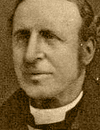
H.C.G. Moule emphasizes the unique and glorious nature of the Name of Jesus, highlighting His dual identity as both fully divine and fully human. He explains that Jesus, as the suffering and risen Savior, embodies the supreme authority of God, deserving of worship and reverence from all. Moule encourages believers to adopt the 'mind of Christ,' recognizing that everything in Christianity revolves around Jesus, who is the source of pardon, power, and guidance. He calls for a deep reliance on Jesus, urging the faithful to look to Him for all their needs and to follow His example of humility and service. Ultimately, Moule reassures that through fellowship with Christ, believers will share in His glory and love eternally.
Text
THE NAME unique and glorious; the Name Supreme, the I AM; to be His Name now, not only as He is from eternity, the everlasting Son of the Father, but as He became also in time the suffering and risen Savior of sinners. In His whole character and work He is invested now with the transcendent glory and greatness of divine dignity. . . is now enthroned where only the Absolute and Eternal King can sit. . . In "the Name of Jesus" . . . the human personal Name, Jesus, "every knee should bow," as the prophet (Isa. 45:23) foretells . . . to the imperium of the exalted Jesus, JEHOVAH-JESUS; "and that every tongue should confess," with adoring, praising, worship, "that Jesus Christ" is nothing less than "Lord," in the supreme and ultimate sense of that might word, "to God the Father's glory." "The Name" is the Supreme Name, JEHOVAH or LORD.
. . . We have here a chain of assertions about our Lord Jesus Christ, made some thirty years of His death at Jerusalem; made in the open day of public intercourse, and made not in the least in the manner of controversy, of assertion against difficulties and denials, but in the tone of a settled, common and most living certainty. . . The fullest possible assurance that He is Man, Man in nature, in circumstances and experience, and particularly in the sphere of relation to God the Father. . . and in a way which is equally vital to the argument in hand, that He is as genuinely Divine as He is genuinely Human. . . . And His "becoming to be" one with us in that mysterious but genuine Bondservice was the free and conscious choice of His eternal will, His eternal love, in the glory of the Throne.
. . . . Jesus Christ "emptied Himself, taking the form of a bond-servant" --the becoming the absolute Human Bondservant of the Father. And the Absolute Bondservant must exercise a perfect Bondservice. And this will mean. . . a perfect conveyance of the Supreme Master's mind in the delivery of His message."He whom God has sent, speaks the words of God." The Kenosis itself (as Paul meant it) is nothing less than the guarantee of the Infallibility. . . . It says a profound and decisive yes to the question, Is our redeemer, as Man, "in the days of His flesh," to be absolutely trusted as the Truth in every syllable of assertion which He was actually pleased to make? "He whom God has sent, speaks the words of God."
Paul appeals to the Philippian believers by many motives. . . But then--there is one plea more; it is the "mind that was in Christ Jesus," when "for us men and for our salvation He came down from heaven, and was made Man, and suffered for us." Here was at once model and motive for the Philippian saints. . . Nothing short of the "mind" of the Head must be the "mind" of the member . . . .
Nothing in Christianity lies really outside of the Lord Jesus Christ. . . . the whole gospel message is conveyed to us sinners in those three words, "Looking unto Jesus." It is pardon we need, it is acceptance, free as the love of God, holy as His law? We find it, we possess it, "looking unto Jesus" crucified. Is it power we need, victory and triumph over sin, capacity and willingness to witness and to suffer in a world which loves Him not at all? We find it, we possess it, it possesses us, as we "look unto Jesus" risen and reigning, for us on the Throne, with us in the soul. Is it rule and model that we want, not written on the stones of Horeb only, but "on the fleshly tables of the heart"? We find it, we receive it, we yield ourselves up to it, as we "look unto Jesus" in His path of love, from the Throne to the Cross, from the Cross to the Throne, till the Spirit inscribes that law upon our inmost wills.
Be ever more and more to us, Lord Jesus Christ, in all Thy answer to our boundless needs. Let us "sink to no second cause." Let us come to Thee. Let us yield to Thee. Let us follow Thee. Present Thyself evermore to us as literally our all in all. And so through the blessed fellowship in Thy wonderful humiliation we shall partake for ever hereafter in the exaltation of Thy glory, which is the glory of immortal love (Philippian Studies, pp. 95-105).
Sermon Outline
- The Name of Jesus
- Unique and Glorious
- Supreme, the I AM
- Invested with divine dignity
Key Quotes
“He whom God has sent, speaks the words of God.” — H.C.G. Moule
“Looking unto Jesus is the key to finding pardon, acceptance, power, and rule in our lives.” — H.C.G. Moule
“Let us sink to no second cause. Let us come to Thee. Let us yield to Thee. Let us follow Thee.” — H.C.G. Moule
Application Points
- We must acknowledge Jesus as the Supreme Lord and bow to His authority.
- We can be assured of Jesus' divinity through the Kenosis, or the act of self-emptying, which guarantees His infallibility.
- Looking unto Jesus is the key to finding pardon, acceptance, power, and rule in our lives.