
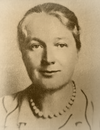
Ten Commandments Written in the Body
Hannah Hurnard teaches that living by Jesus' heavenly principles not only transforms the soul but also renews and maintains the health of the physical body, revealing a profound connection between spiritual obedience and bodily well-being.
In this insightful sermon, Hannah Hurnard explores the profound relationship between spiritual obedience and physical health, drawing from Psalm 139 and the Ten Commandments. She reveals how the Old Testament law linked moral conduct to bodily well-being and how Jesus’ teachings on heavenly principles offer a transformative path to healing and renewal. Through practical examples like faith and mourning, Hannah encourages believers to live in harmony with God's nature to experience holistic health and spiritual growth.
Full Transcript
Oh Jesus, we are so glad again this morning that Thou dost love us enough to come and stand amongst us and to teach us more of the things which Thou hast been teaching Thy lovers and friends and disciples down through the ages. We are so thankful that we are privileged now to learn more of these things and we offer to Thee, Lord, every faculty which Thou hast given us, asking Thee that Thou wilt quicken our understanding, our thoughts and memory, and that Thou wilt give to us great joy in learning from Thyself. And so now we say, speak again, Lord, and all that we ask is very humbly and very earnestly that the lips which Thou dost humble Thyself to choose this morning and the minds through which Thou dost limit Thyself to think and speak, that it may not be blocked.
What Thou dost want us to understand and learn may come through and what is not from Thee may be graciously overruled. Oh Thou loving Teacher of men, Jesus, Thou lover of souls, teach us now and we thank Thee together. Amen.
I hope you don't mind me pausing. I always like not to start until all the friends have found seats so they're not disturbing or distracting anyone. And now I would like to read to you from Psalm 139, what I love, one of my favorite psalms.
I think it's an absolutely marvelous one. Psalm 139. I'm not going to read the whole psalm, but certain verses out of that psalm.
O Lord, Thou hast searched me and known me. Thou knowest my down-sitting and my up-rising. Thou understandest my thoughts afar off.
Thou compassest my path and my lying down and art acquainted with all my ways. For there is not a word in my tongue, but Thou, O Lord, knowest it altogether. I will praise Thee, for I am fearfully and wonderfully made.
Lord, saw Thy work and let my soul know it right well. My substance was locked from me when I was made in secret and curiously walked in the lowest parts of the earth. Thy eyes did see my substance being yet unperfect, and in Thy book all my members have been written, all the organs of my body.
Lord, in Thy book all my members have been written, which in continuance were fashioned when as yet there were none of them. Search me, O God, and know my heart. Try me and know my thoughts and see if there be any wicked way in me and lead me in the way everlasting.
And just going back to verse 14 of that wonderful psalm about the creating of our physical body, the whole process from the moment of conception, even before conception, the whole wonderful process of uniting a soul in nature with a physical body, summed up in these words of the psalmist, I will praise Thee, for I am fearfully and wonderfully made, and let my soul know it right well. Now we are thinking of these talks about this wonderful gospel of Jesus Christ, the truth which he discovered when he was made here on earth, the truth he was sent by God to discover as a human being, the wonderful heavenly principles which he taught, which, if we live in harmony with these principles, remake our soul nature and recreate every cell in our physical bodies and make us all over again. Anyone who lives by these heavenly principles, they call us a new creature in Christ Jesus.
Now, the Old Testament writers understood this connection between the nature which we are developing day by day and the health of our physical bodies, they understood it far better than we who are Christians in the present day and generation. I'm just going to pause a minute because here are some young people coming in without any seats apparently. You're going to freeze down there on that cement floor.
That's better, come in and take the chairs. There's a spare chair to which we can take off the platform if anybody wants it. The Old Testament writers understood so wonderfully how fearfully and wonderfully we are made and the correspondence which exists between our soul nature and character and our physical bodies.
As a matter of fact, our souls are reflected, as it were, in flesh and blood and bones. They are a perfect mirror of what is going on in our soul nature. And there is so much in the writings of the Old Testament about this.
They felt that physical health, holy health, was tremendously important. So important that you remember the law of Moses forbade any priest, if he developed an ulcer or sore or an infection of any kind in his body, the priest was forbidden to officiate as long as there was anything manifest. In his flesh and blood and body, any disease or infirmity or blemish of any kind, simply because our bodies were understood to be a mirror of our soul health.
And those who were consecrated to the holy service of God were considered to be examples and they were much more sensitive souls than others. And anything manifesting in their bodies was taken to indicate some inner disease in thought, in the inner self. You know how much the Old Testament emphasized the importance of blood and it had to be spotlessly holy and pure blood.
Indeed the word, the Hebrew word for blood, is the same as the Hebrew word for likeness. Our blood is the likeness of our thought habits. The inner thoughts and imaginations of our hearts are what maintain the physical blood in holy health and purity and keep it free from the danger of infection and disease.
There are some very, very interesting things in the Old Testament. I do hope you haven't outgrown the Old Testament. It's the proper kindergarten class anyhow for understanding the wonderful things that Jesus taught.
You know Jacob, when he lay dying, called his twelve sons and blessed them. And if you could read those blessings in the Hebrew, you would see that in the blessing of each of those twelve sons of Jacob, he referred to a different organ in the physical body. Those twelve sons of Jacob represented, as it were, the different organs and the different parts of the body.
And they were meant to realize this, to realize that all together they formed one body, Israel, which was to be maintained in holy health. When we come down to the ten commandments given by Moses, it is very remarkable. If you could read those in Hebrew, you would discover that those ten commandments in the Hebrew language, eight of them, and they go in pairs, thou shalt not murder, thou shalt not commit adultery, seem to go together, and thou shalt not steal, and thou shalt not covet, seem to go together.
In that case, all ten of those commandments have in them in the Hebrew language the mention of a specific part of the physical body. It's a most remarkable thing, as though Moses was inspired by God to sum up these ten great moral commandments, which if they are obeyed, will maintain anyone in holy health. He was inspired to sum them up, and in the Hebrew they contain the particular part of the physical body which is affected by keeping or breaking each of these commandments.
Isn't that a wonderful thing? They knew so much about the intimate connection between our behavior and conduct, thoughts and character, and what manifests in our physical body. Therefore, Moses said, thou shalt not do this and that and the other. But if you do, disease and sickness will manifest in this part, in this part, in this part, here or there, and he actually named the different parts of the body affected by breaking each of the ten commandments.
The trouble was, of course, that this was the kindergarten class, and this law, thou shalt not, thou shalt not, was to maintain people in holy health. As long as the children of Israel lived by this law of Moses, the health of the nation was the wonder, the astonishment and envy of every one of the nations round about. And yet you read again and again in the scriptures that when Israel fell into backsliding, began to break the commandments of God, have you not noticed they were overwhelmed by plagues and pestilence and sickness which wiped out thousands.
As you read the Old Testament scriptures, I wonder if you ever thought to yourself that must be exaggerated. So many thousands couldn't all have died at one time, but you see they were holy souls. They were the people of God who had the life that other nations didn't have.
When they fell into sins and broke these commandments, it manifested the terrific power in their physical bodies. But you see also the law, as the New Testament writers tell us again and again, it wasn't perfect. It couldn't, it didn't know enough, it couldn't really transfigure a human body.
The Lord Jesus had to come and discover and teach what still left in the teaching and knowledge of the Old Testament law. He discovered it isn't so much a question of thou shalt not do this and that, but it is this thou shalt react in thought and word and deed in harmony with the heavenly Father's own nature and character. And he taught us the lovely, positive, heavenly principles and laws which not only maintain and make holy health, but which can actually heal.
When we have fallen into sin through ignorance or even when we have fallen into sin when we have known better, these heavenly principles are the means by which we can be healed and restored. And remake our bodies. It's a very wonderful thing, you know.
I believe that the things that Jesus taught will not only heal us of our diseases, but I believe when we understand them better and understand how they are to be practiced, they can remake cell by cell even those bodies that are born crippled. Even those who through no fault of their own have inherited. I think perhaps they've volunteered.
I think perhaps knowing that some bodies in the state of ignorance that mankind is still in were going to perform crippled or spastic or diseased in some way. I sometimes think there are lovely volunteer souls who are allowed to incarnate in their own bodies that they may if they will learn to be pioneers because I think that what Jesus taught is this. Those of us with ordinary normal bodies, we learn to hate acting and thinking and speaking in the unheavenly way because of the diseases which manifest in our bodies as a result.
But I've noticed talking to many of my spastic friends that apart from what they inherited at birth, this infirmity, this spastic infirmity, they often enjoy excellent health in every other way. As though they are to be the pioneers of the faith that every time they will act to a greater degree than other people, they will think and speak habitually to a greater degree than ordinary men and women in the way that Jesus would think and speak and act in them. They can gradually remake and refashion their bodies until they can become completely transfigured.
You and I learn to hate unheavenly attitudes by suffering the results of them. These pioneers, I believe, learn to remake even crippled human bodies by means of living to a higher degree altogether, by a higher standard, more perfectly, allowing the Holy Spirit to think and speak and act in them. This is only, I'm throwing out ideas, I'm not speaking dogmatically at all.
And now this morning I just want to come, and I haven't got very long for it, but I just want to draw your attention to the remarkable correspondence between the heavenly principles which were taught by the Lord Jesus and the different parts of the body, so that we can diagnose ourselves in the Lord's presence, or enable him much more easily to diagnose for us in our own understanding. These nine heavenly beatitudes which were taught by the Lord Jesus, if we live by them as Jesus did continually, from morning until night, thinking, speaking and acting in harmony with these heavenly principles, they maintain in holy heaven every part of our physical body and every one of the systems and organs of our body. Now I shall have to hurry through them.
The first beatitude, blessed are the poor in the spirit. This is really faith. Those who are responsive to the Holy Spirit, those who say, this body and brain is your temple, it's not mine, not I, but Christ.
I live, but I want it to be Christ who lives in me. And this is faith. The willingness to see God's will, the willingness to hear what God wants us to will, the willingness to be controlled by God, that is faith.
And that is what maintains in perfect health our heads, our brains, everything to do with the five physical senses of perception, sight, hearing, smell, taste and touch. It is faith which maintains in holy health our head and our breathing. Breathing is just completely connected either with self-consciousness or Christ-consciousness and it maintains in holy health our lungs.
This is those who have faith, who live according to this first heavenly principle, I live, but not I, I want to let Christ live in me, so that I call not a single thing my own. These are the people whose minds become clearer and clearer, they think more clearly, they understand, their eyesight should improve and their hearing should improve, they should never suffer from asthma or bronchitis, certainly not from the common cold and not from any trouble with the lungs at all. You test these things out.
It's a wonderful thing, I haven't got time this morning to go into great detail, any of you who are interested can ask me about it more fully afterwards. But blessed are the poor in spirit, this faith which should maintain the head and the breathing, the respiratory system in complete holy health. Just one word about our eyesight and our ears.
A good many of us as we get on in life find we need spectacles. I speak a little feelingly about this, I need spectacles. Our eyesight, dear brothers and sisters, is very intimately connected with whether we are thoughtful or not, if we are willing to see what God wants us to see and if we are willing to see the other person's point of view, even if it's exactly the opposite to our own.
Some of us who are very orthodox need spectacles quite early on in life also. That word protectless, that word protectlessness, you know, speaking out before we think whether it's going to hurt the feelings of the other person. It's no wonder when we go to the oculus he says after years of their habit you need stronger spectacles.
What we are willing to see, to let Jesus look through our eyes and to see things from his point of view and to see things from the other person's point of view. It's the same with our ears, you know, it's very true in many cases. There are none so deaf as those who won't hear.
Refusal to give God himself the opportunity to speak to us by not keeping the early morning quiet time will make us begin to be hard of hearing sooner or later, but also unwillingness to hear what our nearest and dearest want us to hear. When they want to draw our attention to aggravating habits or thoughtless habits and we shut our ears and don't pay any attention. All these things are intimately connected up with our bodies.
Our bodies are the mirror of our inner attitude. And such things as asthma are all connected very much with very special self-consciousness perhaps in the presence of certain people whom we are then conscious we don't like them or they rather get on our nerves or in certain circumstances and situations which we wouldn't have chosen. And the common cold, my brothers and sisters, ah, the common cold, those chilly thoughts that we have about other people.
Giving way to this consciousness we don't like this or that. This is nothing but self-consciousness at work. No wonder the common cold is as common as it is.
But if we know these lovely heavenly principles, faith, willingness to say not I but Christ lives in me, I'm going to let him react to people and circumstances in me. This is what maintains that part of the body in holy health. And the second one of these heavenly principles is blessed are they that mourn.
You and I wouldn't think that was blessed at all. Jesus is saying blessed are those people who experience sorrow, heartbreak, who are wronged by others, who go through fiery trials when ordinarily their friends would feel so sorry for them. Jesus said not a bit of it.
Blessed are those who mourn. They have the opportunity to react in the heavenly way with praise and thanksgiving and thereby to transform the whole situation. To bring something out of a situation that makes ordinary men and women sorrowful and brokenhearted, to bring something out of that to the glory of God.
Blessed are those who learn to go through each day praising and thanking God for everything that happens to them as being an opportunity to react to it as Jesus would and to remake that wrong or sad or dreadful situation. And this second heavenly principle which Paul calls the fruit of the spirit which is joy, this is what maintains now you hear this, this is what maintains our nerves in holy health and our glands. I believe that we can defy anybody who goes through each day praising and thanking God for everything that happens as being an opportunity to grow a little more heavenly, to let Jesus react in them.
I believe we may defy anybody to suffer from a nervous breakdown or have to endure the horror of nervous trouble or to have glandular trouble. But those who in thought, and remember that we speak in thought just as much as we speak with our lips. Everything that we say to ourselves in thought in God's ears is ourselves speaking.
If in thought and also if with our lips we give way to murmuring, complaining, self-pity, all self-pity will play havoc with our nerves and legs. Let's fear it as we would fear the bogey. It's one of the worst things.
If we talk to ourselves in thought and say, oh why was this allowed to happen to me? I have more to put up with than anybody else. Nobody understands just what my situation is. If we give way to that kind of thing in thought or word we're bound to have nervous reactions and moreover we're going to poison the glands in our body.
But to react to everything in thought and word with praise and thanksgiving, even if we feel awful inside, it's never hypocrisy to speak as we want to feel. It's the only way to change those dreadful things. If we are feeling anxious and afraid then let us say out loudly, gladly, something confident about the goodness, the unfailing power and help of God and see how speedily to express these things will change the nervous feeling and the anxiety.
Don't try to push these nervous, anxious fears and anxieties down or drive them away, but just express the opposite of what you're feeling and see this lovely holy magic of how it works. And this is what maintains love and gladness in holy health. And then coming on to blessed are the meek.
Those who don't assert themselves, who won't make their own choices but say, not my will but thine be done. You choose the path of life for me. You tell me what you want me to do with my life long.
You guide me in this circumstance, those who are meek. Those who never argue and contradict and assert their own opinions and contradict those of others. This is what maintains all the bones in our body in holy health.
The Hebrew name for bone and self. The inner self are one and the same word. Bone and self.
Our own choices, our own self will is what maintains in holy health our bones. And this brings us to the thought of accidents. You know, in the heavenly vocabulary, I doubt very much if there's any such word as accident.
There may be heavenly arrangements, but I doubt if there's any such word as accident. But I would just draw your attention to the fact that the Old Testament scriptures refer again and again to the fact that those who walk in God's will and follow him, not a bone of them shall be broken. He keepeth all the bones of the righteous person, the one who allows God to control him.
He gives his angels charge over those who are following his will, to keep them in all their ways. And therefore, dear friends, I believe that if an accident does happen to us, and if a bone is broken, we all know how easily the bones of small children break. When they're acting in self-will, they rush off onto the road when we're calling them back and telling them not to.
We say, don't climb that tree, that bow is going to break. But they're so young, they don't understand. They try out their own will and they have these tumbles and crashes and break their bones.
But it's a simple thing, isn't it, with a little child? The bones so quickly mend and heal. But not so with us who are older and who are learning and must learn to say, not my will, but thine be done. Some of us, as we grow older and we've loved our work, and God perhaps has used us in it to start a beautiful work, and the time has come for us really to retire.
The Lord has a more wonderful ministry for us, though it may not be such a public one. And we say to ourselves, no, that young fellow isn't ready to take over yet. I couldn't give up at this stage, everything would go to rack and ruin.
You know, if we persist in that attitude without allowing the Spirit of God to check us and really show us his will, it may well be there'll be a little car crash or a bone broken somewhere. These things are intensely practical. We're here at school.
We're learning to be heavenly men and women, sons and daughters of the Heavenly Father, who will always live and act and choose in harmony with the nature of the Heavenly Father. And then we come on to the fourth beatitude, blessed are those that hunger and thirst for righteousness. Righteousness is only right action, you know, acting in the right way and reacting to what happens to us in the right way all the time.
This is what maintains our hands and arms and legs and feet in holy health. You know, the Hebrew language is a remarkable language. And the Hebrew word for leg and foot and habit is one and the same word.
If you or I suffer with our legs or with foot trouble, you know, ulcers or swollen veins or anything, it would be very practical and very wise, I believe it would be just what the owner of the temple would like us to do. To go to the Lord and ask at once, what habit am I committing in my life which is getting on the nerves of other people? And the Holy Spirit might very well reply, you go and ask your nearest and dearest who live with you or who work with you day by day. Go and say, look here, honey, I'm tired of having these varicose veins or this ulcer.
Would you just tell me what particular habit you would like me to alter? You know, some of us who enjoy talking and we chatter away from morning to night, we just don't know how that sometimes jars on the nerves of our nearest and dearest. And honey himself may have a duodenal ulcer because he's been rather irritated by that for years past. And you, my brothers, you don't always know just how difficult it is for a tidy, busy wife when you are untidy and unpunctual and leave things lying about and don't come home at the right time.
We need to help one another. In this matter of holy health where cells in one body, all of us together form one body and righteousness is acting rightly towards one another and it will manifest in our hands and our arms and our feet and our legs. I tell you, you will have to ask me more about this personally afterwards if there are any points I'm not explaining at sufficient length because the time is flying past.
So let us come to the next heavenly principle. Jesus discovered and taught these things and they really work in the most wonderful way. Blessed are the merciful, the compassionate, those who don't criticize and condemn but by holy imagination put on the bodies of other people and look through their eyes and see things from their point of view and so can understand why they act in that cranky or aggravating way.
Instead of criticizing and condemning. Blessed are the merciful. Compassion or gentleness as Paul calls it is what maintains all the organs in the lower part of our body in holy health.
The bowels and the bladder and the gallbladder and the kidneys and the womb. The Hebrew word for womb is exactly the same as the word for pity and compassion. All the creative organs in our bodies, my brothers and sisters, are all maintained in holy health by practicing mercy and compassion.
Instead of giving way to the unheavenly emotions and feelings, this part of the body is tremendously influenced by our feelings and emotions. Unkind feelings, I believe, or hurt feelings or hurting the feelings of others can produce stones. All these things are intensely practical.
It's all there in the scriptures. In my home country, England, you know, it seems that we are not accustomed to talking about certain parts of the body and certain organs in the body and we're inclined at church to skip those passages when they come in the weekly or the daily reading. But there they are, all these references to the different parts of our body.
You read about them again and again in the Old Testament. You yourselves know that verse which speaks of bowels of compassion and pity and gentleness. And this, in connection with this and our wombs and the various creative organs in our body, they again are very much influenced by the way we use our creative power of speech and the creative gift of memory and imagination.
And as I said only last evening, if we will use these things spitefully, we are going to suffer. We are going to have a great influence on those organs in the body and the breasts. These are all connected with this holy, heavenly attitude of thinking, speaking, remembering and imagining with compassion and pity instead of condemnation and criticism.
All we do need to let the Holy Spirit remind us of this over and over again. And then, blessed are the pure in heart. That almost speaks for itself, doesn't it? We know that the heart, the Bible continually associates our thought habits with our hearts, the thoughts and imaginations of the heart.
Very early on in the Old Testament there's that tragic verse in Genesis 6 which says that God saw that all the thoughts and imaginations of the hearts of men had become only evil continually. Now it's the heart, the thought habits which maintain our blood in holy, healthy condition. Everything connected with our hearts and the circulation and the blood in our body is maintained in holy health by allowing the Holy Spirit to give us a transformed thought life.
Every thought brought into captivity to the Lord Jesus, all these anxious, fearful thoughts, these ambitious and selfish thoughts, impure thoughts, all these will make the blood unhealthy and weak or they will bring blood pressure, strokes and heart trouble sooner or later. All we do need to learn to understand the connection between these things. Blessed are ye, said Jesus, if when you know these things you do them.
You don't just say, Lord, Lord, and not act in accordance with the things that I teach. And then we come on to blessed are the peacemakers, the people who never quarrel. The neighbors think of you as friendly people.
You never get involved in quarrels or anger or strife. These are the people with the cleansed lips who've learned to heal wounds and make up breaches that have been broken. The people who go about with the lovely power of the Lord of love speaking through their lips, healing wounds and breaches, healing strife and anger.
Blessed are the peacemakers. The part of the body which is maintained in holy health by holy cleansed lips and speech is the whole of our digestive system. I did just mention that last night.
We eat our words. Some of us eat very untasty and disagreeable words. And we upset our digestion very quickly indeed.
We can give ourselves stomach ulcers and all sorts of things if we don't understand. Well, I don't want to talk about wind, but you know, there are very windy words which can cause us a lot of discomfort if we use them too often. These are intensely practical things.
We need to let the Holy Spirit who maintains and uses the temple of our bodies, we need to let him teach us and draw our attention to all these things which still keep our physical bodies unhealthy. Those of us who have to live on special diets, we might let him speak to us about our speech habits. Those of us who suffer from allergies, you know, may well be that we react in an exaggerated way with our words to certain things that we don't like and have made up our minds that we won't like and we react in a very exaggerated way.
But the things that the Lord Jesus taught, they are intensely practical and they really work. Tomorrow we shall be thinking of the wonderful process of healing by means of these heavenly principles. Today we are just drawing attention to the fact of this remarkable correspondence between the different parts of our physical body and these heavenly attitudes.
We are fearfully and wonderfully made and that our soul knows right well. Sometimes our conscious mind and understanding hasn't grasped this fact. And then we come on to blessed are those who are persecuted.
There are not many of you in America who are persecuted. I lived for 20 years amongst the most persecuted people in the world, Jews who had fled from Europe. But for you over here in America and in my home country England where we don't have persecution, Paul sums it up for us, blessed are the long-suffering or the patient.
Those who accept the ordinary trials and testings and aggravations of life with patience and with long-suffering. This is what maintains our joints in holy health, keep us supple and strong and able to go out and do devotions in motion beautifully and gracefully and without stiffness or strain at all. But you know long-suffering, the opposite of long-suffering and patience is this lust to alter people who get on our nerves or to make them accept our far better plans than their own stupid, muddly and confused ones.
Trying to arrange the lives of our nearest and dearest, not just trying but simply forcing them to change their way of doing things, this is what sooner or later can produce arthritis, rheumatism, stiff joints. Perhaps you know there are several references in the Bible to our necks and always you will find it's a stiff neck. These things, or almost always, these things are all connected up with whether we are willing to be patient and long-suffering and begin to experience the great adventure of learning to adapt ourselves to other people instead of forcing them to adapt themselves to us.
And then we come to the last of those nine heavenly beatitudes, temperance or self-control. This is a wonderful thing. This is very much connected with our flesh.
Again it is connected with our speech habits, self-control by Christ, Christ thinking and speaking through our lips, Christ maintaining the flesh of our bodies in holy health because we allow him to speak only what he wants to speak. You know he said we shall have to give an account of every idle word that we speak, certainly of every wrong, unkind or bad or evil or untrue word, but Jesus made a great statement when he said every idle, that is every useless word that passes our lips just for the sake of saying something. It will manifest somewhere and when you and I stand on the scales we will begin to see just where it is manifesting.
When we allow ourselves to be eaten up by envy or frustration or self-pity or any of these things, it will eat away our flesh. These things are all connected up together. Jesus came announcing the coming of a new kingdom of heavenly beings, heavenly men and women living in holy health, transfiguring day by day by a gradual wonderful process by the power of the Holy Spirit in them, transfiguring their bodies day by day until at last they are made to come into the likeness of the transfigured body of Jesus himself.
What a gospel it is that we have. This gospel of these truths which Jesus discovered and practiced, tried them out, found how they worked and then gave his life to teaching them that we might also enter into this wonderful experience. And just as I closed this morning I'd only say this one word more, it wouldn't be a gospel of good news if we had to do it in our own strength.
Some of us up in the 40s, the 50s, the 60s, the 70s with lifelong habits that we formed, it wouldn't be possible to break them. Habits of thought and speech and action. But you see the lovely thing is this, Jesus told us that the same Holy Spirit of the Father who dwelt in him and controlled him and empowered him, he was like ourselves, he couldn't have done it alone.
He said of my own self I can do nothing at all. But he promises us that when we understand these heavenly principles and want to cooperate and present ourselves and our bodies to be temples of the Holy Spirit, the same Holy Spirit who dwelt in him will come to live in us also and he is the power. The power to do this.
And then this last thought, it's our ignorance. Because we didn't know the connection, because we didn't know all this that is there in the wonderful gospel of Jesus Christ, that's why we keep failing and saying well I want to be holy but I just remain unholy. I want to be unselfish but I can't stop being selfish.
When we understand what the Holy Spirit is aiming at, when we realize that without exception he wants us to live in harmony with these heavenly principles from morning until night, reacting and acting in harmony with these principles in every circumstance that we find ourselves in, when we realize this, we can cooperate. And when we're willing to cooperate, he will take control. And he will be the saving power enabling us to live, thinking, speaking, acting and reacting as Jesus would.
What a blessed gospel of good news this is. Oh may our dear Lord make it real to every one of us. And tomorrow we're going to think about the wonderful process of letting him heal us, both in soul and in our physical bodies.
May he bless us today and help us each one to go through every moment of this day praising and thanking God for everything.
Sermon Outline
-
I. Introduction and Psalm 139
- Acknowledgement of Jesus as the loving teacher
- Reading and reflection on Psalm 139 about God's intimate knowledge and creation
- Connection between soul and physical body
-
II. Old Testament Understanding of Body and Soul
- Physical health as a mirror of spiritual condition
- Priestly laws forbidding infirm priests to serve
- Hebrew language links blood with likeness and thought habits
-
III. The Ten Commandments and Physical Health
- Each commandment linked to specific body parts in Hebrew
- Obedience maintains national health, disobedience brings plagues
- Limitations of the Old Testament law
-
IV. Jesus’ Heavenly Principles and Healing
- Shift from 'thou shalt not' to positive heavenly principles
- Beatitudes as keys to maintaining and healing the body
- Faith and mourning as examples of principles affecting physical health
Key Quotes
“Our souls are reflected, as it were, in flesh and blood and bones. They are a perfect mirror of what is going on in our soul nature.” — Hannah Hurnard
“If we live by these heavenly principles, they call us a new creature in Christ Jesus.” — Hannah Hurnard
“Blessed are those who learn to go through each day praising and thanking God for everything that happens to them as being an opportunity to react to it as Jesus would.” — Hannah Hurnard
Application Points
- Practice faith by surrendering control and allowing Christ to live through you, promoting mental clarity and physical health.
- Respond to trials and sorrow with praise and thanksgiving to maintain emotional and nervous system health.
- Reflect regularly on your thoughts and attitudes, recognizing their impact on your physical well-being.