
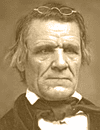
Short Bio
Edward Taylor was a prominent New England Puritan minister known for his profound piety and impactful poetry reflecting his spiritual journey.
Edward Taylor, a New England Puritan, was a deeply pious and learned minister known for his Calvinist beliefs and spiritual devotion. His poetry, particularly his 'Meditations' before the Lord's Supper, beautifully reflects Reformed theology and his mystical communion with Christ. Taylor's writings, though in old spelling and language, offer great literature that rewards careful examination and reading aloud, providing a feast of Puritan poetry for those who appreciate Puritan sermons.
Text
Edward Taylor (1642-1729) was a New England Puritan. He was born in Leicestershire and became a school teacher with Puritan sympathies. After the Great Ejection, Taylor left England, studied divinity at Harvard, and eventually became minister of Westfield, Massachusetts.
Taylor was a colleague of Increase Mather and Charles Chauncey, and corresponded with Richard Baxter and other divines in England. He carried on a long-running controversy with Solomon Stoddard over the Lord's Supper, Taylor taking the position later held by Edwards. Donald Stanford says, "Taylor seems to have been endowed with most of those qualities usually connoted by the word puritan. He was learned, grave, severe, stubborn, and stiff-necked. He was very, very pious. But his piety was sincere. It was fed by a long continuous spiritual experience arising, so he felt, from a mystical communion with Christ. The reality and depth of this experience is amply witnessed by his poetry."
A perusal of his poetry shows that Taylor was a thorough going Calvinist. It was his custom to write a poem ("Meditation") before each Lord's Supper. They are wonderful examples of spiritual experience and devotion.
Here is Reformed theology in beautiful dress. The reader who loves Puritan sermons should welcome a chance to dive into this feast of Puritan poetry. They have been minimally edited, but do not be put off by the old spelling or unfamiliar words. Here is great literature that will repay slow examination, or even better, reading aloud.
Sermon Outline
-
I
- Introduction to Edward Taylor
- Historical Context of Puritanism
- Taylor's Early Life and Education
-
II
- Taylor's Ministry in Westfield
- Controversy Over the Lord's Supper
- Influence of Colleagues and Correspondence
-
III
- Taylor's Piety and Spiritual Experience
- Role of Poetry in His Faith
- Legacy of Taylor's Work
Key Quotes
“Taylor seems to have been endowed with most of those qualities usually connoted by the word puritan.” — Edward Taylor
“His piety was sincere, fed by a long continuous spiritual experience arising from a mystical communion with Christ.” — Edward Taylor
“Here is Reformed theology in beautiful dress.” — Edward Taylor
Application Points
- Explore the depth of your own spiritual experiences and how they shape your faith.
- Consider the role of creative expression, like poetry, in your relationship with God.
- Engage with historical theological debates to enrich your understanding of contemporary faith practices.