
Whitefield's Field Preaching
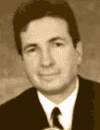
E.A. Johnston highlights George Whitefield's pioneering field preaching as a divinely ordained mission that transformed the church and evangelized vast regions with fervent gospel proclamation.
In this sermon, E.A. Johnston explores the remarkable life and ministry of George Whitefield, focusing on his innovative field preaching that revolutionized evangelism in the 18th century. Johnston draws from historical documents and vivid accounts to illustrate Whitefield's unwavering commitment to spreading the gospel across continents despite opposition and hardship. Listeners are invited to reflect on the enduring legacy of Whitefield's mission and the call to bold, Spirit-empowered evangelism today.
Full Transcript
I have a rare treat for us today, friends. When I was conducting my research on my two volume biography of George Whitefield, I came across a rare document from the Old South Church in Newburyport. It was the centennial commemoration of the death of George Whitefield in the Old South Church, preached September 30, 1870.
And this document, I'm going to read us an excerpt from it. On this memorable occasion, when this message was given, many luminaries were in the audience that day, including the President of Princeton, Whitefield biographer J.B. Wakeley, who led in prayer. And at the front of the church stood the chair in which Whitefield died, as well as his Bible, and the ring from his finger with which he wrote, with its single diamond upon the rich man's windowpane, One thing is needful.
It was a special day, a holy day. God's presence was among his people on this solemn day. Three of the former pastors of the Old South Church were still living and present.
Each of these men, new members of the congregation who had known Whitefield personally and recorded their recollections of him. 1870 was still a day of large things for the church. D.O. Moody was still in his prime and bringing a harvest of souls into the kingdom.
Spurgeon was still at the Metropolitan Tabernacle in London, reigning as the Prince of Preachers. It was an epoch in the history of the church where the pulpits still had an influence upon society. It was a time when preaching was still rich with the eloquence of the great doctrines of the Bible and the hand of God was still upon those faithful gospel bearers in mighty Holy Spirit power.
We weep today for the bankrupt church and the sleeping bride. Our hope is that our hearts will be stirred by listening to this message as I read it to you, this excerpt from that commemoration sermon about George Whitefield. On his arrival in Georgia, finding himself alone for his friends, the Wesleys had abandoned the enterprise and leaving only a single assistant had gone back to England.
He had once addressed himself to his work. One of his first projects was the founding of an orphan house to which he had been incited by the example of the celebrated Frank. It was a good object, though, but partially successful, and he pursued it through life.
But it was chiefly significant as furnishing the providential clue by which his steps were to be guided through the yet unexplored labyrinth of his eventful itinerancy. Most of his first preaching circuits were undertaken in its interest. It opened to him some of his best opportunities.
It sent him hither. It sent him thither back to England that he might raise funds for it and again to America that he might superintend its concerns. It drew forth some of his tenderest human affections.
It served to develop parts of his nature which might otherwise have wanted an object. But whenever he came and whatever his immediate errand, everything became subservient to the one great ultimate aim of his life, the salvation of souls and the quickening of the divine life in the hearts of Christians by preaching of the gospel of the Son of God. Whitefield had now mapped out as it were before him the whole broad field of his life's labors.
His parish or diocese, if I may so denominate it, consisted of two grand districts, one a vast continent just beginning to be peopled but destined to play a mighty part in the history of the world. The other a populous and powerful nation, the seat of empire and the head of Protestant Christendom, both needed to be evangelized, awakened from spiritual slumber, quickened by the power of a divine life made to throb in every fiber of their mighty frames with the pulsations of a living, active, energetic piety. The accomplishment of this great result under God constituted the life mission of George Whitefield.
He traversed these vast regions up and down, backward and forward, for more than thirty years with unflagging ardor. The fire of his burning soul kindled and flamed in every corner. Between the two, the ocean was his highway.
He crossed the Atlantic thirteen times, and that at a period when the passage was long and the discomforts many. From a comparison of dates, I judge that he was actually at sea two years and a quarter, on board ship a considerably longer time, encountering storms, collisions, hunger, seasickness, alarms of hostile attacks, and the rough ways of the roughest of men. This comes of your praying, said one, with an oath, when they had narrowly escaped the peril of immediate destruction.
Of the remaining thirty-one or two years, somewhere about nine were spent in this country in preaching and kindred labors in the populous towns, that sparsely settled country, and among the aboriginal tribes in what Whitfield used to call hunting for sinners in the wilds of America the rest of the time, about two-thirds of the whole was devoted to similar efforts in his native land. It would be pleasant and profitable, could we follow him in his vast circuits, and trace step by step the exertions which he made, the difficulties and perils which he overcame, the traits of character he displayed, and the wonderful effects which accompanied or followed his ministry. A recent writer has said of him, during the period of thirty years constituting the great body of his public life, that the facts of his ministry are of one complexion, one year is just like another, and to follow him would be going over the same ground.
This is true in the general, but not in the particular, for while the same great end is kept always in view, and the same measures employed with substantially the same results, there is scarcely a scene or record where the details are preserved which would not furnish in the hands of a master the subject for a distinct picture worthy of place in the great picture gallery of the church's history. Whitefield's first return from America was the introduction to a remarkable change in the method of his preaching. He had been in this country only about four months, when the wants of the orphan house and the necessity of securing priest orders in order to the full discharge of his new duties seemed to require his return.
It was altogether contrary to his original intention, and he had to tear himself away from his new parishioners, they exacting from him a solemn promise before God to return to them as soon as possible. Up to this time he had been a great stickler for order, all his sermons had been carefully written out, and the first extemporaneous prayer as well as the first extemporaneous sermon on which he ever ventured was deemed worthy of special record. He preached only when and where he was invited by the regular clergymen, and though he exhorted and expounded with great freedom in private houses and elsewhere, would have been shocked at the thought of preaching anywhere but in a church.
But the time had come for him to cast aside such close trammels. It was not a measure of his own seeking, but of a providential necessity. The incapacity of the churches to contain the multitudes had already suggested the experiment.
But now on reaching London, to his great surprise, he found most of the pulpits closed against him, the Archbishop of Canterbury and the Bishop of London received him kindly and approved his plans, but among the clergymen generally dislikes, which had begun to show themselves before his departure, had during his absence ripened into concerted opposition. He took priest's orders, but received no invitations. It was much the same in the country that people were eager as ever to hear, but how to get access to them.
This led to the adoption of field preaching, a measure first reported by Whitfield himself, and which, more perhaps than any other, characterized the great religious movement in which he was the chief actor. The first experiment was made at Kingswood near Bristol. It was in a region of coal mines.
The Colliers were rude and almost savage people. A few ventured to walk in their neighborhood, and when roused, they were the terror of Bristol. Before he went to America, people had said to Whitfield, have not we Indians enough at home? If you have a mind to instruct Indians, there are the Colliers enough in Kingswood.
Unwilling to be idle, he now resolved to see what could be done for them. He gathered around him a few hundreds and began to discourse to them. Presently, he had, at the same and neighboring places, congregations of two, five, ten, and even twenty thousand.
He took his stand upon an elevated spot and made his clear, strong voice audible to the remotest listener. The trees and hedges were full of people, all was hushed the moment he began. The preacher's own soul, as he looked round amidst the deep silence of the multitude, was filled, he told us, with a holy admiration.
As for the poor Colliers, to whom such precious truths were new, having no righteousness of their own to renounce, they were glad to hear of a Jesus who was a friend to publicans and sinners, and came not to call the righteous, but sinners to repentance. The first token of the deep feeling wrought in them was discernible in the white gutters cut by their tears as they coursed plentifully down their black, cold, begrimed cheeks. Hundreds and hundreds, we are told, were brought under deep conviction, which, as the event proved, ended in a sound and thorough conversion.
On one of these occasions, as we are informed by a contemporary periodical, the multitude of all classes that were drawn together, with their coaches and horsemen, covered three acres of ground. A few weeks later, the same experiment was repeated at London. The church at Ellington had been offered him by the vicar, but the church warden objected, so he betook himself to the churchyard.
Shortly after, on a Sunday morning, he appeared at Moorfields, since so noted for its close connection with its London movements, it was a large open space, much frequented by the populace on Sundays and holidays. The crowd was great. Some warned him he'd never come out of that place alive.
He went in between two friends, who were soon separated from him by the pressure of the rabble and compelled to leave him to their mercy. But instead of offering him the slightest indignity, they made a lane for him and passed him along through it to his place. On the evening of the same day, he preached again on Cannington Common, two miles from London, to an assemblage estimated at upwards of 20,000.
Similar scenes were repeated again and again at these two places during several successive weeks. Of one of them, Whitfield himself says, such a sight I never saw before. Some suppose there were above 30 or 40,000 people and near four score coaches, besides great numbers of horses.
And there was such an awful silence and the word of God came with such power. Meanwhile, and afterward, he made extensive tours through the country, including an excursion into Wales, preaching in every considerable town and just such places as offered themselves and everywhere with similar results. The deep interest awakened by his preaching caused a rush to him in private so that all his intervening hours were occupied in counseling and instructing awakened souls, or praying, exhorting, and expounding the scriptures in the religious societies.
Of these, he sometimes visited two or three in a day and continued his efforts and then sometimes far into and even through the night. Even at private houses, whither he went for such purposes, people crowded round the door in such multitudes that he was obliged to ascend by a ladder to an upper window or clamber over the tiles of the neighboring houses in order to get access. It is strange that, seen among the people such a thirst for hearing the word, he should have grown less fastidious informally as to the ways by which the waters of life should be distributed.
As a good Episcopalian, he still wore his gown and where he could advantageously used his prayer book, but where a pulpit was not ready to his hand, a table, a tub, a horse block, the steps of an inn, the stairs of a windmill, even the cuddled player's stage served an excellent purpose, and as for a church, his field and street preaching seemed no more than what his great master had sanctioned, who himself had a mountain for a pulpit and the heavens for a sounding board, and when the gospel was rejected by the Jews, sent his servants into the highways and hedges. I hope, he says, I shall learn more and more, that no place is amiss for preaching the gospel, nor is it strange that amidst such scenes he caught a new and grander conception of the great work of God of which he was chosen as the instrument, and now he begins to see the evidences of some vast divine plan about to be executed. I believe, he says, God will work a great work in the earth, whatever instruments he make use of, I care not, what am I, O Lord, that thou shouldst honor me? Now he begins, as never before, to be conscious of a special and peculiar mission.
The whole world, he says, is my parish, wherever my master calls me, I am ready to go preach his everlasting gospel. Well, that, friends, is an excerpt from a very lengthy work. We'll pick up another piece of it tomorrow, but I wanted to share that with you today as we focus and concentrate on the great labors of George Whitefield and his contribution to the church.
Sermon Outline
-
I
- Introduction to George Whitefield and his historical context
- The significance of the Old South Church commemoration
- Whitefield's early ministry and founding of the orphan house
-
II
- Whitefield's expansive mission across America and England
- Challenges faced including opposition from clergy
- Adoption of field preaching as a new method
-
III
- Descriptions of Whitefield's field preaching events and large crowds
- Impact on diverse audiences including coal miners and urban populations
- The spiritual awakening and conversions resulting from his preaching
-
IV
- Whitefield's evolving understanding of his divine mission
- The global vision of his ministry as 'the whole world is my parish'
- Encouragement to embrace unconventional venues for gospel proclamation
Key Quotes
“The whole world, he says, is my parish, wherever my master calls me, I am ready to go preach his everlasting gospel.” — E.A. Johnston
“There was such an awful silence and the word of God came with such power.” — E.A. Johnston
“No place is amiss for preaching the gospel, nor is it strange that amidst such scenes he caught a new and grander conception of the great work of God.” — E.A. Johnston
Application Points
- Be willing to share the gospel boldly in unconventional settings.
- Trust God's providence even when facing opposition or obstacles.
- Recognize that every believer has a mission field wherever they are called.