
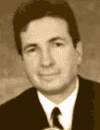
The Bar to Revival
E.A. Johnston emphasizes that the primary obstacle to revival in churches is the reluctance of preachers themselves to preach boldly and authentically for revival.
In 'The Bar to Revival,' E.A. Johnston shares a compelling story of a pastor who faced opposition for preaching boldly about revival, illustrating that the greatest obstacle to spiritual awakening is often the preacher's own reluctance. Johnston challenges ministers to take personal responsibility, preach with conviction, and remove barriers within themselves to see true revival. Drawing on historical examples and practical insight, this sermon calls the church to courageous and authentic preaching that can ignite powerful spiritual renewal.
Full Transcript
I want to share with you friends a true story about an experience of a pastor whom God used in an incredible revival some years ago. This pastor received a survey from the head of the evangelistic committee of his denomination asking to list the reasons why he felt the churches in his denomination were not seeing revival, and the results of the survey would be read at the next regional meeting of some 500 Presbyterian pastors. Well, this man filled out the survey and went to the meeting.
As he sat there, the leader of the committee said he was going to read the survey taken by the assembled pastors, and the number one reason why churches were not seeing revival was because the majority of those surveyed said it was because of the spiritual state of the congregation that was to blame. The second biggest reason why the churches were not seeing revival was because of the deacons in the church who were against it. Then this minister of evangelism said he had received one letter that was different from all the rest, and he wanted to read this letter at this time.
He said one pastor said the reason why we are not seeing revival is because the ministry itself was to blame. This produced a long outburst of laughter that shook the building as ministers rocked back and forth in their chairs, holding their sides in uproarious laughter. The man who wrote the letter said his face turned red, and he hoped his name would not be read in front of that large group of his peers, which it was not.
But after the meeting was over, this pastor approached the committee leader, introduced himself as the man who had wrote that letter, to which this man sneered at him, turned on his heels, and walked away. This brokenhearted pastor went back to his church, determined to preach revival, and God gave him a message from the text, make the crooked places straight. Then he felt God asked him if there were any crooked places in his own life that needed to be made straight.
This pastor took out a pen and paper and addressed two letters to individuals he had wronged, asking for their forgiveness. Then he went to the mailbox and mailed those letters, and that coming Sunday he preached in his church the sermon on make the crooked places straight. As he delivered the sermon, he noticed his large audience was restless and some looked angry.
His wife told him afterwards, you will hear from that sermon. Early Monday morning, he received a call from the mayor's office, demanding he go there immediately. The mayor led him into his office, closed the door behind him, and with his arms folded across his chest he demanded, I heard your sermon yesterday, man to man, I want the names of the individuals who told you those things about me.
The pastor said he had no names to give him, but the mayor didn't believe him. On the way home, he ran into another member of his church, who angrily told him, I will never hear you again. That evening, his wife said she received a call from the church treasurer, who was upset.
The pastor got in his car and went over to this man's house, and the man said, I thought your conscience would be bothering you to come and apologize to me for telling the church all about me yesterday. The pastor soon had a ride on his hands at church because of that one sermon, make the crooked places straight. And eventually, the church decided to rid themselves of so disturbing a minister.
After some months, this man received another pastorate in a different state, and it wasn't long that a revival broke out under his search and sermons. To such degree, the church could not contain the crowds, and the local opera house had to be rented to accommodate the throngs who were coming to Christ because of revival. Now I share that story with you, friends, because I believe it's true.
The bar to revival in our churches today is not because of our sleepy-headed congregations. We are not seeing revival because of a few troubling deacons. But the main bar to revival is the man in the pulpit.
It is ourself. We must be honest with ourselves before God and assume responsibility for a lack today. We are not seeing revival in our churches because we don't preach revival.
We may preach on the need for revival, but that is different from delivering search and sermons that are preached for revival. When Jonathan Edwards preached his famous sermon, Sinners in the Hands of an Angry God, to that church in Enfield, Connecticut in 1741, he didn't begin his sermon with a funny story to warm up his crowd. Rather, he hit them with the great doctrines of grace like a heavy hammer that broke up their false foundations and warmed their heels with the flames from hell below to where he had to stop preaching because he could no longer be heard as their cries and shrieks throughout the house drowned out his voice.
But we preachers today are a bar to revival because we don't want a riot in our church. We fear men more than God. We like talking about the need for revival, and we don't mind even praying for it now and then, so long as we can still be in control of everything.
We preachers keep the lid on revival from breaking out in our church. Like Vance Havner once said, everybody is holding revivals. It's about time somebody let loose of one.
Let us pray.
Sermon Outline
-
I
- Story of a pastor who faced opposition for preaching revival
- Survey results blaming congregations and deacons for lack of revival
- Pastor's conviction that ministry itself is the barrier
-
II
- The pastor's personal repentance and call to 'make the crooked places straight'
- Negative reactions from church members and leaders
- Consequences of preaching boldly for revival
-
III
- Revival eventually broke out under the pastor’s faithful preaching
- The real bar to revival is the man in the pulpit
- Preachers must assume responsibility for lack of revival
-
IV
- Difference between preaching about revival and preaching for revival
- Fear of losing control hinders revival
- Call to let loose revival in the church
Key Quotes
“The bar to revival in our churches today is not because of our sleepy-headed congregations.” — E.A. Johnston
“We are not seeing revival in our churches because we don't preach revival.” — E.A. Johnston
“We preachers keep the lid on revival from breaking out in our church.” — E.A. Johnston
Application Points
- Examine your own life for any 'crooked places' that need repentance before seeking revival.
- Preach and pray boldly for revival, even if it causes discomfort or opposition.
- Do not fear losing control; trust God to work powerfully through authentic ministry.