
Leaving Our Mark Behind
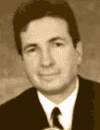
E.A. Johnston illustrates through the life of John Song how a sacrificial and Spirit-empowered ministry can leave an enduring spiritual legacy on a generation.
In this biographical sermon, E.A. Johnston explores the extraordinary life and ministry of John Song, a Chinese evangelist whose sacrificial dedication and Spirit-filled work left a profound impact on his generation. Johnston highlights Song's phases of ministry, his miraculous works, and his unwavering commitment despite suffering. The sermon challenges believers to reflect on the spiritual legacy they are creating in their own lives.
Full Transcript
In Acts 17.6 we read of the early church. These that have turned the world upside down are come hither also. The Chinese evangelist, John Song, was called the Saint Paul of China, and he did indeed have a Pauline-like ministry of apostolic proportions.
His ministry was attended by signs and wonders. The blind received their sight, deaf-mutes could speak, the lame would leap and leave their crutches behind. After a sung meeting, it was not uncommon to see stacks of crutches no longer needed.
He prayed for God to give him a hundred thousand souls, and when God did, he prayed for another hundred thousand, and God saved them as well. John Song said, I have made up my mind. Even if I have to die, I will preach the gospel in China.
I will die a willing death, if only my fellow man be saved. He got his wish, for he died at the age of 42. John Song came to America in 1920 to be educated and earned his Ph.D. in chemistry.
He was a genius who could speak four languages, and after getting his Ph.D., he entered the Liberal Union Theological Seminary in New York, and it was there that God saved him. He was truly born again, and his unconverted seminary professors thought Song had lost his mind and had him committed to a mental institution for 193 days. During that time, he read through his Bible 44 times, and God gave him a key word from every chapter in every book of the Bible.
It was in his dorm room, in seminary, that Jesus stood in his room and changed his name to John and told him what his ministry was to be. He was to have 15 years of public ministry, divided in three-year phases. The first, called the Water Period, this was his preparatory time.
The next three years was the Door Period, where God was opening doors for him. Third was the Dove Period, where the Holy Spirit was poured out upon his ministry, where he had over 100,000 converts in three years. The fourth was the Blood Period, where China was bleeding during the war with Japan, and Dr. Song bled from piles, having to change and wash his underwear three times a day.
The last phase was the Tomb Period, where Song was an invalid in Peking, and he ministered to those who came to visit him. John Song's sacrificial life was seen in that he'd preach all day, pray for hundreds, then stay up in the middle of the night, studying his Bible on his knees. I highly recommend, friends, you get a copy of his life story.
It's worth its weight in gold. It's written by his daughter, Levi. It's entitled, The Journal Once Lost, The Diary of John Song.
I believe Song had a ministry much like George Whitefield heaven opened when he preached. In his last years of ministry and in failing health, Song is flaming out like a fiery comet, falling to earth, creating a sensational crash, and leaving behind a giant smoking crater as his mark upon his country and generation. Before we go to our time of prayer, we must ask ourselves, what mark have we left with our lives upon our generation? As we ponder that, let us pray.
Sermon Outline
-
I
- Introduction to the early church's impact in Acts 17:6
- Overview of John Song's apostolic ministry
- Comparison to Saint Paul and George Whitefield
-
II
- John Song's educational and spiritual journey
- His time in seminary and mental institution
- Divine calling and ministry phases
-
III
- Description of the five ministry periods: Water, Door, Dove, Blood, Tomb
- Miraculous signs and conversions
- Sacrificial dedication despite suffering
-
IV
- Legacy and impact of John Song's life
- Challenge to reflect on our own spiritual mark
- Call to prayer and commitment
Key Quotes
“These that have turned the world upside down are come hither also.” — E.A. Johnston
“I have made up my mind. Even if I have to die, I will preach the gospel in China.” — E.A. Johnston
“Before we go to our time of prayer, we must ask ourselves, what mark have we left with our lives upon our generation?” — E.A. Johnston
Application Points
- Commit to a Spirit-empowered ministry that seeks to impact others deeply.
- Embrace sacrificial service even in the face of hardship for the sake of the gospel.
- Reflect regularly on the spiritual legacy you are leaving for future generations.